
Explosions in the Night: US Bombs Iranian Port Cities as Hormuz Shuts Down Again
Explosions in the Night: US Bombs Iranian Port Cities as Hormuz Shuts Down Again Atlanta, GA – July 13, 2026 — The war between the United States and Iran just took another explosive turn. Over the past 24 hours, American warplanes have pounded Iranian military targets in southern port cities, Iran's Revolutionary Guard has once again slammed the door on the Strait of Hormuz, an
Explosions in the Night: US Bombs Iranian Port Cities as Hormuz Shuts Down Again
Atlanta, GA – July 13, 2026 — The war between the United States and Iran just took another explosive turn. Over the past 24 hours, American warplanes have pounded Iranian military targets in southern port cities, Iran's Revolutionary Guard has once again slammed the door on the Strait of Hormuz, and oil prices are climbing faster than politicians can spin. Let me break down exactly what happened — and why this matters to every single American watching gas prices, grocery bills, and the growing shadow of a wider Middle Eastern war.
What Happened: The Latest Round of Strikes
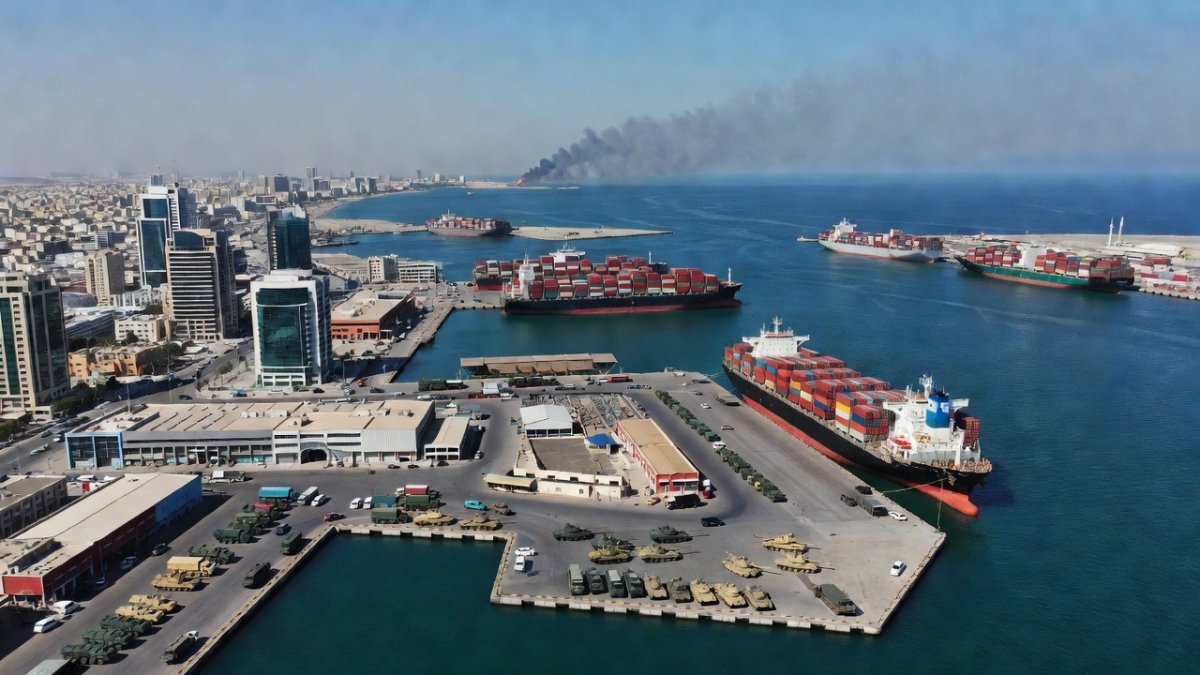
It started Sunday evening, July 12, at approximately 5 PM Eastern Time. US Central Command announced it had launched a fresh series of strikes against Iranian military assets — specifically targeting facilities involved in threatening commercial shipping through the Strait of Hormuz. According to CentCom's official statement, these weren't warning shots. These were precision strikes on Iranian military infrastructure in the southern port cities of Bandar Abbas, Sirik, and other coastal positions.
Iranian state media confirmed explosions rocked these cities overnight. The strikes come after what US officials described as an Iranian attack on a commercial vessel in the Strait of Hormuz — a Cypriot-flagged ship that was set ablaze, with at least one crew member still missing as of this morning.
And here's the part that should make every American sit up straighter. President Trump, speaking to reporters, said: "We bombed the hell out of them last night. They are very, very evil and sick." Love the blunt talk or hate it — those words signal there is no off-ramp in sight.
Strait of Hormuz: The World's Energy Jugular
Let me explain why the Strait of Hormuz matters to you — whether you drive a gas-guzzling pickup in Texas, take the subway in New York, or buy groceries in Atlanta. About 20 percent of the world's petroleum passes through this narrow waterway between Iran and Oman. It's the single most important energy chokepoint on the planet.
Iran's Islamic Revolutionary Guard Corps declared the strait closed on Sunday amid the escalating US strikes. The IRGC has been playing this game since the war began in February — threaten the strait, wait for international pressure, back off — but this time feels different. The language from Tehran is harder. The response from Washington is more aggressive. And the ripple effects are already hitting global markets.
Brent crude surged 3.3 percent in early Monday trading, climbing to $78.50 a barrel. US crude jumped 3.4 percent to $73.83. That's after oil had briefly dipped to a trough of $70.14 in recent weeks when there was cautious optimism about de-escalation. Those hopes? Gone.
According to the New York Times, gas prices at the pump remain more than 27 percent higher than they were on the eve of the war in late February. That's not an abstract statistic — that's your wallet. That's every trip to the pump hitting harder than it did six months ago.
The War That Won't End: A Five-Month Timeline
Let me give you the high-level timeline because context matters, and the mainstream media has a short memory.
February 28, 2026: The United States and Israel launch coordinated strikes against Iran under Operation Epic Fury and Operation Roaring Lion. The strikes kill Iran's Supreme Leader Ayatollah Ali Khamenei — a seismic event that reshapes Iranian leadership and the entire region.
March-April 2026: Iran retaliates by blocking the Strait of Hormuz, launching ballistic missiles at US bases in the region, and targeting Israeli infrastructure. The war expands. Oil prices spike to levels not seen in years.
April 12, 2026: President Trump announces a conditional ceasefire. Iran supposedly promises to reopen the strait. Spoiler alert: they didn't.
April-July 2026: A tense, fragile back-and-forth. The US strikes Iranian targets periodically. Iran hits back by attacking ships, launching drones at Gulf allies. A pattern of attack-counterattack that diplomatic efforts have failed to break.
July 12-13, 2026 (NOW): The latest escalation. US strikes on Bandar Abbas and Sirik. IRGC declares Hormuz closed. A merchant ship set on fire. Oil surging. Gulf states caught in the crossfire.
Al Jazeera is calling it a "Hormuz standoff." The New York Times describes "a familiar pattern of back-and-forth strikes fueled by disputes over the Strait of Hormuz." I call it a war without an exit strategy.
Regional Spillover: Gulf States Under Fire
Here's what's keeping Pentagon planners up at night. The strikes are no longer confined to Iran. Iran retaliated this time by targeting multiple Gulf states — Qatar, Kuwait, Oman, and even Jordan reportedly came under incoming fire. AP News reported Sunday that Iran struck a container ship that set it ablaze.
These aren't accidental stray missiles. Iran is deliberately broadening the battlefield, sending a message: if you host US bases, if you support the American war effort, you are a target.
The United Arab Emirates, a key US ally, has been particularly exposed. The Houthi rebels in Yemen — Iran's proxy force — have also been more active, launching drone attacks toward Saudi Arabia in coordination with the IRGC's latest moves. This is a multi-front conflict now, and it's getting wider by the day.
The Economic Fallout: What This Means for Americans
Let me be direct with you, folks. The 27 percent increase in gas prices since February is just the beginning. If the Strait of Hormuz remains closed — even partially — for an extended period, we're looking at significantly higher prices at the pump, higher costs for goods shipped from Asia, and inflationary pressure the Federal Reserve is already struggling to contain.
Brent crude at $78.50 might sound manageable until you consider this: analysts quoted by Bloomberg warn that a prolonged Hormuz closure could push prices past $100 a barrel within weeks. Remember 2008? Remember $4-a-gallon gas? We could be looking at that again — or worse.
This isn't just about oil. Food prices — rice, palm oil, sugar, coffee — are also projected to spike. Iran's retaliation has disrupted shipping lanes that carry more than just crude. Global supply chains, already fragile from years of shocks, are taking another hit.
What Comes Next: Three Scenarios
Nobody has a crystal ball, but here are the three roads we're looking at:
Scenario 1: Escalation Spiral. The US launches more strikes. Iran retaliates harder. Hormuz stays closed. Oil hits $100+. This is the path we're currently on.
Scenario 2: Conditional De-escalation. International pressure — from China, Europe, and regional powers — forces both sides back to the table. A new ceasefire emerges. The strait reopens. Oil stabilizes. This requires both sides to want a way out, and right now, neither does.
Scenario 3: Full Regional Conflict. The fighting expands to include Iraq, Syria, Yemen, and Lebanon's Hezbollah in a coordinated Iranian-axis response. The US gets pulled into a multi-front Middle Eastern war that makes Iraq and Afghanistan look contained. This is the nightmare scenario, and it's becoming more plausible by the day.
The Bottom Line
I'm going to tell you what I tell my team at Global 1 News every morning: don't let the 24-hour news cycle numb you to the stakes. This isn't background noise. This is a war involving the United States of America, happening right now, with direct consequences for your bank account, your safety, and the stability of the entire world.
The Strait of Hormuz is closed. American bombs are falling on Iranian cities. Oil is spiking. And nobody in Washington seems to have a plan to end this — just a plan to keep escalating.
Stay informed. Stay vigilant. And for God's sake, pay attention to what's happening in the Persian Gulf, because this story is not going away quietly.
By Jessica Ali, Lead Anchor — Global 1 News
This article was produced with AI-assisted research and editorial support. Reporting is based on sources cited in the article.
What's Your Reaction?
 Like
0
Like
0
 Dislike
0
Dislike
0
 Love
0
Love
0
 Funny
0
Funny
0
 Wow
0
Wow
0
 Sad
0
Sad
0
 Angry
0
Angry
0

Editor-in-Chief at Global1.News. Atlanta-based journalist who cuts through the BS and tells it like it is. Lead anchor, host, and the voice you hear when the spin stops and the truth starts.











Comments (0)