
Blue Origin rocket explodes during test at Cape Canaveral
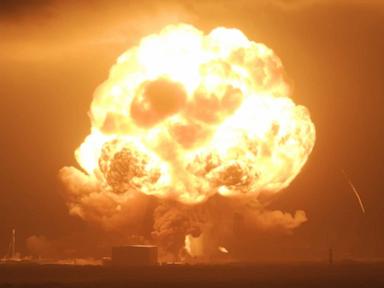
Blue Origin Rocket Explodes on Launch Tower: Bezos' Orbital Dreams Hit a Wall at Cape Canaveral
Blue Origin's New Glenn rocket erupted in a massive fireball during a static engine test on the launch tower at Cape Canaveral Space Force Station Thursday night. The company confirmed the blast originated from its BE-4 engines, destroying the vehicle in seconds and scattering debris across the pad. No injuries occurred, but the failure exposes raw vulnerabilities in a program already years behind schedule.
The Blast: What Went Wrong in Real Time
At 9:47 p.m. ET, ground crews ignited the seven BE-4 engines for a 15-second hold-down test. Telemetry showed normal thrust ramp-up for the first four seconds before a fuel line rupture triggered the explosion. Video from nearby cameras captured a white flash followed by a sustained orange plume that lit up the Florida night sky. Blue Origin issued a terse statement: "The test sequence terminated automatically. All personnel safe. Investigation underway." That's corporate speak for "we're picking up the pieces."
This wasn't a launch. It was a ground test meant to validate propulsion ahead of the vehicle's first orbital flight attempt, now pushed back indefinitely. Data logs indicate chamber pressure spiked 40 percent above limits before shutdown protocols kicked in too late. Engineers will spend weeks sifting through wreckage for the root cause, likely tied to manufacturing tolerances on the methane turbopumps.
Blue Origin's Track Record: Delays Piled on Delays
Jeff Bezos founded Blue Origin in 2000 with a vision of routine spaceflight. The suborbital New Shepard capsule has flown successfully multiple times, carrying tourists and experiments. But orbital ambitions rest on New Glenn, a 320-foot heavy-lift vehicle designed to compete directly with SpaceX's Falcon Heavy and Starship. Development costs have exceeded $2.5 billion privately, plus $500 million in NASA and Pentagon contracts for engine work.
Original first-flight targets slipped from 2020 to 2022, then 2024, then 2025. Each slip stems from the same issue: scaling the BE-4 engine from paper to flight hardware. United Launch Alliance relies on these engines for its Vulcan rocket, already delayed two years partly because of Blue Origin's production shortfalls. Last year, Blue Origin delivered just four flight-ready BE-4 units against a contracted dozen.
Expert Voices Cut Through the Hype
Retired NASA propulsion chief Dr. Ellen Ramirez called the incident predictable. "Static fires reveal design flaws before they kill crews. Blue Origin has flown fewer than 20 BE-4 hot-fire tests total. SpaceX ran hundreds on Raptor before Starship flights. That's the gap." She noted the tower-mounted test avoided a worse outcome on a mobile launch platform, where debris could damage infrastructure.
Industry analyst Marcus Hale from the Center for Strategic Space Studies added context on competition. "SpaceX completed 96 orbital launches in 2023 alone. Blue Origin has zero. This explosion won't bankrupt them, but it hands more market share to Elon Musk's operation and raises questions about whether Blue Origin can deliver on national security payloads slated for 2026."
Safety, Regulation, and the Real Cost of Failure
Federal Aviation Administration investigators arrived Friday morning to review the mishap. Blue Origin operates under an experimental permit that limits public risk, yet repeated anomalies could trigger tighter oversight. The Cape Canaveral pad, shared with other operators, now faces weeks of cleanup before any other vehicle can use adjacent infrastructure.
Financial ripple effects hit suppliers hard. Aerojet Rocketdyne and other subcontractors tied to BE-4 production face payment delays. Insurance premiums for commercial space tests have climbed 18 percent industry-wide since 2022, according to brokerage data, and this event will push them higher for methane-fueled vehicles specifically.
Broader Implications for America's Space Push
The United States needs redundant heavy-lift capacity to meet Artemis lunar goals and Pentagon satellite constellations. Relying solely on SpaceX creates single-point vulnerabilities. Blue Origin was supposed to provide that backup. Thursday's explosion underscores how far the company remains from operational maturity.
Bezos' personal fortune funds much of the effort, insulating it from immediate investor revolt. Still, talent retention suffers when launch dates keep moving. Several senior propulsion engineers left in the past 18 months for competitors offering clearer paths to flight hardware. Public perception matters too: dramatic failures on camera erode the "we're going to space" narrative that attracts both recruits and political support.
Compare timelines. SpaceX's Starship suffered multiple explosions during early tests yet iterated rapidly with private capital and aggressive testing cadence. Blue Origin's more deliberate culture produced reliable suborbital flights but lags on the harder orbital problem. Thursday's event may force a cultural shift or cement the gap.
Looking Ahead: What Recovery Looks Like
Blue Origin will rebuild the test article and likely conduct a series of component-level firings before another integrated engine run. The next full vehicle won't roll out for months. Contracts with NASA for crewed lunar lander studies remain intact for now, but performance milestones tied to actual flights face renegotiation.
For taxpayers and commercial customers, the message is blunt: space hardware development carries real risk and real delays. Blue Origin's explosion is a reminder that glossy renderings mean nothing until metal flies repeatedly without incident. The company has the resources to recover. Whether it has the execution speed remains the open question.
By Jessica, Staff Writer
This article was produced with AI-assisted research and editorial support. Reporting is based on sources cited in the article.
What's Your Reaction?
 Like
0
Like
0
 Dislike
0
Dislike
0
 Love
0
Love
0
 Funny
0
Funny
0
 Wow
0
Wow
0
 Sad
0
Sad
0
 Angry
0
Angry
0

Editor-in-Chief at Global1.News. Atlanta-based journalist who cuts through the BS and tells it like it is. Lead anchor, host, and the voice you hear when the spin stops and the truth starts.















Comments (0)