
How War Quotas Shrink University Spots for Russian Students
The Viral Expression of Youth Frustration In recent days a TikTok video posted by a Russian teenager has circulated widely, capturing raw public anger over university admissions policies. The young woman declares, “SVO children, f*** you, let me get into university,” referring to the preferential treatment granted to children of Russian soldiers participating in the Ukraine con

The Viral Expression of Youth Frustration
In recent days a TikTok video posted by a Russian teenager has circulated widely, capturing raw public anger over university admissions policies. The young woman declares, “SVO children, f*** you, let me get into university,” referring to the preferential treatment granted to children of Russian soldiers participating in the Ukraine conflict. This outburst reflects mounting resentment among ordinary families who see state-funded places shrinking while quotas for war beneficiaries expand. The clip resonates because it articulates what many students discuss privately after receiving their Unified State Exam results this year. Russian teenagers preparing for higher education now confront a system where military connections appear to outweigh academic performance measured by the EGE. The frustration is especially acute in major cities where competition for prestigious institutions has always been intense. Families without military ties watch as peers with quota status secure spots despite lower scores, deepening perceptions of unfairness that extend beyond individual disappointment to broader questions about social mobility in contemporary Russia.
Scale of Quota Expansion in 2025 Admissions
Official data compiled by IStories reveal that more than 28,000 students entered Russian universities under war-related quotas in 2025, nearly double the figure recorded the previous year. This surge follows legislative changes allowing military personnel and their relatives to compete for up to 25 percent of state-funded places beginning this year. The Education Ministry implemented these targets across most degree programs, producing immediate effects on enrollment statistics. In practice the policy reallocates seats that previously went to applicants succeeding solely through EGE performance. Analysts note that the rapid growth coincides with intensified recruitment efforts for the Ukraine operation, creating a direct pipeline from battlefield service to educational advantage. For ordinary Russian households lacking such connections, the numerical expansion translates into fewer realistic pathways to tuition-free study at respected institutions. The doubling of beneficiaries within a single cycle underscores how quickly the quota system has scaled, altering the composition of incoming classes at both regional and capital universities.
Putin’s April Decree and Extended Eligibility
In April President Vladimir Putin signed a decree extending educational benefits to widows of servicemen killed during the Ukraine operation. The measure also broadened coverage to include relatives of personnel from the Interior Ministry, prison service, and military formations originating in the Donetsk and Luhansk regions since 2014. These additions build upon earlier provisions that initially focused on active combatants and their immediate families. By formalizing support for widows and additional security-sector categories, the decree institutionalizes long-term advantages within the higher-education system. The Defense Ministry and relevant agencies now coordinate with universities to verify eligibility, adding administrative layers that further distinguish quota applicants from the general pool. For families in smaller towns and rural areas, awareness of these expanded rights has grown through official channels and veteran organizations, encouraging more applications under the preferential track. The policy therefore reaches beyond current operations to encompass earlier phases of the conflict, multiplying the number of households positioned to benefit.
Performance Gaps Between Quota and General Applicants
IStories reporting indicates that in 90 percent of degree programs, students admitted through war quotas recorded scores below the threshold required for general competition. This gap persists across institutions of varying selectivity and highlights structural differences in preparation and selection criteria. While quota beneficiaries still meet minimum institutional standards, their average results lag behind those of peers admitted through open EGE competition. Faculty members at several universities have observed that the disparity affects classroom dynamics once studies begin, particularly in demanding fields. The Education Ministry maintains that all admitted students satisfy program requirements, yet the statistical pattern documented by independent outlets suggests the quota mechanism functions more as a parallel track than an integrated merit-based process. Ordinary applicants who invest heavily in exam preparation therefore face a compressed pool of remaining places, intensifying the sense that academic effort alone no longer guarantees proportional reward.
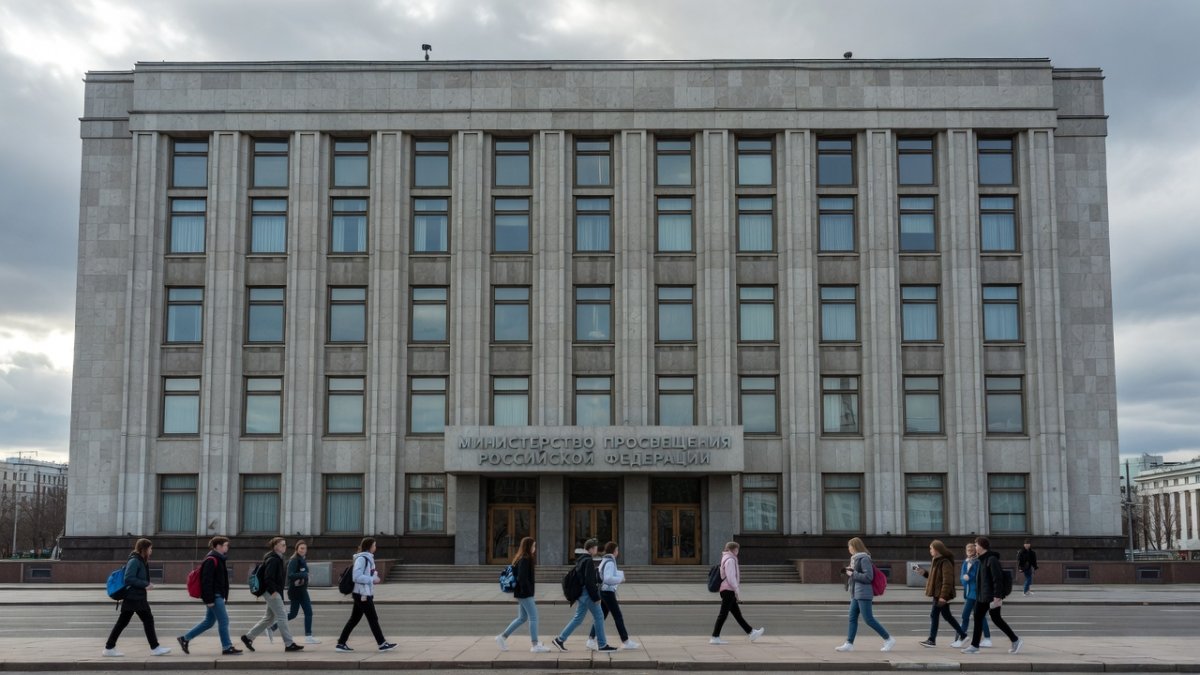
Concentration in High-Demand Fields and Elite Universities
Beneficiaries have gravitated toward medicine, education, information technology, economics, and law, fields offering relatively stable career prospects. Competition proves fiercest at Moscow State University, the Higher School of Economics, and the Moscow State Institute of International Relations, where limited quota allocations still attract substantial numbers of military-connected applicants. These institutions traditionally draw the strongest EGE performers nationwide, making the insertion of lower-scoring quota students particularly noticeable. At HSE, for example, the contrast between quota and standard-admission cohorts has prompted internal discussions about support mechanisms for incoming students. Meanwhile, families outside the quota system must either accept less selective universities or consider paid options whose costs have risen sharply. The clustering effect concentrates advantages within programs that already enjoy high prestige, reinforcing existing hierarchies rather than distributing opportunities evenly across the higher-education landscape.
Rising Tuition Costs and Reduced State Capacity
Average first-year tuition fees increased by 10.7 percent in 2026, according to Kommersant data, while 47,000 fee-paying places were eliminated nationwide. At HSE the cost of media communications programs now approaches one million rubles annually, roughly 13,800 dollars, far exceeding comparable European options such as Sorbonne tuition near 3,000 euros. These increases coincide with scholarship reductions, including cuts to HSE support for low-income students implemented just before EGE examinations. For middle-income Russian families the combination of higher prices and fewer subsidized spots narrows viable choices. A St. Petersburg student described the standard admissions route as akin to winning at roulette, noting that his family pays approximately 400,000 rubles yearly for his place. Such figures represent significant portions of household budgets outside major urban centers, pushing some applicants toward regional institutions or delayed enrollment. The financial pressure amplifies existing quota-related grievances by making paid alternatives less accessible precisely when state-funded options contract.
Personal Accounts and Everyday Realities
Students navigating the revised system describe a pervasive sense of unpredictability. One applicant from St. Petersburg emphasized that securing a state-funded place through open competition now resembles a high-stakes gamble rather than a predictable outcome of diligent study. Families report reallocating savings previously earmarked for other needs to cover tuition, while others postpone university entry altogether. The policy’s reach into widows and security-service families adds further complexity, as eligibility verification processes vary by region and institution. Ordinary Russians without military affiliations increasingly view higher education as stratified along lines unrelated to academic merit, affecting decisions about subject choice and long-term career planning. These individual calculations aggregate into wider patterns of disillusionment visible in online discussions and private conversations among final-year school students across the country.
Long-Term Implications for Social Mobility
The quota framework, now encompassing multiple categories of security personnel and their relatives, is reshaping access to elite education in ways that extend beyond immediate enrollment statistics. By privileging one group within an already competitive environment, the system risks entrenching divisions that influence professional networks and leadership pipelines for years ahead. Universities such as MSU, HSE, and MGIMO, central to training Russia’s administrative and specialist classes, absorb these shifts most visibly. For the broader population the changes coincide with rising costs and reduced scholarship support, constraining options for talented students from non-military backgrounds. Observers within academic circles note that sustained implementation could alter the demographic profile of graduates entering key sectors. As the policy matures, its effects on perceptions of fairness and opportunity will likely continue to surface in public discourse, reflecting deeper tensions between state priorities and individual aspirations within Russian society.
By Irina Volkov, Staff WriterThis article was produced with AI-assisted research and editorial support. Reporting is based on sources cited in the article.
What's Your Reaction?
 Like
0
Like
0
 Dislike
0
Dislike
0
 Love
0
Love
0
 Funny
0
Funny
0
 Wow
0
Wow
0
 Sad
0
Sad
0
 Angry
0
Angry
0
Russia/Eastern Europe Correspondent at Global1.News. Covering Russian politics, energy, security, and the shifting dynamics of the post-Soviet space. Provides clear-eyed analysis on one of the world's most opaque regions.










Comments (0)