
US Support for Iran War Sinks to 33% in Reuters/Ipsos Poll
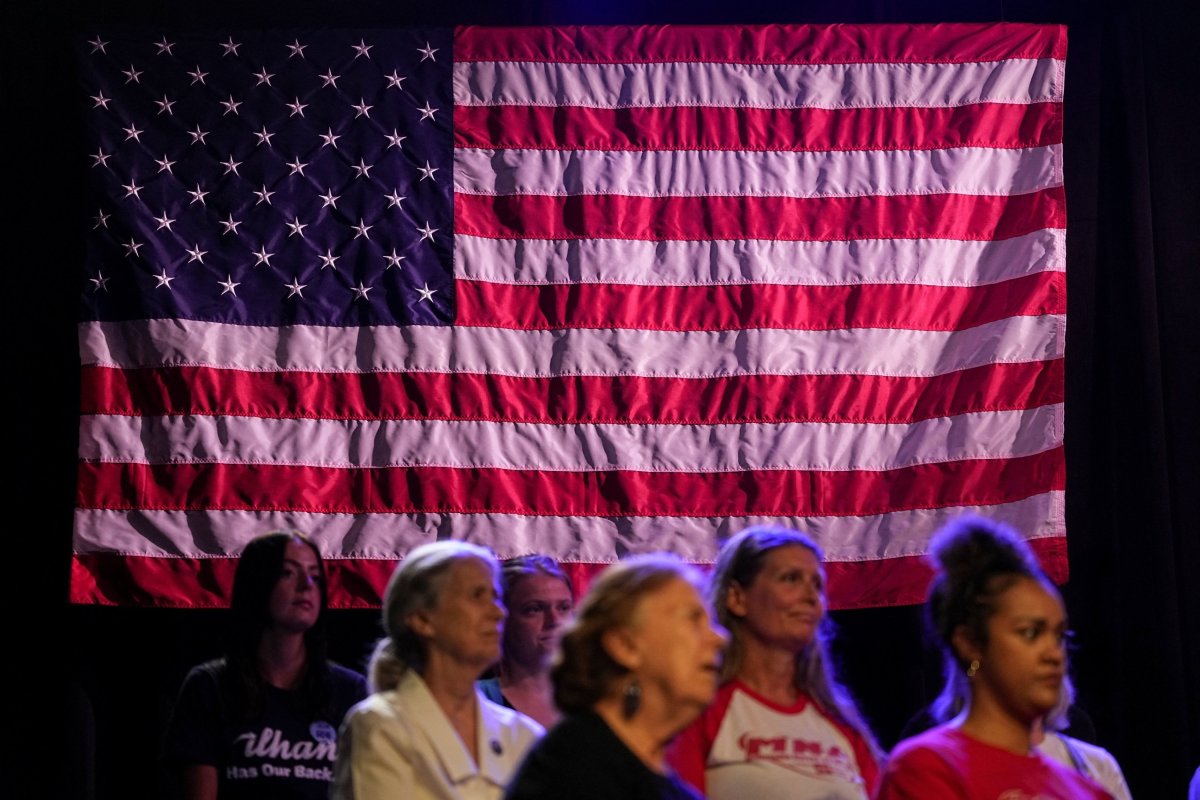
US Support for Iran War Falls Sharply in New Poll A Reuters/Ipsos poll released on July 28, 2026, reveals that only 33 percent of Americans support the ongoing US military campaign against Iran. This marks the lowest level of backing since the conflict began five months earlier.
US Support for Iran War Falls Sharply in New Poll
A Reuters/Ipsos poll released on July 28, 2026, reveals that only 33 percent of Americans support the ongoing US military campaign against Iran. This marks the lowest level of backing since the conflict began five months earlier. The survey of 1,246 US adults, with a margin of error of plus or minus 3 percent, underscores deepening public skepticism as the war enters its sixth month.
The findings show that 69 percent of respondents, including four in ten Republicans, believe President Trump has not clearly explained the goals of US military involvement. Support has remained below 40 percent throughout the conflict, which began on February 28, 2026.
The Reuters/Ipsos findings underscore a critical erosion in America's willingness to sustain prolonged engagement in the Middle East, directly weakening Washington's leverage at the negotiating table. With only 33 percent backing the campaign, Iranian officials gain breathing room to prolong talks, betting that domestic political constraints will force the Trump administration toward concessions on sanctions relief and nuclear enrichment limits. This dynamic mirrors how low public support in past conflicts amplified adversary resolve, allowing Tehran to extract symbolic victories even as military pressure mounts.
Geopolitically, the poll highlights Iran's strategy of attrition, where time favors the Islamic Republic amid rising US fatigue. Analysts note that Iran's oil revenue surge to $23 billion in the first half of 2026 demonstrates resilience against sanctions, bolstering its position to demand transit fees in Hormuz discussions. If American support dips further, Tehran could leverage this to push for a Malacca-style voluntary fee model, enhancing its regional influence while Gulf states hedge their bets on energy security.
Comparisons to Past Conflicts Highlight Shift in Sentiment
Public backing for the current campaign stands in stark contrast to earlier US wars. The Iraq War in 2003 enjoyed roughly 70 percent support in its early months, while the Afghanistan War in 2001 started with approximately 90 percent approval. In this case, support stood at 37 percent by mid-March 2026 and was just 27 percent on the day the war began, when 29 percent of respondents selected "unsure."
These numbers reflect a rapid erosion of consensus that differs from historical patterns. Independent registered voters in the poll favor Democratic congressional candidates over Republicans by 36 percent to 20 percent, with similar preferences emerging on economic policy questions.
Unlike the initial euphoria surrounding the 2003 Iraq invasion, which enjoyed 70 percent approval before sectarian violence eroded it, or the near-unanimous 90 percent backing for Afghanistan in 2001, the Iran campaign's trajectory reveals a post-Iraq public wary of open-ended commitments. Historical data from Gallup polls shows that sustained casualties and unclear objectives accelerate declines, yet here the drop occurred faster due to pre-existing polarization and economic anxieties over $4-per-gallon gas prices.
This shift carries profound implications for Iran's negotiating posture, as leaders in Tehran reference these precedents to justify delaying concessions. Gulf actors like Saudi Arabia and the UAE observe cautiously, recalibrating hedging strategies by quietly expanding ties with China to offset potential Hormuz disruptions. Meanwhile, Oman's mediation efforts draw on the Malacca strait precedent, proposing voluntary fees to de-escalate while preserving Iran's revenue streams without full blockade enforcement.
Second-order effects loom if Trump faces midterm losses, potentially mirroring how Vietnam-era opinion shifts constrained presidential options and invited adversary intransigence.
Political Pressures Mount Ahead of Midterm Elections
The poll arrives as Republicans defend slim majorities in Congress ahead of the November 2026 midterms. White House spokeswoman Olivia Wales stated that Trump will not make decisions based on fluid opinion polls and reiterated the administration's resolve to prevent Iran from acquiring nuclear weapons. GOP strategist Alex Conant noted that the results place pressure on the party in multiple negative ways, particularly as officials had emphasized winning economic arguments since January.
Voters such as retired Marine Alex Womack from Georgia expressed confusion over the war's origins, while independent Rhyan Anderson, who supported Trump in 2024, called for greater focus on domestic issues. These sentiments align with Trump's 2024 campaign pledge to avoid enduring foreign conflicts.
The poll's revelation that independents favor Democrats by wide margins on Iran policy amplifies risks for Republicans, as the conflict intersects with voter priorities on domestic spending amid inflation. Historical parallels to the 2006 midterms, where Iraq fatigue contributed to Democratic gains, suggest similar vulnerabilities if the war drags into November 2026 without clear victories. Iran's Foreign Ministry has already cited these pressures to rebuff direct talks, preferring Omani channels that shield it from appearing weak.
Deeper analysis reveals how this domestic calculus influences Gulf hedging: Saudi Arabia accelerates diversification away from oil dependency, while Qatar leverages LNG exports to buffer against Hormuz volatility. Economic data indicates Iranian oil sales of $18 billion since February have stabilized Tehran's budget, strengthening its hand to resist US demands and prolong the conflict until American political will fractures.
If Trump loses congressional support, second-order effects could include accelerated munitions shortages and a pivot toward diplomacy, validating Iran's long-game approach.
Diplomatic Overtures Signal Potential Shift in Approach
Trump described the United States as engaged in very deep talks with Iran during a July 27 interview with Axios. He indicated that if negotiations fail, the US would return to strong military action, adding that there is not much time and that either progress occurs quickly or not at all. On Air Force One, Trump stated that Iran would not have requested meetings if the US position were weak. At a Michigan rally, he emphasized that adversaries cannot be bribed and must be beaten, while noting friendly negotiations underway.
Iran's Foreign Ministry spokesman Esmaeil Baqaei responded that mediators may convey messages from the American side but stressed that Iran is not currently engaged in negotiations with the United States.
Trump's Axios comments on "very deep talks" with Iran signal recognition that plummeting US support limits indefinite military options, enhancing Tehran's leverage to extract guarantees against regime change. This mirrors historical patterns where public opinion dips prompted US presidents to pursue backchannel diplomacy, as seen in the later Iraq surge era. Iran's insistence on indirect mediation via Oman preserves its narrative of strength while testing US resolve on Hormuz management.
Regional reactions from the UAE and Saudi Arabia involve cautious engagement with these overtures, balancing alliance with Washington against fears of Iranian dominance in the strait. The economic ripple—oil prices dropping 5 percent on pause news—underscores global energy security stakes, with China backing Oman's Malacca-inspired model to ensure tanker flows resume without punitive fees.
Should domestic doubts intensify, a Trump pivot could realign negotiations toward verifiable limits on Iranian nuclear activities in exchange for phased sanctions easing.
Hormuz Mediation Track Offers Limited Progress
Parallel talks between Oman and Iran have advanced toward an agreement in principle on future management of the Strait of Hormuz. Disagreements persist over Iran's demand for transit fees on all ships, while Oman proposes a voluntary fees model similar to the Strait of Malacca. Iran's Department of Environment has drafted a plan tying fees to ship type, cargo volume, navigation history, and pollution record. The discussions receive backing from China, Qatar, and Pakistan.
Hormuz traffic has fallen from roughly 130 ships per day before the war to about five ships per day in the past week, according to UNOPS data. The US continues to encourage commercial shipping to test the Iranian blockade, though six vessels attempting the southern route on Sunday saw one fired upon and the others turn back.
Oman's proposal for voluntary fees modeled on the Strait of Malacca offers a pragmatic template for de-escalation, yet Iran's insistence on mandatory transit charges tied to cargo and pollution metrics reflects its bid to monetize the chokepoint amid $23 billion in wartime oil revenues. This standoff directly impacts global energy markets, with Hormuz traffic plummeting to five ships daily and threatening supply chains that feed 20 percent of world oil trade.
Gulf states' hedging strategies emerge clearly here: Saudi Arabia diverts exports via pipelines, while Qatar prioritizes LNG flexibility to mitigate blockade risks. Geopolitically, successful mediation would restore Iranian negotiating power by demonstrating that US public skepticism constrains full enforcement of sanctions, potentially opening doors for broader nuclear talks.
Analysts warn that failure risks escalation, with second-order effects including higher global prices if the US cannot sustain commercial shipping tests.
Strategic Calculations for Regional Actors
The decline in US domestic support affects Iran's negotiating position by highlighting potential limits on sustained American military commitment. Gulf states, including Saudi Arabia and the UAE, face recalibrations as energy markets react to the pause in US strikes after nearly two weeks of operations. Oil prices fell more than 5 percent on July 27 following news of the pause.
Iran generated an estimated 23 billion dollars in oil revenue during the first half of 2026, exceeding budget projections, with some 18 billion dollars of Iranian oil sold since the war's outbreak. The US reimposed its blockade of Iranian oil exports and ended sanctions waivers, though analysts continue to question the effectiveness of such measures.
The decline in US domestic support fundamentally alters Iran's position, allowing it to frame the war as unsustainable for Washington and demand concessions on enrichment and proxy support. Historical comparisons to the 1980s tanker war show how prolonged Hormuz tensions empower Tehran, while Gulf reactions reveal Saudi and Emirati hedging through diversified partnerships with India and China to safeguard energy routes.
Economic dimensions prove pivotal: a potential Hormuz blockade could spike oil beyond current levels, exacerbating US gas prices already at $4 per gallon and eroding further political backing. Oman's Malacca model gains traction as a compromise, backed by Pakistan and Qatar, to balance Iranian fees with free navigation guarantees.
If Trump encounters mounting opposition, regional actors anticipate accelerated diplomacy that might stabilize markets but embolden Iranian regional ambitions.
Trajectory of the Conflict and Broader Implications
Top US commander in the Middle East Adm. Brad Cooper reportedly recommended halting the bombing campaign around the Strait, citing limits to its effectiveness, while senior officials warned of dwindling munitions stockpiles. Iran denies that the pause amounts to an informal ceasefire. The deaths of 18 American soldiers, alongside thousands in Iran and Lebanon where Iran-allied fighters have engaged Israeli forces, add to the human cost.
Gas prices averaging just over 4 dollars per gallon nationwide, up from about 3 dollars before February 28, further shape public views. These developments influence calculations across the region, from Israeli security assessments to the proxy dynamics involving Hezbollah and Hamas, and the wider Sunni-Shia geopolitical competition.
Admiral Cooper's recommendation to halt strikes highlights munitions constraints and effectiveness limits, amplifying Iran's leverage as public support hovers at 33 percent. This trajectory contrasts sharply with earlier Middle East wars, where initial momentum gave way to quagmires only after years, not months, allowing Tehran to sustain proxy engagements in Lebanon and Yemen without immediate collapse.
Gulf states navigate these shifts by quietly supporting Omani mediation to prevent full Hormuz closure, protecting their oil exports amid China's interest in stable flows. The economic fallout—$18 billion in Iranian oil sales despite sanctions—demonstrates Tehran's adaptive networks, pressuring the US toward talks that could reshape energy security if domestic doubts force a Trump retreat.
Second-order effects from eroding support might include renewed focus on multilateral frameworks, reducing unilateral US commitments while preserving Israel's qualitative edge against Iranian proxies.
By Malik Hassan, Staff Writer
This article was produced with AI-assisted research and editorial support. Reporting is based on sources cited in the article.
What's Your Reaction?
 Like
0
Like
0
 Dislike
0
Dislike
0
 Love
0
Love
0
 Funny
0
Funny
0
 Wow
0
Wow
0
 Sad
0
Sad
0
 Angry
0
Angry
0
Middle East Correspondent at Global1.News. Based in Beirut, covering politics, conflict, energy, and society across the Middle East. Brings context and depth to a region often reduced to headlines.











Comments (0)