
Venezuela Earthquake Catastrophe: 1,700+ Dead After Twin Quakes
A Nation Buried Alive: Venezuela's Twin Earthquake Catastrophe Folks, you need to understand what just slammed into Venezuela. Two massive earthquakes, a 7.2 and a 7.5, struck within 39 seconds of each other on Wednesday, June 24, 2026, ripping through the northern state of La Guaira right outside Caracas. The ground didn't just shake. It tore apart coastal communities like Cat
A Nation Buried Alive: Venezuela's Twin Earthquake Catastrophe
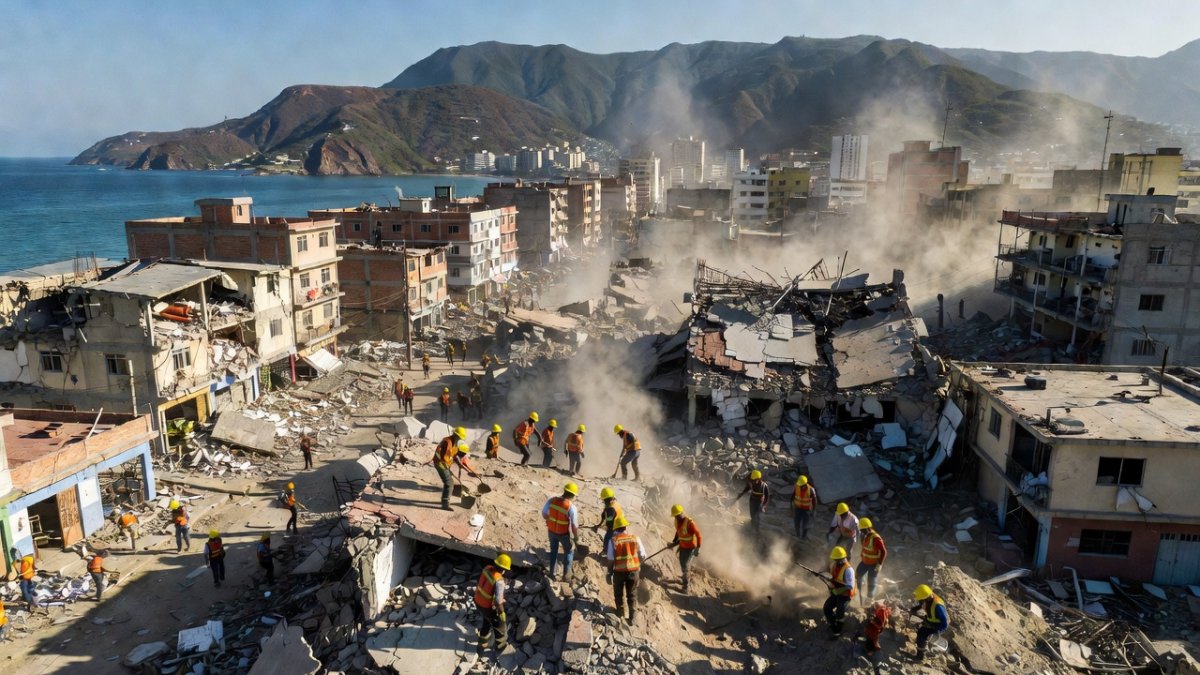
Folks, you need to understand what just slammed into Venezuela. Two massive earthquakes, a 7.2 and a 7.5, struck within 39 seconds of each other on Wednesday, June 24, 2026, ripping through the northern state of La Guaira right outside Caracas. The ground didn't just shake. It tore apart coastal communities like Catia La Mar, Caraballeda, and El Junquito, leaving at least 1,700 people dead and tens of thousands still missing. The United Nations is already ordering 10,000 body bags because the scale is that brutal. This isn't some distant headline. This is a catastrophe unfolding in real time, and the slow response from authorities has left survivors digging with their bare hands while the world watches in horror.
You can feel the urgency in every report coming from the ground. BBC correspondents Orla Guerin and Will Grant are there describing scenes of total devastation. Over 800 buildings collapsed outright, and more than 2,500 structures are damaged across the region. Aftershocks keep coming, including a nerve-fraying 4.6 on Monday, June 29. Interim President Delcy Rodríguez called it the most brutal natural catastrophe in Venezuela's history, and she's right. But words don't pull people from rubble. Action does, and that action arrived far too late for far too many.
The Disaster
The twin quakes hit like a one-two punch no one saw coming. The first 7.2 registered at 10:14 a.m. local time, followed 39 seconds later by the 7.5 that finished the job. Northern La Guaira bore the brunt, with coastal neighborhoods reduced to piles of concrete and twisted rebar. Catia La Mar lost entire blocks. Caraballeda saw apartment towers pancake. El Junquito's hillside homes slid into the sea. UN coordinator Gianluca Rampolla Del Tindaro confirmed at least 2,500 structures affected, a number that keeps climbing as engineers finish assessments.
Five hundred aftershocks have rattled nerves since, each one sending people screaming back into the streets. The 4.6 on June 29 was especially cruel, toppling already weakened walls and reminding everyone that the earth isn't done yet. Casualty figures tell only part of the story. At least 1,700 confirmed dead, but with tens of thousands missing, the true toll could double. Rescue teams are still finding bodies days later. This wasn't just an earthquake. It was two back-to-back monsters that exposed every weakness in Venezuela's infrastructure at once.
Rescue Efforts
Rescue work started with ordinary people using whatever they had. Electricians like Ruben Rojas grabbed crowbars and mallets because the government didn't provide equipment. "The government doesn't give equipment," Rojas said. "They are just like us, working with their hands." Volunteers poured in from across the country, digging through concrete with pickaxes while heavy machinery sat idle or arrived in dribs and drabs. International teams from Mexico and El Salvador finally reached the scene, but locals had already been working around the clock for days.
Miracles kept hope alive. Twenty-one-year-old Aaron Levi Cantillo Vargas was pulled out alive after more than 100 hours trapped in Caraballeda. Salvadoran President Nayib Bukele announced the rescue himself. An 18-day-old baby named Juan David and his mother Dayana Patino were also saved from the rubble. At least 33 people were pulled out alive over that first weekend. Still, the lack of proper tools meant many more didn't make it. Carolyn Zerpa, searching for her father and brother, put it plainly: "You can't really do much with just a pickaxe." Every hour that passed without heavy equipment cost lives.
Government Response
Interim President Delcy Rodríguez deployed 25,000 emergency workers, police, and soldiers, and she introduced a color-coded traffic light system to mark building safety. Temporary camps are going up, but the criticism is fierce and justified. Survivors like Zuly Marín said it straight: "If they had come sooner, many people could have been saved." The response felt reactive rather than prepared, with heavy machinery showing up sporadically instead of immediately. Locals were left to do the government's job while officials held press conferences.
The color-coded system is a start, yet it came after thousands were already buried. Twenty-five thousand personnel sounds like a lot until you realize the affected area spans multiple coastal cities with collapsed infrastructure blocking access. Temporary camps are being set up, but families are still sleeping in the open. The government called this Venezuela's worst natural disaster. That label carries weight only if the response matches the rhetoric. Right now, the gap between words and action remains painfully obvious to everyone on the ground.
International Aid
Help is arriving from abroad, though it took precious days. The United States pledged $300 million, doubling its initial offer, and positioned the USS Fort Lauderdale off the La Guaira coast to deliver supplies directly. China committed $15 million in assistance. The Netherlands is sending a supply vessel. These pledges matter, but they highlight how much more could have been done faster. The American ship is now a floating warehouse of food, water, and medical gear, yet survivors needed those resources on day one, not day four.
UN teams are coordinating body bag deliveries and structural assessments while local volunteers continue the hardest work. Gianluca Rampolla Del Tindaro has been clear about the numbers: 2,500 structures affected and counting. International teams bring expertise and equipment that Venezuela lacked, but coordination remains uneven. The USS Fort Lauderdale's presence shows what rapid deployment looks like when political will exists. Other nations should follow that example instead of waiting for the death toll to climb higher before acting.
Human Stories
Behind every statistic is a name and a family still hoping. Aaron Levi Cantillo Vargas survived 100 hours under concrete because neighbors refused to stop digging. Baby Juan David and his mother Dayana Patino emerged from the rubble as symbols that life can persist even in the darkest moments. Thirty-three others were rescued over one weekend alone, each story a reminder that time is the enemy. Yet for every miracle, there are dozens of families like Carolyn Zerpa's still searching with nothing but a pickaxe and determination.
Ruben Rojas, the electrician who dug with his bare hands, spoke for thousands when he said the government left them to fend for themselves. Zuly Marín's words cut deeper: earlier help would have saved lives. These aren't abstract complaints. They are the lived reality of people who watched their neighborhoods collapse and then watched the official response lag. The human cost isn't measured only in body bags. It's measured in the hours of desperate digging that could have been shortened with proper equipment and faster decisions.
What Comes Next
The immediate crisis isn't over, but the long recovery is just beginning. Venezuela needs sustained international pressure and resources to rebuild, not just one-time pledges. You can help right now. Donate to verified organizations delivering aid on the ground. Contact your representatives and demand they support the full $300 million U.S. commitment plus additional funding for heavy equipment and medical teams. Share the stories of Aaron, Juan David, and the thousands still missing so the world doesn't look away.
Every aftershock is a reminder that the danger hasn't passed. The 500 recorded tremors will continue, and the next big one could strike any moment. Venezuela's people have shown incredible resilience, but resilience alone won't rebuild 800 collapsed buildings or locate tens of thousands of missing loved ones. Action from all of us, from donations to political pressure, is what turns this catastrophe into a story of recovery instead of one more tragedy the world forgot. The time to act is today.
By Jessica Ali, Global 1 NewsThis article was produced with AI-assisted research and editorial support. Reporting is based on sources cited in the article.
What's Your Reaction?
 Like
0
Like
0
 Dislike
0
Dislike
0
 Love
0
Love
0
 Funny
0
Funny
0
 Wow
0
Wow
0
 Sad
0
Sad
0
 Angry
0
Angry
0

Editor-in-Chief at Global1.News. Atlanta-based journalist who cuts through the BS and tells it like it is. Lead anchor, host, and the voice you hear when the spin stops and the truth starts.










Comments (0)