
Houthi Naval Blockade on Saudi Arabia Threatens Global Oil Markets
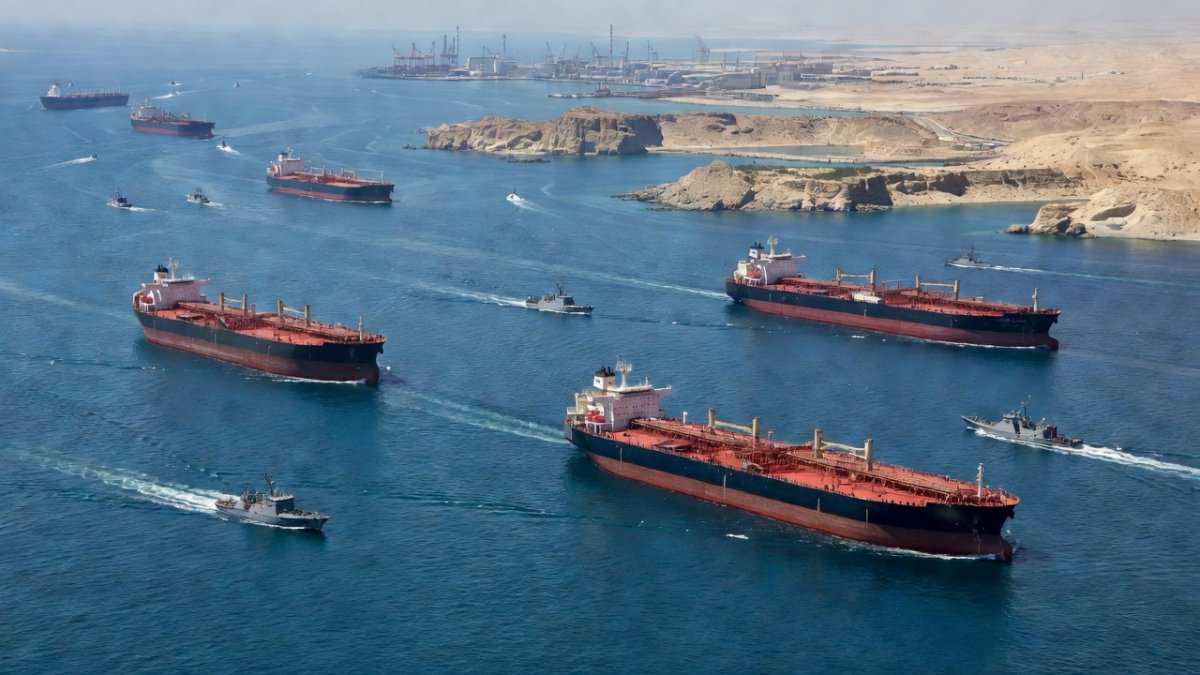
On July 20, 2026, Yemen's Iran-backed Houthi rebels announced an immediate naval blockade of Saudi Arabia at the Bab el-Mandeb strait. Three oil tankers have already reversed course in the southern Red Sea following Houthi warnings, Bloomberg reported July 21. The blockade threatens approximately 6-7 million barrels per day of Saudi crude exports that transit the Red Sea.
Atlanta, Georgia —
What the Houthi Blockade Declaration Entails
The Houthi announcement on July 20 specified a complete naval blockade targeting Saudi-bound traffic through the Bab el-Mandeb strait. Bloomberg and Al-Monitor detailed how rebel leaders cited ongoing regional conflicts as justification for the move. They warned of immediate enforcement against commercial vessels, raising alarms across global shipping lanes that carry vital energy supplies from the Persian Gulf region.
The specific threat extended to any vessel heading to or from Saudi ports, with explicit warnings of military consequences including missile strikes and drone attacks. Houthi statements emphasized that violators would face direct engagement from their naval forces positioned along Yemen's western coast. This declaration marked a sharp escalation from previous harassment tactics to a formal blockade policy.
Al Jazeera reported Saudi condemnation of the move as a direct threat to regional stability and international trade norms. Riyadh described the blockade as an illegal act of aggression backed by Iran, urging immediate international intervention. Saudi officials highlighted risks to energy markets and called for unified diplomatic pressure to reverse the Houthi decision without delay.
The Houthi statement released on July 20 used direct language declaring the blockade "effective immediately" and warning that "any vessel proceeding toward Saudi ports via Bab el-Mandeb will be engaged without further notice." The text, disseminated through maritime radio frequencies and intercepted satellite communications, reached major shipping companies within hours. Operators including Maersk and MSC confirmed receipt of the alerts via their security desks, prompting three tankers already in the southern Red Sea to reverse course before dawn on July 21. The wording left little ambiguity about enforcement timelines or targets.
Bab el-Mandeb: The 20-Mile Chokepoint
The Bab el-Mandeb strait holds critical geographic significance as the narrow passage connecting the Red Sea to the Gulf of Aden. Its name translates to Gate of Tears due to historical shipwrecks in the turbulent waters. The 20-mile-wide channel serves as the sole maritime route for vessels traveling between Europe, Asia, and the Middle East, making it indispensable for global commerce.
Approximately 10 percent of global maritime oil trade transits this passage daily, according to energy analysts. Disruptions here directly affect crude flows from Saudi Arabia, Iraq, and other Gulf producers heading to European and Asian refineries. The strait's strategic value has long drawn attention from naval powers seeking to secure energy supply chains.
Foreign Policy analysis noted that Saudi Arabia's east-west pipeline bypassing the Strait of Hormuz empties into the Red Sea, placing those terminals within Houthi weapons range. This infrastructure carries up to 5 million barrels daily under normal conditions. Any sustained blockade would force costly rerouting around Africa, adding weeks to delivery schedules.
Three Tankers Turn Back: The First Effects
Bloomberg reported that three oil tankers executed U-turns in the southern Red Sea immediately after receiving Houthi warnings on July 20. The vessels, carrying Saudi crude, altered course to avoid potential confrontation near the strait. This rapid response signaled the blockade's initial effectiveness in deterring commercial traffic through the vital waterway.
Shipping companies reacted by suspending new bookings through the Red Sea while insurance premiums surged for any remaining voyages. Reuters noted that war risk coverage costs increased by 300 percent within hours of the announcement. Operators cited safety concerns and potential vessel seizures as primary reasons for halting operations in the area.
These developments echo earlier Houthi Red Sea attacks that began in October 2023, when rebels targeted commercial ships in solidarity with Gaza. The Guardian documented over 50 incidents since then, including missile strikes on vessels linked to Israel or the United States. The current blockade represents a coordinated expansion of those tactics into a systematic closure.
Saudi Arabia's Response
Saudi Arabia's foreign ministry issued a statement via Al Jazeera condemning the blockade as an unacceptable violation of international law. Officials in Riyadh labeled the action a direct assault on global energy security and demanded swift condemnation from the United Nations Security Council. The kingdom vowed to protect its economic interests through all available diplomatic channels.
Saudi military options include deploying additional naval assets to escort tankers and conducting precision strikes against Houthi coastal launch sites. The Guardian reported that Riyadh has already activated joint defense protocols with regional allies. Defensive measures focus on clearing safe corridors through the southern Red Sea while monitoring Houthi radar activity.
Saudi efforts to secure alternative export routes center on expanding the east-west pipeline capacity and increasing shipments from the Persian Gulf terminals. Al-Monitor sources indicated that officials are negotiating emergency access through UAE and Omani ports. These measures aim to maintain export volumes even if the Bab el-Mandeb remains closed for extended periods.
Iran's Dual-Chokepoint Strategy
Reuters analysts described Iran's existing pressure on the Strait of Hormuz as its stronger strategic lever, capable of halting nearly 20 million barrels of daily oil exports. Tehran has repeatedly threatened closure during past tensions with the West. This capability gives Iran significant leverage over global energy prices and Western economies dependent on Gulf crude.
Foreign Policy characterized the Bab el-Mandeb as Iran's last major reserve chokepoint, activated through Houthi proxies when Hormuz pressure alone proves insufficient. The dual approach allows Tehran to threaten two critical passages simultaneously, amplifying economic disruption without direct Iranian naval involvement in either location.
The connection to Iran's broader proxy strategy spans multiple fronts, including support for groups in Iraq, Syria, Lebanon, and Yemen. Reuters reporting highlighted how these networks enable Tehran to project power across the Middle East while maintaining plausible deniability. Coordinated actions at both straits would test international response capabilities across several theaters at once.
Global Market and Energy Security Implications
Market reactions included immediate oil price spikes of $8 per barrel within the first trading session after the announcement. Shipping stocks for companies with Red Sea exposure fell sharply as investors priced in higher operational risks. Bloomberg data showed Brent crude climbing above $95 amid concerns over sustained supply disruptions from Saudi Arabia.
Analysts quoted by Reuters and USA Today warned of a potential dreadful shock to oil prices if the blockade persists beyond two weeks. They projected possible surges toward $120 per barrel under worst-case scenarios involving full enforcement. Such increases would ripple through global supply chains and strain economies already managing post-pandemic recovery.
Implications for US gasoline prices include projected increases of 30 to 50 cents per gallon at the pump within a month. The US administration's response is being closely watched by markets for signs of naval deployment or sanctions escalation. Officials have indicated they are coordinating with allies to assess options that protect energy flows without triggering wider conflict.
Brent crude rose $7.80 per barrel this week, closing at $96.45 on July 22 after opening at $88.65 the prior session. Analysts at Goldman Sachs and JPMorgan Chase now forecast sustained prices above $100 if the blockade lasts beyond ten days, citing risks to 6 million barrels of daily Saudi exports. The surge arrives just before the August US CPI release, with economists warning that a 0.4-percentage-point increase in energy components could push headline inflation back above 3 percent and complicate Federal Reserve rate decisions.
Historical Context: From October 2023 to Today
Houthi Red Sea attacks began in October 2023 during the Israel-Hamas war, according to Reuters and BBC timelines. Rebels initially targeted vessels they claimed had Israeli connections, using drones and anti-ship missiles launched from Yemen's coast. The campaign quickly expanded to include ships from multiple nations, disrupting established trade patterns.
US and UK strikes on Houthi positions occurred in early 2024 in response to escalating attacks on commercial shipping. These operations targeted radar installations and launch sites but failed to halt the campaign entirely. The Guardian noted that Houthi capabilities recovered quickly, allowing continued harassment of vessels throughout 2025.
The escalation trajectory moved from individual ship attacks to the declared blockade announced on July 20, 2026. Foreign Policy traced how repeated provocations and limited international responses emboldened Houthi leaders to pursue a comprehensive closure. This progression reflects growing confidence in their ability to control access to the southern Red Sea.
What Comes Next
Potential US and naval coalition response options include expanded patrols, escort missions for tankers, and targeted strikes on Houthi naval infrastructure. Reuters sources indicated discussions among Western navies about forming a dedicated Red Sea task force. Such measures would aim to reopen safe passage while avoiding direct confrontation with Iranian forces.
Diplomatic off-ramps involve international mediation through Oman or the United Nations, focusing on de-escalation guarantees. Al Jazeera reported early contacts between regional actors seeking to prevent further economic damage. These efforts emphasize restoring normal transit in exchange for security assurances and humanitarian concessions in Yemen.
The timeline for Saudi Arabia sustaining exports under an enforced blockade is estimated at four to six weeks before significant shortfalls emerge. Foreign Policy analysts stressed that prolonged closure would force major production cuts and strain global inventories. Readers should stay informed through reliable sources as developments unfold rapidly in the coming days.
By Jessica Ali, Global 1 News
Diplomatic off-ramps center on Oman, which has maintained open channels with Houthi leaders, and UN Special Envoy Hans Grundberg, who has scheduled emergency talks in Muscat. China is also positioned to mediate given its heavy reliance on Saudi crude; Beijing has already urged restraint in private communications with Riyadh and Tehran. These efforts aim to secure a temporary suspension of the blockade in exchange for renewed humanitarian access and security guarantees, potentially averting a prolonged energy shock.
This article was produced with AI-assisted research and editorial support. Reporting is based on sources cited in the article.
What's Your Reaction?
 Like
0
Like
0
 Dislike
0
Dislike
0
 Love
0
Love
0
 Funny
0
Funny
0
 Wow
0
Wow
0
 Sad
0
Sad
0
 Angry
0
Angry
0

Editor-in-Chief at Global1.News. Atlanta-based journalist who cuts through the BS and tells it like it is. Lead anchor, host, and the voice you hear when the spin stops and the truth starts.













Comments (0)