
US Strikes Iran After Cargo Ship Attack Threatens Fragile Ceasefire
In a recent BBC News report, the United States launched military strikes against Iranian targets in response to a drone attack on a cargo ship in the Strait of Hormuz, marking the most serious test yet of the fragile interim understanding reached between Washington and Tehran just one week ago. The strikes, which targeted missile and radar installations along Iran's coastline,
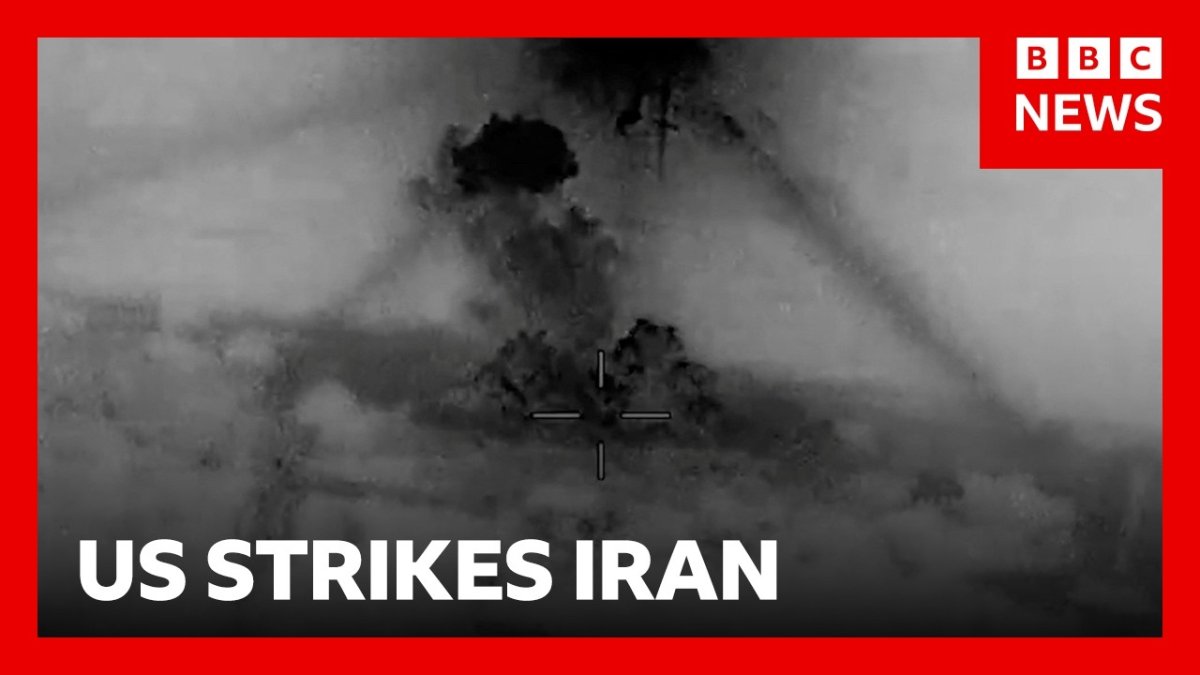
In a recent BBC News report, the United States launched military strikes against Iranian targets in response to a drone attack on a cargo ship in the Strait of Hormuz, marking the most serious test yet of the fragile interim understanding reached between Washington and Tehran just one week ago. The strikes, which targeted missile and radar installations along Iran's coastline, concluded within one hour of US Central Command announcing the operation.
Headline: US Strikes Iran After Cargo Ship Attack Threatens Fragile Ceasefire
Moscow – 27 June 2026 — The Trump administration's week-old interim understanding with Tehran faced its most severe test on Friday as US warplanes struck Iranian missile and radar sites in retaliation for a drone attack on commercial shipping in the Strait of Hormuz.
The Drone Strike That Broke the Ceasefire
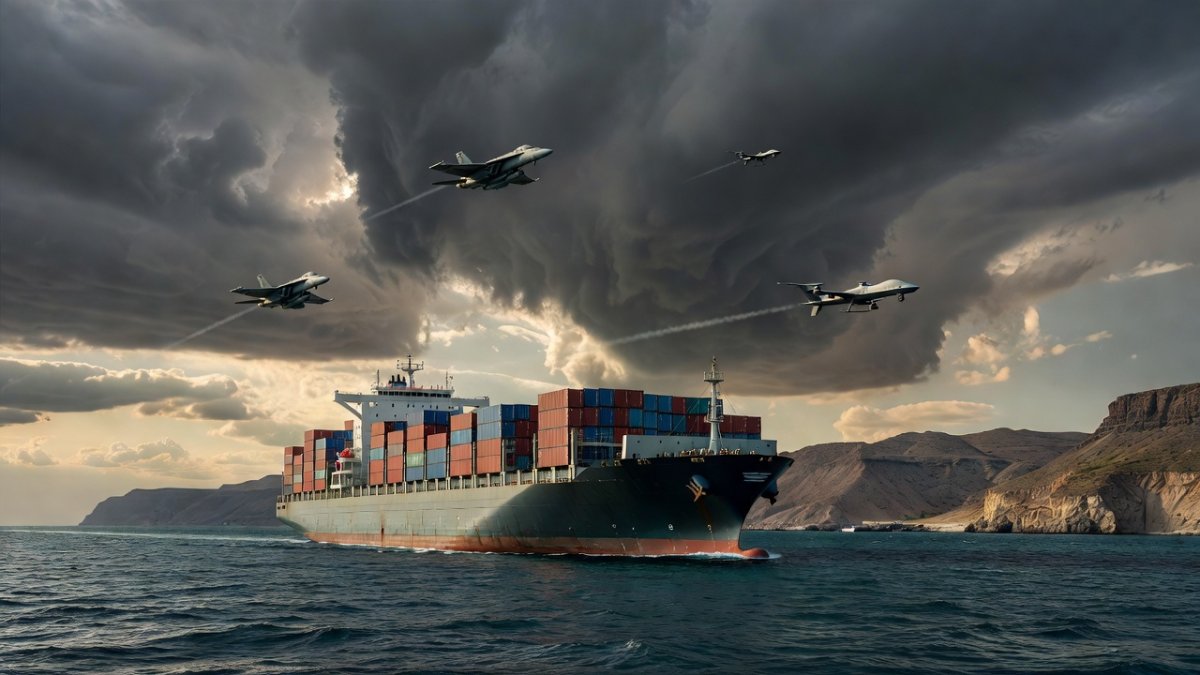
The sequence began on Thursday when a projectile struck a container ship off the coast of Oman in the Strait of Hormuz. The British military confirmed the incident and reported no injuries among the crew. On Friday, US Central Command responded by striking missile and drone launch sites along with coastal radar installations inside Iran. The operation lasted roughly one hour from the moment CENTCOM publicly announced the action until its completion. These targets were selected to degrade Iran’s capacity to repeat such attacks on commercial traffic. The BBC News video embedded above shows the precise locations hit and the immediate aftermath visible from satellite imagery. Shipping lanes in the narrow waterway remained open but under heightened alert as vessels monitored for further projectiles. CENTCOM statements emphasized that the response was limited and proportionate to the single drone incident the previous day. Additional details from the operation indicate that precision-guided munitions were directed at three specific missile batteries and two radar arrays positioned along the Iranian coastline, with real-time coordination between naval assets in the Gulf and air assets launched from regional bases. CENTCOM confirmed that all strikes achieved their intended effects without collateral damage to civilian infrastructure.
President Trump addressed reporters at the White House shortly after the strikes concluded. He stated, “I don't like the fact that they took a shot yesterday, actually four of them.” When pressed on why military action occurred while talks appeared to be progressing, he replied that the situations were “a little bit different.” The briefing ended abruptly as aides ushered journalists from the room, leaving several questions unanswered. This exchange highlighted the tension between Washington’s public messaging on diplomacy and its swift military reaction to the maritime incident.
Tehran's Calculated Response
Ebrahim Azizi, head of the Iranian parliament’s national security commission, posted on social media that the Strait of Hormuz remains under Iranian governance. He framed the episode as “ceasefire management, not a violation” and urged the United States to “respect the rules” while warning against mistaking control for escalation. Tehran’s statement positioned the original drone attack as a defensive measure tied to oversight of the waterway rather than an attempt to restart broader conflict. Iranian officials stressed that all vessels must follow routes approved by Tehran to avoid miscalculation. Behind the public statements, Iranian domestic politics played a central role, with hardline factions within parliament pressing the government to demonstrate resolve against perceived US encroachment. The IRGC maintained a firm stance that any perceived weakness could embolden further external pressure, influencing the measured tone of official responses that avoided outright rejection of future talks.
Vice President JD Vance countered from Washington that Iran should “pick up the phone if there are disagreements.” He added that “violence will be met with violence,” signaling that further incidents would trigger additional US responses. The exchange between Azizi and Vance illustrated how both capitals used measured language to address domestic audiences while leaving limited room for continued communication. Observers noted that neither side closed the door to future talks despite the military action.
The Strait of Hormuz — A Waterway Under Pressure
In recent days approximately 115 ships have successfully transited the Strait of Hormuz while roughly 500 vessels remain stranded at anchorages on either side. On Wednesday, 78 vessels completed passage, the highest daily total recorded since the conflict began yet still below the pre-war average of more than 130 transits. Marine data firm Windward described the situation as “a week of widening commercial confidence has hit its first significant test.” After the Thursday attack, only 43 transits were logged and at least two tankers reversed course rather than risk further exposure. These figures demonstrate how quickly shipping patterns react to even a single confirmed strike.
The UN International Maritime Organization had been exploring an alternative route near Oman, but Iran continues to insist that all traffic follow Tehran-approved corridors. Lloyd’s List Intelligence tracking showed several vessels altering speed or anchoring after the incident, reflecting the caution now embedded in commercial routing decisions. The combination of reduced daily transits and the reversal of tankers underscores the strait’s continued vulnerability to any disruption, regardless of the interim understanding reached the previous week. Economically, the drop in transits has already driven insurance premiums for Gulf-bound tankers up by an estimated 25 percent in a single day, adding millions in costs for shippers and raising concerns about knock-on effects for global oil supply chains. Major energy firms have begun rerouting select cargoes around the Cape of Good Hope, extending voyage times by up to two weeks and tightening available tonnage in the spot market.
The Fragile Interim Deal
One week earlier, Washington and Tehran reached an interim understanding that opened a 60-day window for negotiations on a permanent arrangement. The talks were expected to cover limits on Iran’s uranium stockpile and arrangements for safe passage through the Strait of Hormuz. Both sides had presented the agreement as a pragmatic pause rather than a comprehensive settlement, with the explicit goal of preventing further escalation while core issues remained unresolved. The 60-day period was viewed by diplomats as a narrow but usable timeframe for confidence-building measures. The negotiation process is expected to unfold through a series of closed-door sessions in Geneva and Muscat, with special envoys from the United States, Iran, Oman, and the European Union rotating through technical working groups focused on maritime de-escalation and nuclear transparency. Progress will be measured against weekly benchmarks, including verification of reduced uranium enrichment levels and joint monitoring of shipping lanes.
Following the Friday strikes, the UN International Maritime Organization suspended planned evacuation operations for stranded crews. The IMO secretary-general stated that evacuations would not resume until verifiable guarantees of safety could be obtained from all parties. This decision directly affects hundreds of seafarers waiting for relief and illustrates how quickly operational cooperation can be paused when military incidents occur inside the negotiation window.
Russia, Energy, and Geopolitical Implications
From the Kremlin’s perspective, the renewed tension in the Strait of Hormuz presents both risks and opportunities. Russian officials have long argued that stable energy corridors benefit all major powers, yet Moscow also sees advantage in a Gulf that remains divided and partially unstable. Higher oil prices resulting from any prolonged disruption would support Russia’s export revenues at a time when Western sanctions continue to constrain its economy. At the same time, Russian diplomats have quietly urged both Washington and Tehran to avoid actions that could close the strait entirely, recognizing that a complete shutdown would damage global markets including Russia’s own customers. Russia’s energy export strategy centers on maximizing crude shipments to Asian buyers via the Northern Sea Route and expanded pipeline capacity to China, while coordinating closely with OPEC+ partners to manage output quotas that offset any Gulf volatility. Moscow has signaled willingness to increase production flexibility if prices spike, aiming to balance revenue gains against the risk of market oversupply once tensions ease.
China, as the largest importer of Gulf crude, has coordinated with Moscow on energy security messaging. Beijing’s state media have called for restraint while emphasizing the need for secure sea lanes. The combination of Russian and Chinese statements reflects a shared interest in preventing a wider conflict that would raise energy costs and complicate their own strategic calculations in the region. European capitals have echoed similar concerns, stressing the importance of keeping commercial traffic flowing without endorsing either side’s military moves.
Analysis and Outlook
The next 60 days will test whether the interim understanding can absorb this shock. Iran’s description of the episode as “ceasefire management” suggests Tehran is probing boundaries without intending a full return to open hostilities. The Vance-Azizi exchange shows both governments calibrating statements for internal audiences while preserving the possibility of renewed contact. Analysts suggest this pattern of limited action followed by restrained rhetoric may become the operating norm inside the negotiation period, provided neither side perceives a direct challenge to core interests.
The cargo ship attack itself appears to have been a calculated probe rather than an impulsive act. By striking a single vessel without causing casualties, Iran tested the limits of the new arrangement. The coming days will reveal whether the US response has restored deterrence or whether additional probes will follow. All parties continue to emphasize the value of keeping diplomatic channels open even as military signaling continues in the background. Over the next two months, three main scenarios are under discussion among analysts: a rapid return to quiet diplomacy if both sides treat the strikes as an isolated correction; a series of tit-for-tat incidents that erode trust but stop short of open conflict; or a breakdown that collapses the 60-day window entirely if either capital concludes the other is negotiating in bad faith. Each path carries distinct implications for global energy markets and regional stability.
By Irina Volkov, Staff Writer
This article was produced with AI-assisted research and editorial support. Reporting is based on sources cited in the article.
What's Your Reaction?
 Like
0
Like
0
 Dislike
0
Dislike
0
 Love
0
Love
0
 Funny
0
Funny
0
 Wow
0
Wow
0
 Sad
0
Sad
0
 Angry
0
Angry
0

Russia/Eastern Europe Correspondent at Global1.News. Covering Russian politics, energy, security, and the shifting dynamics of the post-Soviet space. Provides clear-eyed analysis on one of the world's most opaque regions.












Comments (0)