
US-Iran Peace Deal Shakes Netanyahu's Political Future
In a recent analysis from Middle East Eye's YouTube video titled "Is US-Iran deal the nail in Netanyahu's coffin?", commentator Nomi Bar Yaacov describes the agreement as a strategic defeat for the Israeli leader, highlighting how the June 15, 2026, announcement has intensified his political vulnerabilities amid ongoing regional tensions. The US-Iran Peace Deal and Its Core Pro
In a recent analysis from Middle East Eye's YouTube video titled "Is US-Iran deal the nail in Netanyahu's coffin?", commentator Nomi Bar Yaacov describes the agreement as a strategic defeat for the Israeli leader, highlighting how the June 15, 2026, announcement has intensified his political vulnerabilities amid ongoing regional tensions.
The US-Iran Peace Deal and Its Core Provisions
The US-Iran peace deal announced on June 15, 2026, brought an immediate end to months of conflict involving the United States and Israel against Iran. This agreement established an immediate ceasefire across affected areas, allowing for a reduction in hostilities that had previously disrupted vital shipping routes and heightened military engagements. The phased sanctions relief component offers gradual easing of economic pressures on Iran, tied to compliance with outlined steps, while the nuclear talks framework sets the stage for renewed diplomatic discussions on Iran's nuclear program without immediate preconditions for dismantlement.
Central to the deal is the reopening of the Strait of Hormuz, which facilitates the flow of oil and goods through this critical waterway, easing global energy concerns that arose during the preceding months of tension. Oman played a mediating role in key aspects of these negotiations, drawing on its established position as a neutral facilitator in Gulf diplomacy to bridge gaps between the involved parties. These elements collectively mark a shift toward de-escalation, though the agreement stops short of addressing several longstanding Israeli security priorities that had been publicly emphasized in prior weeks.
Importantly, the deal includes no restrictions on Iran's ballistic missiles, as noted in reporting from The Guardian on June 15 by Patrick Wintour, leaving this aspect of Iran's military capabilities unaddressed in the final text. Similarly absent are any limits on Iran's support for groups such as Hezbollah and Hamas, preserving Tehran's regional alliances without new constraints. There is also no requirement for regime change in Iran, allowing the existing government structure to remain intact as talks proceed.
The civilian populations in the region bore significant costs throughout the preceding conflict, with disruptions to daily life, economic hardships, and safety concerns affecting communities across borders. This human dimension underscores the relief that the ceasefire brings, yet it also reveals how ordinary people often shoulder the burdens of high-level geopolitical maneuvering without direct input into the outcomes.
Netanyahu's Political Stance and Recent Insistence
Israeli Prime Minister Benjamin Netanyahu had insisted as recently as June 11, 2026, that provisions addressing Iran's ballistic missiles, support for Hezbollah and Hamas, and a push for regime change would form essential parts of any agreement. These demands reflected his long-standing position on confronting Iranian influence, yet their exclusion from the final deal has created a stark contrast with his earlier public statements. The absence of these elements now positions the agreement as falling short of the comprehensive security guarantees he had advocated.
Former Israeli negotiator Daniel Levy has characterized the situation as an existential moment for Netanyahu, emphasizing how the deal challenges the foundations of his approach to regional security and diplomacy. This assessment aligns with broader views that the agreement undermines the narrative of unyielding pressure on Iran that Netanyahu had cultivated over time. Such developments force a reevaluation of strategies that previously centered on military and sanctions-based confrontations.
The timing of the deal, coming after sustained conflict, amplifies questions about the effectiveness of Netanyahu's insistence on maximalist terms. By not securing the inclusions he highlighted days earlier, the outcome exposes gaps between stated objectives and achievable results through the mediated process. This discrepancy has fueled internal debates within Israel about leadership accountability in foreign policy matters.
Analysts note that Netanyahu's prior positions were rooted in concerns over Iran's expanding influence, yet the deal's focus on ceasefire and talks represents a pragmatic turn that sidelines those hardline elements. The resulting political strain highlights how external diplomatic breakthroughs can rapidly alter domestic power dynamics without direct consultation from all stakeholders.
Domestic Israeli Reactions and Coalition Pressures
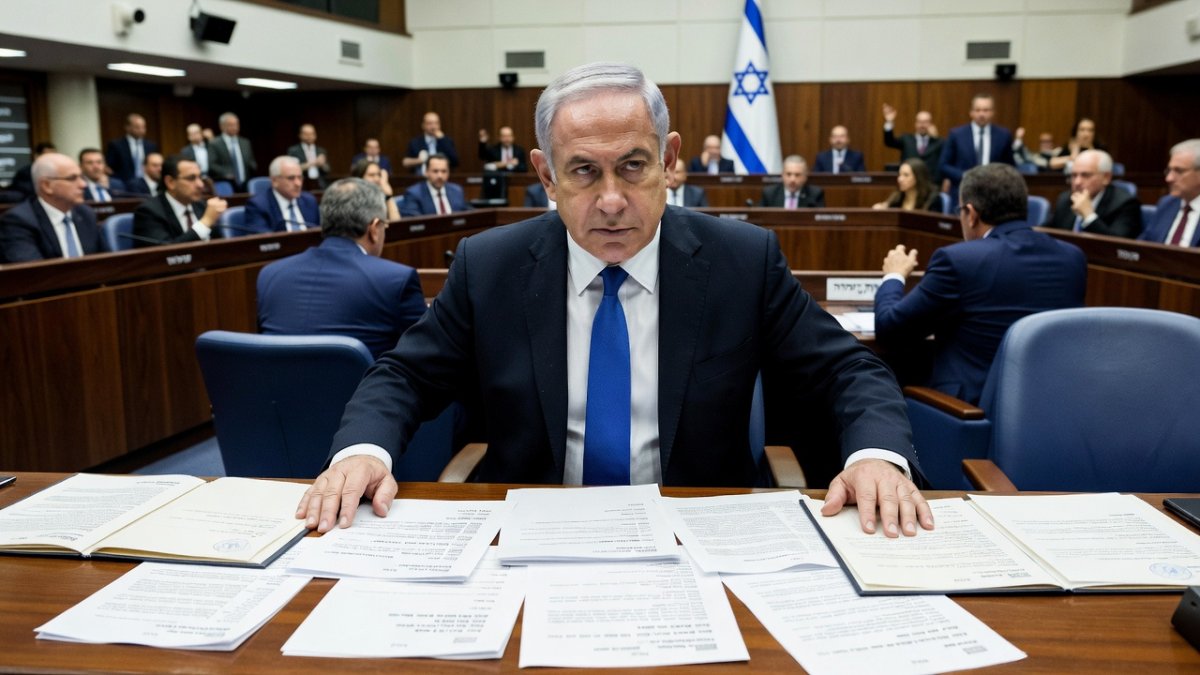
Reporting from the Boston Herald and the Associated Press on June 15, 2026, captured widespread anger among Israelis who have lashed out at Netanyahu in response to the interim peace deal. Public sentiment reflects frustration over perceived concessions that do not align with expectations built during the conflict period, leading to vocal criticisms of the government's handling of negotiations. This backlash manifests in protests and statements questioning the leadership's ability to deliver on security promises.
Netanyahu's far-right coalition partners have responded by demanding a harder line in future dealings, insisting on measures that go beyond the current agreement's scope. These partners, who form a critical base for his government, view the deal's limitations as a weakening of Israel's stance, prompting calls for renewed assertiveness against Iranian activities. Such pressures risk fracturing the coalition if not addressed through compensatory domestic policies.
Nomi Bar Yaacov, in the Middle East Eye discussion, frames the deal as a strategic defeat that erodes Netanyahu's political standing at home. This perspective draws attention to how the agreement's terms, negotiated with involvement from multiple regional players, leave little room for the confrontational posture that had defined his tenure. The resulting crisis extends beyond immediate policy disagreements to questions of long-term viability for his administration.
The deal's failure to incorporate restrictions on missiles or proxy support has intensified scrutiny from opposition voices within Israel, who argue that opportunities for stronger outcomes were missed. This internal division underscores the challenges of maintaining unified support when international agreements prioritize de-escalation over maximal demands. Civilian expressions of discontent further illustrate the personal toll on public trust in leadership during such transitions.
The Role of Regional Actors in the Negotiations
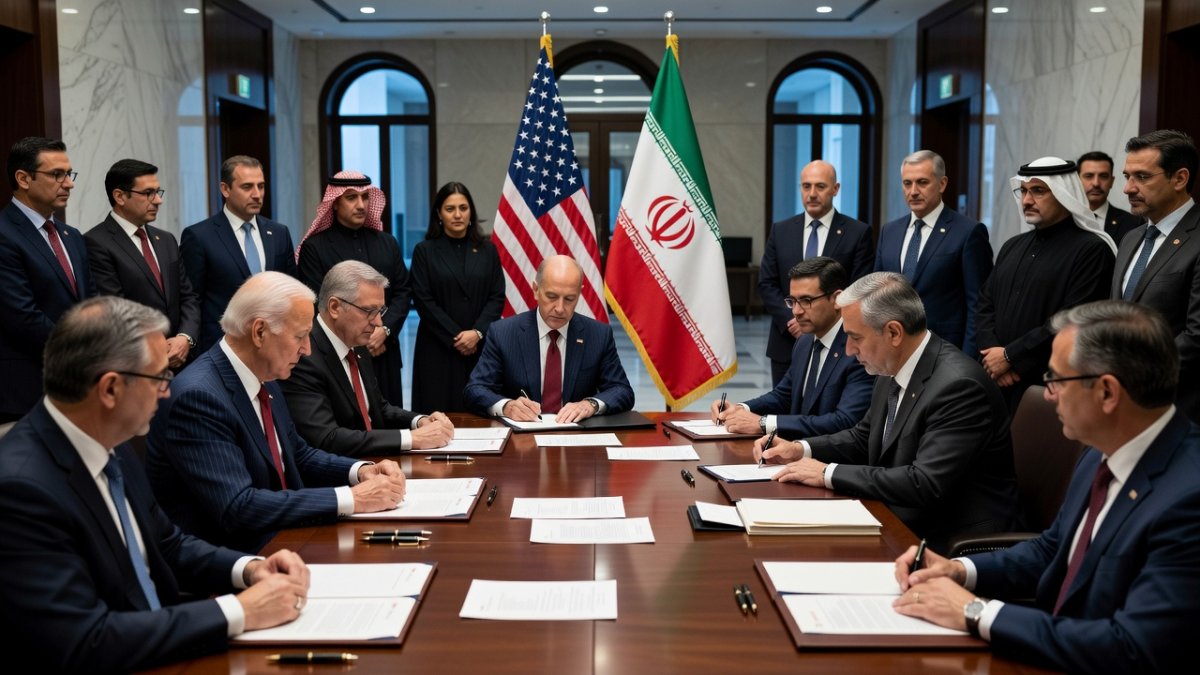
Saudi Arabia, Qatar, and the United Arab Emirates coordinated closely during the endgame of the negotiations, contributing to the framework that enabled the June 15 announcement. Their involvement helped shape aspects of the ceasefire and sanctions relief, drawing on shared interests in stabilizing energy markets and reducing conflict spillovers. This coordination reflects evolving Gulf dynamics where pragmatic engagement with Iran takes precedence over prolonged confrontation.
Oman's mediation efforts proved instrumental in facilitating discreet communications that advanced the talks toward resolution. By leveraging its geographic position and history of balanced relations, Oman helped bridge divides that might otherwise have prolonged the military phase. The resulting deal emphasizes practical steps like the Strait of Hormuz reopening, which benefits multiple economies in the region beyond the primary signatories.
These regional contributions highlight a collective interest in avoiding escalation that could draw in broader alliances or disrupt trade flows. The absence of ballistic missile restrictions or limits on support for Hezbollah and Hamas in the agreement suggests that participating states prioritized achievable ceasefires over comprehensive containment measures. Such choices indicate a preference for incremental diplomacy amid complex proxy networks.
The involvement of these actors also signals shifting alliances that may influence future interactions with Iran, potentially opening avenues for economic cooperation once sanctions phases advance. For populations affected by prior tensions, this coordination offers prospects of reduced volatility, though it leaves unresolved issues related to non-state actors in the wider Middle East landscape.
Consequences for Palestinian Communities and Rights
The US-Iran deal does nothing to alter ongoing operations in Gaza or plans for West Bank annexation, leaving Palestinian communities without new protections or diplomatic leverage from this agreement. Palestinian civil society has interpreted the deal as further marginalizing their rights, as it focuses on bilateral US-Iran issues without integrating calls for justice or self-determination. This omission perpetuates a pattern where regional accords sideline core Palestinian concerns in favor of other priorities.
Historical context reveals how similar diplomatic initiatives have often bypassed Palestinian voices, resulting in prolonged occupation and restricted movement that affect daily existence in the territories. The current deal's emphasis on nuclear talks and sanctions relief, while excluding missile or proxy limitations, does little to address the interconnected nature of conflicts involving groups like Hamas. Consequently, Palestinian advocates see this as a reinforcement of existing power imbalances rather than a step toward equity.
Human rights perspectives emphasize the need for inclusive frameworks that recognize Palestinian experiences of displacement and restriction, yet the June 15 agreement maintains a narrow scope that excludes such elements. Communities in Gaza continue to navigate the aftermath of conflict without relief tied to this deal, underscoring how external negotiations can overlook localized impacts. This marginalization fosters a sense of isolation among civil society groups striving for recognition in broader peace processes.
By not linking the ceasefire to advancements in Palestinian rights, the deal risks entrenching conditions that have long fueled regional instabilities. Analytical views connect this exclusion to wider policy trends where security arrangements favor state actors over non-state or occupied populations, deepening the human costs borne by those least represented at the table.
The Human Cost of the Conflict and Path Forward
Civilian populations across the affected areas endured substantial hardships during the months leading to the June 15 deal, including economic strains from sanctions and disruptions from military actions. These experiences highlight the disconnect between high-level agreements and ground-level realities, where families face ongoing challenges in accessing resources and safety. The phased nature of sanctions relief may gradually alleviate some pressures, but immediate human needs remain pressing in the interim.
Palestinian civil society continues to advocate for their rights amid perceptions that the deal reinforces their marginalization, connecting the agreement's terms to broader patterns of exclusion in Middle East diplomacy. This viewpoint draws on historical precedents where deals involving Iran and Western powers have not translated into tangible improvements for occupied territories. The lack of provisions addressing Gaza operations or annexation plans exemplifies this gap, leaving advocacy efforts to navigate unchanged obstacles.
Looking ahead, the nuclear talks framework offers a potential avenue for sustained dialogue, yet its success depends on addressing underlying tensions that the current deal leaves untouched. Regional coordination by Saudi Arabia, Qatar, and the UAE may support implementation, but incorporating perspectives from affected communities could strengthen long-term stability. Human rights considerations urge that future steps prioritize civilian well-being alongside state security interests.
The overall impact of the agreement, as analyzed in various reports, points to a recalibration of strategies that acknowledges the limits of prior confrontational approaches. For those impacted by the conflict's costs, this transition represents cautious hope tempered by the recognition that unresolved issues, particularly concerning Palestinian rights, require dedicated attention beyond the June 15 framework.
By Fatima Al-Rashid, Staff WriterThis article was produced with AI-assisted research and editorial support. Reporting is based on sources cited in the article.
What's Your Reaction?
 Like
0
Like
0
 Dislike
0
Dislike
0
 Love
0
Love
0
 Funny
0
Funny
0
 Wow
0
Wow
0
 Sad
0
Sad
0
 Angry
0
Angry
0
Gulf/MENA Correspondent at Global1.News. Based in Doha, covering Gulf politics, energy markets, diplomacy, and development across the Middle East and North Africa. Tracks the economic transformation of the Gulf states.











Comments (0)