
US-Iran Burgenstock Talks Yield MoU on Nuclear Inspectors, Lebanon Ceasefire
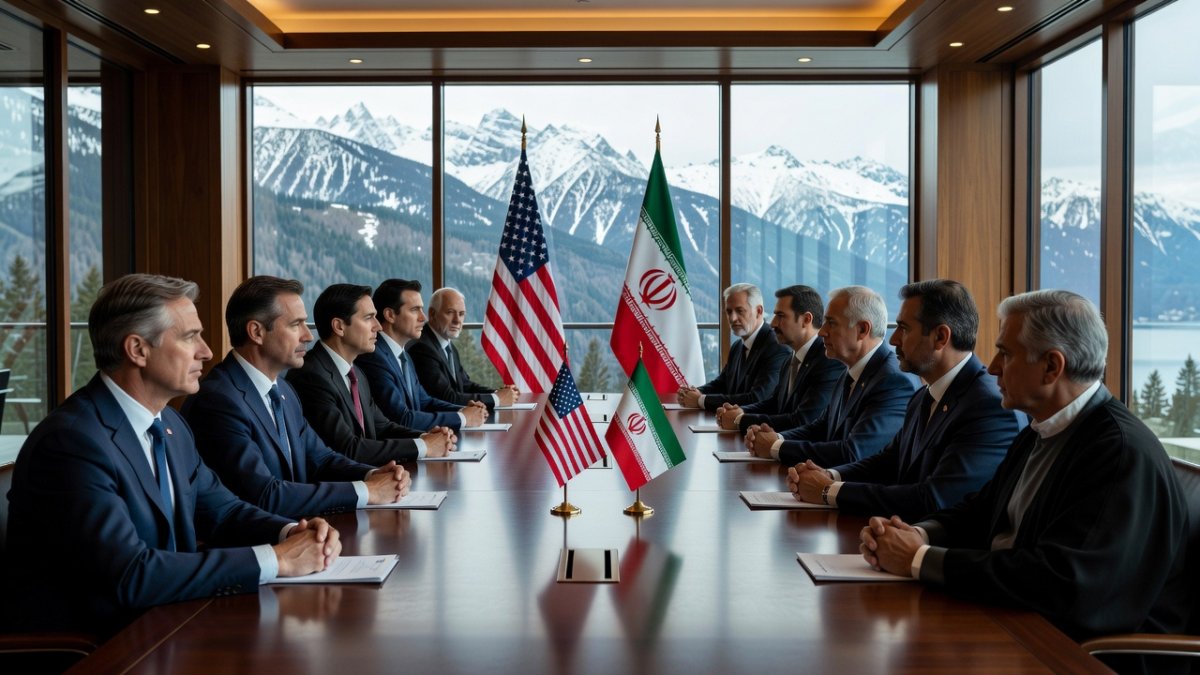
Regional Stakes in the Bürgenstock Talks The Bürgenstock negotiations arrive at a critical juncture following President Trump’s February 28, 2026 announcement of major combat operations against Iran, executed through joint US-Israeli strikes. These talks carry implications extending far beyond bilateral relations, encompassing energy routes, proxy conflicts, and alliance struct
Regional Stakes in the Bürgenstock Talks
The Bürgenstock negotiations arrive at a critical juncture following President Trump’s February 28, 2026 announcement of major combat operations against Iran, executed through joint US-Israeli strikes. These talks carry implications extending far beyond bilateral relations, encompassing energy routes, proxy conflicts, and alliance structures across the Middle East. With six American service members killed in an Iranian drone strike in Kuwait during March, the stakes involve immediate de-escalation alongside longer-term containment of nuclear ambitions. Iran’s leadership, represented by Foreign Minister Abbas Araghchi and Parliament Speaker Mohammad Bagher Qalibaf, seeks relief from sanctions while preserving strategic depth in Lebanon and Iraq. The United States, led by Vice President JD Vance, aims to reassert deterrence without triggering wider war. Gulf Arab states watch closely, balancing security cooperation with Washington against fears of renewed Iranian influence. The involvement of international nuclear inspectors signals potential revival of verification mechanisms, yet regional actors remain wary of any agreement that could embolden Tehran’s regional networks. These dynamics intersect with ongoing tensions in Yemen and Syria, making Bürgenstock a focal point for broader stability efforts.
The Memorandum: Terms and Immediate Impact
The signed memorandum of understanding establishes several concrete commitments. Iran consented to the immediate return of international nuclear inspectors, reversing prior restrictions on IAEA access. The document mandates the immediate and permanent termination of military operations on all fronts, explicitly including Lebanon, thereby linking the agreement to Hezbollah’s activities. Discussions on the Strait of Hormuz produced a commitment from Qalibaf that Iran would manage passage in accordance with international law, addressing concerns over potential blockades. Provisions also cover the phased release of frozen Iranian assets and regulated resumption of oil sales under monitored conditions. These terms produced rapid effects, including a cessation of cross-border exchanges reported within days. The agreement’s enforcement mechanisms remain tied to reciprocal actions, with the United States conditioning further sanctions relief on verified compliance. Regional observers note that the inclusion of Lebanon-related clauses directly affects Hezbollah’s operational freedom, potentially altering the balance of power in Beirut. While the MoU avoids comprehensive nuclear limits, its immediate military pause offers a narrow window for confidence-building measures.
From JCPOA to Confrontation: A Decade of Escalation
The trajectory from the 2015 Joint Comprehensive Plan of Action to the current confrontation reflects repeated cycles of diplomacy and rupture. Under the original JCPOA, Iran accepted limits on uranium enrichment in exchange for sanctions relief, yet subsequent US withdrawal in 2018 triggered renewed enrichment and regional proxy activity. Iranian support for groups in Lebanon, Syria, and Yemen intensified, prompting Israeli strikes and US sanctions targeting oil exports. By early 2026, enrichment levels had exceeded JCPOA thresholds, and Tehran’s ballistic missile program advanced without constraint. The February 28 announcement of joint US-Israeli operations marked a sharp escalation, responding to attacks on shipping and the Kuwait drone incident that killed six American personnel. Araghchi and Qalibaf now navigate a landscape where prior diplomatic channels have narrowed. The Bürgenstock MoU represents an attempt to arrest this decade-long spiral without restoring the full JCPOA framework. Historical patterns suggest that verification disputes and regional proxy behavior will test any new arrangement, particularly given differing interpretations of “permanent termination” of operations in Lebanon.
Strait of Hormuz and Global Energy Security
Approximately 20 percent of global oil trade transits the Strait of Hormuz, rendering Iranian statements on maritime management a matter of international concern. Qalibaf’s assurance that passage would follow international law aims to reassure markets after months of heightened tensions. The MoU’s provisions on oil sales resumption could incrementally increase Iranian exports, currently constrained by sanctions, potentially adding several hundred thousand barrels per day under monitored conditions. Energy analysts note that even modest increases affect pricing benchmarks in Asia and Europe. However, the agreement leaves unresolved questions of inspection regimes for tankers and coordination with Oman and the UAE on navigation safety. The Kuwait drone strike in March underscored vulnerabilities beyond the strait itself, highlighting risks to US forward deployments. Broader energy security therefore depends on sustained Iranian adherence to the MoU’s maritime clauses alongside parallel diplomatic efforts by Secretary of State Marco Rubio in Gulf capitals. Any perceived backsliding could prompt renewed naval escorts and insurance spikes, directly impacting global supply chains.

Gulf Arab Calculus and Rubio’s Regional Tour
Gulf Cooperation Council states approach the Bürgenstock outcome with measured caution. Saudi Arabia, the UAE, and Bahrain have expanded security ties with Washington while maintaining economic channels to Tehran. Secretary of State Marco Rubio’s scheduled visits to the UAE, Kuwait, and Bahrain this week focus on reassuring partners that the MoU does not diminish US commitments to counter Iranian proxy threats. Kuwait, still processing the March drone attack that killed six American service members, seeks clearer assurances on air defense integration. The UAE emphasizes protection of its energy infrastructure and shipping lanes. Bahrain, hosting the US Fifth Fleet, views the agreement through the lens of regional deterrence. While the MoU’s termination of operations in Lebanon indirectly reduces Hezbollah’s reach, Gulf officials remain concerned about Iranian activities in Iraq and Yemen. Rubio’s tour therefore serves to calibrate expectations, linking any further sanctions relief to verifiable steps on missile programs and regional behavior. This diplomatic sequencing reflects longstanding GCC preferences for incremental, enforceable arrangements over sweeping accords.
The Israeli and Lebanese Dimensions
Israel’s participation in the February 28 strikes shaped the negotiating environment at Bürgenstock. The MoU’s explicit reference to Lebanon signals an attempt to translate military pressure into a durable ceasefire affecting Hezbollah’s border positions. Lebanese authorities have long sought relief from cross-border exchanges that displaced communities and damaged infrastructure. The agreement’s enforcement will depend on Hezbollah’s willingness to observe the “permanent termination” clause, a condition Tehran must underwrite. Israeli officials have signaled that any violation would trigger renewed operations, preserving a deterrent posture. At the same time, the return of nuclear inspectors offers Israel indirect reassurance on enrichment timelines, though Jerusalem continues to advocate stricter limits. The interplay between the MoU and Lebanese domestic politics remains delicate, with Hezbollah retaining significant influence in Beirut. Regional actors anticipate that sustained quiet along the Israel-Lebanon frontier will serve as the primary early test of the agreement’s viability, influencing subsequent phases of sanctions relief and asset releases.
Strategic Calculus: Washington and Tehran’s Objectives
Washington seeks verifiable constraints on Iran’s nuclear program and a reduction in proxy operations without committing to a full JCPOA revival. The MoU’s inspector provisions and military pause align with these priorities while preserving leverage through sanctions. Tehran, facing economic strain, prioritizes access to frozen assets and oil revenues to stabilize domestic conditions. Araghchi and Qalibaf must demonstrate that engagement yields tangible benefits without appearing to concede core strategic interests. A former Obama administration official publicly expressed discomfort with the current talks, citing concerns over enforcement gaps and potential domestic political backlash in both capitals. This external commentary underscores persistent skepticism about durability. Both sides appear to favor a limited, stepwise approach that avoids comprehensive renegotiation at present. Success hinges on reciprocal implementation, with Washington conditioning further steps on Iranian compliance regarding inspectors and Lebanon-related ceasefires. The calculus therefore favors incremental confidence-building over ambitious frameworks.
Regional Implications and the Path Ahead
The Bürgenstock MoU introduces a fragile pause that could reshape Middle East alignments if sustained. Successful implementation would ease pressure on energy markets and reduce risks of wider escalation involving Israel and Hezbollah. Yet verification disputes, proxy dynamics, and domestic politics in Tehran and Washington could quickly erode gains. Rubio’s Gulf consultations will help align regional partners, while Iranian adherence to Hormuz commitments and inspector access will determine the pace of sanctions relief. Over the coming months, attention will focus on whether the Lebanon ceasefire holds and whether asset releases translate into measurable economic relief inside Iran. Broader regional actors, including Turkey and Iraq, may seek parallel channels to influence outcomes. The agreement’s narrow scope leaves missile programs and longer-term nuclear limits unaddressed, suggesting that Bürgenstock represents an opening rather than a conclusion. Continued diplomatic engagement, backed by credible enforcement, offers the clearest route to consolidating the current de-escalation. By Malik Hassan, Staff Writer
This article was produced with AI-assisted research and editorial support. Reporting is based on sources cited in the article.
What's Your Reaction?
 Like
0
Like
0
 Dislike
0
Dislike
0
 Love
0
Love
0
 Funny
0
Funny
0
 Wow
0
Wow
0
 Sad
0
Sad
0
 Angry
0
Angry
0

Middle East Correspondent at Global1.News. Based in Beirut, covering politics, conflict, energy, and society across the Middle East. Brings context and depth to a region often reduced to headlines.











Comments (0)