
China's New Report Reassesses the South China Sea Arbitration on Its Tenth Anniversary
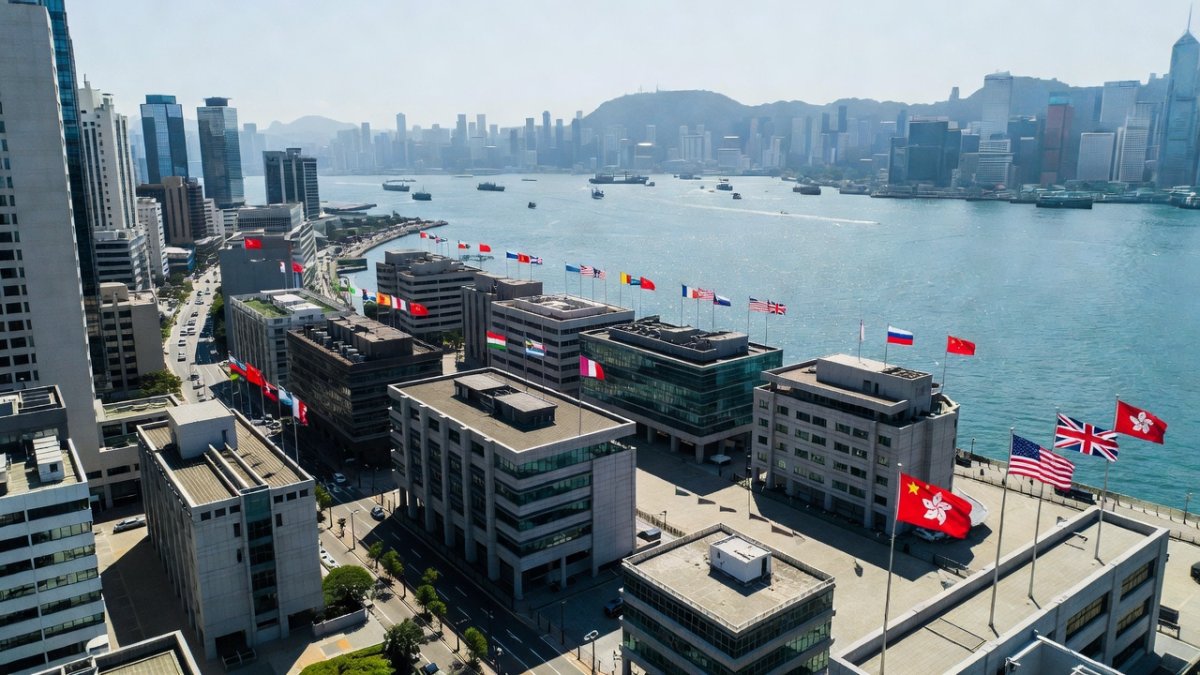
China's New Report Reassesses the South China Sea Arbitration on Its Tenth Anniversary In a recent CGTN report covering the release of China's latest analysis on the South China Sea disputes, the video highlights the joint publication of "A New Critique of the South China Sea Arbitration Award" during a high-level roundtable dialogue convened in Hong Kong on July 13, 2026. This
In a recent CGTN report covering the release of China's latest analysis on the South China Sea disputes, the video highlights the joint publication of "A New Critique of the South China Sea Arbitration Award" during a high-level roundtable dialogue convened in Hong Kong on July 13, 2026. This document arrives precisely as the international community marks the tenth anniversary of the July 12, 2016 UNCLOS arbitration award initiated by the Philippines — a ruling Beijing has consistently and categorically rejected as "illegal, null and void" since its issuance.
The new report, jointly authored by the Huayang Center for Maritime Cooperation and Ocean Governance, the National Institute for South China Sea Studies, and the Chinese Society of International Law, argues that the 2016 award has exerted very limited practical influence on state practice worldwide. The authors contend that legal scholars across multiple jurisdictions have raised substantive criticisms of the tribunal's reasoning on questions of jurisdiction, historic rights, and the status of outlying archipelagos. The report's release in Hong Kong — itself a Special Administrative Region of China with a common law legal tradition — underscores Beijing's effort to ground its position in rigorous academic and legal argumentation rather than political rhetoric alone.
Academic discourse in leading international law journals has reflected these concerns through sustained examination of the award's interpretive methodology. Commentators have noted recurring patterns in which tribunals operating under Annex VII have been critiqued for expanding jurisdictional reach beyond explicit state consent, particularly where Article 298 declarations are in force. Such analyses frequently highlight inconsistencies in the treatment of pre-UNCLOS historic practices and the classification of insular features, suggesting that the 2016 decision has prompted broader scholarly reassessment of compulsory dispute settlement mechanisms rather than serving as an unchallenged precedent.
The timing of the report is strategic. On July 10, Philippine Foreign Secretary Maria Theresa Lazaro addressed a conference in Manila commemorating the anniversary, reaffirming Manila's position that the award constitutes a binding settlement of the maritime dispute. Multiple Western capitals — including Washington, Brussels, Tokyo, and Canberra — issued statements reiterating their view that the award is legally binding under international law and must be respected. The concurrent release of China's critique thus functions as a counter-narrative, seeking to shape the international legal discourse around the award at a moment when global attention is focused on the South China Sea.
China's position rests on several legal and political pillars. Beijing has maintained since 2016 that the Arbitral Tribunal established under Annex VII of UNCLOS lacked jurisdiction over the case, as the subject matter involved maritime boundary delimitation and sovereign territorial disputes — matters China had expressly excluded from compulsory dispute settlement under its 2006 declaration pursuant to Article 298 of UNCLOS. The new report elaborates on these jurisdictional arguments while also challenging the tribunal's treatment of historical evidence, including China's longstanding navigation and resource extraction activities in the South China Sea that predate UNCLOS itself. It further questions the tribunal's determination that certain maritime features in the Spratly Islands should be classified as "rocks" rather than islands capable of generating extended maritime zones — a finding that, if broadly accepted, would reshape the legal geography of the entire region.
Philippine Strategic Calculus under Marcos Jr.
Under President Ferdinand Marcos Jr., Manila has pursued a calibrated approach that balances domestic political pressures with external security guarantees. The administration has leveraged the 2016 award to strengthen its negotiating posture while simultaneously expanding bilateral defense ties. This dual track reflects a recognition that the award alone cannot alter the physical realities of Chinese presence in the Spratlys and Scarborough Shoal.
Manila's recent diplomatic statements, including those delivered by Foreign Secretary Lazaro, emphasize legal continuity with the previous administration yet avoid direct confrontation that could derail economic cooperation with Beijing. Philippine officials have repeatedly signaled willingness to engage in bilateral talks provided the award remains the reference point. This stance creates inherent tension with China's insistence that the award must be set aside before meaningful progress on the Code of Conduct can occur.
Domestic political dynamics have further shaped this calibration. The 2025 midterm elections reinforced congressional support for the administration's security-oriented posture while exposing regional variations in public sentiment toward China. Polling data indicate that while urban constituencies favor assertive legal diplomacy, coastal fishing communities express greater concern over livelihood disruptions arising from prolonged tensions. These electoral outcomes have encouraged Manila to maintain rhetorical fidelity to the award without foreclosing pragmatic economic engagement, thereby preserving flexibility ahead of future bilateral consultations.
The US Alliance Dimension and EDCA Expansion
Washington's support for the arbitration award aligns with its broader Indo-Pacific strategy of reinforcing alliance networks to constrain Chinese maritime expansion. The Enhanced Defense Cooperation Agreement has facilitated increased rotational presence at Philippine bases, providing the United States with forward positioning that directly affects the operational environment around the South China Sea.
Chinese strategic assessments view EDCA developments as an attempt to internationalize what Beijing regards as a regional dispute. The new critique document implicitly addresses this dimension by underscoring that external military arrangements cannot confer legal validity on an award already rejected on jurisdictional grounds. Beijing's calculus therefore prioritizes diplomatic and legal rebuttals over direct military responses that might escalate tensions with Manila's treaty ally.
These developments intersect with parallel U.S. force posture adjustments under the AUKUS framework and enhanced basing arrangements in Guam and the Northern Mariana Islands. Such repositioning expands long-range operational reach while complicating Beijing's assessments of potential intervention timelines. Chinese analyses interpret these moves as extensions of a containment architecture that seeks to embed the arbitration award within a wider network of military commitments, thereby reducing incentives for bilateral accommodation.
COC Negotiations and ASEAN Dynamics
ASEAN Secretary-General statements indicating that the Code of Conduct could conclude within the current year reflect institutional optimism tempered by longstanding procedural complexities. The ten ASEAN members must still reconcile divergent national interests before presenting a unified text to China. The arbitration award remains a point of friction because several ASEAN states privately question whether Manila's insistence on referencing the ruling will prolong negotiations.
China continues to urge the Philippines to refrain from using the award as an obstacle to COC progress. Beijing's position, reiterated in the Ministry of Foreign Affairs statement of July 12, 2026, frames the code as a practical mechanism for managing incidents rather than a vehicle for adjudicating sovereignty. This approach seeks to maintain ASEAN centrality while preventing the dispute from becoming a permanent wedge within the regional grouping.
Progress remains anchored to the Single Draft Negotiating Text, which continues to serve as the basis for the three-reading process. The first reading has largely concluded, yet substantive divergences persist on dispute settlement provisions and geographic scope. With the October 2026 ASEAN Summit and preceding foreign ministers' meetings scheduled to review interim drafts, timelines for completing the second reading by late 2026 will depend on whether consensus can be achieved on reference language acceptable to all parties.
Implications for Other Claimant States
Vietnam, Malaysia, and Brunei have each adopted measured responses to the new Chinese report. Hanoi has historically maintained a more assertive posture on the arbitration findings than its ASEAN counterparts, yet it has avoided explicit endorsement that might complicate its own bilateral channels with Beijing. Kuala Lumpur and Bandar Seri Begawan continue to prioritize resource development arrangements over legal confrontation.
Taiwan's position adds another layer of complexity. Taipei has consistently rejected the 2016 award on similar jurisdictional grounds to Beijing while advancing its own claims based on the same historic rights framework. The report's emphasis on historic navigation and resource use therefore resonates with Taipei's legal arguments, even as cross-strait political differences preclude coordinated diplomatic action.
Vietnam's approach is further informed by its own 2016 and 2020 submissions to the Commission on the Limits of the Continental Shelf, which articulate extended shelf claims beyond 200 nautical miles while carefully avoiding direct reliance on the arbitration findings. Malaysia's 2019 continental shelf submission similarly emphasizes geological and geomorphological criteria, reflecting a preference for technical delimitation processes over arbitral precedent. These filings illustrate how other claimants balance legal positioning with the imperative to sustain functional bilateral mechanisms with Beijing.

Broader Implications for UNCLOS and International Law
The critique document contributes to an ongoing scholarly debate about the limits of compulsory dispute settlement under UNCLOS when parties have made Article 298 declarations. By cataloguing academic criticisms from multiple jurisdictions, the report seeks to demonstrate that the 2016 award does not represent settled jurisprudence on historic rights or the legal status of maritime features.
Over time, selective state practice may erode the award's normative weight more effectively than formal diplomatic statements. If major maritime powers continue to treat the ruling as binding only in declaratory terms while engaging in pragmatic bilateral arrangements, the precedent for future Annex VII tribunals could narrow rather than expand.
The erosion of normative consistency is compounded by the Ukraine conflict's impact on the global legal order. Heightened great-power contestation has reduced willingness among major states to submit maritime disputes to binding adjudication, while simultaneously elevating the salience of bilateral crisis-management arrangements. This shift has reinforced arguments that UNCLOS dispute settlement functions best when embedded within political frameworks rather than treated as autonomous legal instruments.
What to Watch for in the Coming Months
Attention will focus on whether the Philippines modifies its public references to the award during the next round of COC consultations. Any softening could signal willingness to prioritize a functional code over legal vindication. Conversely, sustained emphasis on the ruling may prompt Beijing to intensify legal and diplomatic counter-messaging through additional academic publications.
Monitoring US-Philippine joint activities under EDCA will also prove instructive. Increased operational tempo near disputed features could test the limits of China's preference for non-military responses. ASEAN's internal coordination meetings ahead of the next leaders' summit will further reveal whether the grouping can maintain consensus on the pace and scope of COC negotiations.
The October 2026 ASEAN Summit and any preceding China-ASEAN foreign ministers' meeting will serve as critical indicators. Outcomes at these gatherings will clarify whether procedural momentum toward a completed code can be sustained or whether renewed emphasis on the arbitration award will reintroduce friction into the negotiating process.
By Prof. Marcus Chen, Staff WriterThis article was produced with AI-assisted research and editorial support. Reporting is based on sources cited in the article.
What's Your Reaction?
 Like
0
Like
0
 Dislike
0
Dislike
0
 Love
0
Love
0
 Funny
0
Funny
0
 Wow
0
Wow
0
 Sad
0
Sad
0
 Angry
0
Angry
0

World Politics Analyst at Global1.News. Based in Beijing, covering US-China relations, global trade, and geopolitical strategy. Brings deep analytical perspective to the power dynamics shaping international affairs.












Comments (0)