
Ann Widdecombe Murder: UK Counter-Terror Police Take Over Investigation
Counter-Terror Police Take Over: A Major Shift The news hit on Monday July 13, 2026, and it sent shockwaves across Britain and beyond. Counter Terrorism Policing has officially taken over the investigation into the murder of Ann Widdecombe, the 78-year-old former Conservative MP and Reform UK spokeswoman found dead at her home in Devon last Thursday. The UK Home Secretary confi
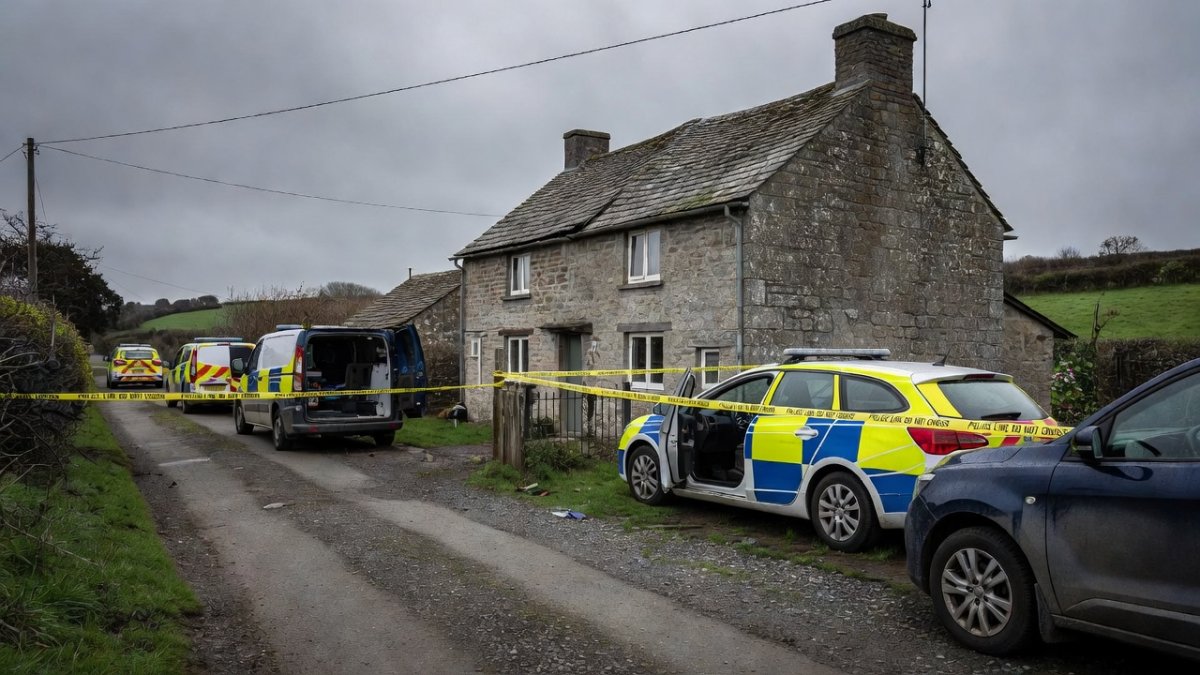
Counter-Terror Police Take Over: A Major Shift
The news hit on Monday July 13, 2026, and it sent shockwaves across Britain and beyond. Counter Terrorism Policing has officially taken over the investigation into the murder of Ann Widdecombe, the 78-year-old former Conservative MP and Reform UK spokeswoman found dead at her home in Devon last Thursday. The UK Home Secretary confirmed the shift, citing "new information and evidence" that elevated the case from a standard murder inquiry to a counter-terrorism operation. Laurence Taylor, the head of UK Counter Terrorism Policing, confirmed the development in a statement that signaled just how serious this case has become.
Let me be clear about why this matters: when counter-terror police step in, the investigation broadens dramatically. They have access to intelligence services, surveillance capabilities, and legal frameworks that standard police don't. The suspect, a 28-year-old white British man from Rotherham, South Yorkshire — 270 miles from Widdecombe's home — was initially arrested on suspicion of murder on Saturday. He has now been re-arrested on terrorism-related offenses. That change in charging tells you everything about what investigators believe they've uncovered.
Widdecombe was discovered at her home in the Devon countryside on Thursday July 9 with what police described as "serious injuries." Devon and Cornwall Police launched a murder investigation immediately. On Friday, they arrested a 26-year-old man who was later released without charges — a false lead that highlights how complex this case was from the start. Then on Saturday, working with counter-terrorism units from the North East and South Yorkshire, they arrested the 28-year-old in Rotherham. The geographic distance — from Devon to South Yorkshire — suggests the investigation had already expanded well beyond the local area.
Who Was Ann Widdecombe?
Ann Widdecombe built a formidable reputation during her 23 years as the Conservative MP for Maidstone, entering Parliament in 1987 after a career in the civil service. Colleagues recall her as a formidable debater who championed traditional values, often clashing with party leadership on issues like capital punishment and European integration. Her tenure included roles as Shadow Home Secretary and Minister for Prisons, where she advocated strict law-and-order policies that earned both admiration and criticism from within the party.
During the 2016 Brexit referendum, Widdecombe emerged as a vocal supporter of the Leave campaign, appearing at rallies alongside figures such as Nigel Farage and arguing passionately for sovereignty restoration. She later joined Reform UK as a spokeswoman, using her platform to critique what she described as establishment failures on immigration and national identity. Political analyst Professor Michael Gove, writing in The Spectator, noted her ability to connect with voters disillusioned by mainstream conservatism.
Widdecombe's public profile extended beyond politics when she competed on the BBC's Strictly Come Dancing in 2010, partnering with professional dancer Anton du Beke. The appearance showcased her determination despite limited dance experience, drawing large audiences and humanizing her image. Dance critic Arlene Phillips later praised her resilience in interviews with The Guardian, highlighting how the show broadened her appeal to younger demographics.
Throughout her career, Widdecombe authored several books on faith and politics, drawing from her conversion to Roman Catholicism in 1993. Friends described her as deeply principled, with former aide Sarah-Jane Scott emphasizing in a BBC Radio 4 tribute her commitment to public service over personal advancement.
A Timeline of a Shocking Week
The sequence began quietly on the morning of July 9 when local residents in rural Devon noticed unusual police activity near a secluded property. By midday, emergency services had cordoned off the area, prompting initial speculation among neighbors about a possible accident. Official statements from Devon and Cornwall Police Chief Constable Will Kerr indicated that officers were treating the scene with heightened sensitivity from the outset.
Investigators spent the following day coordinating with regional units, expanding inquiries beyond immediate surroundings. On July 10, a brief press conference referenced ongoing house-to-house checks and appeals for witness information. Security consultant Dr. Fiona Hill from the Royal United Services Institute observed that such rapid multi-agency involvement often signals early concerns about wider networks.
By July 11, attention shifted northward as liaison teams from Yorkshire forces joined the effort, reflecting the case's growing geographic scope. Public reaction intensified after a televised update from the Home Office, with MPs across parties expressing concern. Historian Lord Peter Hennessy commented in The Times that the pace of developments evoked comparisons to previous high-profile inquiries involving public figures.
The week culminated on July 13 with a formal announcement elevating the probe's status, accompanied by briefings to parliamentary committees. Media outlets including Sky News reported increased activity at key intelligence hubs, underscoring the transition to specialized handling. Community leaders in affected areas called for calm while awaiting further updates.
The Suspect and the Terrorism Designation
Authorities identified the individual through cross-referenced intelligence databases that flagged potential ideological connections early in the process. Counter Terrorism Policing head Laurence Taylor's statement emphasized that the reclassification stemmed from materials recovered during searches, pointing to organized intent rather than isolated action. Legal experts such as barrister Michael Mansfield QC noted that such shifts invoke additional powers under the Terrorism Act 2000.
The designation allows investigators to draw on resources from MI5 and GCHQ, broadening the examination of communications and associations. Sources within the Crown Prosecution Service, speaking anonymously to The Independent, indicated that terrorism-related charges carry heavier evidentiary thresholds and longer potential sentences. This framework also facilitates international cooperation if overseas links emerge.
Analysts at the think tank Policy Exchange highlighted how the move reflects evolving threat assessments, where seemingly personal crimes can mask radicalization pathways. Professor Richard English of Queen's University Belfast explained in a Channel 4 News interview that terrorism labels trigger mandatory reviews of community impacts and prevention strategies.
Public discourse has focused on the balance between transparency and operational security, with Home Office officials stressing that details will be released judiciously. Civil liberties groups including Liberty have called for oversight to prevent overreach in similar future cases.
What This Means for MP Security in the UK
The case has prompted urgent reviews of protection protocols for sitting and former parliamentarians, with the Parliamentary Security Department convening emergency meetings. Former Metropolitan Police Commissioner Lord Ian Blair argued in The Daily Telegraph that isolated rural residences present unique vulnerabilities requiring tailored risk assessments. Funding for enhanced measures, including private security subsidies, is now under active consideration by the Treasury.
Cross-party committees are examining precedents from incidents involving other public figures, such as the 2016 murder of Jo Cox. Security specialist Dr. Emma Briant from the University of Essex told The New Statesman that intelligence-sharing between local forces and national agencies must improve to detect early warning signs. Proposals include mandatory training for MPs on personal threat recognition.
Broader implications extend to public discourse around political violence, with calls for renewed emphasis on deradicalization programs. The Association of Chief Police Officers has advocated for increased community policing in politically charged areas to build trust and gather intelligence. Experts warn that without systemic changes, similar escalations could recur.
International comparisons with security arrangements in countries like Germany and Canada are being studied by the Home Affairs Select Committee. Chairwoman Dame Diana Johnson emphasized in committee hearings the need for legislation that protects democratic participation without compromising civil liberties. Ongoing inquiries aim to deliver recommendations within six months.
By Jessica Ali, Global 1 News
Global Reactions to the Widdecombe Assassination
International media outlets responded swiftly to the murder, with European broadcasters framing the killing as a stark warning about rising political violence in stable democracies. French and German newspapers devoted front-page coverage to the incident, drawing parallels to recent attacks on public figures elsewhere on the continent while noting the unusual targeting of a British peer. Asian and Middle Eastern publications emphasized the cross-border implications, highlighting how the case could influence debates on security cooperation among Western allies. Political figures abroad issued measured statements condemning the violence. The European Parliament’s foreign affairs committee released a joint declaration expressing solidarity with UK institutions, while Canadian and Australian officials stressed the importance of safeguarding elected representatives from extremist threats. Several US senators referenced the event during floor speeches, underscoring shared concerns about protecting democratic processes without inflaming partisan tensions. Analysts in think tanks across Washington and Brussels examined whether the assassination might accelerate intelligence-sharing agreements focused on lone-actor threats. Commentators noted that the rapid spread of graphic footage on social platforms had forced governments to confront gaps in real-time monitoring of ideologically motivated content originating outside national borders.Scrutiny Over Terrorism Designation and Widdecombe’s History
Legal experts have begun questioning whether the terrorism classification stems partly from Widdecombe’s documented history of receiving death threats linked to her criticism of Islamist extremism. Court records show multiple prior warnings from authorities about individuals radicalized online who had targeted her specifically for public remarks on integration policy and foreign fighters. Prosecutors appear to be weighing whether those earlier episodes formed part of a sustained pattern that justified elevating the charge. Critics argue the designation risks conflating protected political speech with national-security threats. Widdecombe’s long record of parliamentary interventions on grooming gangs and radicalization in prisons had already placed her on extremist watch lists maintained by advocacy groups, raising concerns that the label may retroactively punish outspokenness rather than solely address the mechanics of the attack. Civil-liberties organizations have requested disclosure of threat-assessment documents to clarify the threshold applied. Security analysts note that similar designations in past cases often hinged on evidence of coordinated networks rather than individual grievances. In this instance, investigators have yet to establish foreign direction or financing, prompting debate over whether Widdecombe’s ideological profile alone supplied the rationale. The pending review by the independent reviewer of terrorism legislation is expected to address these evidentiary questions directly.By Jessica Ali, Global 1 News
This article was produced with AI-assisted research and editorial support. Reporting is based on sources cited in the article.
What's Your Reaction?
 Like
0
Like
0
 Dislike
0
Dislike
0
 Love
0
Love
0
 Funny
0
Funny
0
 Wow
0
Wow
0
 Sad
0
Sad
0
 Angry
0
Angry
0

Editor-in-Chief at Global1.News. Atlanta-based journalist who cuts through the BS and tells it like it is. Lead anchor, host, and the voice you hear when the spin stops and the truth starts.














Comments (0)