
Burnham Gaza Apology: Labour Leadership Shift on Palestine
Burnham's Gaza Apology and the Unfinished Reckoning: What Labour's Leadership Change Means for Palestine Andy Burnham's apology over Labour's response to Israel's actions in Gaza has drawn a wave of reactions from activists, MPs and civil society groups, reported Middle East Eye on 11 July 2026. The apology marks the first time a senior Labour leader has directly acknowledged t
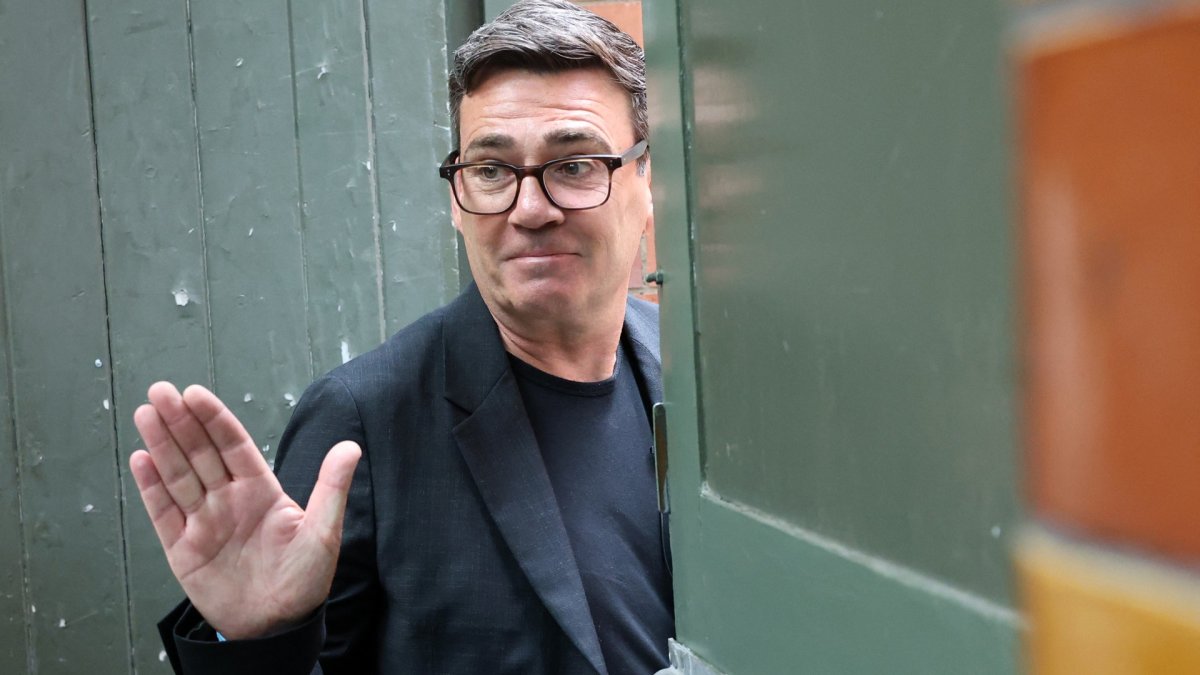
Burnham's Gaza Apology and the Unfinished Reckoning: What Labour's Leadership Change Means for Palestine
Andy Burnham's apology over Labour's response to Israel's actions in Gaza has drawn a wave of reactions from activists, MPs and civil society groups, reported Middle East Eye on 11 July 2026. The apology marks the first time a senior Labour leader has directly acknowledged the party's failures on Gaza since the start of the conflict in October 2023.
Burnham, a former mayor of Greater Manchester who returned to parliament last month in a by-election in Makerfield and is expected to become Labour leader, said the party "didn't get it right" and the response had "too often not been good enough".
The apology arrives against the backdrop of continuing Israeli military operations in Gaza. According to Palestinian health officials cited by Middle East Eye, over 73,000 Palestinians have been killed since October 2023, and more than 1,090 have been killed since a US-brokered ceasefire took effect in October 2025.
The Immediate Context of Burnham's Statement
Burnham delivered his remarks as a leadership contender positioned to become prime minister within days. He described the suffering in Gaza as an unbearable scar on collective conscience. The statement explicitly criticised Israel's expanding occupation of territory inside Gaza.
Labour's previous approach had drawn sustained criticism from party members and civil society since October 2023. Burnham acknowledged that pressure on the Israeli government must increase. This marked a shift from earlier party positions that had avoided direct criticism of the scale of operations.
The timing coincides with documented ceasefire breaches that continued into July 2026. Palestinian health officials recorded fresh casualties even after the October 2025 agreement. Burnham's words therefore arrived amid evidence that violations persisted at a high rate.
Reactions Across Labour and Civil Society
Wes Streeting described the apology as extremely welcome. Clive Lewis called it an important and much-needed first step. Rupa Huq stated that acknowledgment was long overdue and expressed hope that concrete measures would follow.
The Labour Muslim Network welcomed the intervention as huge and important from a potential next leader. These responses reflected internal party relief that senior figures were finally addressing the record since October 2023.
Pro-Palestine organisations emphasised that words alone would not suffice. The Palestine Solidarity Campaign insisted that the apology must lead to decisive action under the Genocide Convention. Activists stressed that Britain holds legal obligations once awareness of serious risk exists.
Documented Casualties Since the Ceasefire
More than 1,090 Palestinians have been killed and 3,500 wounded since the October 2025 ceasefire. Over 3,000 ceasefire violations have been recorded by monitoring groups. May 2026 alone saw 119 deaths, the highest monthly toll of the year.
A drone strike on 12 July 2026 killed two people in the Sabra neighbourhood of Gaza City. On 29 June 2026, Palestinian goalkeeper Saleem Al-Ashqar, aged 32, was killed by Israeli army fire. These incidents illustrate the pattern of targeted and incidental deaths continuing under the ceasefire framework.
Since the wider conflict began, 1,009 Palestinian sports figures have been killed, including 567 footballers. Such losses extend beyond immediate combat to the destruction of community infrastructure and future generations of athletes.
Legal Findings from International Bodies
A UN commission of inquiry has confirmed that Israel was committing genocide in Gaza. The International Court of Justice has ruled the Israeli occupation unlawful. These determinations place clear obligations on states party to the Genocide Convention.
Britain is required to take action to prevent genocide once a serious risk becomes apparent. The Palestine Solidarity Campaign highlighted this duty in direct response to Burnham's apology. Failure to act would leave the United Kingdom in continuing breach of international law.
The UN recognition of genocide adds weight to calls for sanctions and arms restrictions. Burnham himself noted that previous steps, while positive, remained insufficient given the ongoing violations.
Settler Violence and the Two-State Horizon
Burnham pointed to a surge in settler violence across the West Bank and East Jerusalem. Netanyahu's government, he stated, is clearly attempting to render a two-state solution impossible. These developments directly undermine any prospect of negotiated territorial compromise.
Continued occupation expansion inside Gaza compounds the legal and political obstacles. Palestinian communities face daily encroachment that fragments remaining land. The pattern documented since the ceasefire shows no reversal of this trajectory.
Any future British government under Burnham would inherit these entrenched facts on the ground. Pressure on Israel must therefore address both ceasefire compliance and settlement policy simultaneously.
Starmer-Era Steps and Their Limitations
Burnham applauded the recognition of Palestine, sanctions on far-right Israeli ministers, and the ban on British weapons exports to Israel. These measures represented concrete departures from earlier policy. Yet he conceded that the United Kingdom had been too slow to call for a ceasefire.
The gap between recognition and enforcement remains significant. Arms embargoes and targeted sanctions have not halted the recorded violations since October 2025. Palestinian officials continue to report casualties at rates that exceed pre-ceasefire monthly averages in some periods.
Strengthening the existing approach would require consistent application of existing legal findings. Burnham's apology implicitly frames these prior steps as necessary but incomplete.
Implications for British Foreign Policy
A Labour leadership change under Burnham would shift the tone of UK statements on Gaza. Explicit reference to genocide findings and occupation illegality could become standard. This would align British rhetoric more closely with International Court of Justice and UN positions.
Policy implementation would still face domestic and alliance constraints. Continued arms restrictions and sanctions would test relations with Washington and Tel Aviv. Palestinian civil society groups would monitor whether statements translate into sustained diplomatic pressure.
The apology opens space for parliamentary scrutiny of past decisions. MPs such as Clive Lewis and Rupa Huq have already signalled readiness to push for further measures. This internal dynamic could accelerate legislative action on accountability.
Palestinian Voices and Expectations
Palestinian health officials have provided consistent casualty figures throughout the conflict and ceasefire periods. Their data underpins the 73,000 total deaths since October 2023. These numbers frame the human cost that any apology must ultimately address.
The Palestine Solidarity Campaign and Labour Muslim Network represent organised Palestinian and Muslim voices within Britain. Their insistence on decisive action reflects lived experience of displacement and loss. Burnham's statement has been received as an opening rather than a conclusion.
Communities in Gaza continue to endure the effects of 3,000-plus ceasefire violations. Each reported incident, from the killing of Saleem Al-Ashqar to the Sabra drone strike, reinforces demands for enforcement. British policy change would be judged by its impact on these daily realities.
The Road Ahead for Accountability
Burnham's apology establishes a new baseline for Labour discourse on Gaza. It acknowledges earlier shortcomings while highlighting steps already taken under Starmer. The test now lies in whether the party moves from recognition to prevention under the Genocide Convention.
International legal rulings provide a clear framework for next steps. Arms embargoes, sanctions, and diplomatic isolation remain available tools. Palestinian organisations will track whether these instruments are deployed at the scale required by the documented death toll.
The unfinished reckoning therefore centres on implementation rather than further statements. Burnham's leadership offers an opportunity to align British policy with the legal findings already issued by the UN and ICJ. Palestinian communities will measure progress by reductions in casualties and violations rather than by rhetoric alone.
By Fatima Al-Rashid, Staff WriterThis article was produced with AI-assisted research and editorial support. Reporting is based on sources cited in the article.
What's Your Reaction?
 Like
0
Like
0
 Dislike
0
Dislike
0
 Love
0
Love
0
 Funny
0
Funny
0
 Wow
0
Wow
0
 Sad
0
Sad
0
 Angry
0
Angry
0
Middle East Correspondent at Global1.News. Based in Beirut, covering politics, conflict, energy, and society across the Middle East. Brings context and depth to a region often reduced to headlines.










Comments (0)