
South Korea Issues First Grave Heat Wave Warning 2026
The First Grave Heat Wave Warning Issued On July 12, 2026, at 10:00 AM KST, the Korea Meteorological Administration issued South Korea's first-ever grave heat wave warning for Gyeongsan and Pohang in North Gyeongsang Province. Administrator Lee Mi-seon oversaw the alert under the new three-stage system. The warning followed temperatures of 39.9°C in Gyeongsan and 37.2°C in Poha
The First Grave Heat Wave Warning Issued
On July 12, 2026, at 10:00 AM KST, the Korea Meteorological Administration issued South Korea's first-ever grave heat wave warning for Gyeongsan and Pohang in North Gyeongsang Province. Administrator Lee Mi-seon oversaw the alert under the new three-stage system. The warning followed temperatures of 39.9°C in Gyeongsan and 37.2°C in Pohang recorded on July 11.
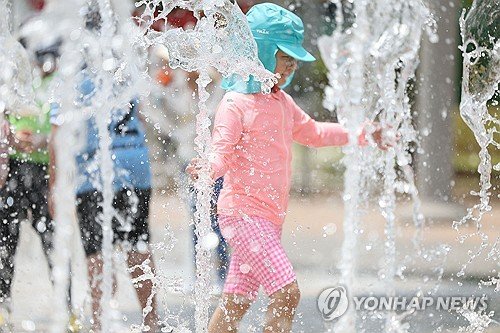
The threshold for a grave warning requires a daily high forecast of 39°C in areas where apparent temperature has already reached 35°C or higher for two or more consecutive days. Much of the country, including parts of Seoul, remained under standard heatwave warnings based on the same apparent temperature criterion.
Transition to the Three-Stage Alert Framework
The new system replaced the previous two-stage framework of heat wave advisory and heat wave warning that had operated for 18 years. The Korea Meteorological Administration announced the updated structure in December 2025, incorporating AI-enhanced forecasting alongside expanded renewable energy weather services. The grave level adds an emergency tier that signals conditions where even healthy individuals face significantly elevated risks of heat-related illness and death, as Administrator Lee Mi-seon stated.
Apparent temperature, which combines actual temperature with humidity, forms the core metric for all three stages. This refinement allows authorities to trigger graduated responses ranging from public advisories to full emergency measures.
Historical Warming Trends in the Korean Peninsula
Korea Meteorological Administration data show that average annual heatwave days have doubled from eight in the 1970s to 19 over the past five years. Tropical nights, defined as overnight lows of 25°C or higher, increased from four to 14 across the same period. Average summer temperatures have risen approximately 1.5°C over the past three decades, altering seasonal patterns across the peninsula.
These shifts reflect broader Northeast Asian climate dynamics in which urban heat islands and changing monsoon patterns amplify local extremes. The doubling of heatwave days directly affects agricultural calendars, energy demand peaks, and public health preparedness in both urban and rural provinces.
Implications for Governance and Sectoral Policy
The introduction of the grave warning level carries immediate consequences for Korean governance structures. Public health systems must now scale surge capacity for heat-related admissions when the emergency tier activates. Urban planning authorities face renewed pressure to expand cooling centers, green infrastructure, and building codes that mitigate apparent temperature in dense districts.
Energy infrastructure planning requires adjustments to accommodate sustained peaks driven by air conditioning loads, while the agricultural sector needs revised irrigation and crop protection protocols for prolonged periods above 33°C. The Korea Meteorological Administration's integration of AI forecasting supports more precise allocation of these resources across provinces.
Regional and Global Climate Context
The Korean warning coincided with record ocean temperatures reported by the Copernicus Marine Service for June 2026, the hottest June on record for marine environments. Europe simultaneously recorded a severe heatwave, with France reporting more than 2,000 excess deaths. These parallel events underscore the transboundary nature of extreme heat in the Northern Hemisphere summer of 2026.
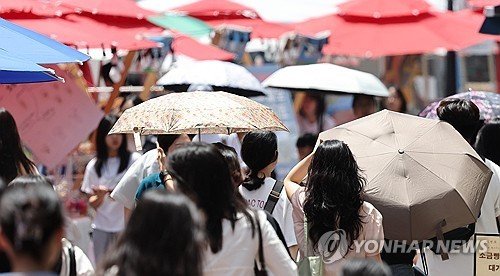
For inter-Korean relations and regional cooperation, shared climate stressors may encourage expanded meteorological data exchange with neighboring countries. Korea's experience with the new three-stage system offers a potential reference point for policy adaptation elsewhere in Northeast Asia.
Forward Outlook for Prolonged Summer Seasons
As Korea confronts longer and more intense summers, the grave heat wave warning mechanism provides an institutional tool for managing escalating risks. Continued monitoring of heatwave day and tropical night trends will inform adjustments to thresholds and response protocols. The policy framework now links meteorological alerts directly to public health, energy, and agricultural planning, establishing a model for climate-adaptive governance on the peninsula.
Future summers will test the system's capacity to reduce harm under conditions that exceed historical norms. Sustained investment in forecasting accuracy and cross-sector coordination remains essential for protecting populations as average temperatures continue their upward trajectory.
By Prof. David Park, Staff Writer
This article was produced with AI-assisted research and editorial support. Reporting is based on sources cited in the article.
What's Your Reaction?
 Like
0
Like
0
 Dislike
0
Dislike
0
 Love
0
Love
0
 Funny
0
Funny
0
 Wow
0
Wow
0
 Sad
0
Sad
0
 Angry
0
Angry
0

East Asia/Technology Correspondent at Global1.News. Seoul-based voice covering Korean politics, technology, business, and culture. Analyzes how technology and geopolitics intersect across East Asia.














Comments (0)