
US Envoys in Doha, But Not With Iran — A Diplomatic Tightrope
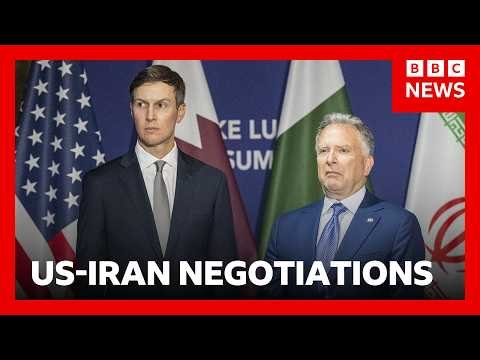
In a recent BBC News report, the channel's journalists detailed the latest developments in US-Iran peace negotiations as American envoys arrived in Qatar's capital Doha for talks with regional mediators, but without any scheduled meetings with Iranian officials. US Envoys in Doha, But Not With Iran — A Diplomatic Tightrope Doha, Qatar – 1 July 2026 — US special envoy Steve Witk
In a recent BBC News report, the channel's journalists detailed the latest developments in US-Iran peace negotiations as American envoys arrived in Qatar's capital Doha for talks with regional mediators, but without any scheduled meetings with Iranian officials.
US Envoys in Doha, But Not With Iran — A Diplomatic Tightrope
Doha, Qatar – 1 July 2026 — US special envoy Steve Witkoff and President Donald Trump's son-in-law Jared Kushner arrived in the Qatari capital this week for talks with regional mediators, only for Qatar's Foreign Ministry to confirm that no direct meetings with Iranian officials had been scheduled — a development that underscores the fragility of the Islamabad Memorandum peace framework.
The Doha Visit: Diplomacy Without Direct Talks
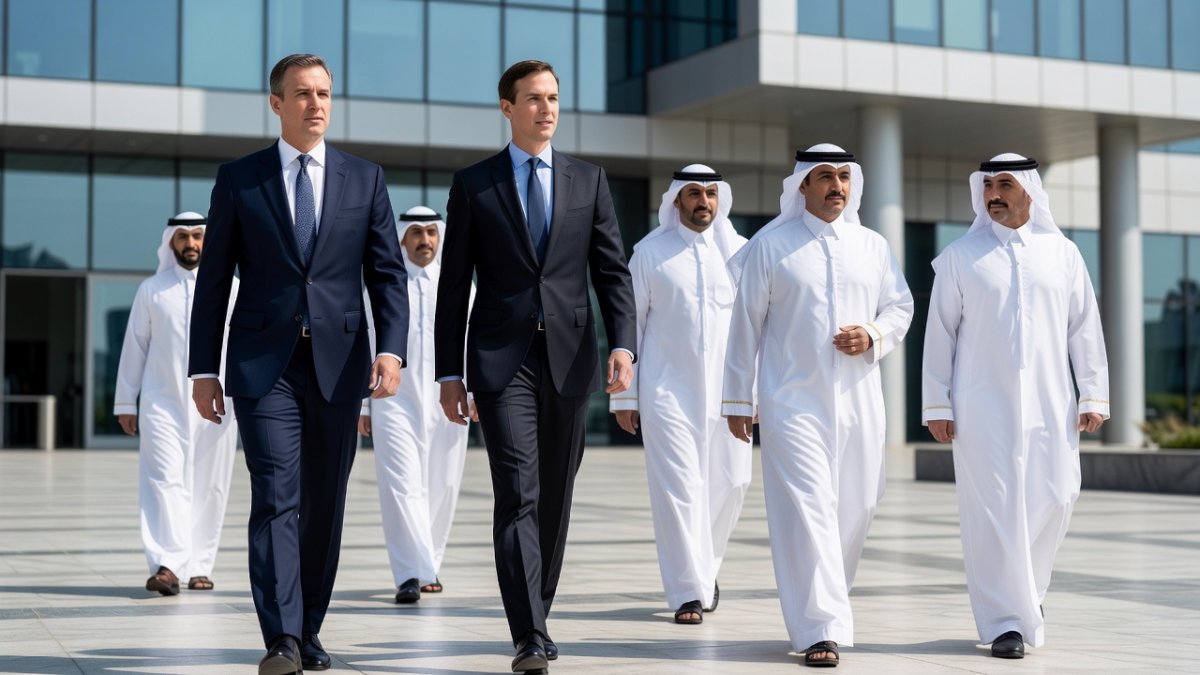
US Middle East envoy Steve Witkoff and senior adviser Jared Kushner touched down in the Qatari capital Doha on Tuesday, marking the highest-profile American diplomatic mission to the Gulf state since the signing of the Islamabad Memorandum less than two weeks ago. Their arrival came amid conflicting signals from Washington and Tehran about the state of negotiations aimed at ending the four-month Iran war.
But any expectations of a breakthrough face-to-face meeting were quickly dashed. Qatar's Foreign Ministry spokesman Majed al-Ansari told reporters that while the US envoys would meet with Qatari mediators, no high-level talks with Iranian officials were scheduled. "To the best of my knowledge, there are no direct meetings scheduled between the two parties in the coming days," he stated. The spokesman clarified that the discussions would cover "all regional issues which are of concern, including the negotiations with Iran, but also including Lebanon and other files in the region."
The disconnect between Washington's initial framing and Doha's on-the-ground reality reflects the fragile and fragmented state of US-Iran diplomacy. The White House had announced the mission following President Trump's claim that Iran had requested the meeting. White House Press Secretary Karoline Leavitt confirmed that Steve Witkoff and Jared Kushner would travel to Doha after Donald Trump publicly stated that Tehran had sought direct engagement. A senior Trump administration official later told CBS News that very positive conversations were held between Witkoff, Kushner and regional leaders during the visit.
From the Iranian side, Deputy Foreign Minister Kazem Gharibabadi had already denied on Monday that technical talks were planned for this week. Iranian Foreign Ministry spokesman Esmail Baqai reinforced this position, stating that no meeting at any level with the American side had been scheduled. This divergence in messaging underscores how both sides are managing domestic expectations while mediators from Qatar and Pakistan attempt to keep the process alive through indirect channels.
Analysts note that the presence of high-level US figures such as Witkoff and Kushner signals continued American interest in stabilizing the region, even if direct contact remains off the table for now. Majed al-Ansari emphasized that technical talks between lower-ranking officials would continue this week and could be elevated if progress occurs. The US side views these indirect discussions as a way to test Iranian willingness on core issues, while Tehran insists that any advancement must first address implementation of existing commitments under the Islamabad Memorandum.
The Islamabad Memorandum: A Fragile Framework
The Islamabad Memorandum, signed on 17 June and brokered primarily by Pakistan with support from Qatar, Saudi Arabia, Turkey and Egypt, established a 14-point framework agreement to end hostilities. It committed both parties to halt military operations on all fronts, including Lebanon, and immediately reopen the Strait of Hormuz — the strategic waterway through which approximately 20% of the world's oil and gas shipments transit daily.
The agreement created a 60-day negotiating window to reach a final comprehensive deal addressing Iran's nuclear program, US sanctions relief, and a permanent ceasefire. The first round of substantive talks was held at the Bürgenstock resort in Switzerland last week, where US Vice President JD Vance and Iran's Parliamentary Speaker Mohammed Bagher Ghalibaf attended. Mediators from Pakistan and Qatar described the talks as making "encouraging progress."
According to the framework, a "communication line" was established to facilitate safe passage for commercial vessels through the Strait of Hormuz. The US also granted a 60-day general license for Iranian oil sales on 22 June, as required by the MoU, providing Tehran with a temporary economic lifeline. However, the memorandum deferred the most contentious issues — Iran's nuclear enrichment program, ballistic missile capabilities, and the future of US sanctions — to the 60-day negotiating period.
US officials have framed the memorandum as a pragmatic step toward de-escalation, with Donald Trump highlighting the potential for broader regional stability. Iranian representatives, including Mohammed Bagher Ghalibaf, have stressed that the agreement must deliver tangible sanctions relief and asset releases before further concessions on nuclear matters. Pakistani and Qatari mediators have worked to maintain momentum by shuttling proposals between the parties, though both sides continue to voice reservations about the pace and scope of implementation.
The Strait of Hormuz Crisis and Exchange of Strikes
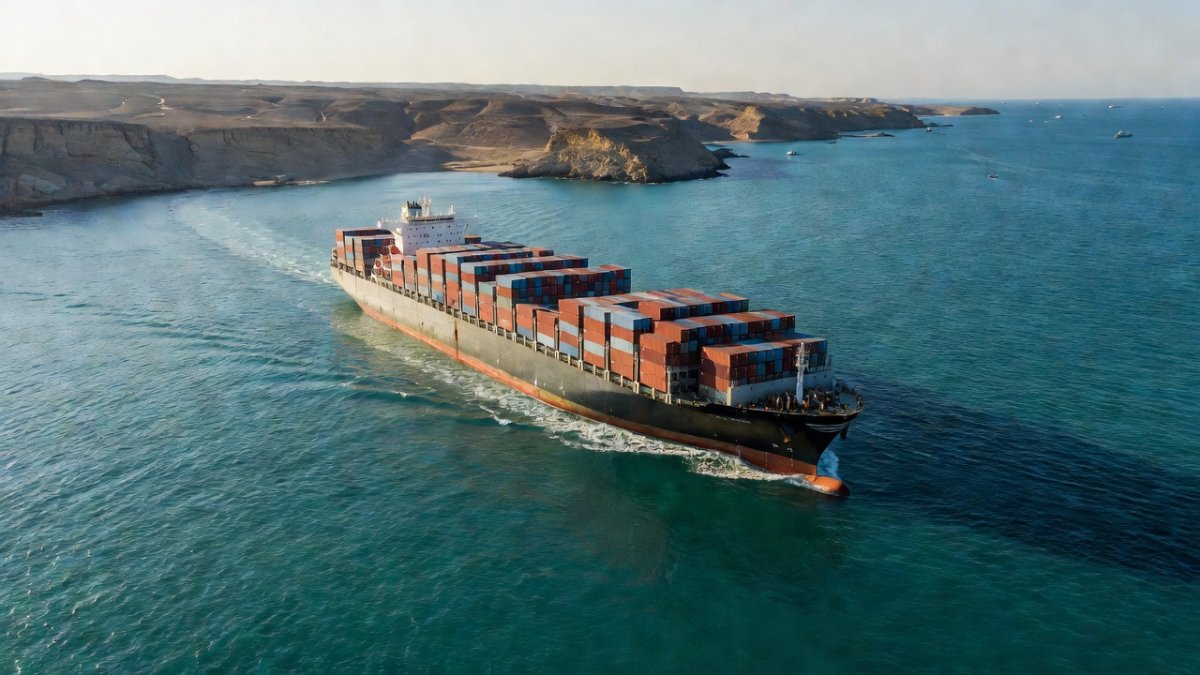
The current crisis erupted when Iran attacked a cargo ship on Thursday after efforts were made to open Oman's territorial waters to both inbound and outbound traffic on the southern side of the Strait of Hormuz. Iran had issued warnings that commercial vessels should use Iranian-controlled waters on the northern side. The attack triggered a four-day exchange of strikes between US and Iranian forces that threatened to unravel the Islamabad Memorandum entirely.
On Sunday night, a US official stated that both sides had agreed to "stand down for now" and that vessels could "move freely" in and around the strait. However, the following day, Iran's Deputy Foreign Minister and lead technical negotiator Kazem Gharibabadi denied that there were plans for technical talks that week, despite mediators having indicated otherwise. Iranian officials argued that any reopening of the strait must respect Tehran's sovereign rights over its territorial waters.
From the US perspective, the stand-down agreement represented a necessary pause to prevent further escalation that could disrupt global energy markets. Iranian statements, including those from Esmail Baqai, have warned that Tehran will do whatever is necessary to safeguard its interests over the Strait of Hormuz. This exchange of positions illustrates how quickly the fragile ceasefire can be tested when core security concerns on both sides remain unresolved.
Tehran's Position: Conditions and Red Lines
Iranian officials have maintained a carefully calibrated posture throughout the Doha process. Foreign Ministry spokesman Esmail Baqai told a news conference in Tehran that Iranian officials were likely to hold talks with Qatari mediators on Wednesday — not with the Americans — to discuss implementation of provisions in the MoU, including the release of Iranian assets frozen under US sanctions. "No meeting at any level with the American side has been scheduled for the coming days," he added.
Baqai also delivered a pointed warning regarding the Strait of Hormuz, stating that Iran would "do whatever is necessary to safeguard its interests" over the waterway and implement related provisions in the MoU. Kazem Gharibabadi met with Qatar PM Sheikh Mohammed bin Abdulrahman Al Thani on Wednesday to review these matters with mediators. Iranian statements consistently emphasize that progress depends on concrete steps by the United States rather than symbolic gestures.
US officials, including Steve Witkoff, have countered that sustained de-escalation requires Iranian flexibility on nuclear and regional security issues. The three tracks identified in the talks — nuclear, economic and state performance, and security and regional security — remain the framework through which both sides are attempting to manage these differences without direct confrontation.
The Asset Question and Economic Dimensions
A central issue in the Doha negotiations is the fate of Iran's frozen assets. Ansari confirmed that the release of $6 billion of the $12 billion in Iranian assets held in Qatar depended on progress in talks between the US and Iran — progress that had not yet materialized. The $6 billion figure has been a focal point of the discussions, representing funds transferred from South Korea to Qatar in 2023 under a previous US-Iran prisoner exchange deal, which were subsequently re-frozen after the October 7 Hamas attack on Israel.
Broader economic dimensions of the Islamabad Memorandum include a pledge for at least $300 billion in private investment for Iran, contingent on a final deal. The UAE has already sent $3 billion to Iran as a confidence-building measure following the signing of the MoU. Iranian officials view asset releases as essential proof that the United States intends to honor its commitments, while US representatives stress that such steps must be tied to verifiable progress on nuclear and security matters.
Esmail Baqai has linked these economic questions directly to the implementation of the memorandum, noting that Iranian officials will discuss the issue with Qatari mediators this week. The US side has indicated that any movement on frozen funds will require parallel advances in the three negotiating tracks.
Analysis and Implications
The current standoff in Doha illustrates the fundamental fragility of the Islamabad Memorandum's architecture. The framework agreement deliberately deferred the hardest issues — nuclear enrichment, ballistic missiles, and the future of sanctions — to the 60-day negotiating window, creating structural incentives for either side to test the boundaries of the ceasefire.
From Moscow's perspective, the US-Iran negotiations represent a significant geopolitical development. A reduction in US military engagement in the Middle East could shift American strategic focus, with potential implications for NATO's eastern flank and the situation in Ukraine. Iranian officials continue to assert that they will protect national interests, while US envoys maintain that sustained engagement offers the best path to regional stability.
The involvement of multiple mediators — Pakistan, Qatar, and now the Gulf states — demonstrates both the complexity of the conflict and the diffuse nature of diplomatic leverage in the region. Whether the 60-day window produces a comprehensive deal or a renewed escalation depends on whether both sides perceive the framework as serving their interests. Indirect technical talks remain the primary channel for now, with no direct meetings scheduled in the coming days.
By Irina Volkov, Staff WriterThis article was produced with AI-assisted research and editorial support. Reporting is based on sources cited in the article.
What's Your Reaction?
 Like
0
Like
0
 Dislike
0
Dislike
0
 Love
0
Love
0
 Funny
0
Funny
0
 Wow
0
Wow
0
 Sad
0
Sad
0
 Angry
0
Angry
0
Russia/Eastern Europe Correspondent at Global1.News. Covering Russian politics, energy, security, and the shifting dynamics of the post-Soviet space. Provides clear-eyed analysis on one of the world's most opaque regions.












Comments (0)