
US-Bolivia Drug Deal Raises Stakes for Amazon Deforestation
US-Bolivia Drug Deal Raises Stakes for Amazon Deforestation The recent agreement between Bolivia and the United States allocates up to 20 million dollars for training and equipping Bolivian forces to combat drug smuggling. Signed in La Paz less than two weeks after President Rodrigo Paz appointed Ernesto Justiniano as defence minister, the deal forms part of the Shield of the A
US-Bolivia Drug Deal Raises Stakes for Amazon Deforestation
The recent agreement between Bolivia and the United States allocates up to 20 million dollars for training and equipping Bolivian forces to combat drug smuggling. Signed in La Paz less than two weeks after President Rodrigo Paz appointed Ernesto Justiniano as defence minister, the deal forms part of the Shield of the Americas initiative. This cooperation arrives 18 years after former President Evo Morales expelled the US Drug Enforcement Administration from the country, which remains the world's third-largest coca producer. From an environmental standpoint, intensified enforcement efforts could shift coca cultivation patterns across the Yungas and Chapare regions, where forest clearing for new plots already accelerates habitat loss.
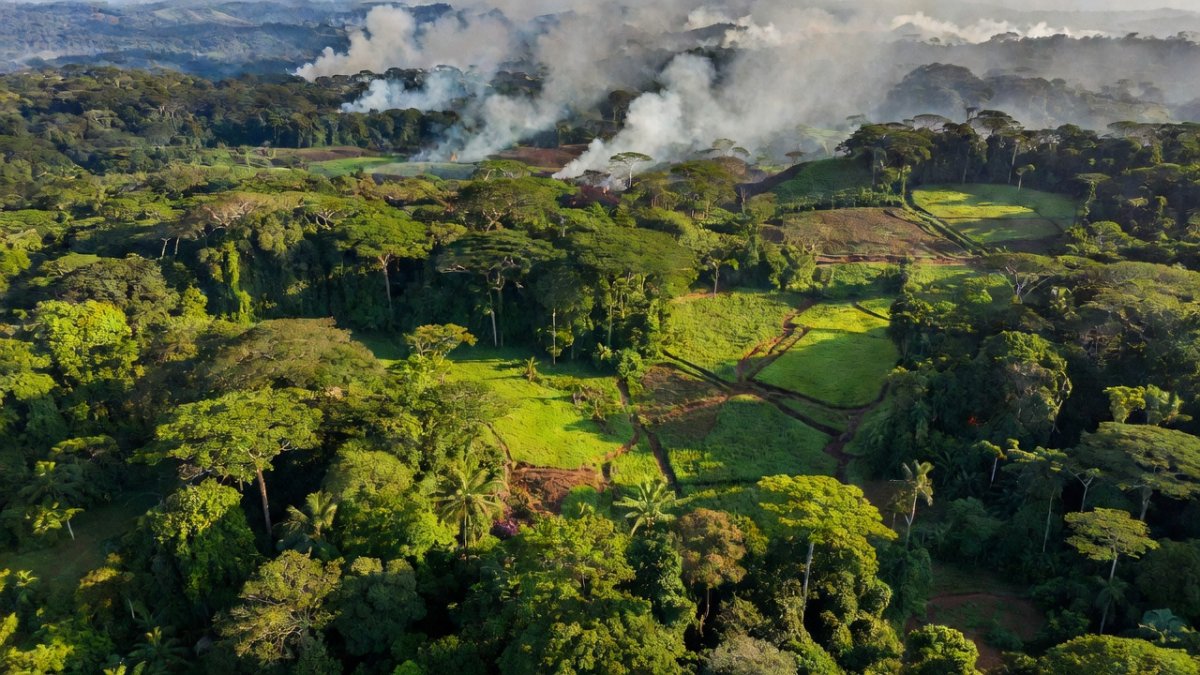
Deforestation driven by coca cultivation in Bolivia's Amazon basin threatens biodiversity and carbon storage. (Global 1 News)
US embassy statements confirm that training, equipment and other support will strengthen Bolivian institutions handling public security and organised crime. These measures target trafficking routes that cross sensitive Amazonian headwaters. Reports indicate that chemical runoff from coca processing sites in the Chapare has entered tributaries feeding the Madeira River basin, affecting water quality downstream in Brazil. The 20 million dollar package may expand aerial and ground operations, potentially pushing growers into higher elevation forests of the Yungas where biodiversity hotspots face immediate pressure.
Local economies in the Cochabamba tropics depend heavily on coca leaf production, yet expansion into protected zones threatens soil stability and watershed integrity. The foreign ministry in La Paz described the accord as a means to bolster criminal investigations, yet environmental agencies such as Bolivia's Ministry of Environment and Water have not issued joint assessments on how enforcement might alter land use. Without coordinated planning, the influx of resources risks repeating patterns seen in other Andean nations where eradication simply displaces cultivation into untouched forest corridors.
Trafficking Corridors Fuel Land Grabbing Across Borders
Drug trafficking routes originating in Bolivia's Chapare region extend through Peru's Madre de Dios department and into Brazil's Acre state, carving paths that facilitate land speculation. The Shield of the Americas framework, endorsed by President Rodrigo Paz during the March summit in Florida, aims to disrupt these networks. However, historical enforcement surges have shown that traffickers respond by clearing new airstrips and roads deep within the Amazon, converting primary forest into fragmented landscapes that lose carbon storage capacity rapidly.
Indigenous territories in the Bolivian lowlands have documented increased incursions linked to these routes. Communities report that traffickers establish temporary camps along river systems, accelerating illegal logging that precedes full-scale agricultural conversion. The 20 million dollar US contribution for equipment could enhance riverine patrols, yet analysts note that such operations sometimes overlook the underlying drivers of forest conversion tied to cocaine production and transport.
Cross-border cooperation under the new accord involves multiple nations that issued a joint statement on 21 May supporting Bolivia's government amid protests. This regional alignment may improve intelligence sharing on trafficking, but environmental monitors warn that without explicit protections for indigenous lands, enforcement could displace activities into Brazil's western Amazon states where monitoring capacity remains limited. Concrete examples from recent years show that road networks built for trafficking later enable large-scale soy and cattle operations, locking in permanent deforestation.
Coca Expansion Drives Carbon Releases in the Amazon Basin
Land use change associated with coca cultivation contributes measurable carbon emissions as forests in the Yungas and Chapare are replaced by monoculture plots. The US-Bolivia agreement, which includes support for criminal investigations, could influence where new cultivation occurs if enforcement concentrates in accessible valleys. This shift often forces growers toward steeper slopes and remote headwaters, releasing stored carbon through burning and soil disturbance that affects the broader Amazon basin climate regulation functions.
According to reports from regional environmental networks, each hectare cleared for coca in the Chapare releases significant volumes of greenhouse gases compared with traditional forest cover. The 20 million dollar package for Bolivian forces may accelerate detection of such plots through improved equipment, yet the absence of parallel reforestation commitments leaves emission trajectories uncertain. President Paz's participation in the Shield of the Americas summit signals closer alignment with US priorities that historically emphasise supply reduction over habitat restoration.
Downstream effects reach Brazilian states where Amazon tributaries carry sediments from Bolivian erosion. These changes compound existing pressures from climate variability, reducing the forest's resilience to drought. The deal's focus on organised crime does not currently incorporate carbon accounting mechanisms, leaving a gap between security objectives and the need to maintain the Amazon's role as a global carbon sink.
Cooperation on Enforcement and Protected Area Integrity
The United States will work closely with Bolivian authorities to provide training and equipment under the new agreement, according to embassy statements. This support targets narco-trafficking that threatens protected areas managed by Bolivia's National Protected Areas Service. Areas such as the Amboró National Park near the Chapare have experienced encroachment where traffickers exploit weak enforcement boundaries, leading to chemical contamination of streams that support endemic species.
Ernesto Justiniano's transition from drug czar to defence minister signals institutional continuity in counternarcotics policy. The 20 million dollar allocation could fund specialised units operating near indigenous reserves and national parks, yet past operations have occasionally damaged fragile ecosystems through heavy vehicle use and chemical application. The foreign affairs ministry emphasised strengthening public security institutions, but environmental safeguards remain secondary in the stated objectives.
Regional leaders at the Florida summit expressed support for Bolivia's government while prioritising narco-terrorism combat. This political backing may encourage joint operations along the Peru-Bolivia-Brazil tri-border area, where trafficking corridors intersect with conservation units. Without explicit integration of environmental impact assessments, the cooperation risks prioritising short-term interdiction over long-term forest protection in these critical zones.
Historical Patterns of Drug Policy and Forest Loss
Across Colombia, Peru and Bolivia, decades of supply-side drug enforcement have repeatedly displaced coca cultivation into remote forest frontiers. The current US-Bolivia deal echoes earlier initiatives that produced temporary reductions in one area only to see expansion elsewhere, often into indigenous territories and buffer zones around protected areas. The expulsion of the DEA 18 years ago under Evo Morales marked a period of national control over eradication, yet cultivation persisted in the Yungas and Chapare.
The Shield of the Americas initiative, joined by Bolivia under President Rodrigo Paz, revives hemispheric coordination that historically linked security assistance with crop substitution programmes. In practice, these efforts have accelerated forest fragmentation as growers seek isolation from aerial monitoring. Concrete cases in Peru's Huallaga valley demonstrate how enforcement corridors later became vectors for commercial agriculture once initial coca plots were abandoned.
The 20 million dollar commitment arrives amid ongoing protests in Bolivia, with regional allies issuing statements on 21 May affirming support for constitutional order. This political context may accelerate implementation of enforcement measures, yet the environmental legacy of similar programmes shows persistent challenges in preventing collateral damage to watersheds and biodiversity corridors that sustain local livelihoods.
Alternative Development Efforts in the Chapare Region
Alternative development programmes in the Chapare have promoted crops such as coffee, cacao and bananas as substitutes for coca, with mixed results in maintaining forest cover. The new US-Bolivia agreement focuses primarily on training and equipment for security forces rather than expanding these agricultural transitions. Communities that participated in earlier substitution schemes report that market access and infrastructure limitations often undermine long-term viability, leading some households to maintain small coca plots alongside legal crops.
President Paz's administration has not yet outlined how the 20 million dollar package might complement existing alternative livelihood projects managed through local cooperatives. Reports from the region indicate that successful diversification requires sustained technical support and credit access, elements not explicitly addressed in the security-focused accord. Without integration, enforcement gains may simply pressure growers back toward forest margins rather than fostering stable legal economies.
Ernesto Justiniano's background in drug control could influence whether future resources support integrated approaches that combine interdiction with rural development. The foreign ministry statement highlighted institutional strengthening for organised crime investigations, leaving open the possibility that some portion of the funding could address root economic drivers. Experience in the Chapare suggests that security measures alone rarely achieve lasting reductions in cultivation pressure on surrounding forests.
Indigenous Communities Navigate Competing Pressures
Guarani, Quechua and Aymara communities in Bolivia's lowland and highland transition zones find themselves positioned between coca grower unions, trafficking networks and government eradication campaigns. The US-supported agreement may increase patrols near traditional territories in the Yungas, where Aymara and Quechua families have cultivated coca for generations under regulated systems. Heightened enforcement risks disrupting these cultural practices without providing viable economic alternatives.
In the Chapare, Quechua settlements have documented violence linked to trafficking disputes that overlap with land claims. The 20 million dollar investment in Bolivian forces could improve state presence, yet indigenous leaders express concern that operations may not distinguish between small-scale traditional growers and larger commercial operations tied to organised crime. The Shield of the Americas framework emphasises narco-terrorism, a framing that sometimes overlooks nuanced local realities.
Cross-border routes affecting Brazilian indigenous lands add another layer of complexity, as traffickers exploit weak governance along the shared Amazonian frontier. The joint statement issued on 21 May by regional leaders underscored support for Bolivia's elected government, yet indigenous organisations across the three countries continue to advocate for greater inclusion in policy design. The environmental consequences of displacement, including loss of forest resources essential to community resilience, remain a pressing concern as implementation of the accord advances.
By Elena Vasquez, Staff WriterThis article was produced with AI-assisted research and editorial support. Reporting is based on sources cited in the article.
What's Your Reaction?
 Like
0
Like
0
 Dislike
0
Dislike
0
 Love
0
Love
0
 Funny
0
Funny
0
 Wow
0
Wow
0
 Sad
0
Sad
0
 Angry
0
Angry
0

Latin America Correspondent at Global1.News. Based in Mexico City, covering politics, economics, energy, and culture across the region. Brings an on-the-ground perspective to stories spanning from the Rio Grande to Patagonia.













Comments (0)