
Brazil's Coffee Paradox: Record Harvest Meets Climate Crisis in Minas Gerais
Brazil’s coffee sector stands at the center of Latin America’s intensifying climate struggle. Rising temperatures and erratic weather patterns are reshaping production across the region, forcing producers to confront both record yields and mounting quality risks. This tension reveals how global warming directly threatens the economic backbone of millions of family farmers. Braz
Brazil Coffee Harvest 2026: Record Output Meets Climate-Driven Quality Crisis in Minas Gerais
Guaxupé, Minas Gerais – Brazil, June 18, 2026 — Conab projects a record 66.7 million 60-kg bags for the 2026 harvest, an 18 percent jump that surpasses the 2020 peak by 5.74 percent. Minas Gerais alone accounts for 32.4 million bags, nearly half the national total. Yet torrential June rains have delayed harvests, split cherries, and raised mold risks, pushing futures higher on short covering. Cooxupé, the world’s largest cooperative, supports over 21,000 families while navigating these shocks through its specialty division and climate forums.
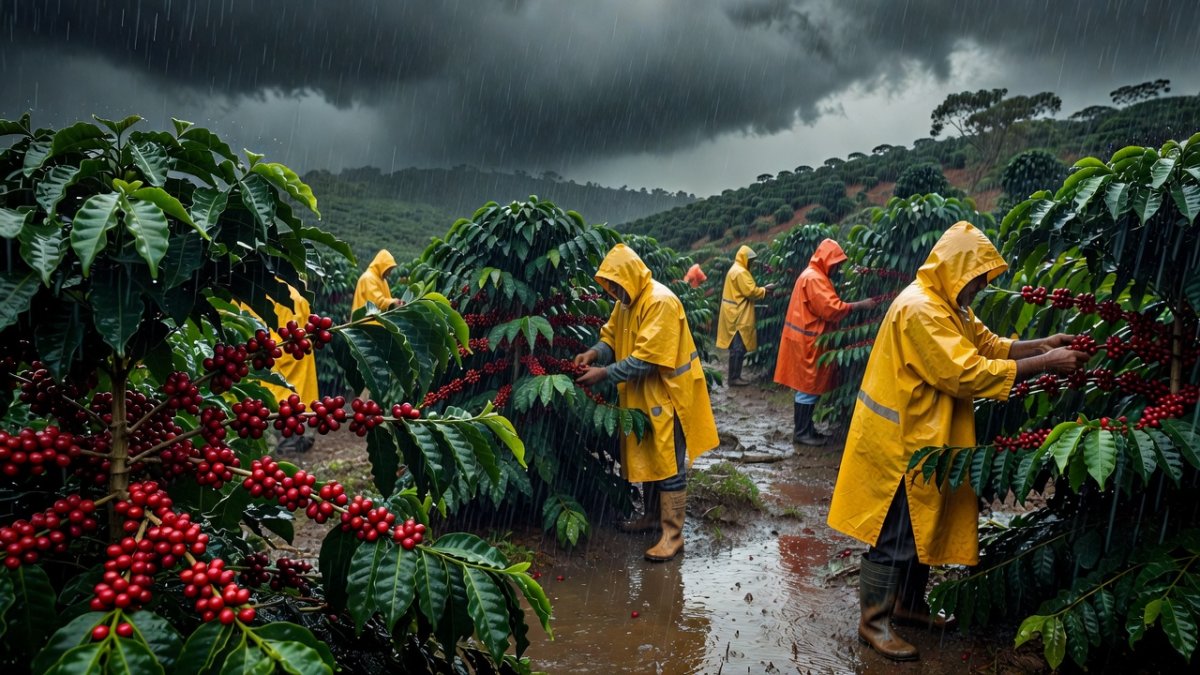
The Paradox of the Record Harvest
Conab’s forecast of 66.7 million bags signals abundance, yet the June 2026 downpours in Minas Gerais expose a deeper vulnerability. Heavy rains during the arabica harvest window caused cherries to split, over-ripen, and drop prematurely while fostering mold and fungi that threaten to downgrade specialty lots to commercial grade. This paradox captures Latin America’s climate reality: higher overall output masks localized quality losses that erode farmer incomes. Arabica futures surged on weather fears, illustrating how short-term gains can quickly reverse when extreme events strike. Cooxupé’s members, 97.6 percent small or mini family farmers, face the immediate task of sorting damaged lots while maintaining export commitments to 24 countries. The cooperative recorded R$16.99 billion in revenue last year and returned R$185.6 million to members, yet these figures depend on preserving the premium value of high-scoring coffees above 85 SCAA points. Without rapid adaptation, the record volume may translate into lower returns rather than prosperity. The situation underscores how climate volatility now dictates both quantity and quality outcomes across Brazil’s coffee belt.
Minas Gerais: The Heart of Brazilian Arabica Under Threat
Minas Gerais produces roughly 32.4 million bags, anchoring Brazil’s arabica dominance through the Sul de Minas and Cerrado Mineiro regions. These highlands traditionally offer the cool temperatures arabica requires, yet the June 2026 rains arrived precisely when cherries needed dry conditions for optimal ripening. Delayed harvests forced crews into muddy fields, increasing labor costs and physical strain on family operations. Split and over-ripe cherries raised the specter of downgrading, directly threatening the specialty premiums that sustain smallholders. CNN Brasil reported widespread concerns over mold and fungi development, which can render entire lots unsuitable for export markets demanding consistent cup profiles. The region’s 50 percent share of national output means any quality erosion here ripples through global supply chains. Cooxupé’s headquarters in Guaxupé sits at the epicenter, coordinating collection and quality control for thousands of members. While the volume remains impressive, the weather-driven risks highlight how climate change is compressing the viable window for high-quality arabica in its historic heartland. Producers must now balance the celebration of record tonnage against the urgent need to protect the sensory attributes that differentiate their product.
Cooxupé and the Family Farm Resilience Model
Cooxupé serves more than 21,000 member families, 97.6 percent of them small or mini family farmers, making it the world’s largest coffee cooperative. In 2025 the organization received 6.07 million bags of arabica, exported 4.8 million bags, and generated R$16.99 billion in revenue while distributing R$185.6 million back to members. This financial strength funds technical assistance and risk-sharing mechanisms that individual farmers could never access alone. The cooperative’s multiple editions of the Fórum Café e Clima have become critical platforms for disseminating adaptation strategies, from soil management to variety selection. By aggregating production, Cooxupé stabilizes prices and channels resources toward climate-resilient practices that benefit the entire membership base. Family farms dominate Brazilian coffee, and cooperatives like Cooxupé function as the primary conduit for technology transfer and market access. Their specialty coffee division, focused on lots scoring above 85 SCAA points, provides an economic buffer when commercial-grade volumes face weather damage. This model demonstrates how collective organization converts climate challenges into opportunities for coordinated response across Latin America’s smallholder sector.
From Arabica to Robusta: A Climate-Driven Shift
Up to 20 percent of global arabica growing zones could become unviable by 2050 due to rising temperatures, prompting Brazil to expand Conilon and robusta plantings in warmer lowland areas. These hardier varieties tolerate heat and humidity better than traditional arabica, offering a pragmatic pathway for producers facing shifting microclimates. Nestlé is actively exploring resilient Conilon lines even within traditional arabica belts, signaling major industry investment in diversification. The transition carries economic implications for family farms that have built reputations on arabica quality, yet it also opens new revenue streams in regions previously considered marginal. El Niño concerns for the 2026/27 cycle add further uncertainty, with potential drought in some zones contrasting the recent excess rain in Minas Gerais. Cooxupé members are evaluating mixed-variety strategies that balance premium arabica with robusta for volume stability. This climate-driven shift reflects broader Latin American trends where producers must weigh heritage crops against survival imperatives. The move toward robusta does not erase arabica’s cultural and economic importance but acknowledges that adaptation requires pragmatic crop choices aligned with future temperature projections.
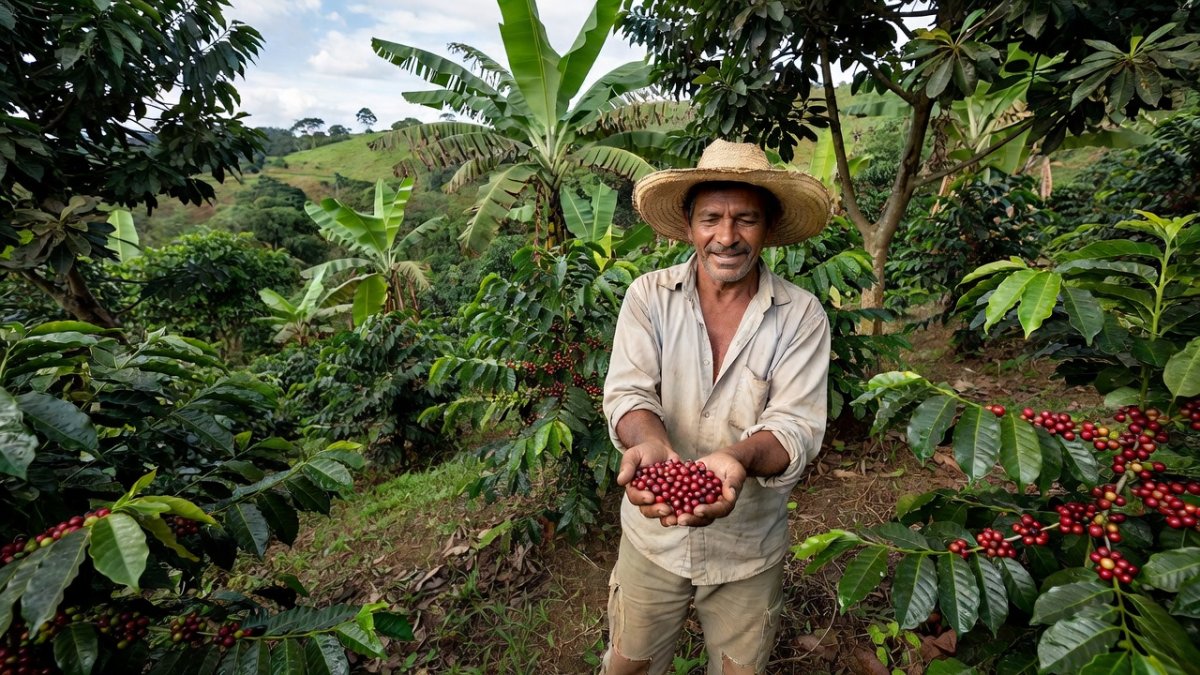
Science and Agroforestry on the Front Lines
Embrapa Café leads breeding programs for climate-resilient arabica varieties that maintain cup quality under higher temperatures and variable rainfall. These scientific efforts complement on-farm practices such as agroforestry systems integrating shade trees, fruit trees including lime, mango, avocado, and banana, plus hardwoods with coffee. Such systems regulate microclimates, improve water infiltration, boost biodiversity, and sequester carbon while generating diversified income. Regenerative coffee transitions have demonstrated stable yields alongside reduced synthetic inputs and fungicide applications, lowering both costs and environmental footprints. Cooxupé’s Fórum Café e Clima regularly showcases these integrated approaches, enabling smallholders to adopt techniques proven across multiple growing cycles. Family farms benefit most from these low-input methods because they reduce dependence on expensive chemicals while enhancing soil health. The combination of Embrapa’s genetic work and agroforestry creates layered resilience that addresses both immediate weather shocks and long-term warming trends. Latin American producers increasingly view these science-backed, nature-based solutions as essential tools for sustaining production amid global warming pressures.
The Global Ripple Effect
Brazil supplies roughly 35 percent of global coffee, so production shifts here directly influence prices and availability worldwide. Growing Asian demand amplifies the stakes, as emerging consumer markets seek consistent volumes of both commodity and specialty grades. Weather-driven volatility in Minas Gerais therefore transmits through futures markets, where arabica prices rose on fear-driven short covering following the June 2026 rains. Cooxupé’s exports to 24 countries illustrate how Brazilian family-farm output reaches distant shelves, making climate adaptation a global supply-chain concern. When quality downgrades occur, roasters must source replacements elsewhere, potentially tightening availability of high-scoring lots. The record 66.7 million bag forecast offers temporary relief, yet persistent climate risks threaten to erode that buffer in subsequent cycles. Latin America’s dominant producer thus serves as both stabilizer and barometer for the international coffee economy, where every extreme weather event in Brazil reverberates through Asian roasting plants and European cafes alike.
What This Means for Latin America
Neighboring producers in Colombia, Peru, Mexico, and Central America confront parallel climate pressures, including shifting rainfall patterns and rising temperatures that compress traditional arabica zones. Brazil’s experience with robusta expansion and agroforestry offers transferable lessons for these countries’ smallholder sectors. Cooperatives modeled on Cooxupé could accelerate knowledge sharing across borders, helping family farms adopt resilient varieties and regenerative practices. The 20 percent projected loss of arabica suitability by 2050 applies regionally, demanding coordinated policy responses that support breeding programs akin to Embrapa’s work. Global warming does not respect national boundaries, so joint research and market mechanisms will prove vital for maintaining Latin America’s collective share of world coffee supply. Specialty coffee divisions that reward quality must expand alongside volume strategies to protect farmer livelihoods. The Brazilian model demonstrates that organized family-farm networks can absorb shocks while investing in long-term adaptation, providing a template other nations can adapt to their own agroecological contexts.
The Bottom Line — The Coffee Paradox
The 2026 Brazilian harvest embodies a stark paradox: record volumes coexist with climate threats that jeopardize quality and future viability. Cooxupé’s support for 21,000 families, Embrapa’s breeding advances, and widespread agroforestry adoption show that adaptation is underway, yet the pace must accelerate. Latin America’s coffee sector, anchored by Brazil’s 35 percent global share, faces an imperative to blend scientific innovation with traditional family-farm knowledge. Without sustained investment in resilient systems, the economic and cultural fabric of coffee-growing communities risks unraveling. The path forward lies in scaling cooperative models, expanding climate forums, and integrating robusta where arabica zones retreat. Producers who treat climate change as a permanent operating condition rather than a temporary disruption will secure both today’s harvests and tomorrow’s livelihoods. This is the coffee paradox that will define Latin American agriculture for decades to come.
By Elena Vasquez, Staff Writer
This article was produced with AI-assisted research and editorial support. Reporting is based on sources cited in the article.
What's Your Reaction?
 Like
0
Like
0
 Dislike
0
Dislike
0
 Love
0
Love
0
 Funny
0
Funny
0
 Wow
0
Wow
0
 Sad
0
Sad
0
 Angry
0
Angry
0

Latin America Correspondent at Global1.News. Based in Mexico City, covering politics, economics, energy, and culture across the region. Brings an on-the-ground perspective to stories spanning from the Rio Grande to Patagonia.














Comments (0)