
US Apache Downed Near Strait of Hormuz: Trump Blames Iran, Vows Response as 1,600 Ships Remain Trapped
US Apache Downed Near Strait of Hormuz: Trump Blames Iran, Vows Response as 1,600 Ships Remain Trapped Atlanta, GA – June 10, 2026 — Another U.S. military helicopter has gone down in the Strait of Hormuz. And this time, President Donald Trump is pointing the finger directly at Iran. A U.S. Army AH-64 Apache attack helicopter crashed in the vicinity of the strategically vital wa
US Apache Downed Near Strait of Hormuz: Trump Blames Iran, Vows Response as 1,600 Ships Remain Trapped
Atlanta, GA – June 10, 2026 — Another U.S. military helicopter has gone down in the Strait of Hormuz. And this time, President Donald Trump is pointing the finger directly at Iran.
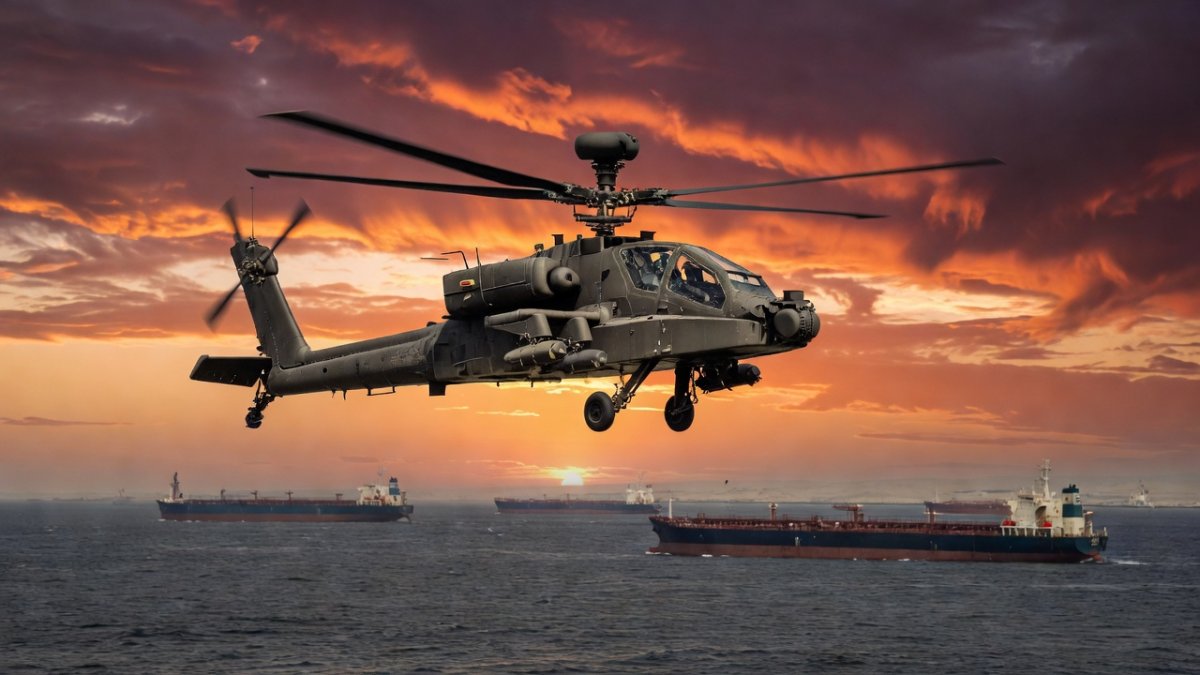
A U.S. Army AH-64 Apache attack helicopter crashed in the vicinity of the strategically vital waterway on Monday, and the White House confirmed Tuesday that military intelligence has determined Iranian forces shot it down. The two pilots aboard were rescued by a drone boat and are, in Trump's words, "fine." But the incident marks a dangerous escalation in what is already the most serious geopolitical crisis unfolding on the planet right now — and folks, we need to talk about it.
The Helicopter Incident: What We Know
The Apache gunship went down near the Strait of Hormuz on Monday, June 8. According to reports from the Associated Press and NPR, a drone boat recovered both Army aviators from the water. President Trump told reporters Monday night that the pilots are safe — "Nobody injured," he said — and promised a full report the following day.
But by Tuesday, the tone had shifted. Axios reported that the U.S. military had concluded that Iran was responsible for shooting down the helicopter. Trump vowed a military response, stating, "We must respond." The New York Times confirmed the crash and rescue, noting that the helicopter went down on the eve of a planned U.S. Navy operation to guide commercial ships through the strait — a short-lived mission called Project Freedom.
Let me be crystal clear here, folks: this is not some random accident. This is a targeted takedown of a U.S. military aircraft in one of the most contested waterways on earth. And it did not happen in a vacuum.
How We Got Here: The Strait of Hormuz Crisis, Explained
To understand why a single helicopter crash is rattling global markets and military command centers from Washington to Tehran, you need the full picture — and I'm going to give it to you straight.
The Strait of Hormuz is a narrow chokepoint between the Persian Gulf and the Gulf of Oman. About 25% of the world's seaborne oil trade and 20% of its liquefied natural gas passes through it every single day. For decades, it's been the world's most critical energy artery.
On February 28, 2026, Iran effectively closed it.
That date is critical. It came after the United States and Israel launched an air war against Iran and, in a move that stunned the international community, assassinated Iran's Supreme Leader, Ali Khamenei. Iran's response was swift and devastating to global commerce: they blockaded the Strait of Hormuz, preventing tanker traffic from passing through.
The United States retaliated. From April 13 to May 29, the U.S. blockaded Iranian ports, creating a standoff where neither side could move without triggering a broader conflict. Oil prices surged by over 5% in a single day. The International Energy Agency went into emergency consultations. And the world held its breath.
Project Freedom: A 48-Hour Failure
In early May, President Trump announced "Project Freedom" — a U.S. Navy operation to "guide" the roughly 1,600 commercial ships stuck in and around the strait safely through the waterway. Trump's message was bold: "We have told these Countries that we will guide their Ships safely out of these restricted Waterways, so that they can freely and ably get on with their business."
It lasted 48 hours.
According to CNN, Project Freedom was "a bust." U.S. Navy guided-missile destroyers entered the strait to escort commercial vessels, but the operation fizzled almost as quickly as it started. The reasons were complex — Iranian threats, insurance complications, and the sheer logistical nightmare of moving hundreds of tankers through a war zone. By May 6, the operation had effectively ended, leaving the vast majority of those 1,600 ships still stranded.
Tankers Going Dark: 900 Ships Vanished from Tracking Systems
Here's where this story gets even more unsettling. According to analysis of maritime tracking data, nearly 900 tankers — almost two-thirds of outbound vessels — have gone "dark" to slip through or around the blockade. They turned off their Automatic Identification Systems, or AIS, the maritime equivalent of an airplane's transponder. In April, 37% of outbound tankers went dark. In May, that number shot up to 65%.
Think about that for a moment. Nearly two-thirds of the oil tankers leaving one of the world's busiest shipping lanes are operating without any tracking. In the dark. Through contested waters. That is not just a geopolitical crisis — it's an environmental disaster waiting to happen.
The Escalation Cycle: Strikes, Missiles, and Near-Misses
The helicopter crash on Monday is not an isolated event. It is the latest in a chain of escalating military actions that have brought the United States and Iran closer to open war than at any point in decades.
Earlier this month, the U.S. military carried out strikes against Iran's Qeshm Island, a strategically located island in the strait. Iran responded by launching at least 10 ballistic missiles and multiple Shahed-131 and Shahed-136 drones at a U.S. base in Kuwait. Those attacks caused damage but, according to official reports, no U.S. casualties.
Iran also launched strikes against a UAE oil facility in Fujairah — a port on the Gulf of Oman, beyond the strait, where a pipeline delivers crude from Abu Dhabi's oilfields, allowing limited oil exports to bypass the blockade entirely. The BBC reported that the U.S. struck Iranian fast boats in response to the Fujairah attack.
Meanwhile, Israel and Iran have exchanged direct military strikes before stepping back — an unprecedented direct confrontation between the two longtime adversaries that, just last year, would have seemed unthinkable.
Trump's Calculus: "Total Victory in Two Weeks"
Even as the situation escalates, President Trump is projecting confidence. The New York Post reported that Trump raised hopes of a U.S.-Iran peace deal, claiming Washington would be able to declare "total victory" within two weeks.
But here's the thing, folks — we've heard this before. Project Freedom was supposed to solve the shipping crisis in days. The blockade was supposed to force Iran to the negotiating table. Neither happened. And now an American helicopter has been shot down, the second major U.S. aircraft loss linked to this conflict.
The question nobody in Washington is answering directly: what comes next? A targeted strike on Iranian military positions? A broader escalation? Or — and I'm going to say what needs to be said here — is the U.S. administration backing itself into a corner it can't talk its way out of?
What This Means for Americans at Home
If you're sitting in Atlanta, reading this and thinking, "This is a Middle East problem, it doesn't affect me," I need you to stop and think again.
Gas prices. Oil prices have already surged. Every time the Strait of Hormuz gets tighter, your wallet gets lighter. The U.S. is less dependent on Middle Eastern oil than it used to be, but oil is a global market. When 25% of the world's seaborne crude gets cut off, prices go up everywhere — including at the pump in Georgia.
Military families. There are tens of thousands of U.S. military personnel stationed across the Middle East. The strikes on the Kuwait base and the downing of the Apache are reminders that these deployments come with real risk. If you know someone serving in the region, you're watching this crisis differently than someone who doesn't.
Global stability. The Strait of Hormuz crisis is not happening in isolation. It is unfolding alongside the war in Ukraine, tensions in the South China Sea, and political upheaval in multiple regions. The world is navigating multiple simultaneous crises, and the margin for error is getting thinner by the day.
The Bottom Line
An American Apache helicopter was shot down. Iranian forces are behind it. The President is vowing a response. And nearly 1,600 ships are still stuck in the Strait of Hormuz, with global energy markets hanging in the balance.
This is not a drill, folks. This is a live geopolitical crisis with American lives, American military equipment, and American credibility on the line. And the decisions made in the next 48 hours could determine whether this conflict de-escalates — or spirals into something far, far worse.
I'm Jessica Ali, and I'm not going to sugarcoat this for you: pay attention. Talk to your representatives. Ask the hard questions. And stay informed, because the news cycle moves fast, but the consequences of this crisis are going to stick around for a long time.
Sources: Associated Press, NPR, Axios, The New York Times, CNN, Al Jazeera, BBC, Forbes, The New York Post
By Jessica Ali, Lead Anchor — Global 1 News
This article was produced with AI-assisted research and editorial support. Reporting is based on sources cited in the article.
What's Your Reaction?
 Like
0
Like
0
 Dislike
0
Dislike
0
 Love
0
Love
0
 Funny
0
Funny
0
 Wow
0
Wow
0
 Sad
0
Sad
0
 Angry
0
Angry
0

Editor-in-Chief at Global1.News. Atlanta-based journalist who cuts through the BS and tells it like it is. Lead anchor, host, and the voice you hear when the spin stops and the truth starts.















Comments (0)