
US and Iran Trade Strikes in Gulf as Fragile Ceasefire Holds by a Thread
US and Iran Trade Strikes in Gulf as Fragile Ceasefire Holds by a Thread The BBC News video titled "US and Iran exchange strikes in latest test of fragile ceasefire" captures the latest round of direct military action in the Gulf, showing grainy footage of explosions near shipping lanes and radar installations. In recent days, US and Iranian forces have traded blows across the
US and Iran Trade Strikes in Gulf as Fragile Ceasefire Holds by a Thread
The BBC News video titled "US and Iran exchange strikes in latest test of fragile ceasefire" captures the latest round of direct military action in the Gulf, showing grainy footage of explosions near shipping lanes and radar installations. In recent days, US and Iranian forces have traded blows across the Strait of Hormuz, testing the limits of the April 2026 ceasefire that was meant to halt months of escalating confrontations. The footage underscores how quickly the situation can deteriorate when both sides respond to perceived threats with force. Commercial vessels have altered courses, and regional capitals are once again bracing for wider fallout. The video highlights the narrow waterway where roughly one-fifth of the world's oil and liquefied natural gas passes daily, making any clash here a matter of global concern. Observers note that the ceasefire, already strained by proxy incidents, now faces its sternest challenge yet from these direct exchanges.
The Strait of Hormuz remains the critical artery for global energy supplies, carrying approximately 20 percent of the world's oil and LNG trade through its narrow shipping lanes. Any prolonged disruption here would send immediate shockwaves through energy markets and inflation rates worldwide. The recent violence coincides with stalled diplomatic efforts to extend the fragile April 2026 ceasefire, leaving negotiators with little room to maneuver. Shipping companies have already begun rerouting tankers where possible, though alternatives remain limited and costly. Analysts warn that even short-term closures could push prices sharply higher, affecting economies from Europe to Asia. The combination of military action and diplomatic deadlock has heightened fears that the truce may not survive the current round of strikes.
US and Iran Trade Strikes in Gulf as Fragile Ceasefire Holds by a Thread
Moscow, Russia — In recent days — The central question now facing policymakers is whether the April 2026 ceasefire can withstand this latest escalation or whether the region is sliding toward a wider and more dangerous confrontation. Both Washington and Tehran have demonstrated willingness to respond forcefully to perceived violations, raising the risk that miscalculation could trigger uncontrolled escalation. The direct nature of the strikes, bypassing proxies, marks a significant departure from earlier phases of the conflict. Regional mediators are working urgently to contain the damage, yet each new exchange erodes the already thin layer of trust. International observers fear that without swift de-escalation, the ceasefire could collapse entirely within days. The stakes extend far beyond the Gulf, touching global energy security and the stability of multiple allied governments.
What Happened: CENTCOM Confirms Drone Intercepts and Retaliatory Strikes
CENTCOM confirmed that US forces shot down four Iranian one-way attack drones aimed at the Strait of Hormuz earlier this week. The drones posed an immediate threat to commercial maritime traffic in one of the busiest shipping corridors on earth. The intercepts occurred after Iranian forces launched the unmanned systems from coastal positions, prompting a rapid US response to protect international navigation. Timing of the launches coincided with heightened tensions over stalled ceasefire talks. Military officials described the drone threat as persistent and difficult to detect until the final approach. The successful intercepts prevented any damage to civilian vessels but underscored the vulnerability of the strait to asymmetric attacks.
In response, US forces struck Iranian coastal surveillance radar sites at Goruk and on Qeshm Island. Pentagon officials described the strikes as defensive and proportionate measures to neutralize assets used for targeting maritime traffic. The radar installations had reportedly supported coordination of attacks against both civilian and military vessels transiting the strait. Damage assessments indicate the sites were rendered inoperable for the immediate future. The operation was conducted with precision munitions to limit collateral effects. Washington emphasized that the action was limited in scope and intended to restore deterrence rather than provoke broader conflict.
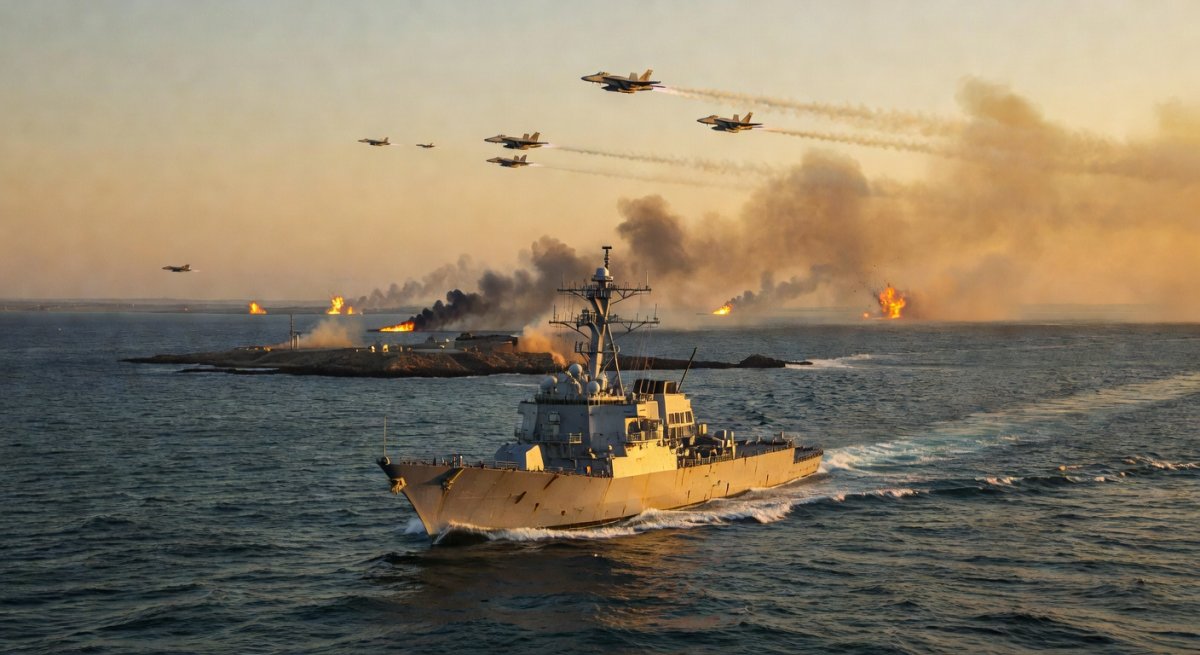
Iran retaliated with seven ballistic missiles directed toward Kuwait and Bahrain. CENTCOM reported that six were intercepted by defensive systems while the seventh failed to reach its intended target. No US personnel were harmed in the barrage. The US military explicitly denied Iranian claims that the strikes damaged the 5th Fleet headquarters in Bahrain. The episode illustrated the rapid cycle of action and reaction now defining the confrontation.
Iran's Response: A Competing Narrative
Iranian state media presented a sharply different account, claiming that missile strikes had successfully hit US targets in Bahrain. The Iranian Foreign Ministry accused Washington of violating the ceasefire and labeled the radar site strikes as unjustified aggression that demanded further response. Official statements emphasized Iran's right to defend its territory and interests against external pressure. The narrative circulated widely on state television and social media channels inside Iran. Tehran portrayed the US actions as part of a pattern of provocation designed to undermine the truce. This version of events has been promoted to domestic audiences as evidence of Iranian resilience.
Tehran's leadership described the ballistic missile barrage as legitimate retaliation for prior US strikes. Iranian officials stated they are fully prepared for a collapse in negotiations and accused the United States of using the ceasefire as cover for continued military pressure. The messaging from senior figures has been consistent in rejecting any notion of Iranian weakness. Preparations for potential further escalation appear to be underway across military and civilian sectors. The stance reflects a determination to maintain deterrence even at the risk of renewed fighting.
The deep divergence between US and Iranian accounts reflects a broader information war in which both sides craft narratives for domestic audiences and international allies. Objective verification of battlefield claims remains extremely difficult amid restricted access and competing official statements. Independent observers have limited means to confirm details in real time. This environment increases the chance of misperception driving policy decisions on both sides.
The Ceasefire: A Fragile Truce Under Growing Strain
The ceasefire emerged from intensive shuttle diplomacy involving Pakistan, Oman, Egypt, and Turkey. President Trump announced the initial truce in early April 2026 after weeks of direct military exchanges between US and Iranian forces across the Gulf region. The agreement was viewed at the time as a narrow but necessary pause to prevent wider war. Mediators invested significant political capital to secure even the limited terms that were reached. The truce included commitments to avoid direct strikes and to reopen limited channels for talks. Its survival has depended on restraint that both sides have found difficult to maintain.
A tentative framework for a 60-day extension has been presented to the White House. President Trump has not yet signed off, requesting tougher terms on the full reopening of the Strait of Hormuz and stricter conditions on Iran's uranium enrichment activities. The additional demands have complicated efforts by mediators to lock in an extension before the current deadline. Iranian negotiators have signaled resistance to further concessions under pressure. The absence of agreement leaves the existing ceasefire in a precarious state.
Each new exchange of fire erodes the trust necessary for diplomatic progress and empowers hardliners in both Tehran and Washington. The current escalation may have set back weeks of painstaking mediator work. Time is now short for salvaging the truce before positions harden further.
The Nuclear Dimension: Stalled Talks and Red Lines
Iran's nuclear program remains the most intractable issue dividing the two sides. US negotiators have demanded that Iran provide binding assurances it will not pursue nuclear weapons, accept severe limits on centrifuge operations at Fordow and Natanz, and permit intrusive IAEA inspections without prior notice. These conditions go beyond previous frameworks and have met strong resistance in Tehran. The nuclear file continues to overshadow all other elements of the ceasefire discussions. Progress on this track is considered essential for any lasting agreement.
Washington has also called for Iran to hand over or down-blend its stockpile of highly enriched uranium and accept a multi-year moratorium on enrichment above 3.67 percent. Tehran has rejected these terms as infringements on its rights under the Non-Proliferation Treaty. The gap between the two positions has narrowed little despite months of indirect talks. Iranian officials continue to insist on maintaining enrichment capacity for civilian purposes.
Prediction markets currently estimate only a 38 percent probability of a nuclear framework agreement by late July. This reflects the deep divisions on virtually every substantive issue and the lack of trust between the two sides. Without movement on the nuclear question, other elements of the ceasefire remain vulnerable.
Global Stakes: Energy Markets and the Strait of Hormuz
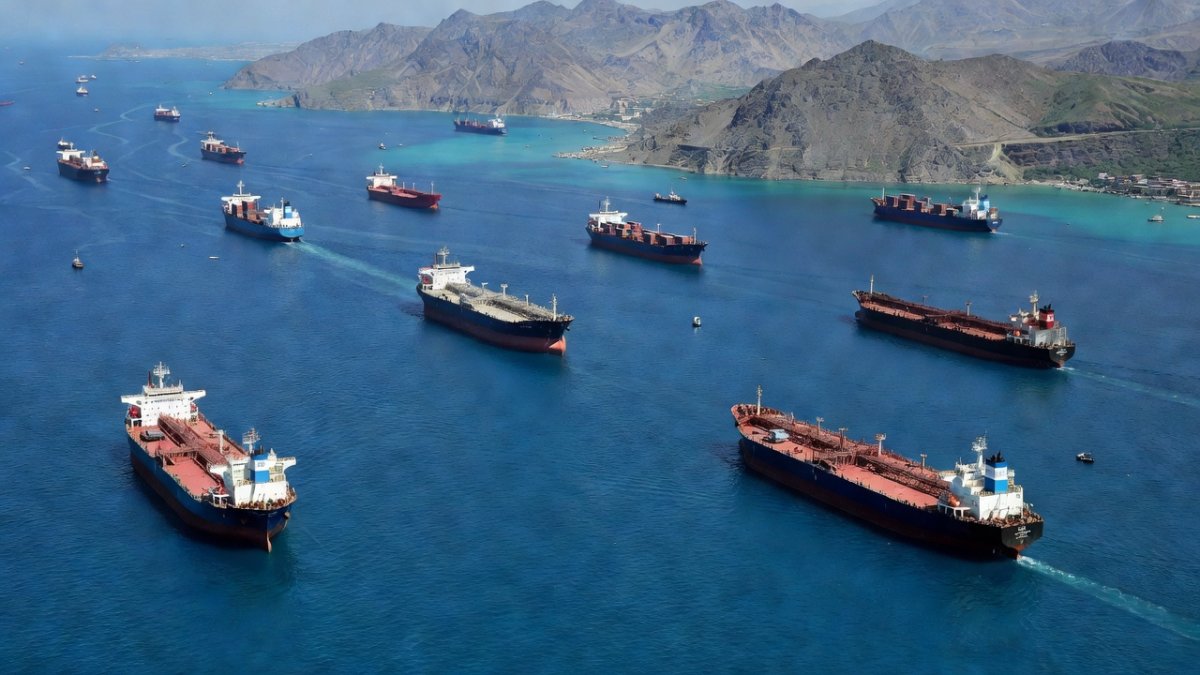
The Strait of Hormuz is one of the world's most critical energy chokepoints. Any sustained disruption to shipping through this narrow waterway would trigger immediate oil and gas price spikes with serious consequences for global inflation and economic growth. Markets have already begun pricing in higher risk premiums following the latest strikes. Central banks in major economies are monitoring developments closely for signs of sustained supply pressure.
Commercial shipping traffic through the strait has already declined significantly. Insurance premiums for vessels operating in Gulf waters have risen sharply. Analysts draw comparisons to the Tanker War of the 1980s when shipping losses mounted dramatically and global energy supplies faced repeated interruptions. The current trend suggests companies are adopting a more cautious posture.
The economic dimension places extraordinary pressure on both governments to find a diplomatic pathway. Yet the political costs of compromise rise with every military exchange, making a negotiated solution harder to sell at home. Energy security concerns now intersect directly with the military and diplomatic calculations in both capitals.
Analysis and Outlook: A Ceasefire on the Brink
This exchange of direct strikes represents the most dangerous test of the ceasefire since its inception in April. Unlike earlier incidents involving proxies, both sides have now conducted direct military action against each other's forces and territorial assets. The threshold for escalation has therefore been lowered. The risk of further rounds of retaliation remains high in the coming days.
For Washington, the escalation undercuts President Trump's stated goal of reducing US military commitments in the Middle East. For Tehran, the strikes expose the limits of Iran's deterrent capacity against American precision strike capabilities and multi-layered missile defenses. Both capitals face difficult choices about how far to push the current confrontation.
Omani and Pakistani mediators continue their shuttle diplomacy, but the diplomatic window is rapidly narrowing. If the ceasefire collapses entirely, the Gulf could face an open-ended conflict with unpredictable consequences for energy markets, regional security, and the broader Middle East order. The world watches as two powers test each other's limits. The question is no longer whether the ceasefire holds through today — it is whether either side still possesses the political will to rebuild it when this round of violence subsides.
By Irina Volkov, Staff Writer
This article was produced with AI-assisted research and editorial support. Reporting is based on sources cited in the article.
What's Your Reaction?
 Like
0
Like
0
 Dislike
0
Dislike
0
 Love
0
Love
0
 Funny
0
Funny
0
 Wow
0
Wow
0
 Sad
0
Sad
0
 Angry
0
Angry
0

Russia/Eastern Europe Correspondent at Global1.News. Covering Russian politics, energy, security, and the shifting dynamics of the post-Soviet space. Provides clear-eyed analysis on one of the world's most opaque regions.














Comments (0)