
Ocean Observatories Initiative: Why Americans Are Searching — And What It Means for Climate, Hurricanes, and the Pacific Alliance
Opening — The Hook Folks, two stories are lighting up search bars this week, and they both point straight at the same uncomfortable truth: the oceans are changing fast, and the politics around them are getting messier by the day. The Ocean Observatories Initiative, that massive National Science Foundation network of buoys, gliders, and seafloor cables, has jumped past 5,000 sea
Opening — The Hook
Folks, two stories are lighting up search bars this week, and they both point straight at the same uncomfortable truth: the oceans are changing fast, and the politics around them are getting messier by the day. The Ocean Observatories Initiative, that massive National Science Foundation network of buoys, gliders, and seafloor cables, has jumped past 5,000 searches in the United States alone. At the same time, Philippine Vice President Sara Duterte’s impeachment drama is dominating feeds in Manila. These aren’t random spikes. They’re connected through climate data, military alliances, and the raw reality that what happens in the Atlantic and Pacific hits American coasts and security interests hard.
Let’s cut through the noise. The OOI isn’t some abstract science project. It’s a real-time sensor grid stretching from the stormy Irminger Sea near Iceland to the cabled arrays off the Pacific Northwest. When new ocean-heat numbers drop or hurricane models need updating, this infrastructure supplies the raw numbers. Meanwhile, Duterte’s fight over impeachment charges is testing the U.S.-Philippines Enhanced Defense Cooperation Agreement at a moment when South China Sea tensions are already high. One story is about instruments in the water. The other is about whether those instruments will keep feeding data into shared defense and forecasting systems. Both deserve your attention.
I’ve watched these trends build for months. Ocean warming isn’t a future problem; it’s already shifting the Gulf Stream and feeding stronger storms that slam the Southeast. Philippine politics affects whether American forces can stage out of bases near the same waters the OOI monitors. If you live anywhere near a coast or care about next season’s insurance rates, these two threads matter more than most headlines admit.
(Global 1 News)
The Ocean Observatories Initiative: What Americans Are Searching For
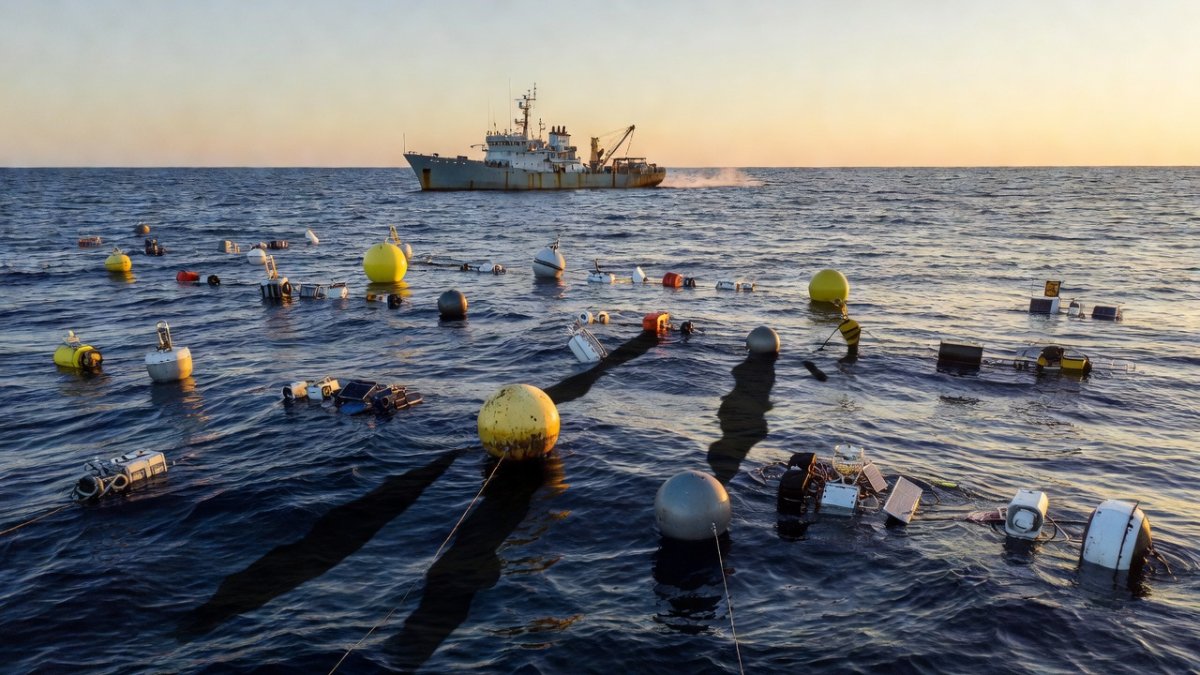
The search surge around the Ocean Observatories Initiative tracks directly to fresh data releases on ocean heat content and Atlantic circulation changes. NSF’s program runs fixed and mobile platforms across multiple arrays. The Regional Cabled Array off Oregon and Washington delivers continuous power and fiber-optic bandwidth to instruments on the seafloor and in the water column. The Endurance Array sits on the continental shelf and slope in the same region, capturing seasonal upwelling that drives fisheries. The Pioneer Array, recently relocated from the Mid-Atlantic Bight to the southern Mid-Atlantic, now focuses on Gulf Stream interactions. Global sites include the Irminger Sea array, which sits in one of the stormiest patches of the North Atlantic and measures deep convection that feeds the Atlantic Meridional Overturning Circulation.
Why the sudden interest? Recent glider and mooring data have shown measurable freshening and warming at intermediate depths in the Irminger Sea, raising questions about AMOC stability. That circulation moves roughly 15 to 20 million cubic meters of water per second northward in the upper layers. When it slows, heat that normally stays in the subtropical gyre can shift, altering hurricane fuel loads along the U.S. East Coast. The OOI’s cabled instruments record temperature, salinity, and velocity every second, giving modelers ground truth they can’t get from satellites alone. NSF budget discussions in Congress have also put the program under scrutiny, with some lawmakers asking whether the roughly $44 million annual operating cost delivers enough applied forecasting value. Those debates leaked into public conversation this week.
Recent deployments added new biogeochemical sensors to the Pioneer Array and upgraded acoustic modems on the Regional Cabled Array. These upgrades let researchers track oxygen minimum zones and carbon uptake in real time. The data flow straight into NOAA’s hurricane intensity models and into fisheries stock assessments used by the Pacific Fishery Management Council. When a Category 4 storm forms, the difference between a 24-hour and a 48-hour intensity forecast often comes down to how much heat content the OOI arrays measured in the days before landfall. That’s the practical payoff Americans are now Googling.
Why This Matters for Climate Science — and Your Wallet
Ocean heat content has risen steadily since the 1990s, and the OOI arrays give the vertical resolution that Argo floats alone cannot provide. The Endurance Array’s shallow moorings sit at 25 to 80 meters, exactly where tropical cyclone mixing occurs. When those sensors record an extra 0.5 degrees Celsius in the upper 100 meters, hurricane rapid-intensification algorithms adjust upward. That adjustment translates into higher Category 3-to-5 probabilities for storms tracking toward the Carolinas and Georgia. Insurance actuaries already bake those probabilities into coastal premiums. The data are therefore not just academic; they move money.
The Irminger Sea array sits at the heart of AMOC monitoring. Its deep moorings reach 2,800 meters and track the southward flow of North Atlantic Deep Water. A sustained weakening of that limb would eventually reduce the northward transport of heat that keeps Western Europe milder than its latitude suggests. Closer to home, the same circulation influences the position of the Gulf Stream separation point off Cape Hatteras. When that point shifts, the warm core of the current moves closer to the shelf, increasing both sea-level rise rates and the energy available for nor’easters. OOI velocity data are now being assimilated into the HYCOM ocean model that the Navy and NOAA both run. That loop directly affects the storm-surge forecasts issued for ports from Savannah to Boston.
Fisheries feel the impact too. The Pioneer Array’s new nutrient sensors track nitrate and silicate pulses that fuel spring blooms. Those blooms support the menhaden and squid stocks that feed everything from striped bass to tuna. When upwelling weakens, as the Endurance Array has documented during recent marine heat waves, recruitment drops and quotas tighten. Commercial fishermen in Oregon and Washington already see the connection. Recreational anglers on the East Coast will feel it next when summer flounder and black sea bass distributions shift north. The OOI data are the early-warning system that determines whether a season stays open or closes early.
From the Atlantic to Atlanta: A Local Angle
Georgia and the broader Southeast sit directly downstream of the Gulf Stream and the warm eddies the OOI arrays now track in real time. When the Pioneer Array records a warm-core ring pinching off and drifting toward the shelf, coastal water temperatures rise faster than the seasonal average. That extra heat lengthens the Atlantic hurricane season’s high-risk window and increases the likelihood that a storm maintains major-hurricane strength until it reaches the Georgia Bight. The Regional Cabled Array’s sister data streams from the Mid-Atlantic feed the same models that the National Hurricane Center uses for the 2024 and 2025 seasons.
Sea-level rise along the Georgia coast already runs 3 to 4 millimeters per year, higher than the global average because of land subsidence and the dynamic height of the Gulf Stream. OOI bottom-pressure sensors on the Endurance and Pioneer arrays help separate the steric component (thermal expansion) from the mass component (ice melt). When those numbers climb, the U.S. Army Corps of Engineers updates its coastal storm-risk management plans for Tybee Island and Jekyll Island. Property owners see the results in updated flood-insurance rate maps. The data chain is direct: sensor to model to map to premium.
Port operations in Savannah and Charleston also depend on accurate current forecasts. The OOI’s acoustic Doppler current profilers measure the Gulf Stream’s nearshore meanders that can add or subtract a knot of speed for inbound container ships. A one-knot difference changes fuel burn and arrival windows. When the arrays go down for maintenance, the backup models lose resolution and shipping companies pay the difference. That’s why the recent sensor upgrades on the Regional Cabled Array matter to logistics managers in Atlanta as much as to oceanographers in Woods Hole.
International Watch: Sara Duterte's Impeachment and the Pacific Alliance
While Americans search ocean data, Philippine politics is testing the durability of the U.S. alliance that protects many of the same Pacific waters. Vice President Sara Duterte faces impeachment complaints centered on alleged misuse of confidential funds and public statements that critics say undermine the chain of command. Her public response has been defiant, framing the moves as politically motivated attacks ahead of future elections. The outcome will influence whether the Enhanced Defense Cooperation Agreement expands or stalls.
EDCA sites in Palawan and northern Luzon give U.S. forces rotational access within striking distance of the South China Sea. Those same waters are monitored by OOI global arrays and by Philippine oceanographic vessels that share data with NOAA. If political instability delays base construction or restricts joint exercises, the real-time data pipeline that feeds hurricane and fisheries models could face gaps. The Regional Cabled Array already relies on international partnerships for ship time and calibration cruises; any friction in Manila ripples outward.
The South China Sea itself is warming at rates comparable to the Atlantic subtropical gyre. Philippine and U.S. naval assets use the same heat-content products derived in part from OOI-style observations. When Duterte’s legal fight distracts Manila’s defense establishment, coordination on maritime domain awareness slips. That coordination matters for everything from illegal fishing enforcement to search-and-rescue after a typhoon. The impeachment drama is therefore not purely domestic; it touches the same ocean-observation backbone that Americans are suddenly researching in large numbers.
What You Can Do Right Now
Start by checking the OOI data portal directly. The site publishes live plots from the Irminger Sea and Pioneer arrays. Spend ten minutes looking at the temperature and velocity time series for the upper 200 meters. You’ll see the same signals that forecasters use. Share those plots with your local emergency-management office or county commission when they discuss coastal resilience budgets. Concrete numbers beat vague warnings every time.
Second, track the Philippine political situation through official channels rather than social-media clips. The State Department releases regular updates on EDCA implementation. When those updates mention joint oceanographic cruises or data-sharing agreements, note the dates. Those agreements keep the OOI arrays calibrated and the models honest. Your representatives in Congress need to hear that sustained funding for NSF ocean infrastructure protects both science and alliance stability.
Finally, push your state insurance commissioner to require public disclosure of how ocean-heat data enter rate calculations. The OOI arrays are already producing the evidence. Making that evidence visible to policyholders creates accountability and keeps pressure on both science agencies and political leaders to maintain the networks that matter. The oceans are talking. The question is whether we keep listening.
By Jessica Ali, Staff Writer
This article was produced with AI-assisted research and editorial support. Reporting is based on sources cited in the article.
What's Your Reaction?
 Like
0
Like
0
 Dislike
0
Dislike
0
 Love
0
Love
0
 Funny
0
Funny
0
 Wow
0
Wow
0
 Sad
0
Sad
0
 Angry
0
Angry
0

Editor-in-Chief at Global1.News. Atlanta-based journalist who cuts through the BS and tells it like it is. Lead anchor, host, and the voice you hear when the spin stops and the truth starts.














Comments (0)