
Herzog Urges Israel-Saudi Dialogue Amid US-Iran War
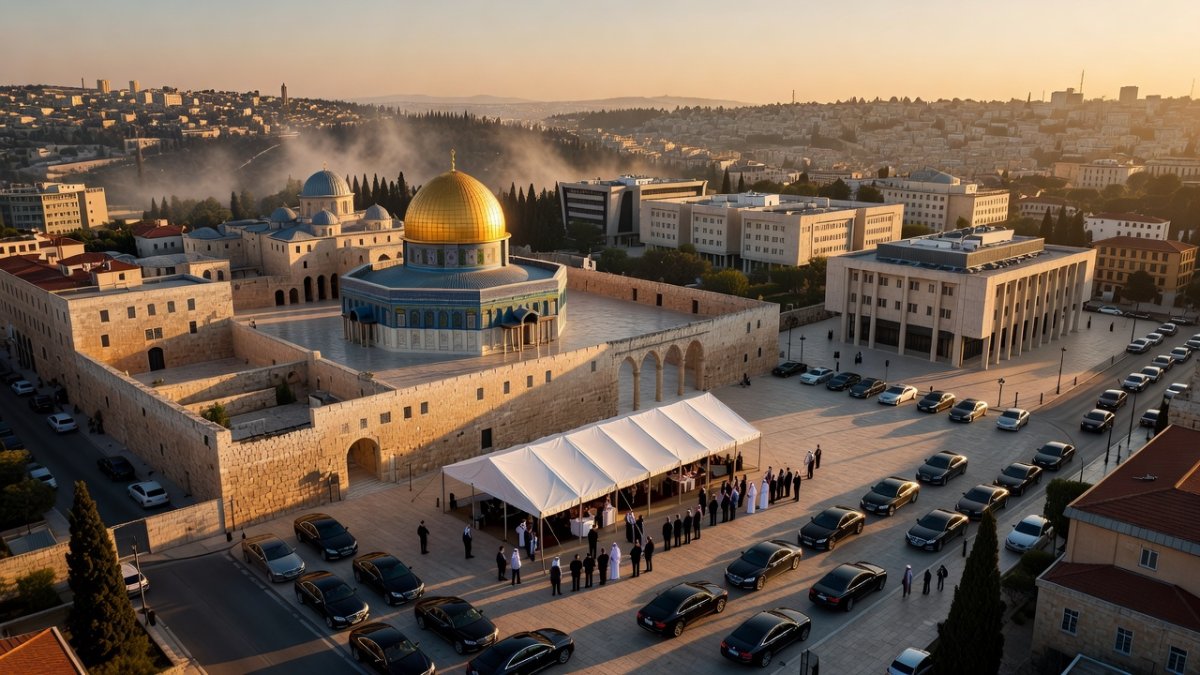
In the fog of an escalating US-Iran confrontation that has already shut the Strait of Hormuz and sent oil prices spiking, Israeli President Isaac Herzog used an Arab media platform to sketch a bold vision of regional realignment. His carefully timed interview signals that Jerusalem sees the current crisis not only as a military emergency but as a rare opening to redraw alliances from Riyadh to Damascus. The stakes could not be higher for Lebanon and the wider Levant. Herzog U
In the fog of an escalating US-Iran confrontation that has already shut the Strait of Hormuz and sent oil prices spiking, Israeli President Isaac Herzog used an Arab media platform to sketch a bold vision of regional realignment. His carefully timed interview signals that Jerusalem sees the current crisis not only as a military emergency but as a rare opening to redraw alliances from Riyadh to Damascus. The stakes could not be higher for Lebanon and the wider Levant.
Herzog Urges Saudi Ties as Iran Crisis Escalates
Jerusalem, Occupied Palestinian Territories — Article continues...
Direct Dialogue with Riyadh as Strategic Imperative
Herzog described normalisation with Saudi Arabia as "my dream," insisting that only direct talks could unlock the full potential of regional integration. He framed the kingdom not merely as a future partner but as the indispensable anchor for any durable architecture that includes Israel. The call comes at a moment when Riyadh's calculations are shaped by the same Iranian threat that prompted the US naval moves in the Gulf.
The Abraham Accords of 2020 established a template for normalization that bypassed immediate Palestinian statehood requirements, enabling the UAE, Bahrain, and Morocco to formalize ties with Israel through U.S.-brokered deals. Saudi Arabia, however, has consistently tied any similar move to measurable progress on Palestinian statehood, a stance reiterated by Crown Prince Mohammed bin Salman in multiple statements. Strategic analysts at the Washington Institute note that Saudi-Iran rivalry creates overlapping threat perceptions with Israel, particularly regarding proxy activities in Yemen and Iraq. Jordan's potential role as a discreet mediator, leveraging its intelligence channels and border security cooperation, could facilitate back-channel talks. Economic incentives further reinforce this calculus: joint development of Red Sea desalination and port infrastructure could generate mutual revenues exceeding $50 billion annually by 2030, per World Bank regional modeling.
Humanitarian Acknowledgment and Political Limits
The president stated that his heart "aches" for innocent civilians in Gaza. This phrasing, unusual for an Israeli head of state addressing an Arab outlet, signals awareness that Arab public opinion remains fixated on Palestinian suffering. Yet Herzog stopped short of policy concessions, keeping the focus on Iran as the deeper structural driver of the current war.
Iran's Nuclear Programme as Root Cause
Herzog repeatedly identified Tehran's nuclear ambitions as the central threat animating both the Gaza conflict and the wider regional crisis. He endorsed diplomacy but welcomed a "firm" American response should talks fail. In the context of the Hormuz blockade and strikes on US facilities, this position aligns Israel with Washington's maximum-pressure track while leaving room for negotiated de-escalation.
IAEA quarterly reports confirm Iran has maintained uranium enrichment at 60 percent purity, within striking distance of the 90 percent weapons-grade threshold. The June 17 ceasefire agreement, intended to cap enrichment and restore inspections, collapsed amid renewed disputes over undeclared sites, leaving breakout timelines estimated at weeks rather than months. Iran's proxy architecture amplifies these risks. Hezbollah's estimated 150,000 rockets in Lebanon, Houthi attacks that forced 12 percent of global container traffic to reroute around the Cape of Good Hope, and Popular Mobilization Forces operations in Iraq collectively constrain Israeli and Gulf freedom of action. Strategic assessments from the International Institute for Strategic Studies highlight that a shortened Iranian breakout window would compel Gulf states to accelerate their own hedging strategies.
Broader Arab Table and the Syrian File
Beyond Saudi Arabia, Herzog expressed a desire to see "Israel at the table with all Arab states," explicitly mentioning Syria. The reference to Damascus is notable given the continued Russian and Iranian presence there. Any normalisation move would require careful choreography with Ankara and the Gulf states that have already invested in post-Assad stabilisation.
Syria's 2023 readmission to the Arab League marked a pragmatic shift driven by UAE and Bahraini engagement, seeking to reduce Iranian and Russian leverage over Damascus. Herzog's interview referenced this trend as an opening for broader Arab-Israeli coordination, noting that reconstruction contracts and energy transit routes could serve as incentives for Syrian restraint. Turkey's dual role as NATO member and actor in northern Syria adds further complexity. Economic analyses from the Atlantic Council suggest that trilateral infrastructure projects linking Syrian ports to Gulf markets could generate $30-40 billion in annual trade once stabilized.
Respect for Washington Despite Policy Friction
Herzog voiced respect for US Vice President JD Vance even while acknowledging tensions over the pace and scope of American operations. The comment reflects Jerusalem's need to maintain bipartisan support in Washington at a time when the Strait of Hormuz crisis could expand into a prolonged energy shock with global consequences.
Strategic Implications for Lebanon and the Levant
From Beirut, Herzog's interview reads as an attempt to reshape the narrative ahead of any post-conflict settlement. If Riyadh and Damascus eventually normalise, Lebanon's own internal balance—already strained by Hezbollah's entanglement with Iran—would face new pressures. The president's emphasis on Iranian nuclear drivers suggests that future Israeli actions may target supply lines through Syria rather than Gaza alone.
Outlook: From Rhetoric to Architecture
Herzog's intervention does not alter battlefield realities on day six of the US-Iran war. It does, however, sketch the diplomatic end-state Israel hopes to reach once the immediate maritime and missile exchanges subside. Whether Riyadh or Damascus will respond positively depends less on Israeli rhetoric and more on Washington's ability to translate naval dominance into lasting constraints on Iran's nuclear programme.
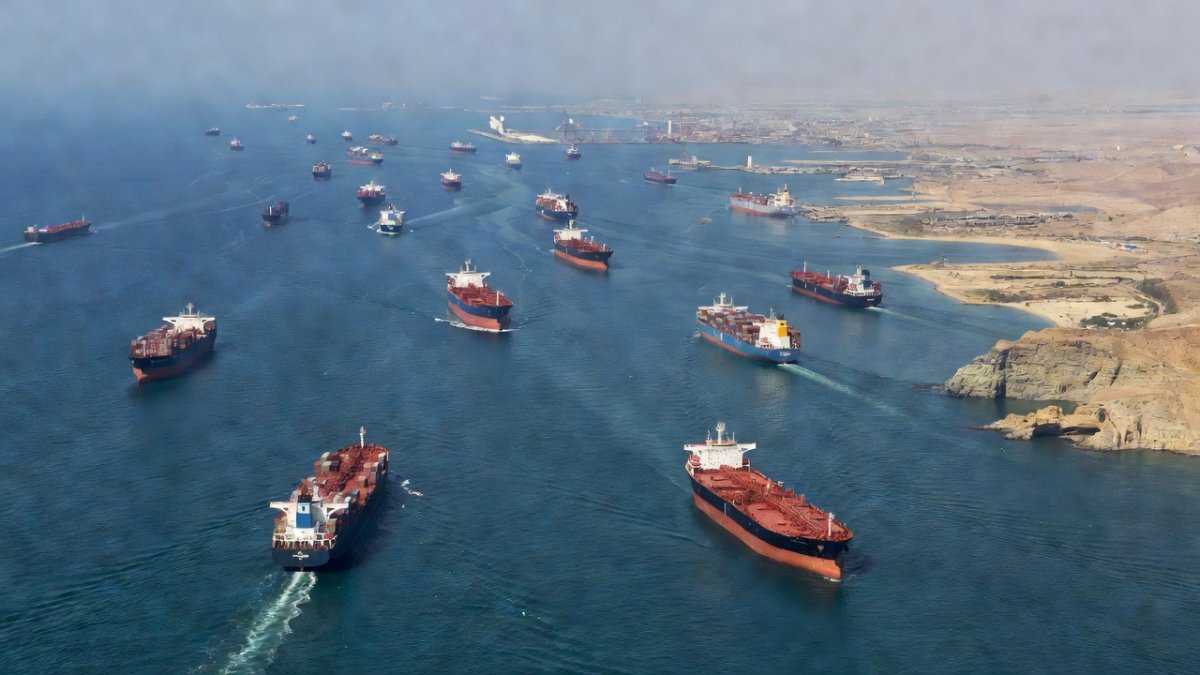
The renewed threat of Strait of Hormuz disruptions pushed Brent crude to approximately $85.85 per barrel. During the brief June ceasefire window, Iran exported roughly 74 million barrels valued at $6 billion, revenues now jeopardized by reimposed restrictions. Gulf sovereign wealth funds hold combined assets exceeding $3 trillion. Strategic modeling by the Oxford Institute for Energy Studies indicates that a sustained closure could add $20-30 per barrel to global prices. This scenario incentivizes Gulf states to accelerate diversification away from Hormuz-dependent exports through expanded Red Sea and pipeline infrastructure.
 By Malik Hassan, Staff Writer
This article was produced with AI-assisted research and editorial support. Reporting is based on sources cited in the article.
What's Your Reaction?
 Like
0
Like
0
 Dislike
0
Dislike
0
 Love
0
Love
0
 Funny
0
Funny
0
 Wow
0
Wow
0
 Sad
0
Sad
0
 Angry
0
Angry
0
Middle East Correspondent at Global1.News. Based in Beirut, covering politics, conflict, energy, and society across the Middle East. Brings context and depth to a region often reduced to headlines.









Comments (0)