
US and Iran Trade Escalating Waves of Strikes as Strait of Hormuz Crisis Threatens Global Energy Markets
In a recent BBC News report, the escalating military confrontation between the United States and Iran has entered its most dangerous phase yet, with both nations exchanging successive waves of airstrikes and missile attacks across the Middle East. The resumption of hostilities marks a decisive collapse of the June ceasefire agreement and threatens to destabilise global energy markets as shipping through the Strait of Hormuz grinds to a halt.
In a recent BBC News report, the escalating military confrontation between the United States and Iran has entered its most dangerous phase yet, with both nations exchanging successive waves of airstrikes and missile attacks across the Middle East. The resumption of hostilities marks a decisive collapse of the June ceasefire agreement and threatens to destabilise global energy markets as shipping through the Strait of Hormuz grinds to a halt.
US and Iran Trade Escalating Waves of Strikes as Strait of Hormuz Crisis Threatens Global Energy Markets
Moscow, Russia — 17 July 2026 — The United States and Iran have entered the most intense phase of their military confrontation since the conflict began in February, with Washington launching multiple waves of precision strikes against Iranian military infrastructure while Tehran retaliates with missile and drone attacks on US military facilities across the Gulf states. The escalation, which has already left at least 35 people dead and more than 300 injured according to Iran's Health Ministry, represents a complete breakdown of the diplomatic framework established in June and threatens to draw the entire region into a full-scale war.
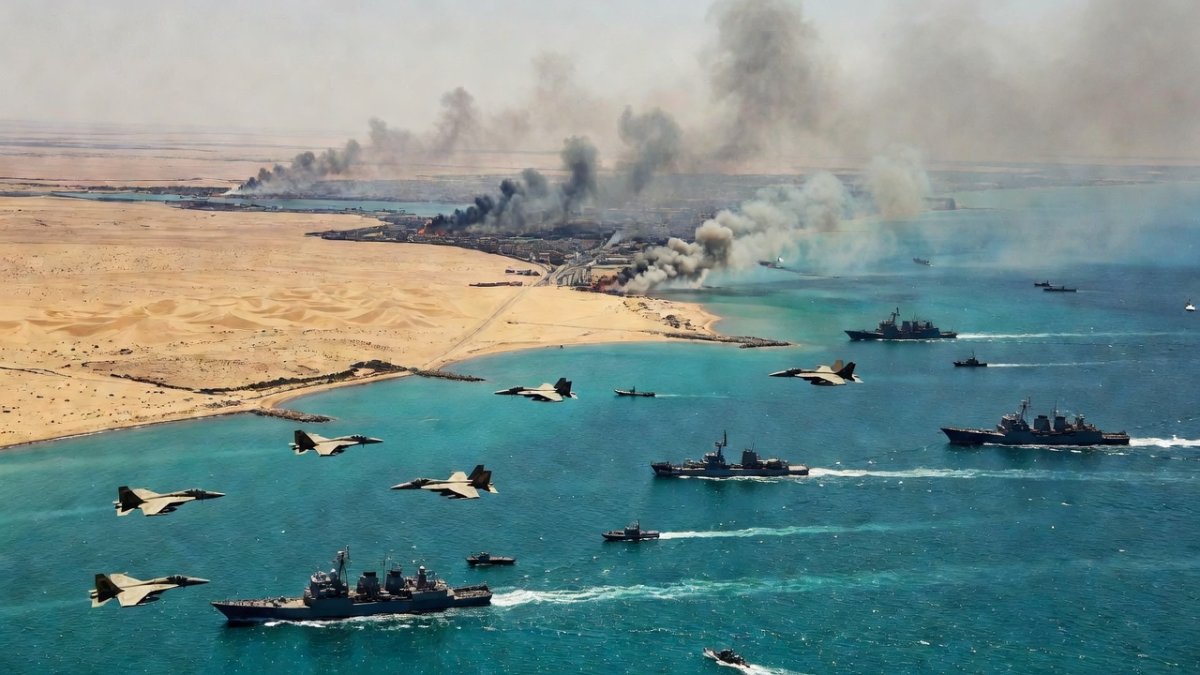
Regional Fallout and the Gulf States
The Gulf states now find themselves trapped between two powerful adversaries whose confrontation shows no sign of slowing. Kuwait’s military command has issued repeated public statements detailing how its forces intercepted four cruise missiles and twenty-one drones launched from Iranian territory. These defensive actions came after the Islamic Revolutionary Guard Corps targeted Ali Al Salem Air Base, striking Patriot batteries and fuel storage facilities. Kuwaiti officials have expressed alarm that their territory has become an unintended battlefield despite maintaining careful diplomatic ties with both Washington and Tehran.
Qatar and Saudi Arabia, whose oil tankers were attacked in the Strait of Hormuz, have strongly denounced the strikes that triggered the latest escalation. Both nations have called for immediate restraint while privately urging the United States to avoid further widening the conflict. Their leaders fear that any prolonged closure of the waterway would devastate their economies, which remain heavily dependent on secure energy exports through the narrow passage.
Jordan now faces similar pressures after Iranian missiles targeted Al-Azraq Air Base. The kingdom intercepted eight incoming projectiles, yet the episode has exposed how even distant Gulf partners can be drawn into direct confrontation. The Gulf Cooperation Council states are attempting to balance their longstanding security relationships with Washington against the growing risk of full-scale regional war that could destroy critical infrastructure and trigger refugee flows across borders.
Iranian leadership continues to frame these developments as a defensive struggle against American imperialism. Parliamentary speaker Mohammad Bagher Ghalibaf has declared that the era of bullying has ended, while the Iranian Foreign Ministry spokesman Esmail Baghaei has accused the United States of deliberately sabotaging the June memorandum. Gulf capitals, however, worry that Iranian threats to impose a blockade on the Strait of Hormuz could bring economic devastation far beyond the immediate combatants, affecting every nation that relies on stable energy supplies from the region.
The GCC states face mounting economic pressure as they navigate their position between Washington and Tehran, with the blockade and strikes disrupting established trade routes and deterring foreign capital. Tourism revenues across the Gulf have declined sharply amid heightened security concerns, while investment flows into major projects have slowed as businesses reassess exposure to regional instability. The UAE’s longstanding role as a regional business hub has come under particular strain, with companies exploring relocation options to more distant financial centres. Over the longer term, these dynamics threaten to erode Gulf sovereignty by limiting the independent foreign policy choices available to smaller states caught in the crossfire of great-power competition.
The Strait of Hormuz: Energy War and Economic Consequences
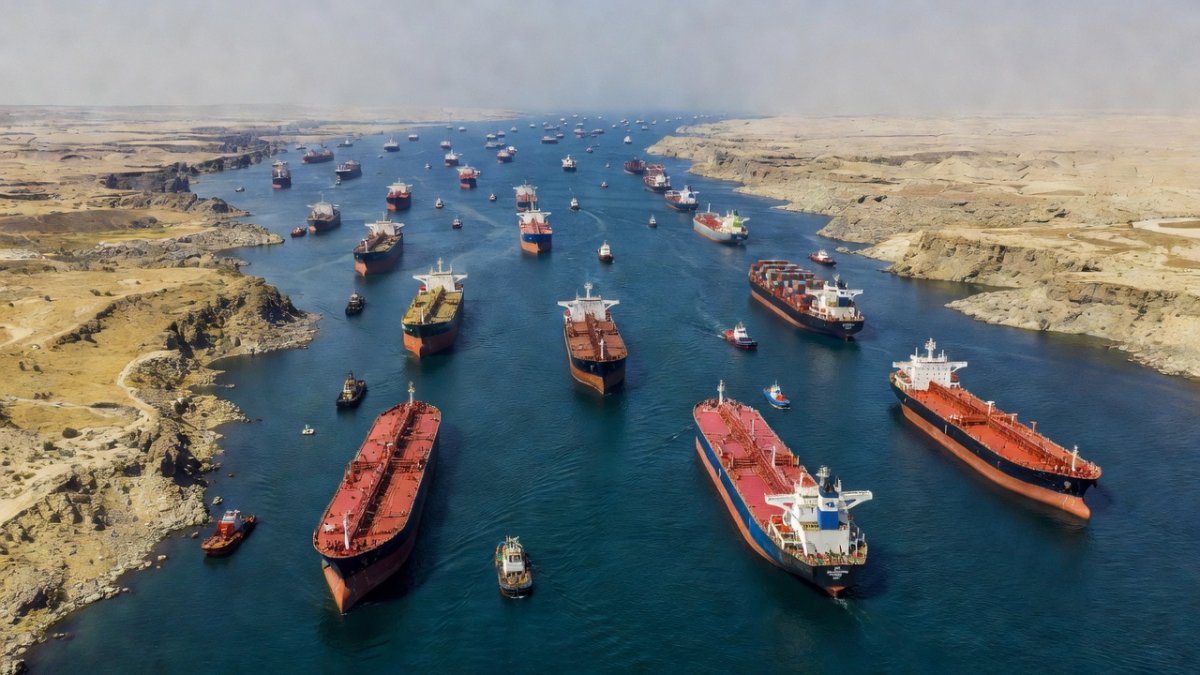
CENTCOM has enforced a tightening blockade by disabling the Curacao-flagged tanker M/T Belma as it attempted to reach Iran’s Kharg Island. Two Hellfire missiles were used after the vessel ignored repeated warnings. Two other tankers that complied with instructions were redirected without incident. These actions demonstrate how the United States is now willing to use direct force against commercial shipping in order to prevent Iranian oil revenues from sustaining military operations.
Shipping traffic through the Strait of Hormuz has dwindled dramatically in recent days. Insurance costs for vessels transiting the area have risen sharply, with some underwriters refusing coverage altogether. Oil prices have responded immediately, with Brent crude rising more than three percent to reach seventy-six dollars per barrel. The combination of reduced volume and higher risk premiums is already affecting global energy markets far beyond the Gulf.
Iran has warned that any ships failing to coordinate with its newly declared Persian Gulf Strait Authority will face unspecified consequences. This additional layer of uncertainty has prompted several major shipping companies to reroute vessels around the Cape of Good Hope, adding weeks to delivery schedules. The economic ripple effects are beginning to appear in Europe and Asia, where refineries dependent on Gulf crude are facing potential shortages if the crisis continues.
Analysts note that sustained disruption could trigger broader energy shortages across import-dependent economies. The International Energy Agency has begun contingency planning, while Russia and other non-Gulf producers watch the price surge with mixed interest. The maritime dimension of this conflict now carries consequences that extend well beyond the immediate military exchanges between Washington and Tehran.
The 2019 attacks on Saudi Aramco facilities at Abqaiq and Khurais already demonstrated the extreme vulnerability of Gulf energy infrastructure to disruption. The current crisis surpasses those events in both scope and duration, amplifying risks across global supply chains. Asian economies such as Japan, South Korea and India, which rely heavily on Gulf crude for their refining sectors, now confront the prospect of sustained price volatility and potential shortfalls that could constrain industrial output and raise costs for consumers across the region.
Russia, China and the Geopolitical Chessboard
The Kremlin views the intensifying US-Iran confrontation as a strategic opportunity that diverts American military resources and political attention away from Ukraine. Higher oil prices resulting from the Strait of Hormuz crisis directly benefit Russia’s state budget, providing additional revenue at a time when Western sanctions have constrained other income sources. Moscow has refrained from overt military involvement while quietly encouraging Tehran to maintain pressure on Washington.
At the same time, Russian officials recognize that prolonged chaos in the Gulf risks triggering a global recession that would ultimately harm all major economies, including Russia’s. The Foreign Ministry has called for renewed diplomatic efforts, yet the Kremlin’s calculations remain focused on how the conflict weakens US alliances with traditional Gulf partners and stretches American naval commitments across multiple theaters.
China’s position is more delicate. Beijing maintains deep economic ties with both Gulf producers and Iran, relying on stable energy flows through the Strait of Hormuz to sustain its industrial base. Chinese diplomats have urged restraint in private communications with both sides, while avoiding any public alignment that could damage relations with Washington. Iran’s post-Khamenei leadership, still consolidating power, has complicated Beijing’s efforts to maintain balanced engagement.
The crisis also affects Russia’s strategic calculations in Syria and the Caucasus, where reduced US focus could create openings for Moscow to strengthen its influence. However, the risk of uncontrolled escalation remains a concern for all external powers watching the confrontation unfold.
Analysis: What Comes Next — A Region on the Brink
President Trump’s recent signals that the United States may broaden strikes to include civilian infrastructure such as power plants, bridges, and transport hubs represent a significant shift in the nature of the conflict. Such targeting would move the confrontation beyond purely military objectives and could produce large-scale civilian casualties that would further inflame regional tensions. Iranian army spokesman Mohammad Akraminia has already warned that a significant portion of the armed forces’ capabilities have not yet been demonstrated and that new arenas of confrontation may open.
The United States has now conducted strikes in northern Iran for the first time, hitting a civilian airport in Semnan. This expansion of the geographic scope suggests that Washington is prepared to apply pressure across a wider area. Diplomatic off-ramps are narrowing rapidly while Iran’s new leadership remains in transition following the funeral proceedings for Ayatollah Ali Khamenei in Mashhad.
The sixty-day negotiation window established in the June memorandum is rapidly closing without progress. The risk of miscalculation has grown substantially, particularly if a strike causes mass civilian deaths or damages a nuclear facility. Both sides currently show no willingness to de-escalate, and the involvement of additional regional actors increases the potential for the conflict to spiral beyond the control of any single command.
Iran’s post-Khamenei leadership has introduced new uncertainties, as internal power struggles in Tehran shape decision-making and limit coherent responses. The hardline position of the IRGC increasingly dominates over any residual moderate voices, reducing the scope for diplomatic flexibility. At the same time, the risk that Hezbollah and other Iranian proxies could open additional fronts adds further layers of complexity, raising the prospect of a multi-front regional confrontation that would be difficult for any party to contain.
By Irina Volkov, Staff Writer
This article was produced with AI-assisted research and editorial support. Reporting is based on sources cited in the article.
What's Your Reaction?
 Like
0
Like
0
 Dislike
0
Dislike
0
 Love
0
Love
0
 Funny
0
Funny
0
 Wow
0
Wow
0
 Sad
0
Sad
0
 Angry
0
Angry
0

Russia/Eastern Europe Correspondent at Global1.News. Covering Russian politics, energy, security, and the shifting dynamics of the post-Soviet space. Provides clear-eyed analysis on one of the world's most opaque regions.












Comments (0)