
U.S. and Iran Exchange Strikes as Ceasefire Fragility Exposed
Folks, buckle up because Sunday, June 28, 2026, just delivered another gut-punch to any hope of calm in the Middle East. Iran's Revolutionary Guard launched drone and missile barrages at Bahrain and Kuwait hours after fresh U.S. strikes on Iranian targets, and the fallout is already threatening to torch the fragile memorandum of understanding signed earlier this month. This is
Folks, buckle up because Sunday, June 28, 2026, just delivered another gut-punch to any hope of calm in the Middle East. Iran's Revolutionary Guard launched drone and missile barrages at Bahrain and Kuwait hours after fresh U.S. strikes on Iranian targets, and the fallout is already threatening to torch the fragile memorandum of understanding signed earlier this month. This is not some passing flare-up. This is the most serious escalation since that tentative deal gave both sides 60 days to hash out shipping in the Strait of Hormuz, lift the U.S. blockade on Iranian ports, ease sanctions, and deal with Iran's highly enriched uranium stockpile. If you're as fired up as I am about leaders playing chicken with lives, keep reading.
The Strikes That Shook the Gulf
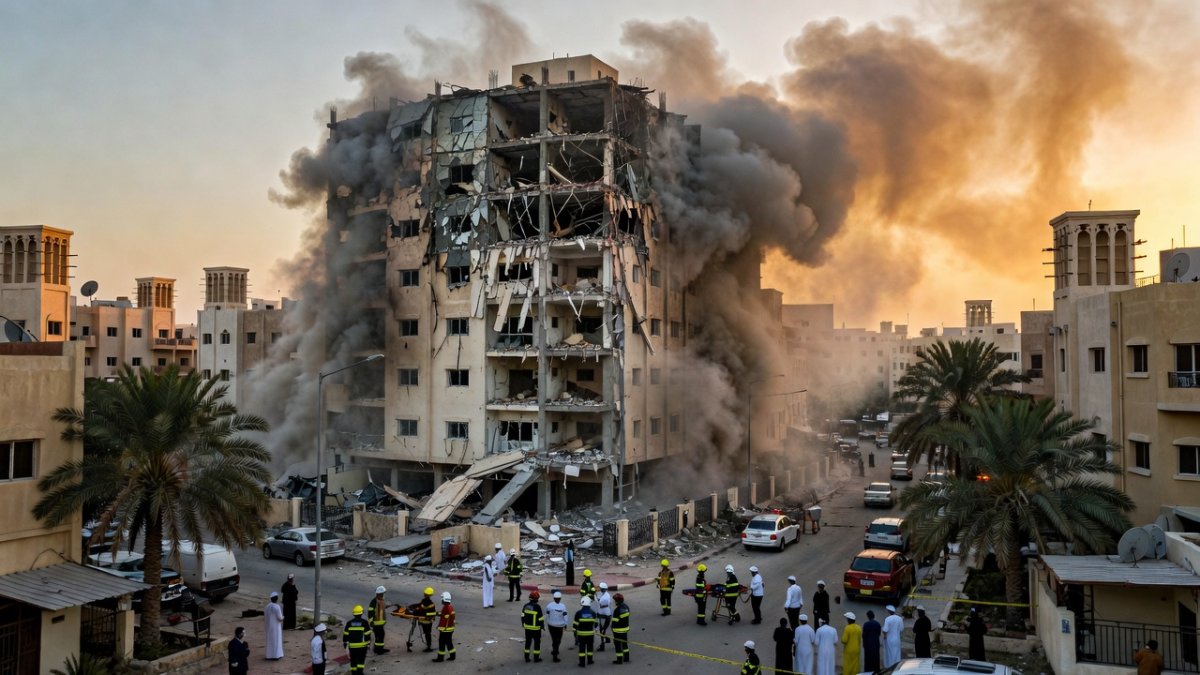
Iran's Revolutionary Guard didn't mince words in their statement carried by state-run Iranian media. They owned the drone and missile attacks outright. Kuwait moved fast, reporting that its air defenses knocked down two Iranian ballistic missiles with zero injuries or damage reported. Bahrain's Interior Ministry painted a different picture: Iranian munitions slammed into a residential building near the international airport, blowing out the top floor of an eight-story structure and shattering windows across the area. Photos released by the ministry show the raw destruction, yet miraculously no one was killed.
Let's call this exactly what it is. These weren't symbolic gestures. They were calculated moves that put civilians in the crosshairs right after the U.S. took its own military action. The timing screams escalation, not diplomacy. And the fact that both Bahrain and Kuwait escaped mass casualties this time doesn't make the intent any less dangerous. (NPR/AP)
Ceasefire Dreams Crumbling Fast
Remember that memorandum of understanding from earlier this month? It was supposed to buy 60 precious days to settle the big sticking points: Strait of Hormuz shipping, the U.S. blockade, sanctions relief, and Iran's uranium stockpile. Now those talks sit in serious jeopardy because of this latest exchange. The Revolutionary Guard's strikes came hours after U.S. action, turning what was already a tense standoff into a full-blown cycle of retaliation.
Negotiators on both sides had a narrow window. Sunday's events just slammed it shut a little tighter. This isn't political theater anymore. It's real-world brinkmanship that risks dragging in more players and more innocent lives. If the goal was to test resolve, mission accomplished. But at what cost to any lasting de-escalation?
Lebanon Front Adds Fresh Fuel
Violence between Israel and Hezbollah in southern Lebanon keeps pouring gasoline on the regional fire. On Sunday, Hezbollah killed an Israeli soldier in Deir Siryan village. Israel's military responded by taking out the man they say was responsible. Hezbollah's leader made it clear the group will keep fighting until Israel withdraws from southern Lebanon entirely.
This isn't a sideshow. It's a direct link to the bigger Iran-U.S. tensions. Every clash in Lebanon raises the temperature everywhere else. The pattern is obvious: one front heats up, and suddenly attacks fly across the Gulf. We're watching interconnected conflicts feed off each other while diplomats scramble to contain the damage.
Iran's Parliament Speaker Calls for Control
Iran's parliament speaker Mohammad Bagher Qalibaf didn't stay silent. He pushed for an urgent meeting of the newly formed conflict control unit that includes Iran, the U.S., and Lebanon. That's a notable move amid the chaos, signaling at least some recognition inside Tehran that things could spiral beyond anyone's control.
Whether this unit can actually deliver results remains to be seen. But the call itself highlights how quickly the situation has deteriorated. One day you're negotiating a 60-day framework, the next you're rushing to stand up emergency mechanisms just to avoid all-out war. Mohammad Bagher Qalibaf's push shows the stakes are now too high for business as usual.
Bahrain's Foreign Ministry Names the Pattern
Bahrain's Foreign Ministry didn't hold back in its condemnation, calling the attacks "a dangerous escalation that reveals that what Tehran is doing is not a passing act, nor an isolated incident, but rather a deliberate approach and a systematic pattern of repeated aggression." That's strong language from a Gulf state that just watched munitions hit near its airport.
Bahrain's Interior Ministry backed up the words with evidence, releasing those photos of the damaged eight-story building. The message is clear: this isn't random. It's a repeated strategy that Bahrain and its neighbors are no longer willing to downplay. The condemnation lands with extra weight because it comes straight from officials who dealt with the aftermath in real time.
What This Means for Everyday People
Behind the statements and missile intercepts are real communities living under the threat of the next round. Kuwait's clean intercept and Bahrain's damaged building both show how close these attacks came to causing mass casualties. The 60-day window in the memorandum of understanding was meant to give breathing room. Instead, we're seeing how quickly one side's action can undo weeks of quiet diplomacy.
Regional players from the Revolutionary Guard to Israel's military to Hezbollah are all operating on their own timelines. The result is a dangerous feedback loop that ordinary citizens in Bahrain, Kuwait, Lebanon, and beyond have no say in. This is the human cost of failed de-escalation, and it's growing by the hour.
Bottom Line
Folks, this is the moment to pay attention, not look away. The Revolutionary Guard's claimed attacks, Kuwait's successful intercepts, Bahrain's Interior Ministry evidence, and Mohammad Bagher Qalibaf's call for an emergency meeting all point to the same truth: the path to any real ceasefire just got steeper. If you're as fired up as I am, here's what you can do right now. Contact your representatives and demand they prioritize protecting civilians and reviving those 60-day talks. Share verified updates from sources like NPR and AP instead of rumors. And stay engaged with the facts on the ground so spin from any side doesn't win. We don't have to accept endless escalation as normal. The power to push for accountability starts with refusing to stay silent.
By Jessica Ali, Lead Anchor -- Global 1 News
This article was produced with AI-assisted research and editorial support. Reporting is based on sources cited in the article.
What's Your Reaction?
 Like
0
Like
0
 Dislike
0
Dislike
0
 Love
0
Love
0
 Funny
0
Funny
0
 Wow
0
Wow
0
 Sad
0
Sad
0
 Angry
0
Angry
0

Editor-in-Chief at Global1.News. Atlanta-based journalist who cuts through the BS and tells it like it is. Lead anchor, host, and the voice you hear when the spin stops and the truth starts.












Comments (0)