
Putin Vows to Protect Russia's Security Amid Ukraine Retaliatory Strikes
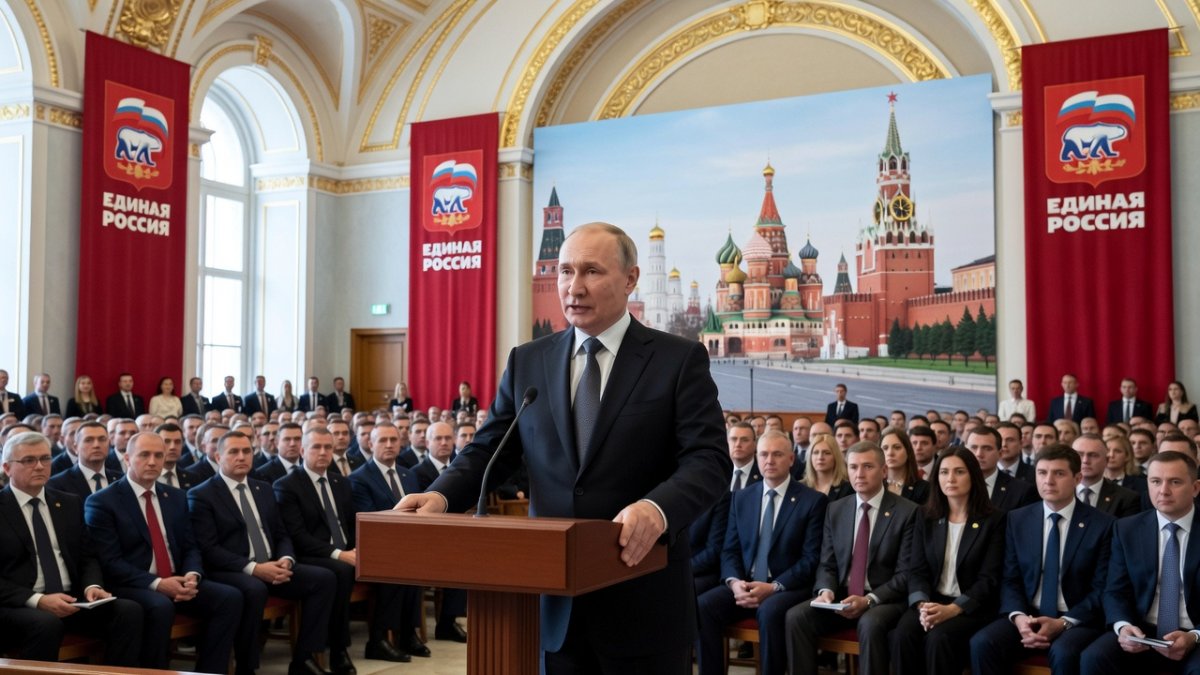
Putin Vows to Safeguard Russia's Security Russian President Vladimir Putin addressed the United Russia party congress on Sunday, stating that the government recognizes ongoing challenges from Ukrainian strikes and is taking measures to respond. "Yes, we see the problems, we are aware of them and are responding to them, but we will certainly ensure the security of both the count
Putin Vows to Safeguard Russia's Security
Russian President Vladimir Putin addressed the United Russia party congress on Sunday, stating that the government recognizes ongoing challenges from Ukrainian strikes and is taking measures to respond. "Yes, we see the problems, we are aware of them and are responding to them, but we will certainly ensure the security of both the country and our citizens, as well as the inviolability of Russia's borders," Putin said. He further noted that Russia would overcome terrorist attacks on its territory and infrastructure facilities.
These remarks came amid intensified Ukrainian operations targeting Russian energy and industrial sites. Putin framed the situation as part of broader efforts to maintain national stability during the ongoing conflict that began in February 2022. Official statements from the Kremlin emphasize the need to protect borders and citizens against such incursions.
Wave of Ukrainian Drone Attacks on Russian Regions
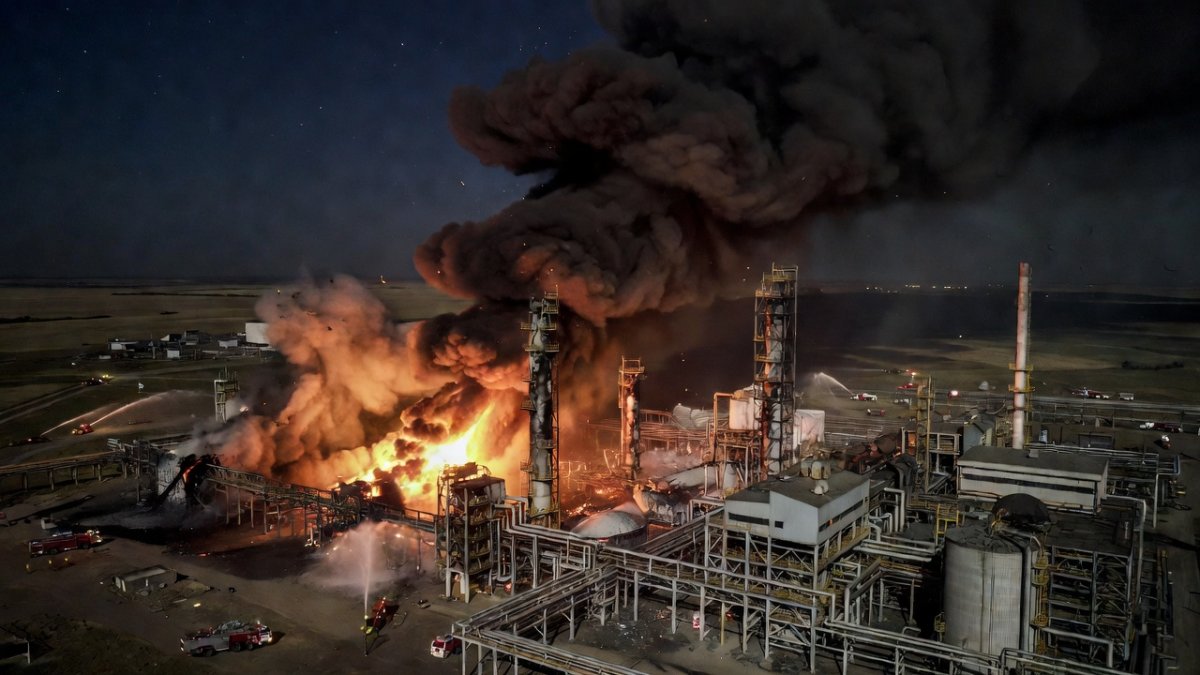
Ukrainian forces launched extensive drone strikes across multiple Russian regions this week, with the Defense Ministry reporting the interception of 213 drones in more than a dozen areas including Moscow. In the southern Krasnodar region, a strike killed one person, wounded another, and damaged several houses from falling debris, according to Governor Veniamin Kondratyev. The attack also ignited a fire at the Slavyansk-on-Kuban oil refinery, a major facility near the Crimean peninsula operated by the Slavyansk EKO group.
Additional strikes reached the Yaroslavl region, approximately 700 kilometers from the border, and caused a significant fire at a refinery southeast of Moscow last week, producing thick black smoke over the capital's suburbs. Ukrainian President Volodymyr Zelensky confirmed these operations on X, describing them as efforts to weaken Russia's war capabilities. Regional authorities in affected areas documented the resulting fires and structural damage.
Deployment of FP-5 Flamingo Missiles in Volgograd
Zelensky attributed a strike in the Volgograd region to newly deployed long-range FP-5 Flamingo missiles, targeting a defense manufacturing plant. "It is a major industrial complex where the enemy produces artillery systems and specialized military equipment, including components for missile launch systems used in attacks against our people," Zelensky wrote. The attack killed one person and wounded 11 others while damaging industrial infrastructure, according to local reports.
This use of the FP-5 Flamingo system marks an expansion of Ukraine's reach into Russian territory. The missiles struck facilities involved in producing equipment for attacks on Ukrainian positions. Russian authorities have not publicly confirmed details of the Volgograd incident beyond general interception reports.
Russian Strikes Across Ukrainian Regions
Russian forces conducted reciprocal air strikes that killed two people and wounded more than 20 across Ukraine. In the northern Sumy region, a 66-year-old man died when a drone hit a residential building, and a separate attack wounded 13 others, according to the local governor. The central-eastern Dnipropetrovsk region saw one death and two injuries, as reported by regional military administration head Oleksandr Ganzha.
In southeastern Zaporizhzhia, strikes wounded nine people including two children and caused extensive damage to civilian infrastructure, with emergency workers rescuing two individuals from a partially destroyed apartment building. These actions followed Ukraine's intensified operations and were presented by Russian officials as responses to prior attacks.
Casualties Reported in Southern Russian Regions
In Russia's Rostov region, a drone attack struck a military museum and wounded 11 people, Governor Yuri Slyusar stated. Separately, in the western Belgorod region, a civilian was killed during a strike on a manufacturing facility. These incidents occurred alongside the broader exchange of strikes over the weekend.
Regional governors documented the specific locations and impacts, noting damage to both civilian and specialized sites. The Defense Ministry's interception figures indicate the scale of Ukrainian drone activity across these southern areas.
Humanitarian Impact in Russia and Ukraine
The strikes have led to civilian casualties and infrastructure disruptions on both sides. In Ukraine, attacks damaged residential buildings in Sumy and Zaporizhzhia, affecting families and requiring emergency rescues. Wounded individuals included children in Zaporizhzhia, highlighting the toll on non-combatants in multiple regions.
On Russian territory, fatalities occurred in Krasnodar, Volgograd, and Belgorod, with additional injuries reported in Rostov. Fuel shortages and power cuts have emerged in Crimea due to hits on logistics and oil facilities, prompting the declaration of an emergency situation on Friday to manage the fallout. Ordinary residents in affected Russian regions face direct consequences from the damage to energy sites.
Strain on Crimea and Broader Energy Infrastructure
Russian-annexed Crimea declared an emergency situation on Friday to address the effects of repeated Ukrainian aerial attacks on logistics chains and oil facilities. The peninsula experiences fuel shortages and power cuts stemming from strikes on sites across Crimea, other occupied Ukrainian territories, and southern Russia. Russia annexed Crimea in 2014, though most countries do not recognize this action.
These developments compound challenges for energy infrastructure in southern Russia, including the Slavyansk refinery hit on Sunday. Kremlin statements link such attacks to the need for enhanced protective measures around critical facilities.
Analysis of Escalation and Future Implications
The exchange of strikes this week, including the use of FP-5 Flamingo missiles and drone barrages, could indicate a shift toward deeper strikes on industrial targets by both sides. Analysts suggest this pattern may prolong disruptions to energy supplies and increase pressure on civilian areas in border and rear regions. Putin's comments at the party congress frame these events as challenges that Russia intends to overcome through security enhancements.
Attribution of specific systems like the FP-5 Flamingo by Zelensky points to Ukraine's efforts to target defense production. Russian responses in regions such as Sumy and Dnipropetrovsk reflect ongoing operations aimed at Ukrainian infrastructure. This cycle of retaliation risks further strain on power structures and economies in both countries, particularly affecting energy politics and daily life for residents in Krasnodar, Rostov, Belgorod, and Ukrainian oblasts including Zaporizhzhia and Sumy.
Source: The Moscow Times
By Irina Volkov, Staff Writer
This article was produced with AI-assisted research and editorial support. Reporting is based on sources cited in the article.
What's Your Reaction?
 Like
0
Like
0
 Dislike
0
Dislike
0
 Love
0
Love
0
 Funny
0
Funny
0
 Wow
0
Wow
0
 Sad
0
Sad
0
 Angry
0
Angry
0

Russia/Eastern Europe Correspondent at Global1.News. Covering Russian politics, energy, security, and the shifting dynamics of the post-Soviet space. Provides clear-eyed analysis on one of the world's most opaque regions.











Comments (0)