
Saudi Aramco Helicopter Crash Near Ras Tanura Kills 14 Amid Gulf Energy Crisis
A Saudi Aramco helicopter crashed near the vital Ras Tanura refinery complex on Sunday, killing all 14 Saudi citizens on board and casting a fresh spotlight on the vulnerabilities facing Gulf energy infrastructure at a time of heightened regional tension. The incident, which Saudi authorities have not linked to hostile action, comes as Gulf producers scramble to ramp up output
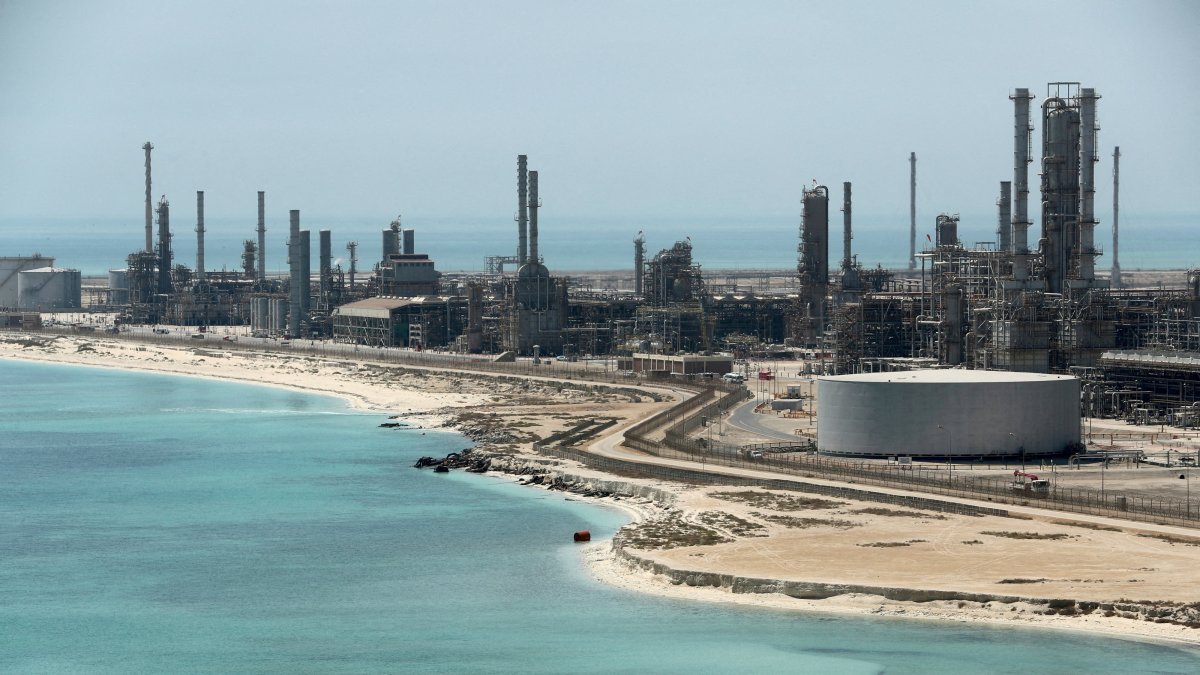
A Saudi Aramco helicopter crashed near the vital Ras Tanura refinery complex on Sunday, killing all 14 Saudi citizens on board and casting a fresh spotlight on the vulnerabilities facing Gulf energy infrastructure at a time of heightened regional tension. The incident, which Saudi authorities have not linked to hostile action, comes as Gulf producers scramble to ramp up output following Iranian disruptions to maritime trade routes, including the sustained closure of the Strait of Hormuz — a chokepoint through which roughly one-fifth of the world's petroleum transits under normal conditions.
The crash near Ras Tanura, home to one of the Middle East's largest refineries with a processing capacity of 550,000 barrels per day, carries symbolic weight beyond the human toll. It underscores the operational pressures on Saudi Arabia's energy sector as it navigates overlapping crises: the aftermath of the Iranian drone campaign that has repeatedly struck Gulf energy assets, the imperative to maintain production at approximately 10 million barrels per day, and the logistical demands of a sprawling corporate aviation network that moves personnel across more than 300 helipads serving Aramco's far-flung operations.
The Crash and Its Immediate Aftermath
The Saudi Press Agency reported that the Aramco-operated helicopter went down in Ras Tanura on June 28, 2026, with all 14 passengers confirmed as Saudi citizens. An official investigation has been launched by energy ministry personnel to establish the precise cause, though authorities have explicitly ruled out any connection to hostile action at this stage. The victims were part of routine operational movements within Aramco’s extensive internal transport system.
Aramco maintains one of the region’s largest corporate aviation fleets, operating more than 60 aircraft including helicopters that serve over 300 heliports across Saudi Arabia. This network supports the movement of personnel to remote facilities in the Eastern Province and beyond. The loss of an entire flight crew and passengers highlights the intensity of daily logistics required to sustain output levels near 10 million barrels per day.
Initial statements from Riyadh emphasize that production at nearby facilities continues without interruption. Yet the crash occurs against a backdrop of sustained operational strain, where maintenance schedules and crew rotations have been compressed to compensate for earlier disruptions. Analysts note that any prolonged grounding of segments of the fleet could create secondary bottlenecks in personnel deployment.
Ras Tanura's Strategic Role in Global Energy
Ras Tanura hosts one of the Middle East’s largest refineries, with a nameplate capacity of 550,000 barrels per day. Its location on the Persian Gulf coast makes it a critical node for both crude processing and export infrastructure serving Asian and European markets. The facility processes a significant share of Saudi Arabia’s heavy and medium sour crudes that underpin global supply balances.
The refinery has faced repeated targeting during periods of escalation, including an Iranian drone strike early in the current conflict that triggered a fire and forced a partial shutdown. Such incidents demonstrate how even limited damage at Ras Tanura can ripple through global product markets, particularly diesel and jet fuel grades exported from the kingdom.
Saudi officials have stressed that the complex remains fully operational following the latest incident. Nevertheless, the concentration of refining capacity in a single coastal zone continues to present a structural vulnerability that regional planners have sought to mitigate through parallel investments at Jubail and Yanbu.
Iran's Shadow: The History of Attacks on Gulf Energy Infrastructure
Iranian drone campaigns have repeatedly struck Gulf energy assets since the onset of the current Middle East conflict. Facilities at Ras Tanura, Jubail, Yanbu, and Riyadh were all affected during the weeks-long wave of attacks reported by Riyadh in April. These operations disrupted several production streams and forced temporary reductions at multiple sites.
The pattern reflects Tehran’s strategic calculus of targeting economic lifelines rather than purely military objectives. By raising insurance costs and forcing Gulf states to divert resources toward hardened defenses, Iran seeks to impose sustained pressure without triggering full-scale conventional retaliation. Sunni-Shia sectarian dynamics further complicate de-escalation efforts across the region.
Saudi Arabia has responded by accelerating redundancy measures and deepening coordination with other Gulf Cooperation Council members. Yet the cumulative effect of these strikes has left energy operators acutely aware that any future round of maritime or aerial disruption could again converge on the same high-value nodes.
The Strait of Hormuz Closure and Gulf Production Strategy
The sustained closure of the Strait of Hormuz has removed a vital export artery that normally carries roughly one-fifth of global petroleum volumes. Gulf producers, led by Saudi Arabia, have therefore accelerated efforts to increase output from fields that can reach markets via alternative routes or expanded storage arrangements.
OPEC+ dynamics have grown more complex as Riyadh balances the need to replace lost Iranian-linked volumes with the risk of oversupply if the strait reopens abruptly. Other members, including the UAE and Kuwait, face similar pressures to maintain quota discipline while supporting higher collective production ceilings.
These adjustments carry second-order effects on global inventories and price volatility. Markets have priced in a persistent risk premium, yet any sudden resumption of Hormuz traffic could trigger a rapid repricing that tests the fiscal assumptions underpinning Gulf budgets.
Energy Security in an Era of Great Power Competition
The United States continues to maintain a naval presence in the Gulf aimed at deterring further closure of the Strait of Hormuz, though Washington’s appetite for direct intervention has diminished. China, by contrast, has expanded its diplomatic and commercial footprint through long-term purchase agreements that prioritize supply stability over political alignment.
Russia’s position remains opportunistic, leveraging its own export volumes to Asian buyers while avoiding direct entanglement in Gulf security arrangements. This triangular competition creates space for Gulf producers to diversify partnerships, yet it also exposes them to shifting great-power priorities that may not align with regional stability goals.
Energy infrastructure resilience has therefore become a core element of national security planning. Investments in hardened facilities and redundant export corridors now compete with traditional military procurement for budgetary attention across the Gulf Cooperation Council states.
Saudi Arabia's Vision 2030 in the Crosshairs
Vision 2030’s diversification targets depend heavily on sustained energy revenues to fund non-oil sectors. Any prolonged threat to facilities such as Ras Tanura directly affects the fiscal space available for giga-projects and private-sector initiatives that Riyadh has promoted as pillars of post-hydrocarbon growth.
Investor confidence remains sensitive to perceptions of physical risk. Repeated incidents targeting energy infrastructure can raise the cost of capital for Saudi entities seeking international financing, even when official statements downplay immediate operational impact.
Nevertheless, the kingdom has continued to advance downstream and petrochemical expansions that reduce reliance on raw crude exports. These moves aim to capture greater value domestically while building buffers against future supply-chain disruptions.
Broader Regional Implications
Oil markets have absorbed the latest incident without immediate price spikes, yet the cumulative signaling of vulnerability continues to influence trading behavior. Traders now routinely factor in both Hormuz-related risks and the potential for renewed strikes on coastal infrastructure when modeling forward curves.
Gulf stability hinges on whether Saudi Arabia and Iran can establish even minimal deconfliction mechanisms. Absent such channels, the risk of miscalculation remains elevated, particularly as both sides maintain significant capabilities to target energy assets.
The coming months will test whether Gulf producers can sustain elevated output while managing internal security and external diplomatic pressures. The Ras Tanura crash serves as a reminder that operational resilience and geopolitical restraint must advance in tandem if the region is to avoid deeper economic shocks.
By Malik Hassan, Staff WriterThis article was produced with AI-assisted research and editorial support. Reporting is based on sources cited in the article.
What's Your Reaction?
 Like
0
Like
0
 Dislike
0
Dislike
0
 Love
0
Love
0
 Funny
0
Funny
0
 Wow
0
Wow
0
 Sad
0
Sad
0
 Angry
0
Angry
0

Middle East Correspondent at Global1.News. Based in Beirut, covering politics, conflict, energy, and society across the Middle East. Brings context and depth to a region often reduced to headlines.













Comments (0)