
US and Iran Exchange Strikes Across Middle East as Ceasefire Collapses
In a recent BBC News report, the scale of the escalating confrontation between the United States and Iran came into sharp focus as both sides exchanged military strikes for a second consecutive day across the Middle East. What began as targeted US operations against Iranian military infrastructure in southern Iran rapidly expanded into a multi-front exchange, with Tehran striki
In a recent BBC News report, the scale of the escalating confrontation between the United States and Iran came into sharp focus as both sides exchanged military strikes for a second consecutive day across the Middle East. What began as targeted US operations against Iranian military infrastructure in southern Iran rapidly expanded into a multi-front exchange, with Tehran striking American military assets in Bahrain, Kuwait and Jordan. The escalation has all but shattered the fragile ceasefire framework that had been painstakingly brokered through international mediation efforts in recent months.
US and Iran Exchange Strikes Across Middle East as Ceasefire Collapses — Second Day of Cross-Border Attacks
Moscow, Russia — 11 June 2026 — The United States and Iran have exchanged military strikes for a second consecutive day in an escalation that threatens to engulf the wider Middle East region. Washington confirmed fresh operations against military, surveillance and radar sites in southern Iran on Wednesday, while Tehran responded with a wave of retaliatory strikes targeting US military installations across Bahrain, Kuwait and Jordan. The back-and-forth assaults come as the Biden-era ceasefire framework — already under severe strain — faces what analysts describe as its most serious test yet, with Iran's foreign ministry declaring the agreement "practically meaningless" in the wake of the renewed hostilities.
Naval Blockade Intensifies as Third Vessel Disabled in Gulf of Oman
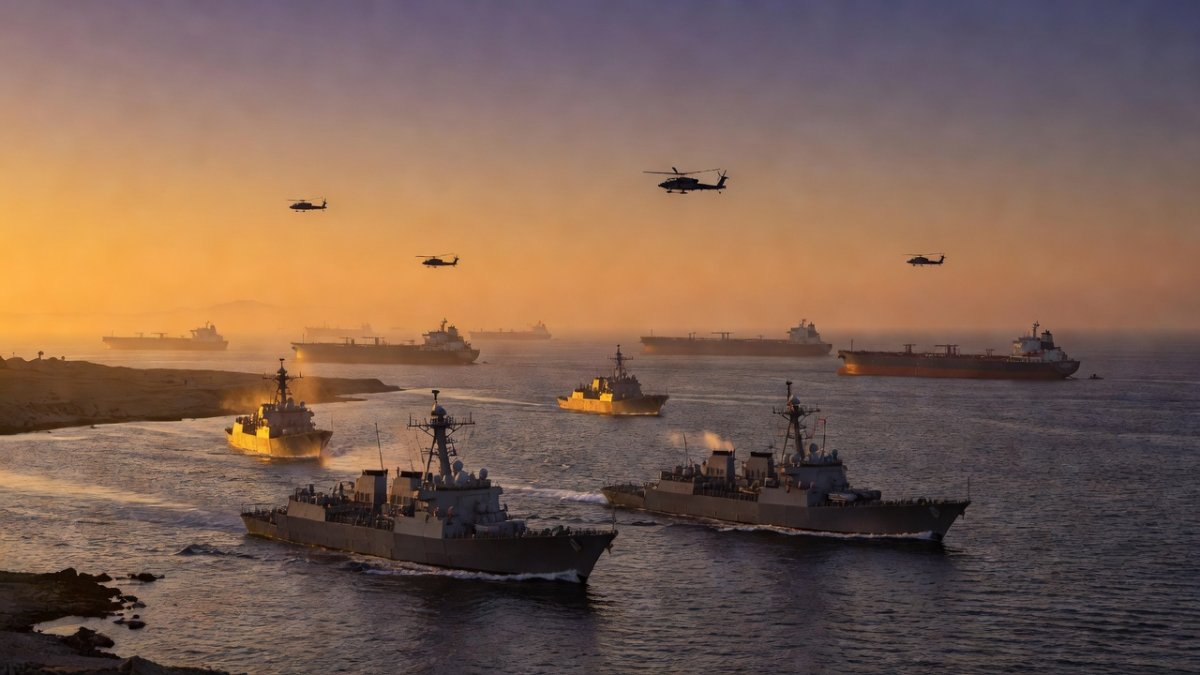
Central to the current crisis is the intensification of the US naval blockade in the Strait of Hormuz, a waterway through which approximately twenty per cent of the world's oil and liquefied natural gas typically passes. On Thursday, US Central Command confirmed it had carried out a strike on a third vessel this week — the Guinea-Bissau-flagged tanker Jalveer — accusing it of attempting to transport Iranian oil through the Gulf of Oman in violation of the blockade. All twenty Indian crew members aboard the Jalveer were reported safe, with evacuation operations still underway, according to India's shipping ministry.
The strike on the Jalveer follows two earlier operations that have drawn sharp diplomatic condemnation from New Delhi. On Monday, US forces disabled the Palau-flagged oil tanker Marivex in the Gulf of Oman after its crew failed to comply with American directives. All twenty-four crew members were subsequently rescued by the Omani military. Two days later, on Wednesday, US forces struck the Palau-flagged Settebello, firing munitions into its engine room after the crew "repeatedly failed to comply with directions from American forces," according to Centcom. That operation resulted in the deaths of three Indian sailors — deck cadet Aditya Sharma, engine fitter Shivanand Chaurasia and chief engineer Patnala Suresh — transforming a maritime enforcement operation into a major diplomatic incident.
According to Centcom, the Settebello was the eighth vessel disabled since the blockade began on 13 April. The command reports that 134 ships have been redirected after complying with US forces, while forty-two humanitarian vessels have been permitted to transit the waterway. President Donald Trump also claimed on Wednesday that the US military had helped two hundred commercial ships navigate the strait as part of what he described as a "secret mission". The blockade, Trump has stated, will remain "in full force and effect until an agreement is reached, certified, and signed".
Iran's Retaliatory Campaign Targets US Military Assets Across the Region
Iran's Islamic Revolutionary Guard Corps confirmed it launched strikes against American bases in Bahrain, Kuwait and Jordan in direct retaliation for the US operations on Iranian soil. In Bahrain, which hosts a major US naval base, an Iranian drone attack injured an eleven-year-old girl, with local authorities reporting damage to homes and vehicles across the capital region. Jordan's military said it had intercepted twenty Iranian missiles, while Kuwait's armed forces confirmed they engaged what they described as "hostile aerial targets".
Iran's foreign ministry issued a strongly worded statement condemning what it called the "illegal and criminal attacks" carried out by the United States, arguing they violate the UN Charter and fundamental principles of international law. The ministry declared that the latest US strikes render the ceasefire between the two countries "practically meaningless" and warned that American leaders would be held responsible for the consequences of the escalation. On the waterway itself, Iran's state media continued to insist the Strait of Hormuz is "completely closed to all types of vessels" — a claim that US Central Command has consistently denied, stating that commercial shipping continues to transit the strait.
Iran has also created a new institutional framework — the Persian Gulf Strait Authority — which it says will give the Iranian army the authority to oversee vessels transiting the region after the conflict. This new body, established in recent days, reflects Tehran's determination to assert control over the strategic waterway following the US blockade that began on 13 April. Iranian officials argue that the authority will enforce compliance with international norms while protecting national sovereignty against what they term unlawful American interference. The move comes amid repeated assertions from Iran's waterway authority that the Strait of Hormuz remains completely closed, directly contradicting US claims that commercial traffic persists despite the tensions. Tehran has positioned this authority as a counterweight to the US naval presence, drawing support from Moscow which maintains strategic interests in Iran's energy sector and opposes the American blockade on principle. Russian diplomats have privately conveyed to Iranian counterparts that any prolonged closure risks broader economic fallout, yet they continue to back Tehran's right to defend its maritime approaches. From the Iranian perspective, the authority signals a long-term restructuring of Gulf security arrangements that could involve coordination with partners in China and Russia. Meanwhile, Saudi Arabia has watched these developments warily, fearing spillover effects on its own oil exports through the same chokepoint. The creation of the Persian Gulf Strait Authority also underscores Iran's rejection of the US position that the blockade will stay in force until a certified agreement is signed. Analysts note that this institutional innovation may complicate future mediation efforts, as it entrenches Iranian military oversight in an area vital to global energy flows. Turkey has urged restraint in implementing such measures, with Foreign Minister Hakan Fidan emphasizing the need for dialogue to prevent further incidents involving vessels like the Jalveer or Settebello. Overall, the authority represents Iran's attempt to reshape the post-ceasefire reality on the water, even as diplomatic channels explore the release of frozen funds as a potential off-ramp.
(Global 1 News)
India's Diplomatic Offensive: Summoning the US Envoy Over Civilian Casualties
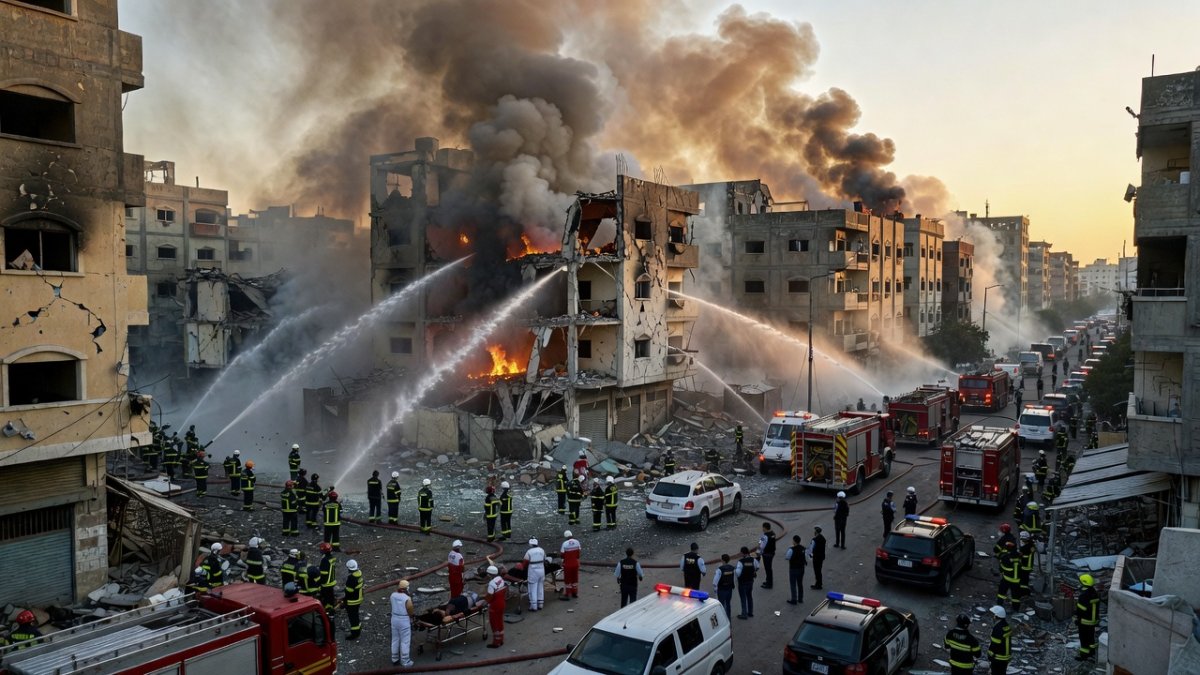
The deaths of the three Indian sailors have triggered one of the most serious diplomatic confrontations between New Delhi and Washington since the conflict began. India's Ministry of External Affairs summoned Jason Meeks, the deputy chief of mission at the US Embassy in New Delhi, to lodge what officials described as a "strong protest" over the strike on the Settebello. Shipping Minister Sarbananda Sonowal described the loss of life as "deeply unfortunate" and an "irreparable loss," pledging that the bodies of the three deceased would be repatriated to India at the earliest opportunity.
India's foreign ministry has gone further in its public statements, describing the repeated attacks on commercial vessels as "deeply worrisome" and calling for an immediate de-escalation of tensions. In a press conference in New Delhi, ministry officials confirmed that three separate strikes on the Settebello, Marivex and Jalveer vessels had all been carried out by the US Navy. The crisis has highlighted a deeper problem: more than eighteen thousand Indian sailors remain stranded in the Gulf region, including five hundred and sixty-two aboard Indian-flagged vessels, with no clear pathway to safe passage given the blockade and counter-blockade dynamics. Manoj Yadav, general secretary of the Forward Seamen's Union of India, told The Economic Times that he "refused to believe" the US lacked information about the nationalities of those aboard the vessels, suggesting detention rather than military strikes was a "viable alternative".
The diplomatic fallout extends beyond the immediate crisis, with implications for the broader US-India strategic partnership that both nations have cultivated over the past two decades. New Delhi's decision to summon Jason Meeks marks a rare public rebuke of Washington, highlighting how the deaths of Aditya Sharma, Shivanand Chaurasia and Patnala Suresh have strained ties at a time when both countries seek closer defense cooperation. Shipping Minister Sarbananda Sonowal has emphasized that the loss represents an irreparable blow to Indian maritime communities, with families in coastal states now demanding accountability. The presence of thirteen Indian-flagged vessels and over eighteen thousand sailors stranded near the Strait of Hormuz adds urgency, as India balances its energy security needs against alliance commitments. US Central Command's explanation that the Settebello crew failed to comply has done little to assuage Indian anger, with officials in New Delhi arguing that better coordination could have prevented the tragedy. This episode risks complicating joint naval exercises and intelligence sharing, particularly as India maintains strong economic links with Gulf states including Bahrain and Kuwait. At the same time, New Delhi has welcomed calls from Pakistan and Saudi Arabia for mediated talks, seeing them as avenues to protect its citizens without direct confrontation. The incident also exposes vulnerabilities in global shipping lanes where Indian nationals form a critical workforce, prompting reviews of evacuation protocols for future crises. Ultimately, the partnership faces a test of whether Washington can address Indian concerns while maintaining its blockade posture against Iran.
International Community Rallies for De-escalation as Diplomatic Channels Remain Open
The escalating confrontation has drawn urgent calls for restraint from a broad coalition of international actors, reflecting growing alarm that the US-Iran conflict could spiral into a wider regional war. Pakistan expressed deep concern, with a foreign ministry spokesman insisting that "diplomacy and dialogue should be the guiding principles" between the warring parties. Pakistan's Interior Minister Mohsin Naqvi, who held what were described as "important meetings" with senior Iranian leaders in Tehran this week, has positioned Islamabad as a potential mediator — a role that Saudi Arabia has also endorsed, calling for fresh negotiations to be facilitated by both Pakistan and Qatar.
Russia has called on both Washington and Tehran to restart peace talks, warning that continued strikes would cause significant harm to the global economy — a particularly pointed warning given the Kremlin's own reliance on energy revenues and its strategic partnership with Iran in the oil and gas sector. China's military has also weighed in, with a spokesperson telling Reuters that Beijing is "seriously concerned" by the recent escalation, arguing that resorting to force "will only further aggravate tensions and military action cannot resolve the underlying issues." Turkey's Foreign Minister Hakan Fidan joined the chorus, calling for both sides to halt their renewed attacks and resume negotiations immediately. Meanwhile, three Iranian sources told Reuters that behind the scenes, diplomatic efforts have actually intensified, with negotiations centring on the possible release of frozen Iranian funds — suggesting that despite the escalation on the battlefield, both sides may still see a political off-ramp.
The divergent international responses reveal the complex geopolitical landscape in which this conflict is unfolding, with each major power pursuing its own strategic interests. Russia's warnings about economic harm stem directly from its opposition to the US blockade of Iranian ports, which Moscow views as destabilizing energy markets where it holds stakes through partnerships with Tehran. China, while expressing serious concern, prioritizes stability in the Strait of Hormuz to safeguard its oil imports, urging both sides to avoid actions that close vital routes. Pakistan's active diplomacy via Mohsin Naqvi's meetings in Tehran positions it as a bridge, supported by Saudi Arabia's call for Qatar-mediated talks that could address frozen funds as leverage. Turkey's Hakan Fidan stresses negotiation to prevent wider involvement of regional actors. These varied approaches underscore how the crisis intersects with global energy security, with the effective closure of the Strait of Hormuz driving up oil prices worldwide. Despite battlefield exchanges, the focus on releasing Iranian assets indicates potential for de-escalation if Washington and Tehran find common ground.
Analysis and Implications: A Ceasefire in Name Only
The current escalation represents what analysts describe as the most serious breach of the US-Iran ceasefire since its inception. Iran's foreign ministry declaration that the agreement is now "practically meaningless" carries significant weight — it signals that Tehran no longer considers itself bound by the terms of a deal that Washington has, from the Iranian perspective, already violated through its strikes on southern Iran. The international calls for de-escalation, while numerous and urgent, face a structural problem: neither side appears willing to be the first to step back from the brink.
From Moscow's perspective, this crisis presents both risks and opportunities. The Kremlin has consistently opposed the US blockade of Iranian ports and views Washington's military posture in the Gulf as a threat to Russian strategic interests in the region. Russia's call for renewed peace talks aligns with its broader foreign policy objective of positioning itself as a counterweight to American military dominance in the Middle East. At the same time, an uncontrolled escalation between the US and Iran could destabilise global energy markets in ways that would harm Russia's own economic interests, particularly if the Strait of Hormuz — through which a significant portion of global LNG trade passes — remains effectively closed.
The human cost of this escalation is already evident. Three Indian families have received the news that their sons will not be coming home. An eleven-year-old girl in Bahrain is recovering from injuries sustained in an Iranian drone strike. More than eighteen thousand Indian sailors remain trapped in the Gulf, caught between a US blockade and an Iranian counter-blockade, with no clear end in sight. As diplomatic channels remain open — and, according to Iranian sources, may even be intensifying behind the scenes — the question is whether Washington and Tehran can find their way back to negotiations before the situation spirals beyond the point of diplomatic recovery.
By Irina Volkov, Staff Writer
This article was produced with AI-assisted research and editorial support. Reporting is based on sources cited in the article.
What's Your Reaction?
 Like
0
Like
0
 Dislike
0
Dislike
0
 Love
0
Love
0
 Funny
0
Funny
0
 Wow
0
Wow
0
 Sad
0
Sad
0
 Angry
0
Angry
0

Russia/Eastern Europe Correspondent at Global1.News. Covering Russian politics, energy, security, and the shifting dynamics of the post-Soviet space. Provides clear-eyed analysis on one of the world's most opaque regions.














Comments (0)