
Türkiye-Kyrgyzstan Partnership Boosts Trade, Middle Corridor
Türkiye-Kyrgyzstan Strategic Partnership Strengthens the Middle Corridor Türkiye and Kyrgyzstan have taken concrete steps to expand their strategic partnership, with trade, investment, and transportation cooperation at the center of recent high-level talks in Ankara. The seventh meeting of the Türkiye-Kyrgyzstan Joint Strategic Planning Group, co-chaired by Foreign Minister Hak
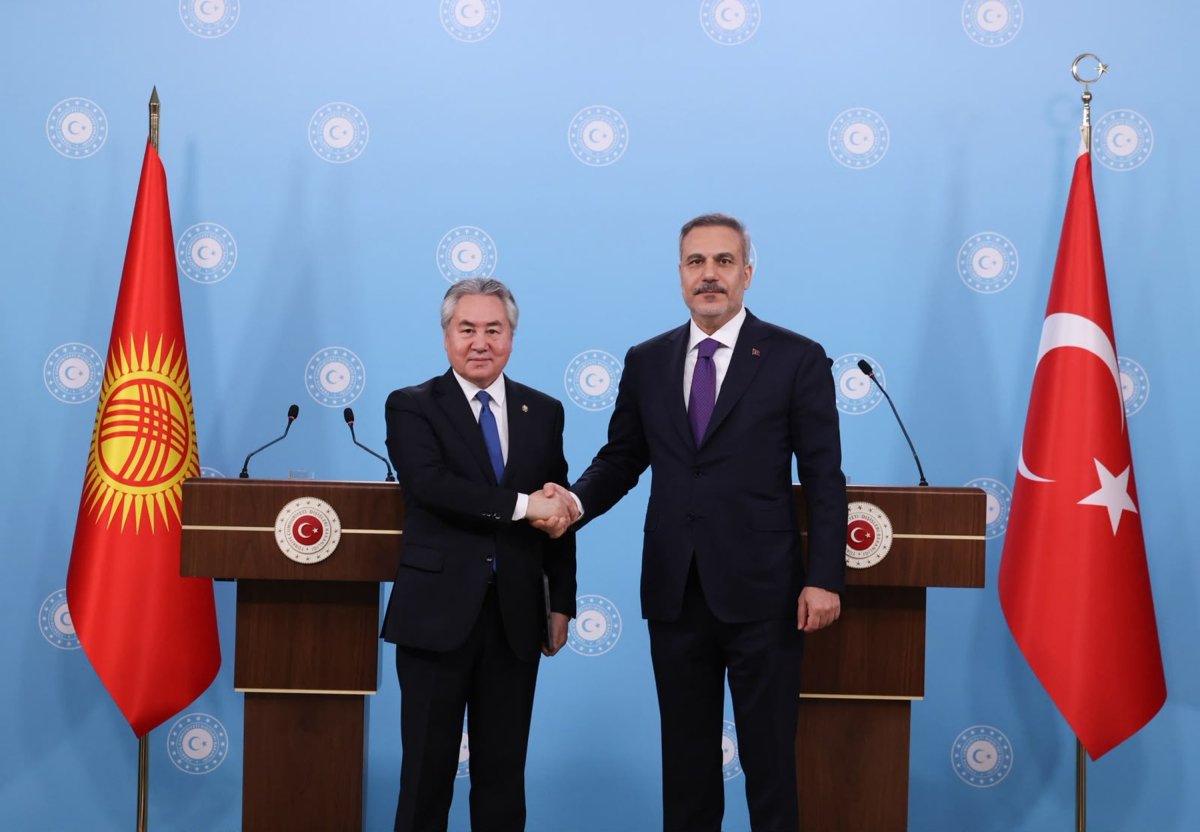
Türkiye and Kyrgyzstan have taken concrete steps to expand their strategic partnership, with trade, investment, and transportation cooperation at the center of recent high-level talks in Ankara. The seventh meeting of the Türkiye-Kyrgyzstan Joint Strategic Planning Group, co-chaired by Foreign Minister Hakan Fidan and his Kyrgyz counterpart Jeenbek Kulubayev, produced commitments to facilitate reciprocal presidential visits and improve connectivity for landlocked Central Asian economies.
Joint Strategic Planning Group Outcomes
The Ankara discussions focused on practical measures to increase bilateral trade volumes and ease movement of people for work, education, and cultural exchange. Both sides reaffirmed political backing for joint investment projects while agreeing to create conditions that attract new initiatives. Kulubayev described the atmosphere as one of mutual trust and openness, underscoring shared determination to move from declarations to implementation.
Preparations for visits by Kyrgyz President Sadyr Japarov to Türkiye and President Recep Tayyip Erdoğan to Kyrgyzstan were reviewed. Such high-level exchanges typically serve as catalysts for finalizing agreements on transport corridors and investment frameworks that have lingered in earlier rounds of talks.
The Middle Corridor as Kyrgyzstan’s Strategic Priority
Kulubayev explicitly positioned the Middle Corridor as one of Kyrgyzstan’s most important routes. Bishkek seeks to link the planned China-Kyrgyzstan-Uzbekistan railway directly to this Trans-Caspian network, thereby gaining reliable access through Türkiye to European and Arab markets. This ambition aligns with the broader goal of reducing dependence on routes that pass through Russia or face seasonal and political constraints.
For a landlocked country, reliable transit options directly affect export competitiveness in minerals, agricultural products, and light manufactures. Integration with the Middle Corridor would shorten delivery times to Mediterranean ports and open possibilities for onward shipment to Gulf economies that maintain growing commercial ties with Türkiye.
Turkish Foreign Policy Calculus in Central Asia
Ankara’s engagement with Kyrgyzstan forms part of a consistent effort to deepen relations across Turkic-speaking states. Turkish policymakers view enhanced connectivity as a means to increase economic leverage and diplomatic influence without direct confrontation with larger powers. The emphasis on transport infrastructure complements parallel initiatives in Azerbaijan and Kazakhstan, creating a coherent east-west axis that bypasses traditional chokepoints.
By supporting Kyrgyzstan’s successful bid for a non-permanent seat on the UN Security Council for 2027-2028, Türkiye also gains a potential diplomatic partner on issues ranging from counter-terrorism to energy security. In return, Bishkek benefits from Turkish technical assistance and advocacy in multilateral forums.
Geopolitical Implications for Russia, China, and Western Actors
The Middle Corridor’s development carries second-order effects for great-power competition. Russia has historically dominated north-south trade routes from Central Asia; alternative corridors that run through the Caspian and Türkiye erode that monopoly over time. China, while still the dominant investor in regional rail projects, must now navigate multiple corridors rather than a single predictable pathway.
Western governments and Gulf investors have shown interest in funding segments of the Middle Corridor as part of broader supply-chain diversification strategies. Türkiye’s role as the western terminus gives Ankara additional leverage in negotiations over port access, customs harmonization, and security arrangements that affect energy and container flows.
Economic Diversification and People-to-People Ties
Beyond infrastructure, the ministers discussed easing visa and work permit procedures and expanding educational exchanges. These steps aim to build constituencies that sustain political momentum even when governments change. For Kyrgyzstan, Turkish universities and vocational programs offer alternatives to Russian or Chinese institutions, diversifying human-capital pipelines.
Trade expansion remains constrained by geography and limited direct flights, yet both governments have identified specific sectors—construction materials, textiles, and agro-processing—where Turkish firms already possess competitive advantages. Political support for investment projects is intended to de-risk private-sector participation.
Regional Security and Mediation Role
The two sides reiterated that international disputes should be settled through dialogue and international law. Kulubayev praised Türkiye’s mediation initiatives and described Ankara as playing one of the most important roles in regional peace efforts. This endorsement reflects Kyrgyzstan’s interest in positioning itself as a constructive actor on the UN Security Council, particularly for landlocked and mountainous developing states.
By aligning rhetorically with Turkish positions on crisis resolution, Bishkek signals a preference for multipolar diplomacy rather than exclusive alignment with any single power. Such positioning may prove useful when Central Asian states navigate tensions between Russia’s security guarantees and China’s economic weight.
Outlook for Implementation and Reciprocal Visits
The invitation extended to Foreign Minister Fidan to visit Kyrgyzstan indicates both capitals intend to maintain momentum. Concrete deliverables—updated transit agreements, joint investment funds, and synchronized customs procedures—will determine whether the latest pledges translate into measurable increases in cargo volumes along the Middle Corridor.
Success will hinge on coordinated action among multiple stakeholders, including Azerbaijan, Kazakhstan, and Uzbekistan, as well as private operators managing Caspian ferry services. If these elements align, the Türkiye-Kyrgyzstan partnership could serve as a model for how smaller Central Asian states leverage Turkish connectivity to reach wider markets while preserving strategic autonomy.
This article was produced with AI-assisted research and editorial support. Reporting is based on sources cited in the article.
What's Your Reaction?
 Like
0
Like
0
 Dislike
0
Dislike
0
 Love
0
Love
0
 Funny
0
Funny
0
 Wow
0
Wow
0
 Sad
0
Sad
0
 Angry
0
Angry
0

Middle East Correspondent at Global1.News. Based in Beirut, covering politics, conflict, energy, and society across the Middle East. Brings context and depth to a region often reduced to headlines.












Comments (0)