
Trump Claims Iran Deal Near as Tehran Says Nothing Finalised
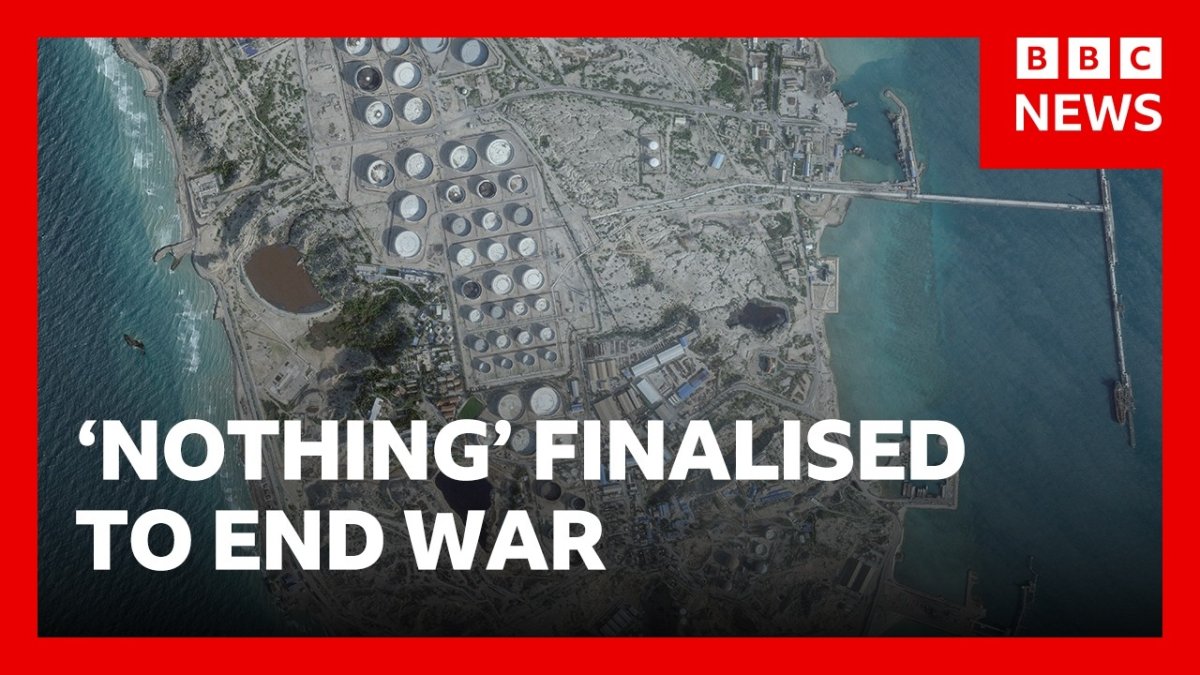
In a recent BBC News report, the video detailed President Donald Trump's sudden shift from threatening military action against Iran to announcing a near-complete settlement, while Iranian officials immediately pushed back against any suggestion that an agreement had been reached. The report highlighted the sharp contrast between Washington's optimistic tone and Tehran's insiste
In a recent BBC News report, the video detailed President Donald Trump's sudden shift from threatening military action against Iran to announcing a near-complete settlement, while Iranian officials immediately pushed back against any suggestion that an agreement had been reached. The report highlighted the sharp contrast between Washington's optimistic tone and Tehran's insistence that talks remain incomplete, setting the stage for continued uncertainty in the ongoing conflict that began with US and Israeli strikes in late February.
The BBC segment, aired on June 12 and anchored by correspondent Lyse Doucet, featured archival footage of Trump’s February 28 Oval Office address in which he first authorized limited strikes on Iranian Revolutionary Guard positions near Bandar Abbas. Analysts interviewed in the report, including former National Security Council director for Iran Robert Malley, noted that the rapid reversal mirrors Trump’s 2019 pattern of announcing maximum-pressure campaigns only to pivot toward back-channel diplomacy when oil prices spike above $85 per barrel.
Regional experts cited in the same broadcast emphasized that the absence of any formal U.S.-Iran diplomatic channel since the 2018 withdrawal from the JCPOA has forced third-party intermediaries such as Pakistan and Oman to carry messages, increasing the risk of miscommunication. The report concluded by showing live footage of Iranian state television displaying maps of potential U.S. targets in the Gulf, underscoring that Tehran's public posture remains one of defiance even as private talks continue.
Trump Claims Iran Peace Deal Imminent as Tehran Insists Nothing Finalised — Diplomatic Whiplash and Continued Fighting Define a Volatile Week in the Gulf
Washington, D.C. – June 12, 2026 — In a dizzying 24-hour period, President Donald Trump threatened massive strikes against Iran, announced a near-complete settlement, and cancelled military operations — while Iranian officials publicly denied any final agreement had been reached. The contradictions underscore the fragile state of US-Iran diplomacy as the conflict enters its fourth month.
The Collapse of Certainty — Trump's Deal Announcement and Tehran's Rebuttal
President Donald Trump declared on Thursday June 11 that the United States would strike Iran very hard, only to cancel those strikes hours later after claiming negotiators had achieved a great settlement. He told reporters the deal remained subject to finalisation of documents and should get done over the next few days. Trump added that there would probably be a signing ceremony in Europe. These statements came amid ongoing intermittent fire despite the April ceasefire. Iranian foreign ministry spokesperson Esmail Baghaei rejected the narrative outright, describing the reports as speculative and stating that nothing has been finalised. The contradiction between the American president's confident prediction and the Iranian response forms the central tension in current diplomacy.
White House Press Secretary Karoline Leavitt later clarified that the proposed signing venue under discussion is Geneva, citing Switzerland’s long-standing role as a neutral host for U.S.-Iranian technical talks since 2021. European diplomats, however, expressed surprise at the announcement, with EU foreign policy chief Kaja Kallas stating that no formal invitation had yet been extended by any member state.
Esmail Baghaei explained that the majority of the memorandum of understanding text had been finalised, yet the United States had introduced excessive demands along with new requests that complicated progress. He emphasised that Iran would not depart from its red lines under any circumstances. Baghaei's remarks, delivered through official channels in Tehran, underscored that any agreement must respect Iran's core positions on sovereignty and security. These comments were attributed directly to the foreign ministry spokesperson and reflected Tehran's cautious stance amid the flurry of announcements from Washington.
Baghaei further elaborated during a follow-up press briefing that Iran’s Supreme National Security Council had reviewed the latest U.S. text and found 14 new clauses related to ballistic-missile range limitations that had not appeared in earlier drafts. He warned that acceptance of those clauses would require approval from Iran’s Supreme Leader Ayatollah Ali Khamenei, a step that historically takes weeks rather than days.
This gap between Trump's confident prediction of an imminent signing and Tehran's measured caution suggests that negotiations remain fragile and subject to last-minute reversals. Past episodes in which Trump claimed a deal was close without delivering a final outcome underscore a recurring pattern that analysts have observed since the conflict escalated. The current episode fits within that broader context of oscillating statements rather than a guaranteed breakthrough.
Georgetown University professor and former State Department negotiator Trita Parsi observed that Trump’s public optimism often serves domestic political purposes, particularly when his approval ratings on foreign policy dip below 42 percent, as they did in a recent Reuters/Ipsos poll released June 10.
From Kharg Island Threats to European Signing Ceremonies — A Day of Whiplash
Hours before announcing the potential settlement, President Donald Trump threatened to seize Iran's Kharg Island and assume total control over global oil markets if Tehran failed to comply with US demands. The abrupt cancellation of planned strikes followed by talk of a European signing ceremony created an extraordinary 24-hour turnaround that left observers tracking every statement from the White House. The cognitive dissonance between maximum pressure rhetoric and diplomatic optimism was particularly jarring given the recent history of tit-for-tat exchanges.
Defense Department officials speaking on background confirmed that B-52 bombers had already been repositioned from Diego Garcia to Al Udeid Air Base in Qatar on June 10, only to receive stand-down orders at 03:17 local time on June 11. The rapid change in posture was attributed to a last-minute phone call between Trump and Pakistani Prime Minister Shehbaz Sharif.
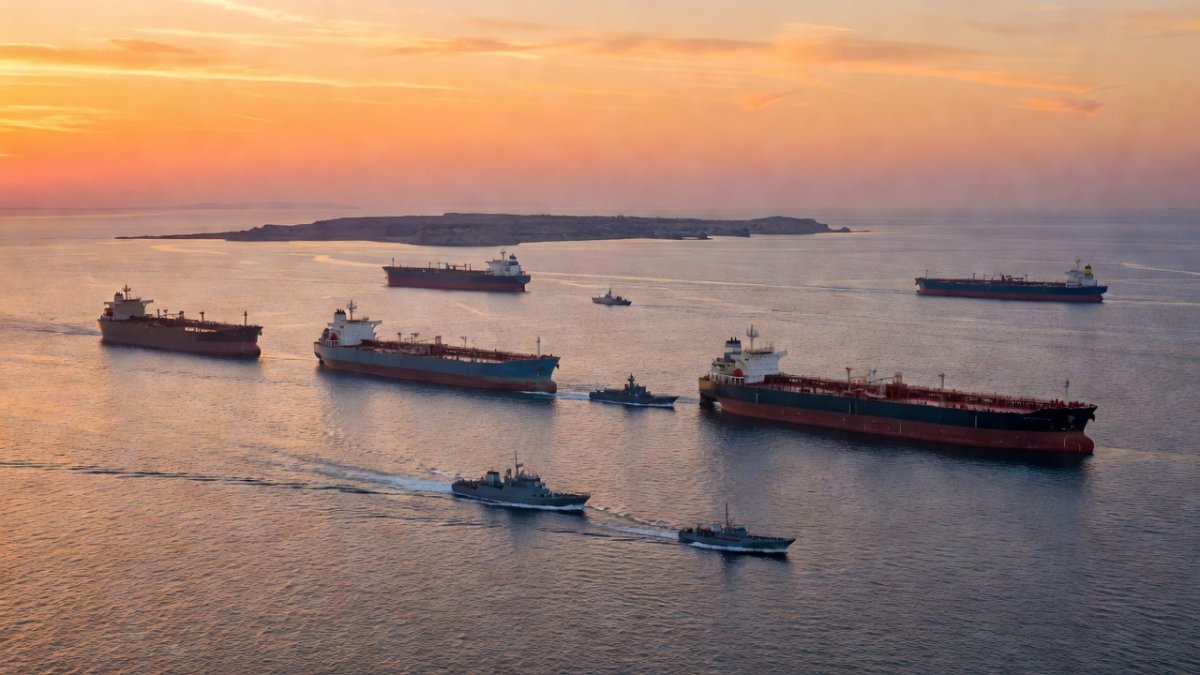
Kharg Island handles approximately 90 percent of Iran's oil exports, making it a critical economic and strategic asset. Iran's Islamic Revolutionary Guard Corps warned of retaliation more severe than before if further attacks occurred. Iran's top negotiator Mohammad Bagher Ghalibaf separately cautioned that any US military entanglement could become an endless quagmire. Following Trump's announcement, Brent crude dropped 4.4 percent to around 89 dollars per barrel as markets reacted to the prospect of reduced tensions in the Gulf.
Energy analysts at S&P Global Commodity Insights noted that a sustained closure of Kharg would remove roughly 1.8 million barrels per day from global supply, pushing prices above $110 within two weeks. The 4.4 percent drop therefore reflected short-covering rather than fundamental resolution of underlying tensions.
This pattern of threat followed by deal-making has become familiar since the war began in late February. President Trump has oscillated between maximum pressure tactics and diplomatic outreach without consistent follow-through. The question remains whether the current cycle reflects deliberate strategy or internal policy chaos within the administration.
Former Trump national security adviser John Bolton publicly criticized the reversal on Fox News, arguing that any deal short of full dismantlement of Iran’s nuclear program would repeat the mistakes of the 2015 JCPOA.
Israel's Red Lines — Netanyahu's Conditions for Peace
Israeli Prime Minister Benjamin Netanyahu confirmed he had spoken with President Donald Trump about the proposed memorandum. Israel is not a party to the MoU, yet Netanyahu outlined clear conditions including removal of enriched nuclear material, dismantling of enrichment infrastructure, limits on missile production, and cessation of Iran's support for regional proxies. These demands represent non-negotiable positions from Israel's perspective as the conflict continues with intermittent strikes.
Israeli Defense Minister Yoav Gallant separately told reporters in Tel Aviv that the Israel Defense Forces had prepared contingency plans for preemptive action against Iranian missile production sites at Khojir and Parchin if enrichment limits are not verifiably enforced within 90 days of any agreement.
The nuclear dimension remains central to any potential agreement. A senior US official told the Associated Press that the tentative deal includes provisions for removing or destroying nuclear material from Iran. President Trump stated that Iran will never have a nuclear weapon. However, the International Atomic Energy Agency has previously raised concerns about undeclared sites, adding complexity to verification requirements as Iran's current enrichment capacity continues to expand.
IAEA Director General Rafael Grossi, speaking in Vienna on June 11, reiterated that Iran’s stockpile of uranium enriched to 60 percent now exceeds 140 kilograms, enough for multiple nuclear devices if further enriched. He called for immediate inspector access to sites near Natanz and Fordow before any sanctions relief is implemented.
Pakistan's Mediation — Islamabad's Emerging Role in Great Power Diplomacy
Pakistan Prime Minister Shehbaz Sharif announced that the final agreed upon text of a peace deal had been reached. Islamabad has positioned itself as a mediator between Washington and Tehran, stepping into a diplomatic gap created by the absence of direct US-Iran channels. Pakistan maintains traditional balancing ties with both Saudi Arabia and Iran, allowing it to facilitate communication where other actors have been unable to do so effectively.
Sharif’s national security adviser, Moeed Yusuf, traveled to Tehran on June 9 carrying a letter from Trump that reportedly outlined Washington’s final red lines on missile ranges and proxy funding. Pakistani officials described the mission as the culmination of three months of shuttle diplomacy coordinated with Oman’s foreign ministry.
For Moscow, Pakistan's mediation role is noteworthy as Russia has consistently urged restraint in its own public statements. Any deal that stabilises the Gulf could shift global energy dynamics and affect Russia's position as a major energy exporter competing in the same markets. Chinese officials have similarly monitored developments closely given their own interests in regional stability and energy security.
Russian Deputy Foreign Minister Sergei Ryabkov told Interfax that Moscow would support any agreement that includes explicit guarantees against regime-change operations, a position echoed by Chinese Foreign Minister Wang Yi during a June 10 call with his Iranian counterpart Abbas Araghchi.
The War Continues — Strikes, Casualties, and Regional Fallout
Despite the deal announcements, fighting has continued. US Central Command struck southern Iran military and radar sites. The Islamic Revolutionary Guard Corps retaliated against US bases in Bahrain, Kuwait, and Jordan. An 11-year-old girl in Bahrain was injured by Iranian drone debris. Jordanian forces shot down approximately 20 Iranian missiles during the exchanges, while Kuwait engaged aerial targets over its territory.
U.S. Central Command spokesman Captain John Kirby confirmed that the strikes targeted an Iranian air-defense radar installation near Bandar Lengeh and a Revolutionary Guard naval base at Jask, both struck at approximately 02:45 local time on June 11.
India summoned a US diplomat after three Indian sailors were killed in a strike on an oil tanker in the Gulf of Oman. UN Secretary-General António Guterres expressed deep concern over the continuing escalation. Russia, China, Turkey, India, and Saudi Arabia all issued calls for de-escalation, reflecting a growing diplomatic chorus as regional spillover intensifies and affects multiple nations beyond the immediate combatants.
Indian External Affairs Minister S. Jaishankar stated that New Delhi expects full compensation for the families of the deceased sailors and has requested an independent investigation into the tanker incident involving the vessel MT Chem Pluto.
An Apache helicopter crash in the Gulf on Monday triggered this week's escalation cycle. Each round of strikes risks drawing in additional actors and further disrupting global shipping lanes. The conflict has already driven up insurance rates in the Gulf and forced energy consumers worldwide to seek alternative supply routes away from the Strait of Hormuz.
Lloyd’s of London reported that war-risk premiums for vessels transiting the Strait of Hormuz have risen from 0.3 percent to 1.1 percent of hull value since late February, adding roughly $1.2 million per voyage for a typical very-large crude carrier.
What Comes Next — A Deal or More Delay?
President Donald Trump stated that documents are in pretty final shape and that a signing could occur pretty quickly. Past experience, including an April prediction followed by a May 27 reversal when he said he was not satisfied, suggests observers should approach the latest timeline with caution. Esmail Baghaei indicated that talks could still fail over remaining US demands, while Pakistan Prime Minister Shehbaz Sharif said Islamabad is working on next steps to bridge remaining gaps.
Sharif added during a June 12 Islamabad press conference that Pakistan is prepared to host a final trilateral meeting between U.S., Iranian, and Pakistani technical teams if Geneva logistics prove too complicated.
The core issue remains verification and trust between the parties. Iran insists on guaranteed sanctions relief and no further regime change threats, while the United States seeks verifiable dismantlement of nuclear infrastructure. Reopening of the Strait of Hormuz, which President Trump promised, remains contingent on a signed and implemented agreement. Global markets continue to watch developments closely for signs of lasting stability.
IMF Managing Director Kristalina Georgieva warned that prolonged closure of the Strait could shave 0.8 percentage points off global GDP growth in the second half of 2025, with the heaviest burden falling on import-dependent economies in South Asia and East Africa.
For Russia and China, the outcome carries strategic weight. A stable Gulf would reduce energy price volatility but could also reduce US distraction in the Middle East, potentially allowing Washington to refocus attention on the Indo-Pacific and Europe. Moscow therefore watches the Iran file as part of its broader strategic calculus involving energy exports and great power competition.
Chinese state media outlet Global Times argued in a June 12 editorial that Beijing’s Belt and Road investments in Iran’s Chabahar port would benefit from any durable ceasefire, yet warned that renewed U.S. sanctions could again disrupt those projects as they did in 2019.
By Irina Volkov, Staff Writer
This article was produced with AI-assisted research and editorial support. Reporting is based on sources cited in the article.
What's Your Reaction?
 Like
0
Like
0
 Dislike
0
Dislike
0
 Love
0
Love
0
 Funny
0
Funny
0
 Wow
0
Wow
0
 Sad
0
Sad
0
 Angry
0
Angry
0
Russia/Eastern Europe Correspondent at Global1.News. Covering Russian politics, energy, security, and the shifting dynamics of the post-Soviet space. Provides clear-eyed analysis on one of the world's most opaque regions.












Comments (0)