
Super Typhoon Bavi: East Asia's Most Destructive Storm in Decades Bears Down on Taiwan and China
The Immense Scale of Typhoon Bavi Typhoon Bavi spans 1,000km at its widest point, comparable to the width of France, as it advances across the Pacific toward Taiwan and southeastern China. Forecasts indicate it will deliver heavy rainfall to Taiwan's northern and eastern regions as well as remote Japanese islands before landfall in Fujian province on Saturday. Taiwanese authori
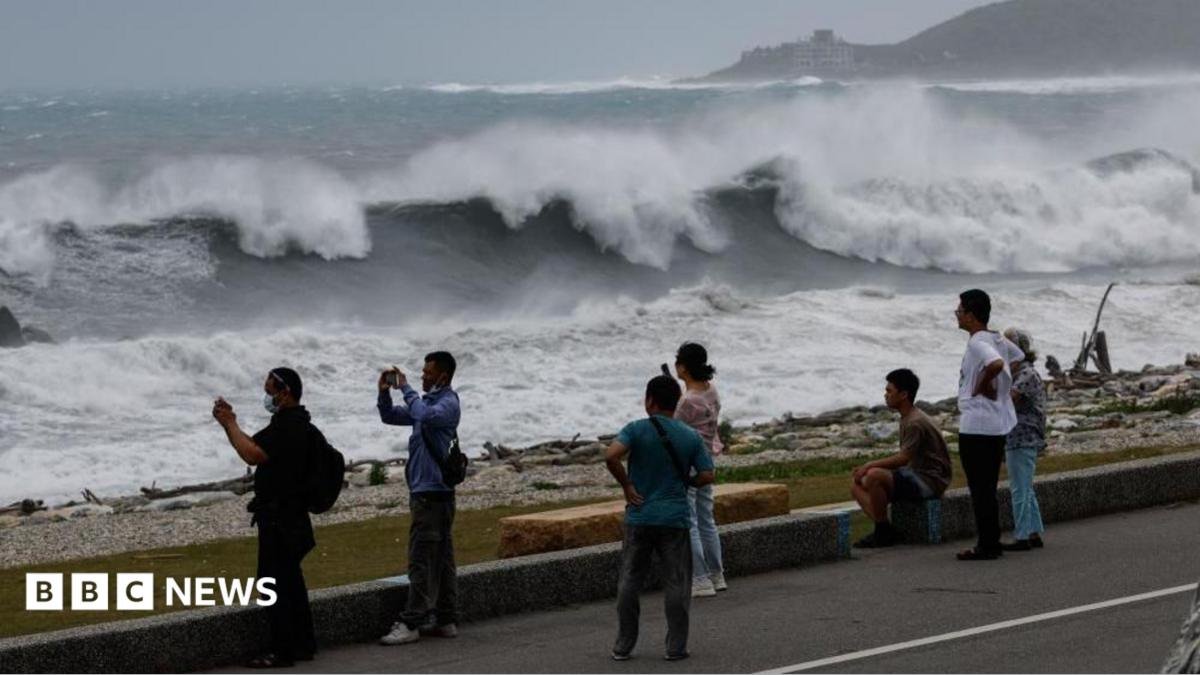
The Immense Scale of Typhoon Bavi
Typhoon Bavi spans 1,000km at its widest point, comparable to the width of France, as it advances across the Pacific toward Taiwan and southeastern China. Forecasts indicate it will deliver heavy rainfall to Taiwan's northern and eastern regions as well as remote Japanese islands before landfall in Fujian province on Saturday. Taiwanese authorities project up to 1m of rainfall in affected areas, a volume that tests drainage systems and elevates landslide risks in mountainous terrain. This size positions Bavi as the largest storm by diameter to approach the island since 1987, amplifying concerns over widespread flooding and infrastructure strain.
Taiwan's Coordinated Preparations and Military Mobilization
Taiwan's defence ministry has placed 29,000 soldiers on standby for relief operations, underscoring the island's emphasis on rapid response capacity. Flight cancellations and school suspensions have already disrupted daily routines, while residents have cleared supermarket shelves in anticipation of supply shortages. These measures align with established disaster protocols that prioritize civilian safety and logistical continuity. The scale of military involvement reflects Taiwan's strategic focus on integrating defence resources into civil protection frameworks, particularly when storms of this magnitude threaten densely populated zones.
China's Warnings and Provincial Readiness Measures
Across the strait, Chinese authorities have highlighted the potential for significant impact as Bavi approaches Fujian, with possible northward movement of remnants toward Jiangsu, Anhui, and the Bohai Sea region. Ma Jun, director of China's Institute of Public and Environmental Affairs, noted that Bavi's large size and abundant energy could extend outer rainbands into northern provinces less accustomed to typhoon conditions. He urged strengthened preparations in those areas. Some projections suggest the system could make landfall twice within China, complicating coordination between coastal and inland agencies. Southern provinces continue recovery from Typhoon Maysak, which caused at least 39 deaths and prompted evacuation of more than 130,000 people, mostly in Guangxi.
Disaster Management Capacity and Beijing's Governance Priorities
China's response framework draws on the China Meteorological Administration and local emergency offices to coordinate evacuations and infrastructure protections. The emphasis on northern provinces building typhoon experience connects directly to domestic stability objectives, as effective disaster handling reinforces public confidence in central governance. Fujian's role as a key economic corridor means preparations also safeguard supply chains and industrial output. Historical patterns show that timely mobilization in coastal zones has limited casualties during past events, allowing Beijing to project competence in climate-related challenges that affect millions.
Geopolitical Calculus Across the Taiwan Strait
The simultaneous exposure of Taiwan and mainland China to Bavi illustrates shared vulnerabilities that intersect with cross-strait dynamics. Both sides maintain independent preparedness systems, yet the storm's trajectory highlights how environmental threats can influence regional stability calculations. Taiwan's military standby and China's provincial alerts occur without direct coordination, reflecting entrenched political separation. Over time, such events may encourage limited technical exchanges on meteorological data, though core strategic postures remain unchanged. Regional actors, including Japan, monitor developments for implications on maritime routes and alliance readiness.
Climate Adaptation and Long-Term Strategic Implications
Bavi's projected intensity adds to evidence of shifting weather patterns that demand sustained investment in resilient infrastructure. For China, this aligns with broader objectives of enhancing adaptive capacity in both southern and northern provinces to protect economic growth targets. Taiwan similarly integrates climate considerations into long-term planning for agriculture and urban development. The contrast with earlier storms like Maysak provides context for evaluating cumulative strain on relief resources. Effective management of Bavi could inform future policies on early-warning systems and cross-regional resource allocation, supporting East Asia's overall resilience against recurring Pacific typhoons.
By Prof. Marcus Chen, Staff WriterThis article was produced with AI-assisted research and editorial support. Reporting is based on sources cited in the article.
What's Your Reaction?
 Like
0
Like
0
 Dislike
0
Dislike
0
 Love
0
Love
0
 Funny
0
Funny
0
 Wow
0
Wow
0
 Sad
0
Sad
0
 Angry
0
Angry
0

World Politics Analyst at Global1.News. Based in Beijing, covering US-China relations, global trade, and geopolitical strategy. Brings deep analytical perspective to the power dynamics shaping international affairs.















Comments (0)