
The Launch of Thailand's Innovative SHIELD Platform
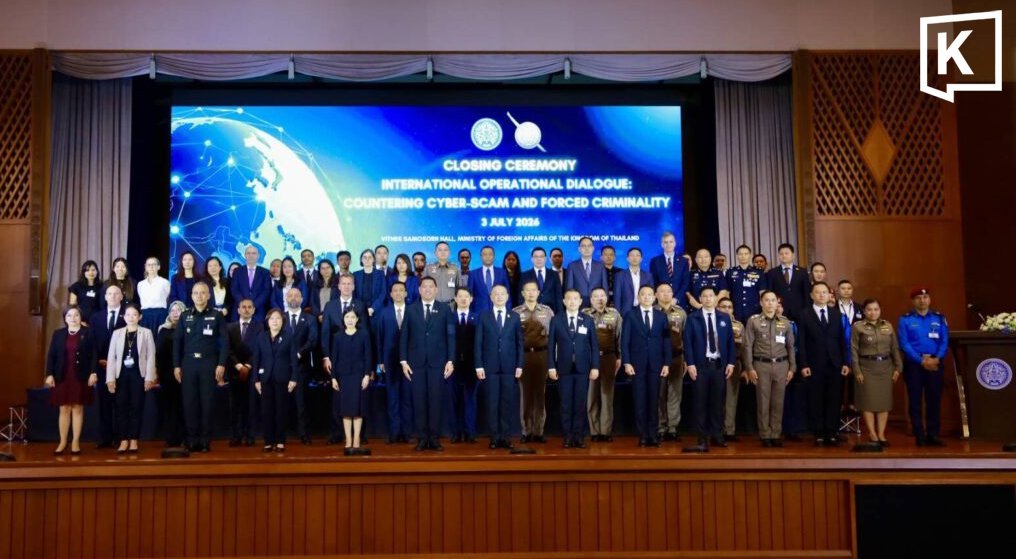
The Launch of Thailand's Innovative SHIELD Platform The launch event took place on Friday at the Vithes Samosorn Hall inside the Ministry of Foreign Affairs in Bangkok during the closing ceremony of the second consultation meeting on preventing and suppressing human trafficking linked to cybercrime. This gathering was jointly organised by the Royal Thai Police and the Ministry
The Launch of Thailand's Innovative SHIELD Platform
The launch event took place on Friday at the Vithes Samosorn Hall inside the Ministry of Foreign Affairs in Bangkok during the closing ceremony of the second consultation meeting on preventing and suppressing human trafficking linked to cybercrime. This gathering was jointly organised by the Royal Thai Police and the Ministry of Foreign Affairs, bringing together frontline law enforcement officers and representatives from international organisations. Thai police unveiled the new technology platform dubbed SHIELD on 3 July 2026, describing it as the world's first system developed specifically to combat transnational call centre scam syndicates and human trafficking networks through real-time international intelligence sharing. The ceremony highlighted Thailand's commitment to addressing these growing threats in Southeast Asia.
SHIELD represents a groundbreaking development in global law enforcement cooperation as the first platform designed specifically to integrate intelligence against transnational call centre scams and human trafficking. Authorities presented the system as a tool that enables participating agencies to exchange real-time information on scam compound locations, criminal financial networks, suspected offenders and trafficking victims. This integration helps authorities coordinate investigations, rescue operations and cross-border enforcement more efficiently than previous methods allowed. The event marked a significant step forward in Thailand's efforts to lead international responses to cyber-enabled crimes.
The platform's introduction comes at a critical time when Thai authorities continue to confront large-scale cyber scam operations linked to human trafficking networks operating across parts of Southeast Asia. Officials emphasised that SHIELD would serve as a central hub for sharing vital data among partners to disrupt these networks effectively. The launch builds directly on prior discussions and agreements reached through regional and global consultations. Thai readers can see this as a proactive measure that positions the country at the forefront of protective technologies.
During the ceremony, speakers outlined how SHIELD would streamline processes that once took weeks into near-instantaneous exchanges of critical details. The system focuses on practical outcomes such as faster victim identification and location tracking across borders. This development reflects Thailand's cultural emphasis on community protection and collective well-being. The platform's design ensures that data flows securely among trusted partners to maximise impact against organised crime groups.
Attendees learned that SHIELD would expand over time with additional features based on operational feedback from users in multiple nations. The Royal Thai Police stressed that the tool addresses both scam activities and the human trafficking elements often intertwined with them. This dual focus makes the platform unique compared to existing systems used elsewhere. For Thai families concerned about loved ones abroad, the launch signals enhanced safeguards through technology.
Distinguished Attendees at the SHIELD Ceremony
The ceremony was chaired by Social Development and Human Security Minister Nikorn Soemklang, who oversaw the proceedings with a focus on international collaboration. Attendees included Pinsuda Jayanama, Director-General of the Department of International Organizations, along with Pol. Lt. Gen. Surapong Thanomchit, Commissioner of Provincial Police Region 8. Pol. Lt. Gen. Kritsada Kanjanalongkorn, Assistant Commissioner-General of the Royal Thai Police, also participated in the event. Representatives from law enforcement agencies in 11 countries joined officials from several international organisations at the Ministry of Foreign Affairs venue.
The gathering formed part of the closing activities for the second consultation meeting, which emphasised practical steps against human trafficking tied to cybercrime. Minister Nikorn Soemklang highlighted the importance of unified action across borders during his remarks. The presence of 11 country representatives underscored the broad regional interest in Thailand's new platform. This diverse attendance reflected ongoing efforts to build trust and shared protocols among Southeast Asian nations and beyond.
The December 2025 International Conference on Global Partnerships Against Cyber-Scamming, hosted by the Ministry of Foreign Affairs in Bangkok, laid important groundwork for the current launch. That earlier event brought together representatives from 67 countries, international organisations, the private sector and civil society. Discussions there strengthened global cooperation against cyber-enabled crime and directly informed the development of SHIELD. Thai officials used insights from the 2025 conference to refine the platform's capabilities before the July 2026 unveiling.
Pol. Lt. Gen. Surapong Thanomchit and Pol. Lt. Gen. Kritsada Kanjanalongkorn contributed operational perspectives from their respective roles in provincial and national policing. Their involvement ensured that SHIELD addresses real-world challenges faced by officers on the ground. The 11 countries represented at the ceremony demonstrated immediate interest in adopting similar intelligence-sharing practices. Such participation helps create a network that benefits Thai communities by reducing cross-border criminal activities.
The Ministry of Foreign Affairs played a central role in facilitating the event alongside the Royal Thai Police. This partnership highlights Thailand's diplomatic approach to security issues affecting the region. Attendees exchanged views on how the platform could evolve to meet emerging threats. For Thai readers, the distinguished guest list signals strong governmental and international backing for protecting citizens from scam syndicates.
Understanding the Real-Time Capabilities of SHIELD
SHIELD enables participating agencies to exchange real-time information on scam compound locations, criminal financial networks, suspected offenders and trafficking victims. This feature allows authorities to coordinate investigations, rescue operations and cross-border enforcement more efficiently. The system integrates intelligence against transnational call centre scams and human trafficking in ways no prior platform has achieved. Thai police designed the tool specifically for these interconnected crimes prevalent in Southeast Asia.
Location tracking forms a core function of SHIELD, helping officers identify scam compounds operating in border areas of neighbouring countries. Real-time data sharing reduces the delays that previously allowed criminal groups to relocate quickly. Victim identification improves through immediate access to shared records from multiple nations. These capabilities directly support rescue missions and disrupt ongoing exploitation.
The platform's intelligence integration covers financial networks that move illicit proceeds generated by call centre operations. Suspected offenders become easier to monitor when agencies update information instantly across borders. This coordinated approach strengthens enforcement actions that protect vulnerable populations. Thai authorities note that such tools are essential given the scale of operations in Cambodia, Myanmar and Laos.
Rescue operations benefit from SHIELD because victim details can be verified and acted upon without lengthy bureaucratic processes. Cross-border enforcement gains speed when all partners access the same updated intelligence simultaneously. The system represents a shift toward proactive rather than reactive policing strategies. Implications for Thai readers include greater confidence that authorities can respond swiftly to threats involving Thai nationals abroad.
Future expansions of SHIELD may incorporate additional data points based on feedback from field operations. The current design already addresses the most pressing needs identified during regional consultations. Real-time sharing ensures that information remains current and actionable for all users. This technological advancement aligns with Thailand's national priorities in safeguarding its people and borders.
The Scale of Call Centre Scams in the Region
Thai authorities continue to confront large-scale cyber scam operations linked to human trafficking networks operating across parts of Southeast Asia, particularly in border areas of Cambodia, Myanmar and Laos. These criminal groups have exploited victims from numerous countries while generating billions of dollars in illicit proceeds. Neighbouring countries serve as operational bases and regional transit routes for the syndicates. The problem has grown rapidly, prompting Thailand to take a leading role in coordinated responses.
Call centre scams often involve forced labour within compounds where victims are trafficked and compelled to participate in fraudulent activities. Billions in illicit proceeds flow through sophisticated financial networks that span multiple jurisdictions. The use of border areas in Cambodia, Myanmar and Laos provides criminals with strategic advantages for evading detection. Thai police have documented how these operations target individuals across Asia and further afield.
Human trafficking elements compound the harm caused by scam syndicates, as victims face severe exploitation alongside their involvement in criminal schemes. The billions generated sustain and expand these networks, creating cycles of abuse that are difficult to break. Regional transit routes facilitate the movement of both victims and proceeds. Thailand's designation of this issue as a national agenda reflects the urgency felt by officials and communities alike.
Authorities have observed that scam compounds adapt quickly to enforcement efforts, making real-time intelligence essential for success. The exploitation of victims from numerous countries highlights the transnational nature of the threat. Billions in proceeds also fund further criminal expansion into new areas. Thai readers recognise that these operations can affect families when relatives fall victim to recruitment or financial losses.
The problem extends beyond immediate financial harm to include long-term social consequences for affected communities. Border security challenges arise when transit routes are exploited by organised groups. Thailand's response includes strengthening prevention alongside enforcement measures. This comprehensive view helps protect the nation's reputation as a safe and cooperative regional partner.
Global Partners Embracing the SHIELD System
To date, Thai police said SHIELD has already been adopted by partners in 10 countries: Australia, China, India, Japan, Malaysia, Nepal, the Philippines, South Korea, the United States and Vietnam. These nations recognise the platform's value in addressing shared threats from call centre syndicates. Participating international organisations include the United Nations Office on Drugs and Crime, the International Organization for Migration and the Federal Bureau of Investigation. Their involvement adds expertise and resources to the initiative.
The adoption by these 10 countries demonstrates growing international consensus on the need for specialised tools against cyber-enabled crime. Australia and the United States bring advanced technical capabilities to the network. China, India, Japan, Malaysia, Nepal, the Philippines, South Korea and Vietnam contribute regional knowledge essential for operations in Southeast Asia. This diverse group strengthens the overall effectiveness of intelligence sharing.
The United Nations Office on Drugs and Crime supports SHIELD through its designation of task forces focused on call centre crime. The International Organization for Migration assists with victim protection aspects of the platform. The Federal Bureau of Investigation provides insights from its global experience with financial crime networks. Together these organisations enhance the credibility and reach of Thailand's initiative.
Early signatories to SHIELD have begun integrating the system into their existing law enforcement frameworks. This adoption process builds on relationships formed during the December 2025 Bangkok conference. The 10 countries represent a strong foundation for future expansion to additional partners. Thai readers can appreciate how such alliances protect national interests while fostering regional stability.
International organisations continue to promote SHIELD as a model for other regions facing similar challenges. Their endorsement encourages more nations to consider joining the platform. The combination of country-level and organisational participation creates a robust support structure. This collaborative model reflects Thailand's gentle yet determined approach to global security issues.
Key Leaders Driving Thailand's Anti-Crime Efforts
Pol. Gen. Thatchai, who also serves as director of the Royal Thai Police's Anti-Human Trafficking Center and head of the UNODC-designated Anti-Call Center Crime and Human Trafficking Task Force, emphasised that SHIELD would strengthen international cooperation. He noted the platform enables faster, real-time responses to both call centre scams and human trafficking cases. Under the leadership of National Police Chief Pol. Gen. Kitrat Phanphet, the Royal Thai Police continues to prioritise these issues. The government has designated the suppression of call centre scams and human trafficking as a national agenda.
Pol. Gen. Thatchai's dual roles position him to oversee both operational and strategic aspects of the SHIELD rollout. His statements highlight the importance of sustained partnerships with the Ministry of Foreign Affairs. National Police Chief Pol. Gen. Kitrat Phanphet directs overall efforts to expand the platform globally. This leadership structure ensures consistent progress on Thailand's national agenda priorities.
The national agenda status means that multiple agencies receive clear directives to strengthen prevention, law enforcement and international cooperation. Pol. Gen. Thatchai works closely with international partners to refine SHIELD based on field experiences. National Police Chief Pol. Gen. Kitrat Phanphet supports these initiatives through resource allocation and policy guidance. Their combined efforts demonstrate Thailand's commitment to addressing one of the world's fastest-growing forms of transnational organised crime.
Leadership from the Royal Thai Police integrates insights from the December 2025 conference into ongoing platform development. Pol. Gen. Thatchai's task force role facilitates direct links with UNODC expertise. National Police Chief Pol. Gen. Kitrat Phanphet ensures alignment with broader national security objectives. Thai readers benefit from this focused governance that prioritises citizen safety.
Continued collaboration between police leadership and foreign affairs officials promises further enhancements to SHIELD. The national agenda framework provides the necessary authority for cross-agency coordination. Pol. Gen. Thatchai and National Police Chief Pol. Gen. Kitrat Phanphet model the dedication required to combat sophisticated criminal networks. Their vision supports long-term regional stability and protection for Thai communities.
Practical Benefits of SHIELD for Thai Communities
The launch of SHIELD supports Thailand's national agenda by directing agencies to strengthen prevention and law enforcement against call centre scams. Thai families gain indirect protection as real-time intelligence helps prevent recruitment of vulnerable individuals into trafficking situations. Border security improves through better tracking of transit routes used by criminal groups in neighbouring countries. Community safety receives a boost when authorities coordinate rescue operations more effectively across borders.
By enabling faster responses to trafficking cases, SHIELD reduces the likelihood that Thai nationals become victims in scam compounds located in Cambodia, Myanmar or Laos. The platform's focus on victim identification assists families seeking information about missing relatives. International adoption by 10 countries extends these safeguards beyond Thailand's immediate region. This expanded network creates safer conditions for Thai workers and travellers abroad.
Thai communities near border areas benefit from enhanced enforcement that disrupts operational bases of scam syndicates. The billions in illicit proceeds targeted by SHIELD represent funds that could otherwise fuel further crime affecting local economies. Leadership under Pol. Gen. Thatchai and National Police Chief Pol. Gen. Kitrat Phanphet ensures sustained attention to these issues. Practical outcomes include more successful investigations that bring offenders to justice.
The December 2025 conference discussions translated into tangible tools like SHIELD that Thai people can rely upon for protection. Involvement of organisations such as UNODC, IOM and the FBI adds layers of support that strengthen outcomes for affected families. Border security measures integrated into the platform help maintain Thailand's reputation as a secure homeland. Community safety initiatives gain momentum when intelligence flows freely among trusted partners.
Overall, SHIELD contributes to a sense of collective security that resonates with Thai cultural values of harmony and mutual care. Families experience reduced anxiety knowing authorities possess advanced tools to combat transnational threats. The platform's real-time capabilities translate into quicker resolutions for cases involving Thai citizens. This development marks a positive step toward lasting regional peace and prosperity.
By Ann Srisawat, Staff WriterThis article was produced with AI-assisted research and editorial support. Reporting is based on sources cited in the article.
What's Your Reaction?
 Like
0
Like
0
 Dislike
0
Dislike
0
 Love
0
Love
0
 Funny
0
Funny
0
 Wow
0
Wow
0
 Sad
0
Sad
0
 Angry
0
Angry
0

Southeast Asia Correspondent at Global1.News. Based in Bangkok, covering Thai and Southeast Asian politics, economy, technology, and culture. Deep regional perspective on one of the world's most dynamic regions.















Comments (0)