
Thailand invites public to Bangkok Pride 2026, driving bid for World Pride 2030
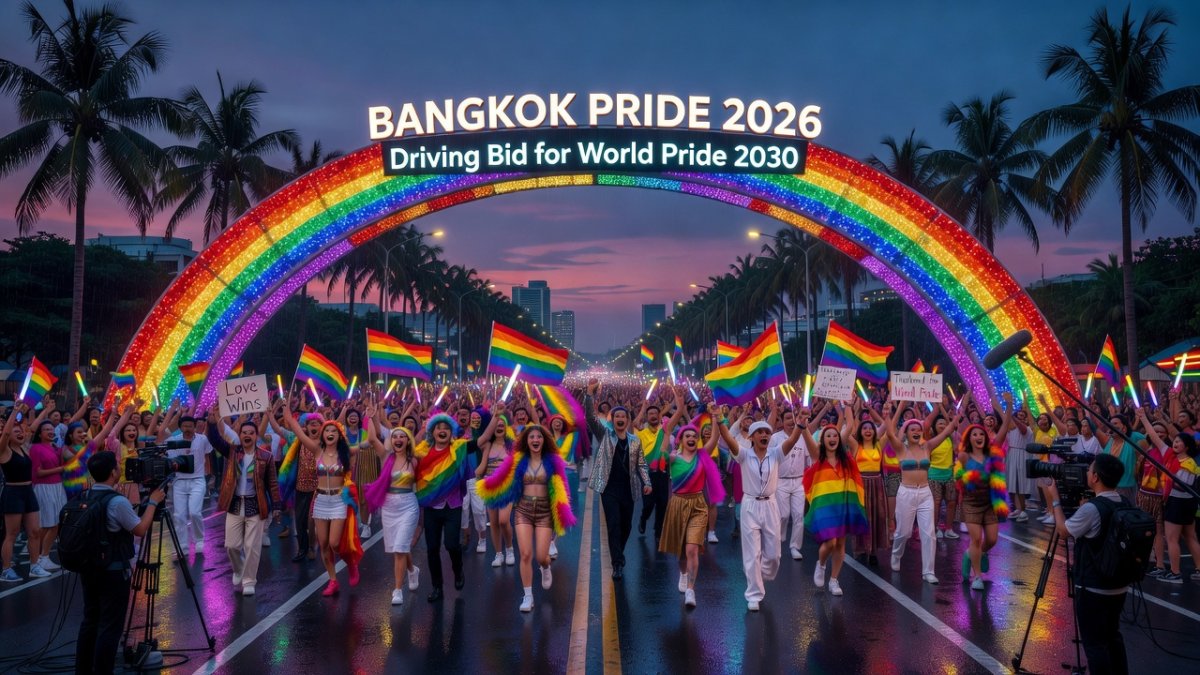
Thailand Invites the World to Bangkok Pride 2026 in Bold Step Toward Hosting World Pride 2030
BANGKOK — In a move that blends Thailand’s signature hospitality with a clear vision for global leadership, the government this week extended a warm public invitation to the Bangkok Pride Festival 2026, scheduled for this Sunday, 31 May. The centerpiece will be a vibrant five-kilometer rainbow parade winding from Lumphini Park through the heart of Silom and ending at the banks of the Chao Phraya River. Officials framed the event as both a celebration of local diversity and a strategic showcase for the country’s formal bid to host World Pride 2030.
A Public Welcome Rooted in Thai Values
Deputy Prime Minister and Minister of Culture, Somsak Thepsuthin, spoke at Government House yesterday, emphasizing that the festival is open to every resident and visitor who wishes to walk, cheer, or simply witness. “Our doors have always been open,” he said. “This parade is not only for the LGBTQ+ community; it is for families, students, elders, and tourists who believe in kindness and respect.” The language deliberately echoes the Thai concept of “nam jai,” or generosity of spirit, which organizers hope will define the 2030 bid.
Logistics released by the Bangkok Metropolitan Administration show that more than 120 floats have already registered, alongside marching bands from six universities and cultural performances featuring classical lakhon dance reinterpreted with rainbow motifs. Street vendors along the route will offer free iced Thai tea and mango sticky rice to participants, underscoring the community-focused character of the event.
From Local Celebration to International Ambition
Thailand first hosted a modest Pride march in Bangkok in 2002. Since then the event has grown steadily, drawing an estimated 80,000 participants in 2025. The leap to a 5-kilometer route this year reflects both increased domestic support and the strategic need to demonstrate capacity for a World Pride-scale gathering. World Pride, coordinated by InterPride, typically attracts between 500,000 and 1.5 million visitors; previous hosts include Madrid (2017) and Sydney (2023).
Thailand’s bid committee, formed in late 2025, highlights three comparative advantages: year-round warm weather, an established tourism infrastructure that already welcomes more than 40 million visitors annually, and recent legislative progress. Marriage equality legislation, signed into law in September 2024, made Thailand the first Southeast Asian nation to grant same-sex couples full marital rights. Organizers argue this legal milestone positions the country as a natural leader for regional inclusion.
Marriage Equality as Foundation
Legal experts note that the 2024 law removed more than 30 discriminatory clauses across tax, inheritance, and adoption statutes. Dr. Nattaya Boonchai, professor of constitutional law at Thammasat University, explained that implementation has been swift: “By April 2026, over 4,200 same-sex couples had registered marriages. The administrative systems adapted within six months—an unusually rapid rollout.” This efficiency, she added, reassures international observers that Thailand can manage the complex logistics of a global Pride event.
Community leaders credit grassroots advocacy dating back to the 1980s, when groups such as Anjaree quietly supported people living with HIV. Today, those same networks coordinate volunteer marshals for the parade, ensuring both safety and cultural sensitivity. “We are not importing an idea,” said longtime activist Paisan Suwannawong. “We are growing something that already exists in Thai soil.”
Economic Dimensions and Tourism Data
The Tourism Authority of Thailand projects that a successful 2030 World Pride could generate ฿18–25 billion (approximately US$520–720 million) in direct spending, comparable to the 2025 Songkran festival. LGBTQ+ travelers already contribute an estimated ฿120 billion annually to the national economy, according to 2025 figures from the Bank of Thailand. Hotels in the Silom and Sathorn districts report 15 percent higher occupancy during Pride week than during ordinary high season.
Analysts caution that benefits must be distributed beyond Bangkok. The bid committee has therefore partnered with tourism boards in Chiang Mai, Phuket, and Pattaya to create parallel “Pride Village” programs that would host satellite events and cultural exchanges in 2030.
International Context and Regional Leadership
Within ASEAN, Thailand’s moves stand in contrast to more restrictive environments elsewhere. Cambodia and Vietnam have seen gradual decriminalization efforts, while other neighbors maintain ambiguous legal frameworks. By positioning itself as a safe, legally progressive host, Thailand hopes to attract not only Western tourists but also regional visitors who may not yet enjoy similar protections at home.
InterPride board member Elena Vargas, speaking from Madrid, welcomed the bid: “Thailand’s combination of legal equality and visible public celebration meets our core criteria. We look forward to a thorough evaluation visit later this year.” The evaluation will examine security planning, accessibility for persons with disabilities, and sustainability measures—areas the Bangkok Metropolitan Administration has already begun addressing through new shuttle-bus routes and zero-waste stations along the parade path.
Voices from the Streets
At a pre-parade rehearsal on Silom Soi 2 last weekend, 23-year-old university student Kwanjai Rattanakorn painted a banner reading “Love Wins Here.” She told Global1 News that her parents, both civil servants, plan to attend for the first time. “They used to worry about what neighbors would say,” she said. “Now they see the prime minister’s office supporting us. It changes everything.”
Retired teacher Somchai Meesuk, 68, will march with his husband of two years. “We never thought we would see this day,” he reflected. “The parade route passes the school where I taught for thirty years. I want my former students to see that happiness is possible at any age.”
Looking Ahead to 2030
The formal bid dossier will be submitted to InterPride in October 2026. If selected, Bangkok would host the event in late October or early November 2030, aligning with the cooler “cool season” and avoiding monsoon disruptions. Proposed venues include the newly expanded IMPACT Arena for the main concert and riverfront stages near ICONSIAM for evening cultural showcases.
City planners emphasize that infrastructure upgrades—wider pedestrian walkways, improved lighting, and expanded public toilets—are designed to serve residents long after the event concludes. “This is not a one-week festival,” said Bangkok Governor Chadchart Sittipunt. “It is an investment in a more inclusive city for the next generation.”
As preparations intensify, the message from officials and activists alike remains consistent: Thailand’s invitation is genuine, its legal framework is solid, and its cultural embrace of diversity runs deep. The five-kilometer parade this Sunday serves as both rehearsal and declaration of intent.
This is Ann Srisawat for Global1 News, reporting from Bangkok. 🇹🇭
This article was produced with AI-assisted research and editorial support. Reporting is based on sources cited in the article.
What's Your Reaction?
 Like
0
Like
0
 Dislike
0
Dislike
0
 Love
0
Love
0
 Funny
0
Funny
0
 Wow
0
Wow
0
 Sad
0
Sad
0
 Angry
0
Angry
0

Southeast Asia Correspondent at Global1.News. Based in Bangkok, covering Thai and Southeast Asian politics, economy, technology, and culture. Deep regional perspective on one of the world's most dynamic regions.











Comments (0)