
Thailand Faces Dual Economic Pressures from Middle East Conflict
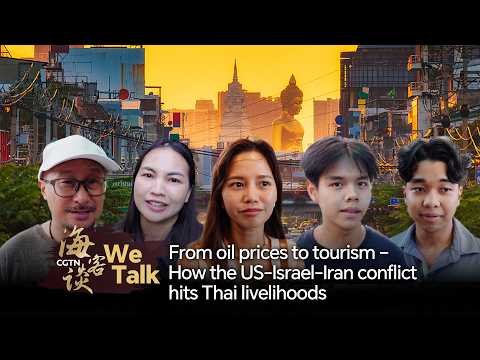
Thailand Faces Dual Economic Pressures from Middle East Conflict In a recent CGTN "We Talk" episode titled "From oil prices to tourism – How the US-Israel-Iran conflict hits Thai livelihoods," analysts examined the cascading effects of the US-Israel-Iran war that began on February 28, 2026. The discussion highlighted Thailand's acute exposure to elevated global oil prices and r
(Global 1 News)
The Strait of Hormuz Disruption and Thailand's Energy Dependence
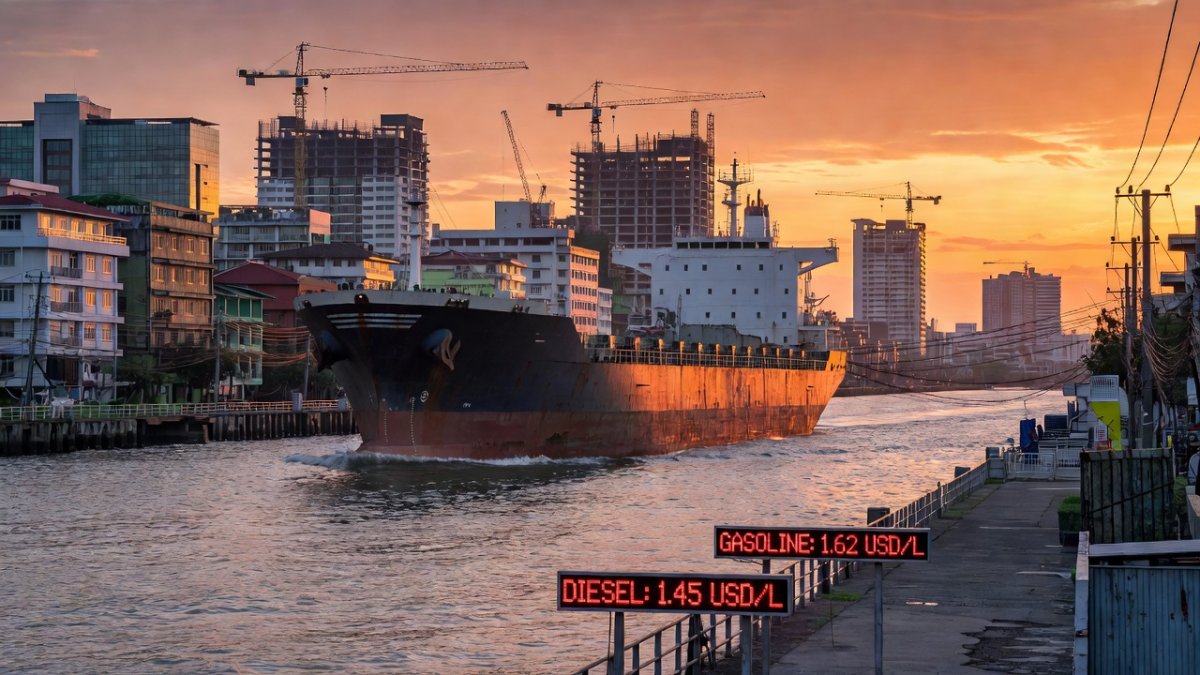
The closure of the Strait of Hormuz to commercial shipping has removed a vital artery that carried approximately 20 million barrels of oil per day in 2025. Thailand, which imports roughly 80 percent of its crude oil, has absorbed repeated price spikes that persist even after the reported ceasefire agreement reached in mid-June 2026. Because the country lacks sufficient strategic reserves and domestic production capacity, higher energy costs have fed directly into transportation, manufacturing, and household electricity bills. Policymakers in Bangkok now confront the reality that short-term fiscal buffers are insufficient to offset sustained external shocks of this magnitude.
Tourism Contraction and Its Multiplier Effects
Tourism contributed around 12 percent of Thailand's GDP before the war. Long-haul markets in Europe, the Middle East, and North America have curtailed bookings amid concerns over regional instability and higher airfares. Hotel occupancy rates in major destinations have fallen sharply, while ancillary sectors such as retail, food services, and ground transport report parallel declines. The contraction is not merely cyclical; it reflects a structural shift in traveler risk perception that may outlast the immediate conflict. Government stimulus aimed at domestic tourism has provided only partial relief, leaving export-oriented service providers exposed to prolonged revenue shortfalls.
(CGTN)
China's Positioning as an Alternative Economic Partner
Beijing has moved to present itself as a stabilizing economic presence for ASEAN members facing energy and tourism headwinds. As ASEAN's largest trading partner, China has accelerated discussions on expanded energy cooperation and infrastructure financing under existing frameworks such as the Belt and Road Initiative. Thai officials have explored joint ventures in refining capacity and renewable projects that could reduce future exposure to Hormuz-related volatility. These overtures align with China's broader objective of deepening regional economic interdependence while its own economy manages the secondary effects of global energy price increases.
ASEAN's Energy Diversification and Regional Calculus
Across Southeast Asia, governments are accelerating solar installations and liquefied natural gas import terminals to lessen reliance on Middle Eastern crude. Thailand has joined neighbors in revising power development plans, yet the pace of substitution remains constrained by grid infrastructure and financing costs. The strategic question for ASEAN capitals is how to balance immediate energy security needs against longer-term alignment choices. Greater engagement with Chinese suppliers offers near-term relief but raises questions about technology standards and debt sustainability. Meanwhile, traditional partners in the United States and Europe have offered limited immediate alternatives, leaving ASEAN states to weigh competing offers with careful attention to leverage and conditionality.
Second-Order Effects on the Global South and Multilateral Institutions
The conflict's ripple effects extend beyond Thailand to commodity-importing economies across the Global South. Elevated oil prices have widened current-account deficits and complicated debt-servicing obligations for several developing nations. ASEAN's experience illustrates a wider pattern: middle-income countries with high tourism dependence and limited energy autonomy face compounded vulnerabilities. Multilateral forums such as the Asian Development Bank and ASEAN+3 have begun preliminary discussions on coordinated financing facilities, yet concrete disbursement mechanisms are still under negotiation. The episode underscores how localized geopolitical shocks can test the resilience of existing regional safety nets.
Strategic Outlook for Thailand's Policy Choices
Thai authorities must navigate a narrow path between short-term stabilization measures and structural reforms. Accelerating renewable deployment, negotiating longer-term supply contracts with diverse producers, and promoting higher-value tourism segments represent plausible directions. At the same time, maintaining constructive relations with both China and traditional Western partners will require calibrated diplomacy. The war has clarified that energy security and tourism resilience are no longer peripheral concerns but central elements of national strategy. How effectively Bangkok integrates these lessons will shape Thailand's economic trajectory well beyond the current ceasefire period. By Prof. Marcus Chen, Staff Writer
This article was produced with AI-assisted research and editorial support. Reporting is based on sources cited in the article.
What's Your Reaction?
 Like
0
Like
0
 Dislike
0
Dislike
0
 Love
0
Love
0
 Funny
0
Funny
0
 Wow
0
Wow
0
 Sad
0
Sad
0
 Angry
0
Angry
0

World Politics Analyst at Global1.News. Based in Beijing, covering US-China relations, global trade, and geopolitical strategy. Brings deep analytical perspective to the power dynamics shaping international affairs.











Comments (0)