
China's Enduring Stake in Multilateral Institutions Amid Great-Power Rivalry
China's Enduring Stake in Multilateral Institutions Amid Great-Power Rivalry UNGA President Endorses China's Multilateral Role In the CGTN Leaders Talk interview, UNGA President Annalena Baerbock described China as essential to the United Nations and the broader global order, highlighting Beijing's contributions to peacekeeping operations and development cooperation. This asses
UNGA President Endorses China's Multilateral Role
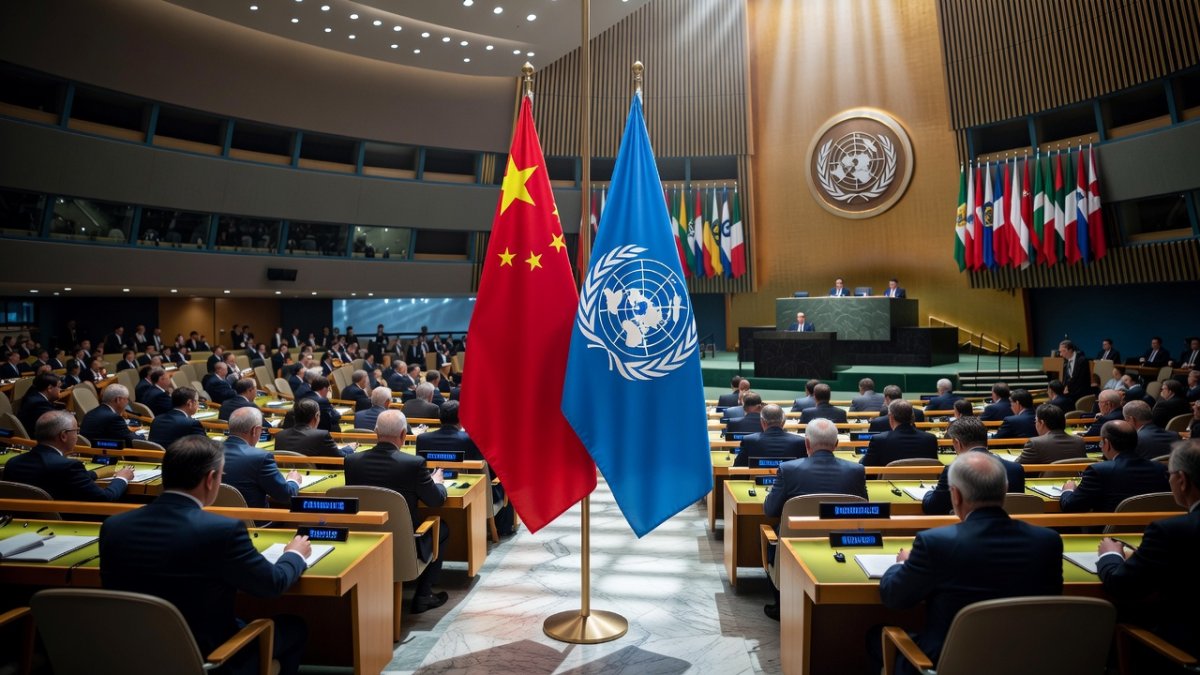
In the CGTN Leaders Talk interview, UNGA President Annalena Baerbock described China as essential to the United Nations and the broader global order, highlighting Beijing's contributions to peacekeeping operations and development cooperation. This assessment arrives at a moment when US-China strategic competition increasingly shapes debates over institutional reform and the future of collective security arrangements. The remarks underscore how China's sustained engagement with multilateral forums aligns with its long-standing emphasis on sovereign equality and non-interference, principles that continue to guide policy formulation within the Ministry of Foreign Affairs.
China's approach to multilateralism has evolved through successive policy frameworks, including the 14th Five-Year Plan, which integrates international cooperation into domestic modernization objectives. Officials such as Wang Yi have consistently framed participation in the United Nations as a means to advance shared development rather than to project dominance. Baerbock's comments therefore reflect recognition that Beijing's material support for UN initiatives complements rhetorical commitments to collective problem-solving, particularly in areas where unilateral actions by other powers have created institutional vacuums.
From a strategic standpoint, this endorsement reinforces China's interest in preserving the UN's centrality against efforts to bypass it through ad hoc coalitions. The Ministry of Commerce has similarly channeled resources into South-South partnerships that complement UN development goals, illustrating how economic statecraft and diplomatic engagement operate in tandem. Such coordination allows Beijing to position itself as a reliable stakeholder rather than a revisionist actor, even as competition with Washington intensifies over influence within specialized agencies.
The Evolving UN-China Relationship: Peacekeeping and Development
China's peacekeeping contributions have grown steadily since the early 2000s, reflecting a deliberate decision by the Central Military Commission to align military diplomacy with UN mandates. These deployments support stability in regions critical to Belt and Road corridors while demonstrating Beijing's willingness to shoulder operational burdens that many Western capitals have reduced. Baerbock's reference to development cooperation further points to the role of institutions such as the National Development and Reform Commission in coordinating infrastructure projects that intersect with UN Sustainable Development Goals.
Historical context reveals that China's engagement with the UN system has always been pragmatic. After regaining its seat in 1971, Beijing initially adopted a low-profile posture before gradually expanding its financial and personnel commitments. The Dual Circulation strategy introduced in recent years has not diminished this outward orientation; instead, it has sought to balance domestic resilience with continued participation in global supply chains and multilateral financing mechanisms. This dual emphasis enables China to address criticisms of economic decoupling while maintaining leverage within UN economic bodies.
Development cooperation under the Ministry of Commerce has emphasized capacity-building programs that complement UN technical assistance frameworks. These initiatives often target governance and infrastructure gaps in partner countries, creating parallel tracks of engagement that do not require alignment with Western conditionalities. The resulting architecture strengthens China's diplomatic capital at a time when debates over UN reform risk fragmenting consensus on core mandates.
Strategic Implications: A Counterweight to Unilateralism
Baerbock's characterization of China as essential carries direct implications for managing unilateral tendencies within the international system. US policy shifts toward selective engagement have left openings that Beijing has filled through consistent support for UN budgetary processes and specialized agency operations. This pattern serves China's core interest in preventing the erosion of norms that constrain great-power coercion, particularly in maritime and trade domains where Washington has pursued extraterritorial measures.
Within the Ministry of Foreign Affairs, strategic planners view multilateral endorsement as validation for policies that prioritize state sovereignty over interventionist precedents. The 14th Five-Year Plan's external dimension explicitly links domestic stability to an international environment free from hegemonic dictates. By sustaining peacekeeping and development roles, China positions itself as an indispensable stabilizer, thereby complicating efforts to isolate it through secondary sanctions or technology export controls.
US-China competition thus acquires an institutional dimension in which control over UN narratives becomes contested terrain. Beijing's approach avoids direct confrontation while steadily expanding its footprint in areas such as conflict mediation and post-conflict reconstruction. This measured accumulation of influence aligns with long-term objectives of reshaping global governance without triggering outright institutional rupture.
European Perspectives on China's Global Engagement
European assessments of China's UN role remain divided, reflecting differing national priorities within the European Union. Germany's foreign policy tradition, embodied by figures such as Annalena Baerbock, has historically balanced transatlantic commitments with pragmatic engagement on global issues. The CGTN interview signals a willingness to acknowledge concrete Chinese contributions even amid broader tensions over trade practices and human rights.
France and other continental powers have pursued parallel tracks, engaging Beijing through both bilateral channels and multilateral formats. The Ministry of Foreign Affairs in China has cultivated these relationships by emphasizing shared interests in climate governance and pandemic preparedness, areas where UN mechanisms retain relevance. Such diplomacy mitigates the risk that European capitals will uniformly align with Washington on containment strategies.
Nevertheless, European strategic autonomy remains constrained by NATO dependencies and internal divergences over economic security. China's Dual Circulation framework, coordinated in part through the National Development and Reform Commission, offers European firms continued market access that competes with US-led decoupling initiatives. This economic interdependence provides Beijing with additional leverage in shaping European perceptions of its multilateral utility.
The recognition from a European-led UNGA presidency carries particular weight given Germany's traditionally cautious approach to China engagement. Baerbock's remarks suggest a recalibration within Berlin's foreign policy establishment, acknowledging that constructive partnership with Beijing on multilateral governance yields tangible results that benefit all parties involved.
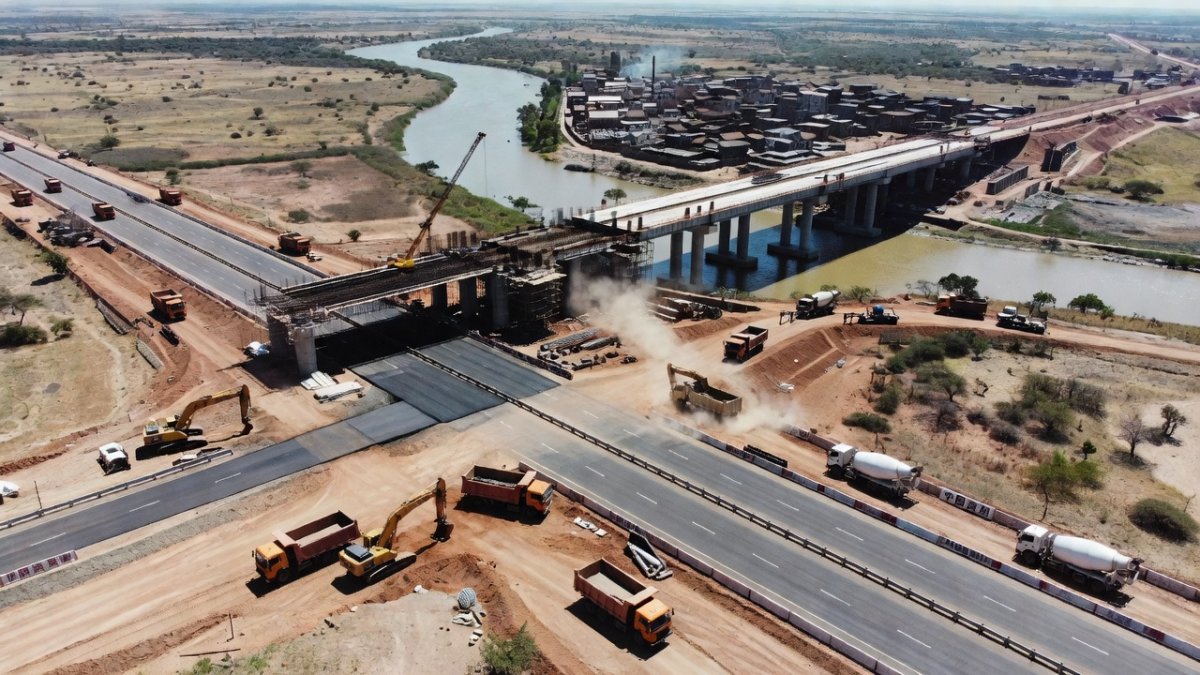
China's contributions to UN peacekeeping have included deployment of engineering troops, medical personnel, and police units to missions in South Sudan, Mali, and the Democratic Republic of Congo. These deployments, coordinated through the Ministry of National Defense's peacekeeping affairs office, now make China the second-largest contributor to the UN peacekeeping budget and the largest troop contributor among the five permanent Security Council members. The operational experience gained through these missions strengthens China's capacity to project stability in regions connected to Belt and Road corridors.
Development cooperation represents an equally significant dimension of China's multilateral engagement. The China International Development Cooperation Agency, established in 2018, has streamlined aid coordination across health infrastructure, agricultural technology, and educational exchange programs that serve over 120 countries. These programs operate alongside the Asian Infrastructure Investment Bank's 100-plus approved projects, collectively demonstrating an institutional architecture that supplements traditional UN development mechanisms.
From Washington's perspective, China's expanding UN role generates both opportunities and challenges. The US has historically led on peacekeeping financing and institutional reform, but recent political divisions have constrained its capacity for sustained multilateral engagement. This vacuum allows Beijing to frame its contributions as filling gaps left by Western retrenchment, a narrative that resonates across the Global South where development needs remain acute. The strategic consequence is that efforts to marginalize China diplomatically become increasingly difficult when Beijing holds legitimate claims to institutional responsibilities.
What This Means for the Global South
Countries across the Global South have long regarded China's UN engagement as a counterbalance to historical patterns of Western dominance within the organization. Baerbock's remarks lend further legitimacy to Beijing's narrative that its peacekeeping and development efforts address priorities often sidelined by traditional donors. This resonance strengthens diplomatic support for Chinese positions in UN voting blocs on issues ranging from development financing to Security Council reform.
Policy instruments such as those administered by the Ministry of Commerce have expanded trade and investment linkages that complement UN development agendas. These ties create constituencies within recipient states that favor continued cooperation with China over exclusive alignment with US or European frameworks. The 14th Five-Year Plan's emphasis on high-quality Belt and Road projects further embeds Chinese capital in infrastructure critical to regional integration.
Wang Yi's diplomatic outreach has consistently framed this engagement as partnership among equals, avoiding the hierarchical language sometimes associated with OECD-led initiatives. As a result, Global South governments gain additional room to maneuver between competing great powers, preserving policy space that multilateral endorsement from the UNGA president helps to legitimize.
The Road Ahead: Multilateralism Under Strain
The convergence of US-China rivalry and institutional fatigue poses ongoing tests for the multilateral system that Baerbock described as dependent on Chinese participation. Future UN reform discussions will likely center on expanding representation while preserving veto structures, a balance that China has historically defended through the Ministry of Foreign Affairs. Sustained peacekeeping and development roles provide Beijing with credentials to shape these negotiations.
Coordination between the National Development and Reform Commission and international financial institutions will remain essential for translating rhetorical support into operational outcomes. Dual Circulation objectives will continue to influence how China calibrates its contributions, ensuring that multilateral engagement reinforces rather than undermines domestic priorities. This calibration will determine whether Baerbock's assessment translates into durable institutional influence.
Ultimately, the trajectory of multilateralism hinges on whether major powers can reconcile competitive impulses with collective imperatives. China's demonstrated utility in UN operations offers one pathway toward managed coexistence, provided that Washington and its allies refrain from measures that force binary choices on third parties. The coming years will reveal whether this equilibrium can be maintained.
By Prof. Marcus Chen, Staff WriterThis article was produced with AI-assisted research and editorial support. Reporting is based on sources cited in the article.
What's Your Reaction?
 Like
0
Like
0
 Dislike
0
Dislike
0
 Love
0
Love
0
 Funny
0
Funny
0
 Wow
0
Wow
0
 Sad
0
Sad
0
 Angry
0
Angry
0

World Politics Analyst at Global1.News. Based in Beijing, covering US-China relations, global trade, and geopolitical strategy. Brings deep analytical perspective to the power dynamics shaping international affairs.










Comments (0)