
Day of Reckoning in the Gulf: Strait of Hormuz Crisis Escalates as US Strikes Iran
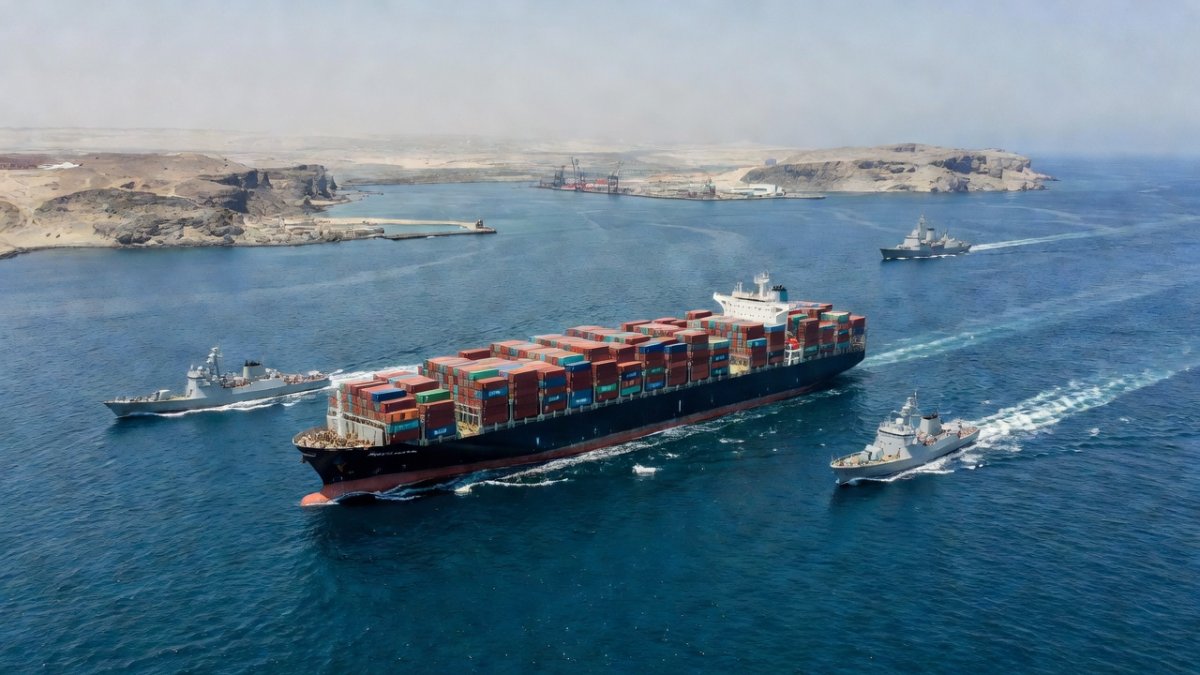
Day of Reckoning in the Gulf Folks, the Strait of Hormuz just became the flashpoint that could reshape the entire global order. We are watching a direct military confrontation between the United States and Iran unfold in real time. On Sunday, the IRGC attacked the Cyprus-flagged container ship M/V GFS Galaxy, setting it ablaze and forcing its crew to abandon ship into lifeboats
Day of Reckoning in the Gulf
Folks, the Strait of Hormuz just became the flashpoint that could reshape the entire global order. We are watching a direct military confrontation between the United States and Iran unfold in real time. On Sunday, the IRGC attacked the Cyprus-flagged container ship M/V GFS Galaxy, setting it ablaze and forcing its crew to abandon ship into lifeboats. The United States responded with precision strikes on 140 military targets across southern Iran. This is the third American strike in a week. Let me be clear about what is at stake: twenty percent of the world's oil passes through that narrow waterway. When the guns start firing in the Strait of Hormuz, every single person who drives a car, heats a home, or buys groceries feels the impact.
Reuters, the Associated Press, CNN, The Guardian, The New York Times, Al Jazeera, and ABC Australia are all reporting the same basic facts. This is not speculation. This is not hypothetical. This is happening right now. And the situation is accelerating faster than most people realize.
What Happened: The Attack on M/V GFS Galaxy
The sequence of events began when IRGC speedboats surrounded the M/V GFS Galaxy near the entrance to the Strait of Hormuz. According to Centcom reports confirmed by Reuters, the Iranian Revolutionary Guard Corps issued a radio warning demanding the vessel alter course. When the ship did not comply, the IRGC fired a warning shot across the bow. Minutes later, small arms fire raked the deck and an incendiary device ignited containers on the forward hold. The crew abandoned ship under fire as smoke billowed across the deck.
The Guardian obtained video from a nearby vessel showing the GFS Galaxy listing heavily and trailing black smoke. CNN confirmed the ship remains adrift and partially on fire with damage to its bridge and cargo holds. The M/V GFS Galaxy is a Cyprus-flagged container vessel managed by Centaurus Maritime, carrying commercial cargo bound for Asian markets. Rescue vessels from nearby commercial traffic pulled survivors from the water. No casualties have been confirmed at this time, but the crew remains unaccounted for in official statements.
This was not an inspection gone wrong. This was a deliberate act of maritime aggression designed to close the Strait through intimidation. The IRGC has harassed commercial shipping before, but never with this level of escalation while American carrier groups are already deployed in theater.
America Strikes Back: 140 Targets in a Single Night
Early Sunday morning, US Central Command announced that American forces had struck 140 military targets across Iranian territory in a single coordinated wave. The New York Times, citing Pentagon sources, reported that the strikes hit missile storage sites near Bandar Abbas and IRGC command facilities on Qeshm Island. Additional precision strikes targeted IRGC naval bases, radar installations, and air defense systems along the coastline of Hormozgan province.
This is the third American operation in seven days, each one larger and more devastating than the last. The first strikes on July 7 hit three sites after commercial vessels were attacked. The second wave expanded the target list. This third wave — 140 targets — represents a dramatic escalation. Reuters confirmed secondary explosions at several sites, indicating the successful destruction of stored munitions and fuel depots. Al Jazeera reported explosions visible from miles away near Bandar Abbas and Hajjiabad.
The message from Washington is unmistakable: close the Strait and we will dismantle your capacity to do so. Centcom described the operation as focused on degrading Iran's ability to threaten shipping while avoiding civilian population centers. But make no mistake — hitting 140 targets in a single night is not a warning shot. It is a military campaign.
Iran's Response: Strait Declared Closed, Gulf States Targeted
Iran immediately declared the Strait of Hormuz closed to all commercial traffic "until further notice," according to statements carried by Iranian state media and confirmed by Al Jazeera. The IRGC announced that any vessel traveling through the Strait without authorization would be considered hostile. IRGC naval units began aggressive patrols and threatened to mine the narrow shipping lanes that carry one-fifth of the world's daily oil supply.
But Iran did not stop with declarations. Within hours of the American strikes, Iranian missiles struck infrastructure targets in at least two Gulf states believed to host US forces. The Guardian and AP reported damage to oil facilities and port terminals, though the exact extent remains unclear. These strikes represent a dangerous widening of the conflict — Iran is now directly attacking neighboring states, not just American forces or commercial shipping.
Al Jazeera reported that Iranian officials framed the Strait closure and the missile strikes as defensive measures against American aggression. In reality, this is economic warfare aimed at global energy supplies combined with a military strategy designed to make the cost of American strikes too high for Washington to sustain. The retaliation against Gulf Arab states shows Tehran is willing to regionalize the conflict rather than absorb strikes passively.
Trump Draws the Line: "The Strait Is Open"
President Trump addressed the nation directly and rejected Iran's declaration in blunt terms. "The Strait is open," he stated firmly, adding that any attempt to interfere with international shipping would be met with overwhelming force. He emphasized that the United States and its allies would keep sea lanes clear regardless of Iranian threats. The statement came hours after the latest round of strikes and was broadcast across all major networks.
CNN and The New York Times both reported that Trump personally authorized the expanded target list after reviewing real-time imagery of the burning M/V GFS Galaxy. His position is consistent across the crisis: American naval power will not be denied passage through international waters. The political implications are equally clear. The White House is framing this as a test of American resolve, and any domestic criticism risks being labeled as weakness in the face of Iranian aggression. The president has drawn a hard line and backed it with the destruction of 140 Iranian military assets.
Oil Markets in Turmoil: What This Means for Your Wallet
Let's talk about what this actually means for real people. Gas prices are already climbing at the pump. Analysts tracking futures markets reported an immediate spike in crude prices within hours of the strikes. If the Strait remains contested — and right now both sides are doubling down — Americans will feel this in their wallets within days, not weeks.
The impact goes far beyond the gas station. Supply chains for electronics, automobiles, and consumer goods that rely on Asian shipping routes passing through the region will face delays and higher costs. Insurance premiums for maritime cargo have already jumped. Airlines that transit the region are rerouting flights. Families relying on stable energy prices for heating, transportation, and daily expenses need to prepare for significant volatility in the weeks ahead.
Twenty percent of the world's oil moves through the Strait of Hormuz. When Iran says it is closed — even if the US Navy keeps it technically open — the uncertainty alone drives prices higher. Tanker owners are already refusing to sail into the region without war risk insurance premiums that have multiplied overnight.
The Regional Picture: Gulf States in the Crossfire
The missile strikes on Gulf state infrastructure represent a dangerous new phase. Iran is now directly attacking the neighboring countries that host American military installations. This changes the strategic calculus completely. Gulf states that have attempted to maintain diplomatic distance from the US-Iran confrontation now find themselves unquestionably in the line of fire.
The UN's International Maritime Organization issued an urgent call for "maximum restraint and de-escalation," but those words carry little weight when missiles are already flying. ABC Australia reported that US military installations in the region were placed on heightened alert after the Iranian retaliation strikes. The risk of a miscalculation drawing in additional regional actors increases with every exchange of fire.
Iran's proxy forces across Yemen, Iraq, Syria, and Lebanon add another layer of complexity. The IRGC has spent decades cultivating militia networks that can strike American interests without direct Iranian attribution. If this conflict continues to escalate, those proxies will almost certainly become active. The conflict is no longer confined to the Strait of Hormuz — it has already spread to the Arabian Peninsula and the Gulf States.
What Comes Next
The risk of a wider war is real and growing every hour. Each American strike reduces Iran's conventional military options and increases the likelihood that Tehran turns to asymmetric attacks, proxy forces, or outright mining of the Strait. The IRGC has already demonstrated it will target commercial shipping and neighboring states. The next escalation could draw in additional regional actors and push the conflict far beyond the Gulf.
Here is what you can do right now. Track official Centcom and State Department updates instead of relying on social media rumor and unverified claims. Contact your members of Congress and demand clear authorization and congressional oversight for any sustained military campaign. Prepare your household budget for higher energy costs over the next 30 to 60 days. And stay engaged — this crisis will not resolve itself through wishful thinking or half-measures.
The Strait of Hormuz is the world's economic artery. Right now it is under direct fire. And the decisions made in the next 48 hours will determine whether this remains a contained military confrontation or escalates into a regional war that reshapes the global order. Pay attention. This matters.
By Jessica Ali, Lead Anchor — Global 1 News
This article was produced with AI-assisted research and editorial support. Reporting is based on sources cited in the article.
What's Your Reaction?
 Like
0
Like
0
 Dislike
0
Dislike
0
 Love
0
Love
0
 Funny
0
Funny
0
 Wow
0
Wow
0
 Sad
0
Sad
0
 Angry
0
Angry
0

Editor-in-Chief at Global1.News. Atlanta-based journalist who cuts through the BS and tells it like it is. Lead anchor, host, and the voice you hear when the spin stops and the truth starts.











Comments (0)