
Reeves Warns Burnham: Governing Hard as Transition Looms
Reeves Delivers Parting Warning to Burnham as Labour Prepares for Abrupt Transition Reeves Issues Stark Caution Amid Leadership Change Rachel Reeves used what is likely her final interview as chancellor to deliver a pointed message to Andy Burnham, stressing that any successor must arrive with a fully worked-through plan because governing remains exceptionally difficult in Brit
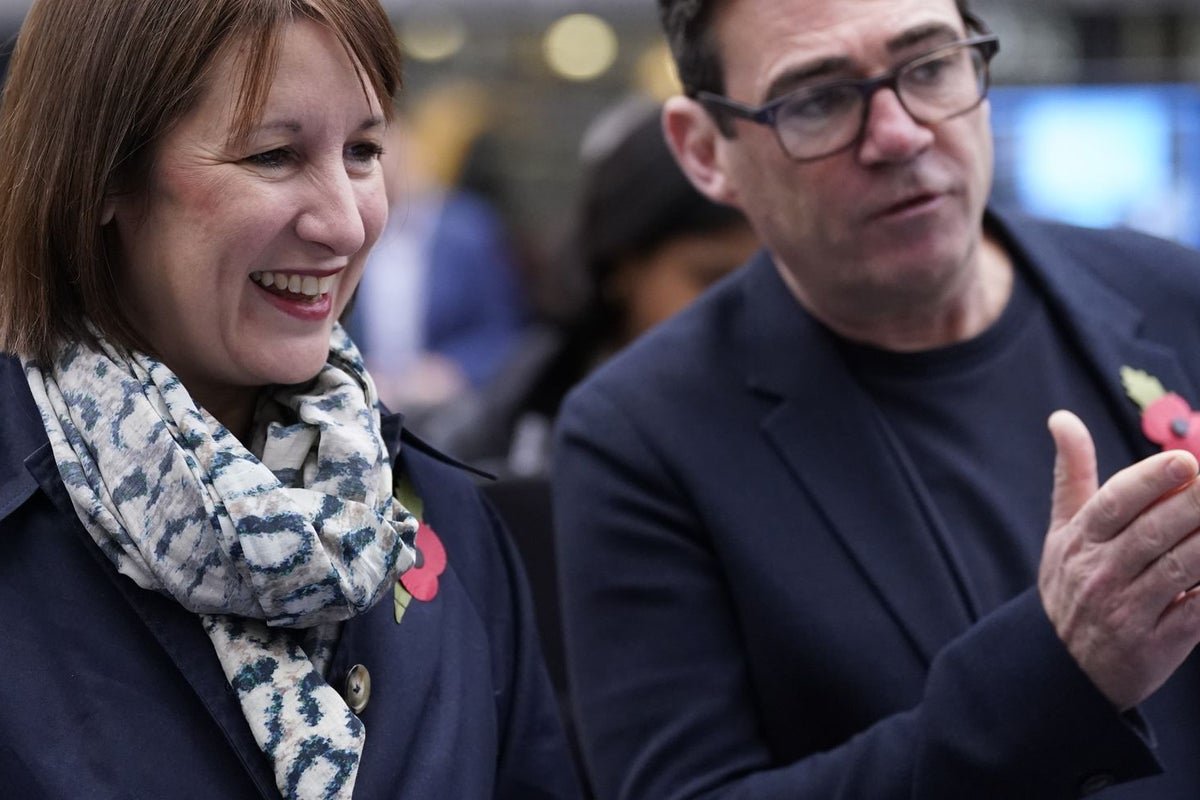
Reeves Delivers Parting Warning to Burnham as Labour Prepares for Abrupt Transition
Reeves Issues Stark Caution Amid Leadership Change
Rachel Reeves used what is likely her final interview as chancellor to deliver a pointed message to Andy Burnham, stressing that any successor must arrive with a fully worked-through plan because governing remains exceptionally difficult in Britain. Speaking on the BBC’s Laura Kuenssberg programme this week, she appeared to accept that her own tenure at the Treasury is drawing to a close as Burnham readies himself to replace Keir Starmer. The Independent’s reporting captures a chancellor who, while defending her record, chose not to contest the narrative that power is shifting rapidly within the Labour Party. Burnham has already secured the backing of 322 Labour MPs and is expected to become prime minister on Monday 20 July, leaving little time for preparation. Reeves’s remarks therefore function less as personal reflection and more as institutional advice passed to the man poised to inherit both the office and its constraints. Her tone throughout the exchange suggested resignation rather than resentment, framing the transition as inevitable yet fraught with practical challenges that no incoming leader can afford to underestimate.
The Warning: Governing Remains Exceptionally Hard
Reeves’s central admonition—that Burnham requires a detailed plan because governing is hard in Britain—carries particular weight given the compressed timetable now facing the party. The Independent notes that she refused to indulge in speculation about her own future while simultaneously underscoring the structural difficulties any chancellor or prime minister encounters once in office. This warning is not abstract; it arrives against a backdrop of economic pressures and public impatience that she herself acknowledged. By emphasising preparation, Reeves implicitly critiques any assumption that a change of leader alone will resolve entrenched problems. Her comments also serve to manage expectations around Burnham, whose rapid ascent has been accompanied by claims of extensive prior planning. Rather than dismissing those claims, she described a year-long preparation period as perfectly reasonable, thereby lending legitimacy to Burnham’s readiness while still insisting that readiness must translate into concrete policy architecture. The message is clear: personal ambition must be matched by administrative substance if the next Labour government is to avoid the pitfalls that have beset its predecessor.
Winter Fuel Decision Stands Despite Public Disquiet
On the contentious issue of stripping the winter fuel allowance from millions of pensioners, Reeves declined to label the policy a mistake, even as she reflected on the personal toll of her time in office. The Independent reports that she identified crying in the Commons as her toughest moment, yet she offered no retrospective concession on the allowance cut. This refusal to back down reveals a chancellor determined to defend fiscal choices made under pressure rather than retreat into easy contrition. The decision continues to generate significant political friction, and her unwillingness to revisit it publicly suggests she views the measure as necessary rather than merely expedient. By maintaining this stance in what may be her last major interview, Reeves reinforces the argument that difficult decisions cannot be reversed simply because they prove unpopular. The episode also illustrates the narrow room for manoeuvre available to any chancellor confronting constrained public finances and competing demands on the welfare budget. Her position leaves Burnham with a clear, if uncomfortable, inheritance on an issue that remains live within the party and among voters.
Internal Tensions Surface Over Lengthy Leadership Planning
Louise Haigh’s disclosure on a BBC podcast that Burnham had been preparing a prime-ministerial bid for at least a year has intensified existing strains inside Labour. The Independent’s account shows Reeves responding by describing such preparation as perfectly reasonable, thereby attempting to dampen rather than inflame the controversy. Nevertheless, the revelation has exposed the depth of factional calculation that preceded Starmer’s anticipated departure. Haigh’s intervention, coming so close to the formal transition, underscores how long the succession question has been under active discussion among senior figures. Reeves’s defence of Burnham’s timeline serves a dual purpose: it normalises the planning while simultaneously signalling that she does not regard it as improper or destabilising. The episode highlights the difficulty of maintaining party unity during a leadership change that has been signalled well in advance yet remains formally uncompleted. With Burnham’s coronation now days away, these tensions risk carrying forward into the new administration unless quickly contained.
Conservative Critique Focuses on Growth and Employment Record
Shadow chancellor Sir Mel Stride used the occasion to launch a pointed attack on Reeves’s economic stewardship, citing anaemic growth and what he termed the wrong choices on tax and borrowing. The Independent records his claim that unemployment has reached its highest level for five years, with youth unemployment particularly severe. These criticisms arrive at a moment when Reeves is simultaneously defending her record and preparing to hand over responsibility. Stride’s intervention serves the classic opposition function of highlighting perceived failures while the government remains in office, yet it also frames the inheritance Burnham will receive. Reeves countered by insisting that the next prime minister will take charge of a much stronger economy than the one she inherited, even while conceding that the public remains impatient for visible change. The exchange illustrates the partisan battle lines that will shape the immediate post-transition period, with Conservatives seeking to tie Labour’s difficulties to specific policy decisions and Labour arguing that underlying conditions have improved despite short-term pain.
Devolution Agenda Positions North as Centre of Decision-Making
Reeves offered explicit support for Burnham’s long-standing devolution agenda, arguing that more decision-makers should be based in the north of England. The Independent reports that she presented this shift as both desirable and consistent with the broader direction of travel under the current government. By endorsing greater regional autonomy at this juncture, she effectively hands Burnham a policy priority that aligns with his own political base in Greater Manchester. The emphasis on northern decision-making also serves to differentiate the coming leadership from a Westminster-centric model that many in the party believe has contributed to regional discontent. Reeves’s remarks suggest that devolution will form part of the institutional legacy she leaves behind, rather than an area requiring reversal. For Burnham, this provides an early opportunity to advance an agenda that resonates with voters outside London while demonstrating continuity with existing Labour thinking on rebalancing the economy geographically. The approach carries both political and administrative implications for how power is exercised after next Monday.
Transition Tests Durability of Labour’s Governing Model
The rapid handover now under way raises fundamental questions about how Labour intends to exercise power once Burnham assumes office. Reeves’s interview, as detailed by The Independent, blends personal reflection with institutional counsel, acknowledging both the achievements and the limitations of her chancellorship. She leaves behind an economy she describes as stronger, yet one still confronting public impatience and structural employment challenges. The combination of internal plotting revelations, Conservative attacks, and unresolved policy disputes such as winter fuel payments creates a complex inheritance. Burnham’s expected arrival next Monday will therefore test whether extensive preparation can overcome the inherent difficulties of governing that Reeves highlighted. The coming weeks will reveal whether the party can convert its leadership transition into renewed momentum or whether the tensions and critiques already visible this week will constrain the new prime minister from the outset. The manner in which these issues are managed will shape perceptions of Labour’s governing capacity for the remainder of the parliament.
By Erica Thornton, Staff WriterThis article was produced with AI-assisted research and editorial support. Reporting is based on sources cited in the article.
What's Your Reaction?
 Like
0
Like
0
 Dislike
0
Dislike
0
 Love
0
Love
0
 Funny
0
Funny
0
 Wow
0
Wow
0
 Sad
0
Sad
0
 Angry
0
Angry
0

US Politics and Policy Correspondent at Global1.News. Based in Washington DC, covering American politics, policy, elections, and the courts. Knows how the system works and tells you what it actually means.















Comments (0)