
Dr Nagham Nawzat Helps Yazidi Survivors of IS Genocide
The Abduction and Captivity of Shireen DUHOK, Iraq – Shireen was studying for a high school examination at her home in the northern Iraqi town of Sinjar on 3 August 2014, when Islamic State group militants broke into her house and kidnapped her from her family. At the age of 19, she was sold as a sex slave to an IS militant in the north-western city of Tal Afar. Three months la
The Abduction and Captivity of Shireen
DUHOK, Iraq – Shireen was studying for a high school examination at her home in the northern Iraqi town of Sinjar on 3 August 2014, when Islamic State group militants broke into her house and kidnapped her from her family. At the age of 19, she was sold as a sex slave to an IS militant in the north-western city of Tal Afar. Three months later, Shireen was sold once again to Abu Omar, another IS fighter in Mosul, to become his third wife. "He said 'I love you,' but when you love someone, you don't rape her. It destroyed my life," Shireen tells MEE. "Abu Omar already had two Iraqi wives." Although Abu Omar's other wives lived in a separate house, Shireen says that they used to beat her whenever they got together.
Shireen's account captures the systematic cruelty inflicted on Yazidi women during the 2014 IS offensive. For more than two years, she remained confined to the house in Mosul, forced to cook, wash dishes and clean daily. Two guards stood at the entrance, denying her even brief access to the garden for fresh air. Abu Omar later brought two other Yazidi girls into the household: one aged six who was made to clean, and another aged ten who was subjected to repeated rape. Shireen's attempts to intervene went unheeded.
The Yazidi Experience Under IS Rule
Yazidis believe in Yasdan, a god who emanates seven angels, with Melek Tawwus or the Peacock Angel revered above all others. IS fighters told Shireen that Melek Tawwus was the devil and compelled her conversion to Islam. Her uncle and many friends were killed, while her father and one sister remain missing since 2014. Upon release in 2016 during the Iraqi campaign to retake Mosul, Shireen faced depression and recurring nightmares that blocked sleep. "It's too horrible, the skeletons of my uncle and my friends are under the ground," she said.
Her story forms part of the thousands of testimonies from Yazidi women who endured IS captivity. In 2014, IS seized almost a third of Iraq. At least 12,000 Yazidis were killed or kidnapped as part of what the United Nations describes as an ongoing genocide against the religious minority. These events displaced entire communities and left lasting scars on survivors returning to the Kurdistan region of Iraq.
Dr Nagham Nawzat's Path to Gynaecology
Born in Mosul to a Yazidi family in 1976, Dr Nagham Nawzat, now 42, pursued medicine from an early age with a focus on women's health. She graduated with a degree in gynaecology from Mosul's Medical College in 2002. Her goal was to better understand issues related to women's health, teach women about health care and provide support for them. In March 2016, she received the International Women of Courage Award from then-US Secretary of State John Kerry for her work with traumatised Yazidi survivors and efforts to combat gender-based violence.
Nawzat's decision to specialise in gynaecology stemmed from long-standing concern for women's issues. After IS advances in 2014, she joined the Duhok Survivors' Centre in 2015 to volunteer healthcare and psychological support for women who survived IS captivity. The centre, funded by the United Nations Population Fund, remains the only facility in Iraq specialising in gender-based violence.
Delivering Care at the Duhok Survivors' Centre
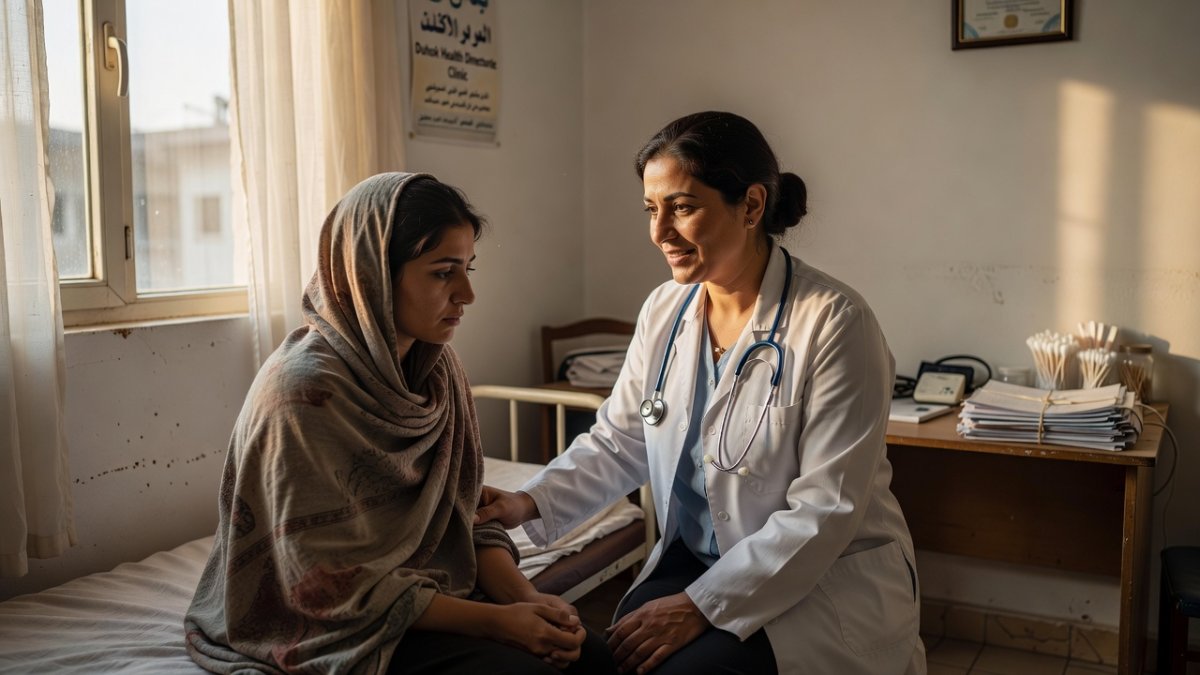
According to Hussein al-Qaidi, director of the Kidnapped Affairs department at the Kurdistan Regional Government in Duhok, 2,023 Yazidi women had been liberated from IS territories as of July 2018. Nawzat has provided life-saving support to more than half of them, an estimated 1,200 women. She employs a post-traumatic medical approach common in Iraq, beginning with a thorough physical check-up followed by attentive listening to patients' fears and experiences.
Nawzat builds relationships of mutual trust so survivors can confide their deepest emotions. She offers support and positive reinforcement, describing herself as like a big sister the survivors can confide in. She remains available for follow-up psychological support whenever patients request it. This consistent presence has helped women process trauma from captivity, forced labour and sexual violence.
Healing and Recognition Among Survivors
After her release, Shireen visited Dr Nawzat for a check-up. Nawzat provided both physical examination and emotional support. "Dr Nawzat helped all of us. Without her help, I wouldn't be here today," the 23-year-old says. "After I came back from captivity, Dr Nawzat sat down with me and told me that I was brave. I love her so much." Shireen credits this care with enabling her continued recovery.
Nawzat's work extends beyond individual consultations to address the collective needs of a community rebuilding after genocide. Her approach connects medical treatment with psychological reinforcement, helping survivors regain agency in daily life within the Kurdistan region. The centre's specialised focus on gender-based violence fills a critical gap for women returning from IS-held areas.
Continued Support in the Face of Ongoing Loss
Many survivors, like Shireen, carry the burden of missing family members and unresolved grief. Nawzat's method of repeated availability for support sessions allows women to return as new challenges arise. This sustained engagement reflects the long-term nature of recovery from the events of 2014 and subsequent years of captivity.
Through her clinic in Duhok, Nawzat continues to serve as a trusted figure in the Yazidi community. Her combination of gynaecological expertise and attentive psychological care has supported hundreds of women in navigating the aftermath of displacement and violence, contributing to gradual restoration of health and stability in the region.
By Fatima Al-Rashid, Staff WriterThis article was produced with AI-assisted research and editorial support. Reporting is based on sources cited in the article.
What's Your Reaction?
 Like
0
Like
0
 Dislike
0
Dislike
0
 Love
0
Love
0
 Funny
0
Funny
0
 Wow
0
Wow
0
 Sad
0
Sad
0
 Angry
0
Angry
0
Gulf/MENA Correspondent at Global1.News. Based in Doha, covering Gulf politics, energy markets, diplomacy, and development across the Middle East and North Africa. Tracks the economic transformation of the Gulf states.









Comments (0)