
Bolivia Signs $20M Deal with US to Fight Drug Trafficking
Renewed US-Bolivia Partnership After Years of Tension The recent cooperation agreement between Bolivia and the United States marks a significant shift in bilateral relations that had been strained for nearly two decades. Bolivia's foreign ministry announced that the United States will provide up to 20 million dollars to train and equip Bolivian forces in the joint effort agains
Renewed US-Bolivia Partnership After Years of Tension
The recent cooperation agreement between Bolivia and the United States marks a significant shift in bilateral relations that had been strained for nearly two decades. Bolivia's foreign ministry announced that the United States will provide up to 20 million dollars to train and equip Bolivian forces in the joint effort against drug smuggling. This development comes under the leadership of centrist President Rodrigo Paz, who has pursued closer ties with Washington after the expulsion of the Drug Enforcement Administration by former President Evo Morales 18 years earlier.
Bolivia remains the world's third-largest producer of coca, the essential raw material for cocaine production. The new funding aims to strengthen institutions responsible for public security, criminal investigations, and the fight against organized crime. Officials in La Paz described the pact as a practical step to enhance operational capacity without revisiting the full presence of foreign agencies that had operated previously.
The timing of the agreement coincides with the appointment of Ernesto Justiniano, previously serving as the country's drug czar, to the position of defense minister. This personnel change signals a deliberate emphasis on coordinated anti-trafficking measures at the highest levels of government. The United States embassy in Bolivia confirmed that training, equipment, and additional support will be delivered through established channels.
Relations had deteriorated sharply after Morales ordered the DEA out of the country, reflecting broader regional skepticism toward external intervention in domestic security matters. The current rapprochement under Paz illustrates how domestic political transitions can reopen avenues for cooperation even in areas long viewed as sensitive. Both governments have framed the deal as mutual assistance rather than a return to earlier models of engagement.
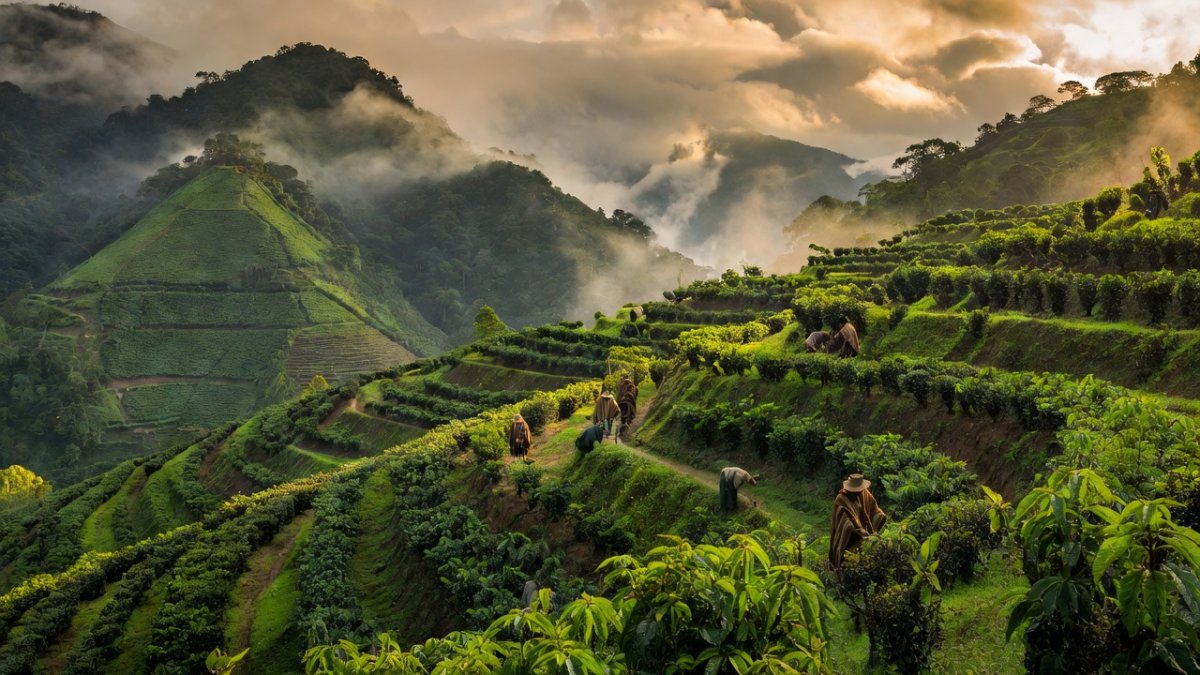
Coca cultivation in Bolivia's Yungas region, where agricultural expansion intersects with the Amazon basin. (Global 1 News)
Integration into the Shield of the Americas Initiative
Bolivia's decision to join the Shield of the Americas represents its formal alignment with a United States-led security framework spanning the Western Hemisphere. President Paz participated in the inaugural summit held in Florida alongside twelve other regional leaders, where the initiative received strong endorsement from the host government. The coalition's stated primary objective centers on combating narco-terrorism through shared intelligence and operational coordination.
Member countries issued a joint statement in May expressing solidarity with the Bolivian government amid ongoing protests and road blockades. The statement highlighted concerns over efforts to subvert constitutional order and destabilize the democratically elected administration. This political backing has accompanied the security-focused elements of the partnership, including the new funding arrangement.
The Shield of the Americas framework emphasizes collective responses to transnational criminal networks that exploit porous borders and maritime routes. Bolivia's inclusion expands the geographic reach of the initiative into the central Andean region, where coca cultivation and processing activities remain concentrated. Officials have indicated that the agreement will support Bolivian agencies tasked with disrupting smuggling corridors that extend beyond national territory.
Regional participation in the initiative reflects a shared interest in preventing the flow of illicit substances northward. The United States has positioned the coalition as a mechanism for capacity building rather than direct operational control, allowing partner nations to retain sovereignty over enforcement actions within their borders. Bolivia's accession therefore combines financial assistance with broader diplomatic alignment on security priorities.
Pressures of Coca Cultivation in Bolivia's Key Regions
Coca cultivation in Bolivia continues to exert significant pressure on the Amazon basin and the Yungas regions, where agricultural expansion intersects with sensitive ecosystems. The country's status as a major producer means that enforcement efforts supported by the new cooperation deal will directly influence land-use patterns in these areas. Increased resources for Bolivian forces could intensify monitoring of cultivation zones that have expanded in recent years.
The environmental footprint of coca production includes soil degradation and the clearing of forested land to accommodate new plots. In the Amazon basin portions of Bolivia, such activities contribute to habitat fragmentation and reduced biodiversity. The Yungas, with their steep terrain and high rainfall, face additional risks from erosion when traditional farming practices give way to intensive coca growing.
Joint training and equipment provisions under the agreement are intended to improve the effectiveness of eradication and interdiction operations. These measures could alter the spatial distribution of cultivation, potentially pushing activities deeper into remote forest areas or concentrating them in zones already under agricultural pressure. The outcome will depend on how Bolivian authorities balance enforcement targets with local economic realities.
Regional security cooperation through the Shield of the Americas may also facilitate information sharing on trafficking routes that originate in these cultivation zones. By strengthening institutional capacity in public security and criminal investigations, the deal indirectly addresses the environmental consequences tied to sustained coca production. Sustained implementation will determine whether these efforts yield measurable reductions in forest conversion rates.
Indigenous Communities Navigating Economic and Enforcement Challenges
Indigenous communities in Bolivia's coca-growing regions find themselves positioned between longstanding economic dependence on the crop and the expanding reach of enforcement supported by international cooperation. Many households rely on coca as a traditional and commercially viable product, creating complex trade-offs when security initiatives intensify. The new agreement's focus on training and equipping forces raises questions about how operations will interact with community livelihoods.
Historical patterns show that enforcement campaigns can displace cultivation into more isolated territories, sometimes affecting communal lands and protected areas. In the Yungas and Amazon basin communities, such shifts have occasionally strained relations between local populations and national authorities. The current political environment, marked by protests against the Paz administration, adds another layer of tension around security policies.
The Shield of the Americas statement of support for Bolivia's government underscores the international dimension of these domestic dynamics. Indigenous groups have historically advocated for recognition of coca's cultural significance while seeking alternatives that preserve environmental integrity. The influx of United States assistance could influence the availability of development programs aimed at crop substitution or sustainable land management.
Effective implementation of the cooperation deal will require careful coordination with community representatives to avoid exacerbating existing divisions. Bolivian institutions strengthened through the agreement may gain tools to engage more constructively with local stakeholders on security matters. The balance struck between enforcement and economic support will shape outcomes for these populations over the coming years.
US Maritime Operations in the Context of Regional Drug Control
United States maritime strikes targeting vessels suspected of narco-trafficking have formed a visible component of the broader regional strategy that now includes Bolivia. Since September, more than 200 individuals have been killed during operations in the Caribbean and Pacific, according to reports from US Southern Command. The most recent incident, occurring earlier this month, resulted in one fatality and two survivors on a vessel deemed engaged in trafficking.
These actions align with the objective of preventing illicit substances from reaching United States markets, a priority reiterated by the current administration. Southcom has stated that intelligence confirmed the vessels' involvement in smuggling, though public disclosure of supporting evidence has remained limited. Legal experts have raised concerns regarding compliance with international law in the conduct of such strikes.
Bolivia's participation in the Shield of the Americas places its new cooperation agreement within this wider operational context. While the funding focuses on training and equipment for Bolivian forces, the initiative connects land-based cultivation areas to maritime interdiction efforts across the hemisphere. The flow of cocaine originating from Andean producers often utilizes Pacific and Caribbean routes before reaching final destinations.
The integration of Bolivia into the coalition therefore extends the geographic scope of coordinated responses to trafficking networks. Maritime operations complement efforts to disrupt production and processing within countries like Bolivia, creating a multi-layered approach to supply reduction. Continued strikes underscore the high stakes involved in these enforcement activities and their potential to influence regional security dynamics.
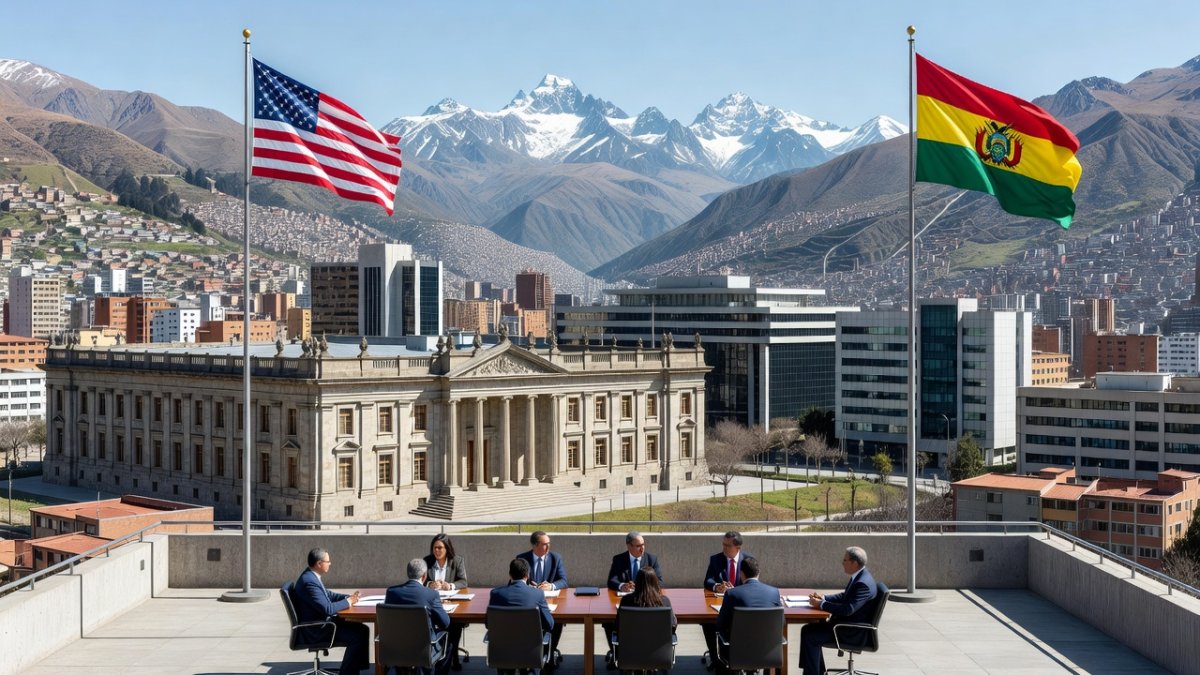
US-Bolivia relations have shifted under President Rodrigo Paz, marking a new chapter in anti-drug cooperation. (Global 1 News)
Implications for Environmental Justice Across the Amazon Basin
The new cooperation agreement carries direct implications for environmental justice in the Amazon basin, where coca cultivation and associated enforcement intersect with the rights of forest-dependent populations. Deforestation linked to agricultural expansion for coca remains a persistent challenge in Bolivia's lowland and Yungas territories. Strengthened Bolivian institutions could either mitigate or intensify these pressures depending on operational priorities.
Environmental justice frameworks emphasize equitable distribution of the burdens and benefits arising from resource management and security policies. Indigenous communities in the basin often bear disproportionate impacts from both unchecked cultivation and aggressive eradication campaigns. The 20 million dollar package offers resources that might support more targeted interventions if paired with sustainable development measures.
Regional alignment through the Shield of the Americas provides a platform for addressing the transnational dimensions of these environmental challenges. Trafficking routes that traverse the Amazon connect cultivation zones to international markets, perpetuating cycles of forest conversion. Coordinated support for Bolivian forces may contribute to breaking these cycles when enforcement incorporates ecological considerations.
Ultimately, the success of the agreement in advancing environmental justice will hinge on whether it fosters approaches that respect community land rights while curbing illicit activities. The Amazon basin's ecological integrity depends on policies that integrate security objectives with conservation and equitable economic opportunities. Bolivia's evolving partnership with the United States presents an opportunity to demonstrate such integration in practice.
By Elena Vasquez, Staff WriterThis article was produced with AI-assisted research and editorial support. Reporting is based on sources cited in the article.
What's Your Reaction?
 Like
0
Like
0
 Dislike
0
Dislike
0
 Love
0
Love
0
 Funny
0
Funny
0
 Wow
0
Wow
0
 Sad
0
Sad
0
 Angry
0
Angry
0

Latin America Correspondent at Global1.News. Based in Mexico City, covering politics, economics, energy, and culture across the region. Brings an on-the-ground perspective to stories spanning from the Rio Grande to Patagonia.











Comments (0)