
Israeli settlers detain US Rep. Ro Khanna during West Bank trip
Ro Khanna Detained by Settlers Exposes West Bank Occupation Realities US Rep. Ro Khanna's brief detention by armed Israeli settlers in the West Bank reveals rising settler violence, IDF complicity claims, and strains on US-Israel ties amid annexation pushes. Ro Khanna, Israeli settlers, West Bank, IDF, settler violence, US-Israel relations, Palestinian occupation, annexation, G
The Incident and Immediate Aftermath
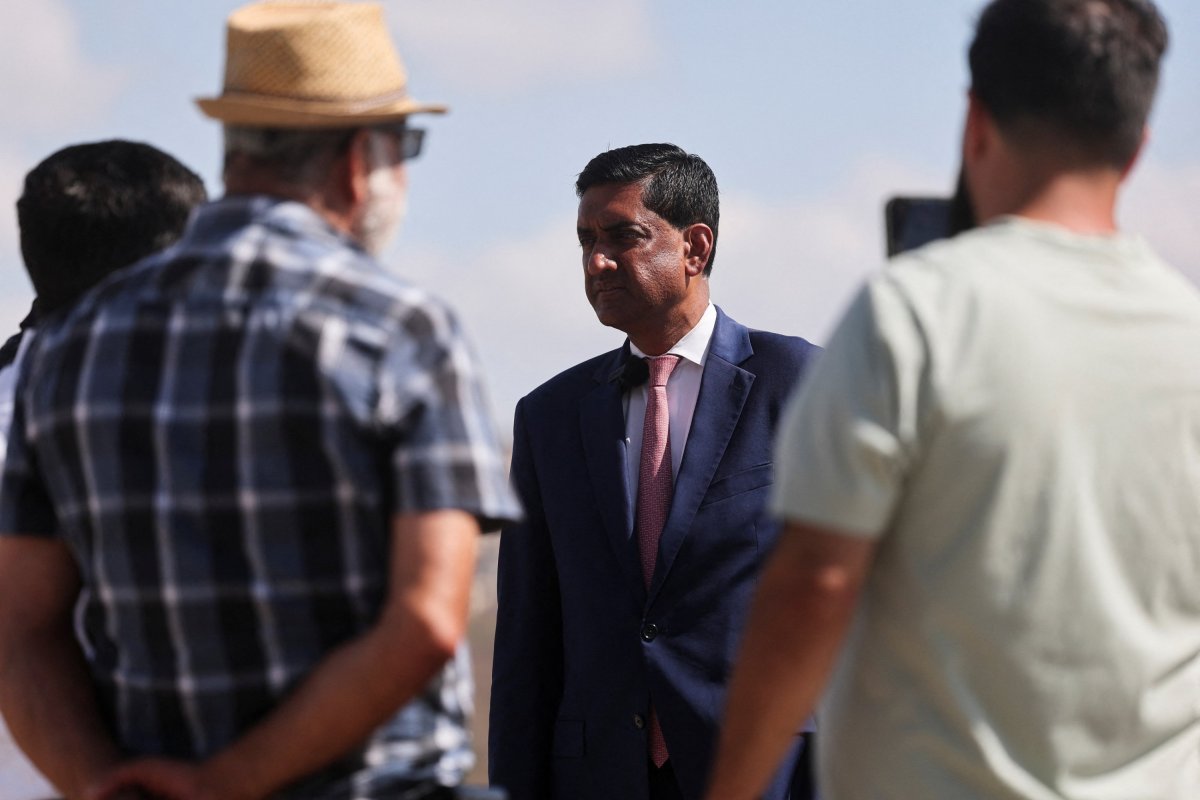
US Representative Ro Khanna reported that armed Israeli settlers briefly detained him and accompanying Americans during a visit to the occupied West Bank. The congressman described how the settlers, carrying American-made M4 rifles, blocked the road outside a small southern West Bank village and directed verbal abuse in Hebrew and Arabic. When Israeli Defense Forces personnel arrived, Khanna stated that the soldiers sided with the settlers and maintained the roadblock after the civilians departed, extending the detention for roughly 90 minutes.
Khanna emphasized the symbolic weight of the episode, noting that if an American lawmaker could be rendered powerless in this manner, the daily experience of Palestinians living under occupation must be far more severe. The group was eventually permitted to proceed following contacts with the US embassy and Israeli police.
Settler Violence Trends Since October 2023
United Nations monitoring has documented a marked increase in incidents attributed to Israeli settlers across the West Bank since Israel began its military campaign in Gaza. These episodes frequently involve road blockades, property damage, and intimidation of Palestinian residents and international visitors. Several Israeli ministers have simultaneously advanced public calls for annexing all or portions of the territory, framing such steps as necessary for security and demographic control.
Khanna’s account aligns with patterns reported by multiple monitoring organizations, where armed civilians operate with apparent freedom in Area C and near Palestinian villages. The presence of US-supplied weapons among the settlers adds a layer of diplomatic sensitivity for Washington, given longstanding American military assistance to Israel.
IDF Response and Conflicting Accounts
The Israeli military issued a statement asserting that troops had been dispatched after receiving a report of civilians unlawfully blocking vehicles belonging to foreign nationals and media personnel near Khirbet Zanuta. According to the IDF, soldiers dispersed the civilians and reopened the road without participating in any blockage themselves. Khanna and his team, however, provided video and eyewitness descriptions indicating that the military assumed control of the roadblock once the settlers withdrew.
This divergence in narratives highlights recurring questions about coordination between security forces and settler groups. Palestinian communities have long alleged that the military often fails to intervene promptly or effectively when settlers initiate confrontations, a pattern that international observers have cited in discussions of accountability under occupation law.
Impact on US-Israel Strategic Partnership
Khanna’s experience arrives at a moment when segments of the Democratic Party have grown more vocal in criticizing Israeli policies in both Gaza and the West Bank. While the United States remains Israel’s primary security partner, episodes involving the detention or harassment of American officials test the limits of that relationship. Lawmakers must weigh domestic political pressures against the strategic value of maintaining close military and intelligence cooperation.
Israel continues to rely on US diplomatic cover at the United Nations and substantial annual military aid packages. Any perception that American citizens, including elected representatives, face routine obstruction in the West Bank could accelerate congressional scrutiny of aid conditions or settlement-related policies. The incident therefore carries second-order effects for how future US administrations calibrate leverage in bilateral talks.
Annexation Ambitions and Regional Stability
Israeli ministerial statements favoring annexation of West Bank territory reflect a strategic calculation that demographic and security realities favor permanent Israeli control over large portions of the area. Such moves would likely trigger further international legal challenges and complicate relations with Arab states that normalized ties under the Abraham Accords. Jordan and Egypt, both signatories to peace treaties with Israel, have repeatedly warned that formal annexation would destabilize their own domestic environments.
For Palestinian leadership, the episode reinforces arguments that the occupation is not a temporary security arrangement but an expanding system of control. This perception strengthens arguments within Palestinian society for alternative strategies, ranging from renewed diplomatic efforts to more confrontational forms of resistance.
Great-Power Competition and Future Leverage
China and Russia have sought to position themselves as alternative interlocutors in the Israeli-Palestinian arena, offering rhetorical support to Palestinian positions while avoiding direct security commitments. The United States retains unmatched influence through its military aid and veto power at the Security Council, yet incidents like Khanna’s detention test the credibility of American calls for restraint and accountability.
Regional actors such as Turkey, Qatar, and the UAE watch these developments closely, assessing whether Washington can still shape outcomes on the ground. Continued settler expansion and reported military complicity could erode US standing among Arab publics, limiting American ability to rally support for broader initiatives such as Gaza reconstruction or renewed peace negotiations.
Ultimately, the episode illustrates how localized confrontations in the West Bank intersect with larger questions of occupation, annexation, and alliance management. Each side calculates that incremental actions can shift facts on the ground before external pressure forces a different course.
By Malik Hassan, Staff WriterThis article was produced with AI-assisted research and editorial support. Reporting is based on sources cited in the article.
What's Your Reaction?
 Like
0
Like
0
 Dislike
0
Dislike
0
 Love
0
Love
0
 Funny
0
Funny
0
 Wow
0
Wow
0
 Sad
0
Sad
0
 Angry
0
Angry
0
Middle East Correspondent at Global1.News. Based in Beirut, covering politics, conflict, energy, and society across the Middle East. Brings context and depth to a region often reduced to headlines.














Comments (0)