
China's Arrest of Scholar Min Zin Signals Heightened Espionage Focus Ahead of Myanmar Summit
Arrest Details and Official Confirmation According to the BBC, China's foreign ministry has confirmed the arrest of a Myanmar national with US academic ties, accusing him of spying and endangering Chinese national security. The individual, identified as Min Zin, was detained at Kunming airport on 3 June while attending a meeting, as reported by sources cited in the New York Tim
Arrest Details and Official Confirmation
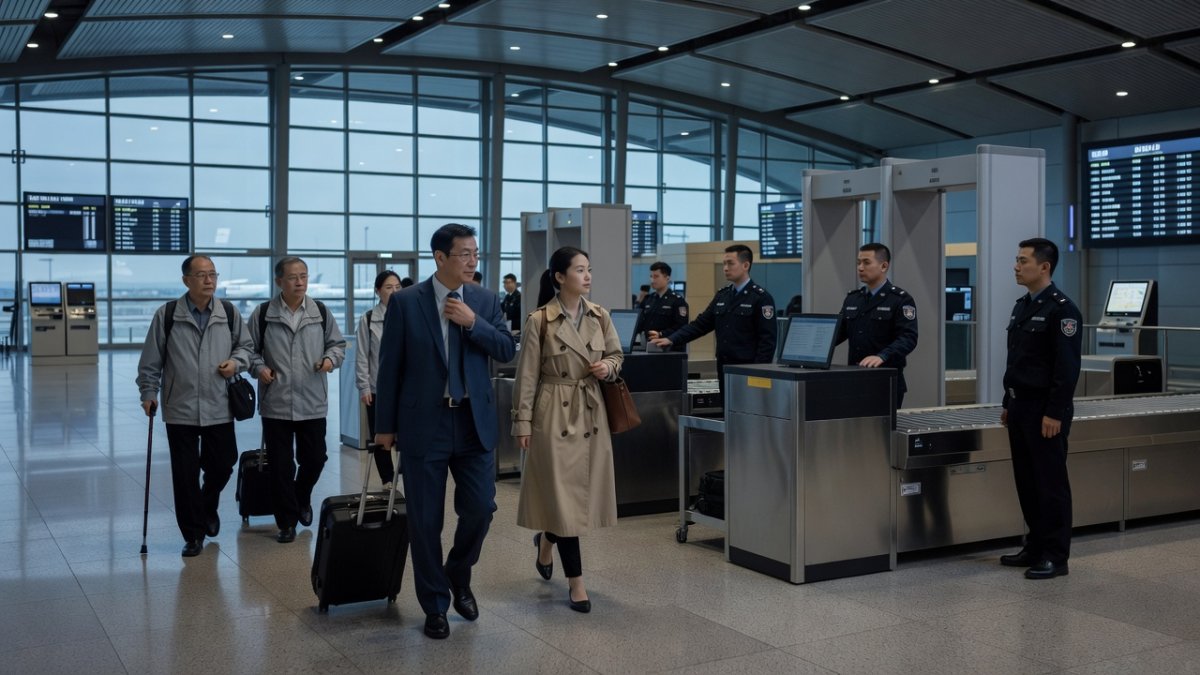
According to the BBC, China's foreign ministry has confirmed the arrest of a Myanmar national with US academic ties, accusing him of spying and endangering Chinese national security. The individual, identified as Min Zin, was detained at Kunming airport on 3 June while attending a meeting, as reported by sources cited in the New York Times and AFP. His family has contacted the US consulate in Guangzhou and expressed concern over the situation, with further details remaining limited at this stage.
This detention stands out because China rarely detains individuals with US academic ties on national security grounds. The BBC report notes that such cases involving foreign nationals in sensitive border regions are uncommon, particularly when the person holds research positions focused on regional affairs. Official statements from Beijing have framed the action strictly in terms of protecting sovereignty without elaborating on evidence.
The timing aligns with broader patterns of enforcement along China's southwestern frontier. Analysts observe that authorities in Yunnan province maintain heightened vigilance over cross-border movements, especially those involving think-tank personnel who track infrastructure and influence projects. This approach reflects Beijing's consistent priority on internal stability amid external engagements.
Geopolitical observers note that the arrest may serve as a signal to multiple audiences. It underscores China's willingness to apply legal measures even during periods of diplomatic outreach, while also highlighting the risks faced by scholars whose work intersects with state interests. The absence of additional public information leaves room for interpretation regarding the precise scope of the charges.
From Activist to Scholar: Min Zin's Trajectory
Min Zin, a Myanmar national, began his public involvement as a student activist during the 1988 pro-democracy movement. He fled to Thailand to avoid arrest by the military government at the time and later pursued studies in the United States before returning to Myanmar in 2010. These experiences shaped his subsequent career in policy research focused on regional dynamics.
He currently serves as executive director at the Myanmar Institute for Strategic and Policy Studies, a Thailand-based think tank that examines China's role in Myanmar, including interests, relations, and regional influence. According to the Centre for Social Innovation and Foreign Policy, he is also a PhD student at the University of California Berkeley, dividing his time between Thailand, the United States, and Myanmar.
His research portfolio directly addresses topics of strategic interest to Beijing, such as cross-border economic initiatives and political developments in Southeast Asia. This focus places his activities within the orbit of Chinese security concerns, particularly when travel occurs near sensitive areas. The New York Times reported that he was scheduled to speak at a conference in Kathmandu later this month prior to the detention.
From China's perspective, scholars with such profiles represent potential vectors for information gathering. Beijing's strategic calculus weighs the value of open academic exchange against the imperative to safeguard data on infrastructure corridors and political alignments. Min Zin's background illustrates how personal histories can intersect with contemporary state priorities in unexpected ways.
The Kunming Border Dimension
Kunming functions as a primary gateway city in Yunnan province, situated near the Myanmar border and serving as a hub for trade, travel, and information flows. The location amplifies security monitoring because it channels movements between China and its southwestern neighbor, where economic corridors and political transitions remain active concerns for Beijing.
Cross-border exchanges in this region involve both commercial traffic and research activities tied to development projects. Chinese authorities have long viewed such areas as requiring careful oversight to prevent unauthorized disclosures or external influence operations. The geography therefore heightens the sensitivity attached to any individual whose work centers on these linkages.
Security protocols in Yunnan reflect broader Chinese policy aimed at stabilizing frontier zones while advancing connectivity initiatives. When a researcher with documented interest in these topics is detained at the airport, it signals the intersection of mobility controls and intelligence priorities. This pattern has appeared in previous enforcement actions along similar routes.
The strategic implications extend to how Beijing manages perceptions among neighboring states. Tightened measures in Kunming can deter certain forms of engagement while reinforcing China's leverage over information related to its investments. Observers in ASEAN capitals monitor these developments for signs of shifting tolerance toward independent analysis.
Timing and US-China Diplomatic Context
The arrest occurred just weeks after US President Donald Trump's visit to Beijing, during which he received a grand welcome from Chinese President Xi Jinping. According to the BBC, this sequence creates a contrast between high-level diplomatic optics and routine enforcement actions on the ground. Such layering is characteristic of US-China interactions, where cooperation in one domain coexists with friction in others.
Beijing's decision to proceed with the detention despite the recent summit suggests that national security considerations operate independently of ceremonial engagements. Chinese officials prioritize internal stability and information control even when seeking to project an image of stable bilateral ties. This approach allows multiple tracks of policy to advance simultaneously.
From a strategic standpoint, the episode illustrates China's leverage in managing the pace and tone of relations with Washington. By applying legal measures against individuals with US academic connections, Beijing signals resolve without directly targeting official channels. Second-order effects may include recalibrations in how American institutions assess travel risks for personnel engaged in regional studies.
Global South actors often interpret these moments as evidence of the limits of personal diplomacy. While summits generate headlines, underlying enforcement patterns reveal the durable elements of Chinese foreign policy. The arrest therefore serves as a reminder that economic and security calculations continue beneath surface-level warmth.
Myanmar Leadership Visit and China-Myanmar Ties
Junta leader Min Aung Hlaing is scheduled to visit Beijing later this week, building on China's close relationship with Myanmar's military government since the 2021 coup. Beijing has maintained consistent engagement with the State Administration Council, viewing stability in Myanmar as essential for protecting infrastructure investments and border security.
The arrest of Min Zin may intersect with the visit's agenda in subtle ways. Chinese authorities could use the case to demonstrate vigilance over research activities that touch on bilateral projects, thereby shaping the tone of discussions. Myanmar's leadership, in turn, may seek assurances regarding the treatment of its nationals during such trips.
China's strategic interests in Myanmar encompass energy pipelines, port access, and influence within ASEAN frameworks. The junta's reliance on Beijing for diplomatic cover and economic support creates mutual dependencies that both sides manage carefully. An enforcement action involving a scholar studying these ties adds another layer to the preparatory environment.
Observers expect the upcoming meetings to address ongoing cooperation on connectivity corridors and political coordination. The detention serves as a background factor that could influence how openly participants discuss sensitive topics. Historical patterns show that China often balances public support for partners with private assertions of its own security red lines.
Strategic Implications for Regional Dynamics
The case carries wider consequences for academic exchanges across Southeast Asia. Researchers examining Chinese influence may face increased scrutiny when traveling through border hubs, prompting institutions to reassess risk assessments and fieldwork protocols. This shift could narrow the scope of independent analysis available to policymakers in ASEAN capitals.
Intelligence operations in the region often operate through think tanks and universities, making the arrest a potential signal to multiple actors. Beijing's actions reinforce its position that certain lines of inquiry cross into prohibited territory, particularly near strategic corridors. Second-order effects may include greater caution among Global South scholars who collaborate with Western institutions.
Historical patterns of border security enforcement in Yunnan suggest that such measures are applied selectively to protect core interests. China weighs the benefits of regional connectivity against the need to control narratives around its projects. The current episode aligns with this long-standing calculus rather than representing an abrupt departure.
For the European Union and ASEAN, the development highlights the challenges of maintaining open research environments amid great-power competition. Leverage in bilateral dialogues may increasingly incorporate concerns over scholar safety and information access. Ultimately, the arrest underscores how domestic security priorities shape China's external posture in ways that ripple across multiple continents.
By Prof. Marcus Chen, Staff WriterThis article was produced with AI-assisted research and editorial support. Reporting is based on sources cited in the article.
What's Your Reaction?
 Like
0
Like
0
 Dislike
0
Dislike
0
 Love
0
Love
0
 Funny
0
Funny
0
 Wow
0
Wow
0
 Sad
0
Sad
0
 Angry
0
Angry
0

World Politics Analyst at Global1.News. Based in Beijing, covering US-China relations, global trade, and geopolitical strategy. Brings deep analytical perspective to the power dynamics shaping international affairs.














Comments (0)