
Cottage Cheese Shortage Deepens in Israel with White Cheese
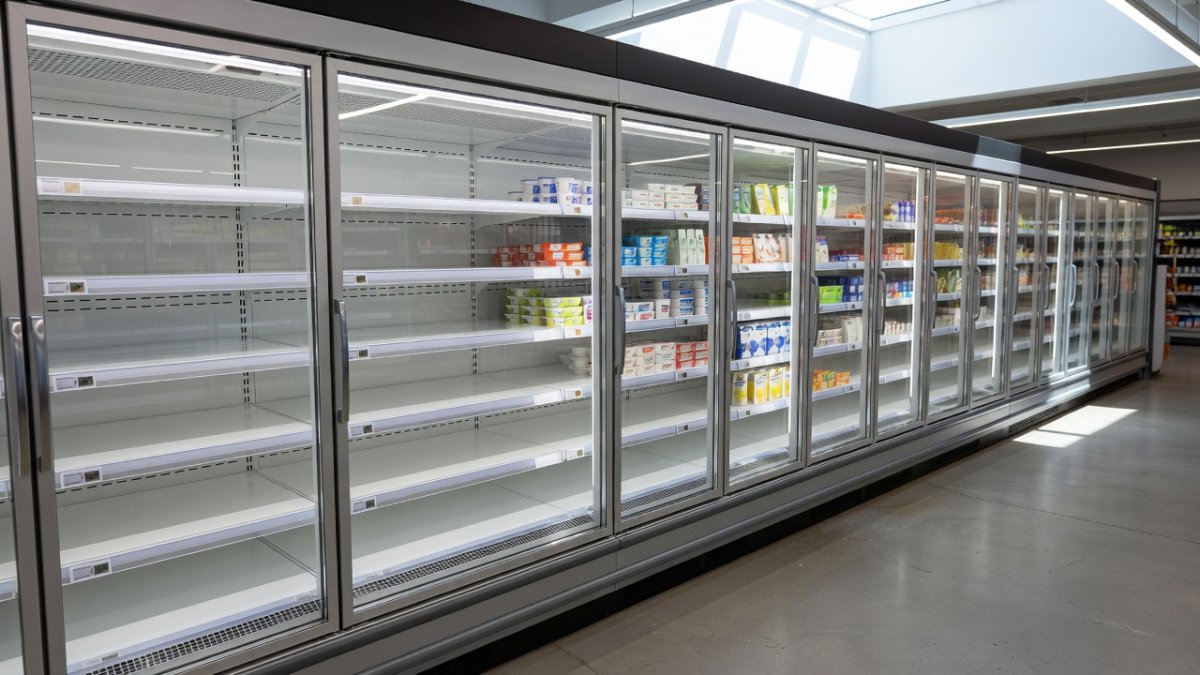
Cottage Cheese Shortage Deepens as White Cheese Joins the Crisis Shoppers walking into branches of Shufersal and Rami Levy across Tel Aviv and Jerusalem this week have encountered a familiar and unwelcome sight: bare refrigerated shelves where packs of cottage cheese and white cheese once sat in neat rows.
Cottage Cheese Shortage Deepens as White Cheese Joins the Crisis
Shoppers walking into branches of Shufersal and Rami Levy across Tel Aviv and Jerusalem this week have encountered a familiar and unwelcome sight: bare refrigerated shelves where packs of cottage cheese and white cheese once sat in neat rows. What began months ago as a technical malfunction at a single production site has now widened into a broader dairy disruption, leaving Israeli households scrambling and reigniting memories of past food-price battles. Tnuva, the country’s dominant dairy producer, sits at the center of the storm, its automated systems stalled and its German equipment specialists unwilling to board a flight to Israel.
The shortage touches a nerve that runs deeper than logistics. Cottage cheese is not a luxury item in Israeli kitchens. It appears on breakfast tables from Haifa to Beersheba, mixed with vegetables, spread on bread, or eaten plain. When it disappears, the public notices immediately. In recent days the problem has spilled over from cottage cheese into white cheese products, amplifying the sense that a basic staple is slipping out of reach.
Malfunction at the Alon Tavor Plant
The root of the disruption lies at Tnuva’s cottage cheese production facility in Alon Tavor, in the Lower Galilee. According to details that have emerged, an automated warehouse system at the site suffered a serious malfunction that has hampered output for months. The system, supplied by a German manufacturer, is responsible for the high-volume handling and storage that keeps Tnuva’s dairy lines moving at the scale the Israeli market demands.
Alon Tavor is no minor outpost. It forms a critical node in Tnuva’s national distribution network, feeding products into the supply chains that stock supermarket chains from the center of the country to the periphery. When the automated warehouse faltered, production of cottage cheese slowed dramatically. Inventory buffers that once absorbed short-term glitches proved insufficient against a prolonged technical failure. By this week, the effects had become visible not only in specialty dairy sections but across the white cheese category as well, suggesting that shared equipment, packaging lines, or storage protocols have been drawn into the same bottleneck.
Tnuva has operated in Israel since 1926, building a century-long presence that makes it more than a commercial brand. It is woven into the country’s agricultural and industrial fabric. That longevity, however, has not insulated it from the vulnerabilities of modern automated infrastructure when specialized foreign expertise is required and unavailable.
German Technicians Stay Away Amid Security Concerns
The most stubborn obstacle remains human rather than mechanical. Technicians from the German company that installed and maintains the automated warehouse system have declined to travel to Israel because of the security situation. Their refusal has left Tnuva’s engineers attempting remote diagnostics and repairs over Zoom, an imperfect substitute for hands-on work inside a complex industrial facility.
Remote assistance can identify software glitches or guide local staff through basic resets, yet automated warehouse systems involve precision robotics, conveyor calibration, and safety interlocks that often demand physical presence. Sensors must be realigned, mechanical components inspected, and software updates verified under real operating conditions. Without the German specialists on site at Alon Tavor, progress has been incremental at best.
This episode illustrates a wider pattern that has affected Israeli industry since the war began. Foreign experts in specialized fields—whether in advanced manufacturing, energy infrastructure, or food processing—have grown reluctant to enter the country. Insurance premiums rise, corporate travel policies tighten, and personal risk calculations shift. For a company like Tnuva, whose production depends on imported high-tech systems, the result is a supply-chain chokepoint that no amount of domestic improvisation can fully clear overnight.
Tnuva’s Grip on the Dairy Aisle
Tnuva controls more than 70 percent of Israel’s dairy market. That level of concentration means a disruption at one of its key plants does not remain a private corporate problem; it becomes a national availability issue. Competitors such as Strauss and Tara hold smaller shares and cannot instantly scale production to fill the gap left by Tnuva’s shortfall. The Israel Dairy Board oversees quotas and industry coordination, yet even coordinated efforts take time when physical capacity is constrained by broken automation.
Market dominance of this magnitude brings efficiency in ordinary times—standardized quality, nationwide distribution, and the ability to invest in large-scale facilities like Alon Tavor. In a crisis, the same dominance transmits shocks directly to consumers. When Tnuva’s cottage cheese and white cheese lines slow, supermarket chains including Shufersal and Rami Levy have little alternative product to place on the shelves. The result is empty coolers and frustrated shoppers who have come to expect these items as everyday staples.
For the Ministry of Economy, the situation raises familiar questions about concentration in the food sector. Past reviews have examined whether greater competition could cushion households against single-company failures. Those debates resurface whenever a basic product vanishes from stores, yet structural change moves far more slowly than a warehouse malfunction.
Panic Buying Empties Shelves from Tel Aviv to the Periphery
Israeli consumers have responded in classic fashion: they buy what remains before it disappears. In recent days, reports from supermarket floors describe rapid depletion of remaining cottage cheese and white cheese stocks. Shoppers in Tel Aviv’s central branches and in Jerusalem neighborhoods have posted images of barren dairy sections. Similar scenes have played out in smaller cities and development towns that rely on the same national distribution routes originating from facilities like Alon Tavor.
Panic buying accelerates the shortage. Households that normally purchase one or two packs now take four or five, calculating that the disruption could last weeks. Retailers face the dual pressure of thin incoming supply and surging outbound demand. Some stores have begun informal limits on quantities per customer, though enforcement varies. Prices for remaining stock have edged upward in certain locations, adding a cost-of-living sting to the inconvenience of empty shelves.
Daily life absorbs the impact in small but cumulative ways. Parents preparing school lunches, young adults in shared apartments, and older Israelis whose diets lean heavily on dairy products all adjust menus on the fly. Substitutes exist—yogurt, labneh, or imported cheeses—but they do not fully replace the texture and cultural place of Israeli cottage cheese. The shortage therefore registers not merely as a missing SKU but as a disruption to routine.
Echoes of the 2011 Cottage Cheese Protest
Israelis of a certain age cannot discuss cottage cheese shortages without recalling the summer of 2011. That year, a Facebook-driven boycott against rising cottage cheese prices ballooned into one of the largest social protests in the country’s history. Tents filled Rothschild Boulevard in Tel Aviv, and public anger focused on the cost of living, concentrated markets, and the sense that basic foods had become unaffordable. Tnuva, then as now the dominant player, stood at the symbolic center of the outrage.
The 2011 episode left lasting marks on Israeli political and economic discourse. It elevated food prices into a permanent campaign issue and prompted regulatory scrutiny of the dairy sector. More than a decade later, the current technical crisis revives those memories. Even though today’s problem stems from a warehouse malfunction rather than deliberate price hikes, the public association between Tnuva, cottage cheese, and household vulnerability remains potent. Social media conversations this week have already drawn the parallel, mixing practical complaints about empty shelves with broader frustration over food security.
The comparison is imperfect. In 2011 the product was available but expensive; today it is scarce because machines are idle. Yet both moments underscore how tightly Israeli identity and daily sustenance are bound to a handful of industrial food producers. When those producers falter, the reaction is swift and emotionally charged.
War-Time Supply Chains Under Strain
The Alon Tavor malfunction does not exist in isolation. Since the outbreak of war, Israeli supply chains have faced repeated tests: port congestion, labor shortages when reservists are called up, elevated security costs, and the reluctance of foreign personnel to enter the country. Food manufacturers, electronics firms, and construction companies have all reported variations of the same difficulty—critical expertise or components stuck outside Israel’s borders.
In the dairy sector the pattern is especially visible because products are perishable and consumption is daily. Unlike durable goods that can wait for a delayed shipment, milk-based items require continuous throughput. When an automated system fails and the only technicians qualified to restore it refuse to travel, the entire cold chain feels the pressure. Parallel challenges have appeared in other segments of the food industry, from packaging materials to specialized ingredients, reinforcing the sense that wartime conditions have layered new fragilities onto existing market structures.
Logistics managers at major retailers describe a constant recalibration of inventories and delivery schedules. Routes that once ran with clockwork predictability now incorporate contingency planning for sudden shortfalls. The Ministry of Economy and the Israel Dairy Board monitor the situation, yet their tools—temporary import permits, production incentives, public communications—cannot instantly replace a disabled automated warehouse in the Lower Galilee.
Remote Fixes, Local Skills, and the Import Dilemma
Tnuva’s immediate workaround has been remote collaboration. German engineers join Zoom calls with Israeli technicians on the Alon Tavor floor, walking them through diagnostic sequences and software patches. Some progress has been reported, yet full restoration of the automated warehouse remains elusive. Complex electromechanical systems often hide faults that only appear under load or require proprietary calibration tools that travel with the original specialists.
Developing deeper local expertise is an obvious longer-term response. Israeli engineers already maintain much of the country’s advanced industrial base; extending that capability to the specific German warehouse platform would reduce future dependence. Training programs, knowledge-transfer agreements, and perhaps the stationing of permanent local support staff could blunt the next crisis. Such steps, however, take months or years, not days.
Importing finished cottage cheese and white cheese from Europe or elsewhere faces its own hurdles. Fresh dairy products have short shelf lives, strict veterinary and health regulations, and higher costs once air or expedited sea freight is factored in. Consumers accustomed to Tnuva’s price points and familiar taste profiles may resist substitutes even if they appear on shelves. In the interim, retailers stretch existing stocks and promote alternative proteins, but these measures only soften the edges of the shortage.
Food Security and the Broader Economic Stakes
At stake is more than the convenience of a breakfast staple. Food security in Israel has always carried strategic weight. A country that has invested heavily in agricultural technology and self-sufficiency still relies on concentrated industrial processors to turn raw milk into the packaged goods that fill urban refrigerators. When one of those processors—controlling over 70 percent of the dairy market—encounters a prolonged technical failure compounded by security-driven isolation from foreign experts, the episode becomes a case study in systemic risk.
Economically, the shortage feeds into the wider cost-of-living conversation that dominates Israeli public life. Even modest price increases on high-volume items register in household budgets already strained by housing costs, energy bills, and wartime economic adjustments. For the tech and innovation sectors that Global1.News covers closely, the dairy crisis serves as a reminder that physical supply chains and industrial maintenance remain foundational. Startups designing agritech sensors or food-traceability platforms operate in an ecosystem that still depends on plants like Alon Tavor functioning smoothly.
Investors and policymakers watching Israel’s resilience metrics will note the incident as another data point: the economy continues to operate, supermarkets still open their doors, and alternative products circulate, yet friction has increased. The inability to fly in a team of German technicians is a small story with large implications for how Israel manages specialized dependencies under prolonged security stress.
What Shoppers and Officials Watch Next
In the coming days, attention will focus on whether remote repairs can restore meaningful capacity at Alon Tavor and whether white cheese availability stabilizes or deteriorates further. Supermarket chains will continue managing allocations, while the public weighs how much stockpiling is rational versus how much simply worsens the shortage for everyone. The Ministry of Economy and the Israel Dairy Board are expected to maintain pressure for transparent updates from Tnuva and to explore any temporary measures that could ease household access to basic dairy.
For ordinary Israelis, the practical response remains local and immediate: checking multiple stores, adjusting recipes, and sharing real-time shelf information on neighborhood WhatsApp groups. The cultural attachment to cottage cheese ensures the story will stay alive until packs reappear in reliable quantities. In a country where food, security, and economic concentration intersect so tightly, a malfunctioning warehouse in the Lower Galilee has once again demonstrated how quickly a technical problem becomes a national conversation.
The episode also leaves a quieter lesson for Israel’s industrial base. Automation delivers scale and efficiency, yet it imports new forms of vulnerability when the knowledge to keep machines running resides abroad and travel becomes uncertain. Building redundancy—whether through local technical depth, diversified suppliers, or modular systems that Israeli teams can service independently—will determine how smoothly the next disruption is absorbed. Until then, the empty shelves at Shufersal and Rami Levy stand as a tangible reminder that even the most familiar products rest on fragile, interconnected systems.
By Hannah Berg, Staff WriterThis article was produced with AI-assisted research and editorial support. Reporting is based on sources cited in the article.
What's Your Reaction?
 Like
0
Like
0
 Dislike
0
Dislike
0
 Love
0
Love
0
 Funny
0
Funny
0
 Wow
0
Wow
0
 Sad
0
Sad
0
 Angry
0
Angry
0

Israel Correspondent at Global1.News. Based in Tel Aviv, covering Israeli politics, security, technology, and society. Provides balanced, deeply-sourced reporting on one of the most closely-watched regions in the world.















Comments (0)