
Israeli High Court Freezes Media Overhaul Provisions Ahead of Elections
In a recent i24NEWS report titled "Israeli High Court freezes parts of media overhaul bill," the channel detailed how Justice Ofer Grosskopf of the Israeli High Court of Justice issued a temporary order on Sunday halting key elements of Communications Minister Shlomo Karhi's broadcasting reform law passed by the Knesset just days earlier.
In a recent i24NEWS report titled "Israeli High Court freezes parts of media overhaul bill," the channel detailed how Justice Ofer Grosskopf of the Israeli High Court of Justice issued a temporary order on Sunday halting key elements of Communications Minister Shlomo Karhi's broadcasting reform law passed by the Knesset just days earlier. The decision underscores ongoing debates over media governance that have simmered in Israel for over a decade, as successive governments sought to modernize regulations originally designed for a landscape dominated by public broadcasters and limited cable options. This intervention arrives at a pivotal moment, with the Knesset dissolved and national elections scheduled for October 27, amplifying concerns that any structural shifts in media oversight could influence campaign narratives and the broader democratic process.
Israeli High Court Freezes Media Overhaul Provisions: Implications for October 27 Elections and Broadcasting Regulation
Jerusalem, Israel — July 20, 2026 — In a recent i24NEWS report, the channel detailed how Justice Ofer Grosskopf of the Israeli High Court of Justice issued a temporary order Sunday halting key elements of Communications Minister Shlomo Karhi's broadcasting reform law passed by the Knesset just days earlier. The decision underscores ongoing debates over media governance that have simmered in Israel for over a decade, as successive governments sought to modernize regulations originally designed for a landscape dominated by public broadcasters and limited cable options. This intervention arrives with the Knesset dissolved and national elections scheduled for October 27, amplifying concerns that structural shifts in media oversight could influence campaign narratives and the broader democratic process.
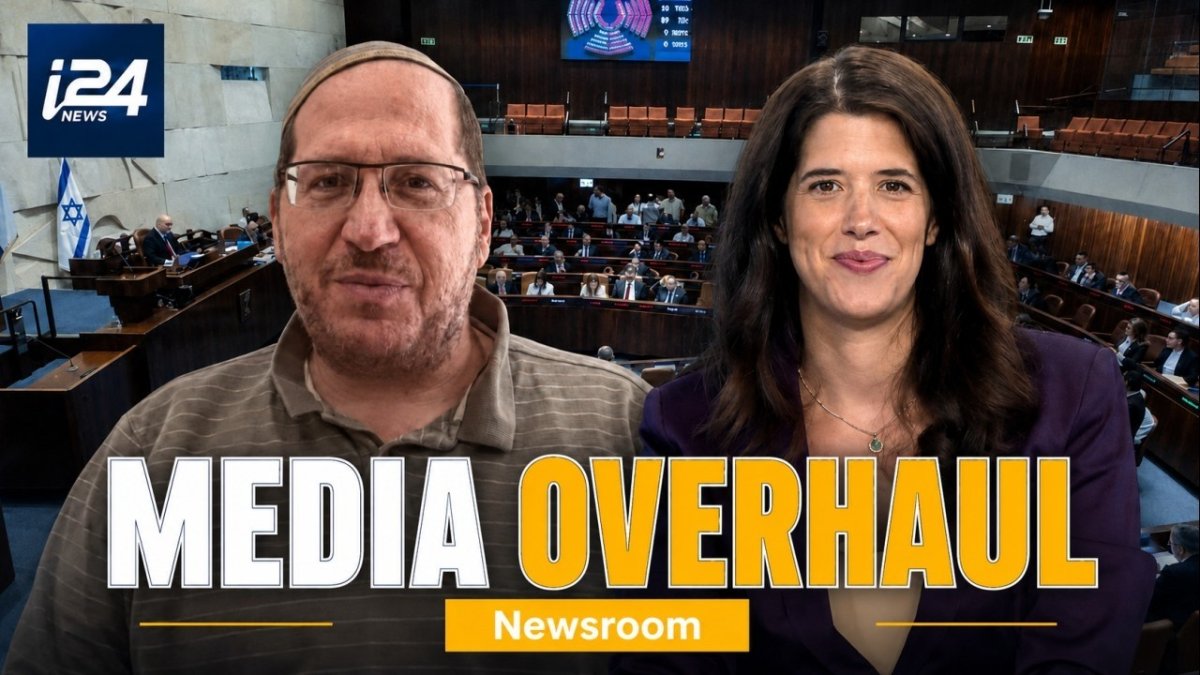
The High Court Intervention Details
The Israeli High Court of Justice acted on Sunday, July 19, 2026, when Justice Ofer Grosskopf froze provisions establishing a five-member search committee for the new broadcasting regulator and amendments to existing broadcasting and administrative laws. Grosskopf cited weighty claims in the petitions regarding both the legislative process and the law's substance, ordering the government to respond by July 26. The court expressed concern that once implemented, reversing the law's effects would prove difficult, particularly with the Knesset already dissolved ahead of October 27 elections. This freeze specifically targets the search committee's formation, which was slated to recommend candidates for the nine-member regulatory council, thereby stalling appointments that could reshape content oversight during the sensitive pre-election period. Historically, Israel's media reform debates trace back to the 1990s when the Second Authority for Television and Radio was established to oversee commercial channels amid the shift from state monopoly to pluralism, yet critics have long argued that fragmented oversight stifled innovation in an era of streaming services. This latest intervention builds on that legacy by questioning whether rushed structural changes adequately address digital convergence without eroding safeguards for diverse viewpoints. Procedurally, routing the bill through a special committee chaired by Likud MK Galit Distel Atbaryan instead of the Economic Affairs Committee raised flags about bypassing expert scrutiny typically applied to complex economic legislation, a tactic some view as accelerating passage at the expense of thorough debate on enforcement mechanisms. For Israeli media consumers, the freeze delays potential shifts in content oversight that could affect everything from prime-time news to online platforms, leaving audiences in a state of uncertainty during a period already marked by heightened regional tensions. The temporary order also preserves the operational independence of longstanding bodies like the Second Authority for TV and Radio, which has historically balanced commercial interests with public service obligations, and the Cable and Satellite Broadcasting Council, responsible for multichannel distribution standards since the early 2000s.
Passage Through the Knesset
The Knesset approved the broadcasting reform law on Thursday, July 16, 2026, in a 53-48 vote after it advanced through a special committee chaired by Likud MK Galit Distel Atbaryan rather than the standard Knesset Economic Affairs Committee. Provisions on news provider regulation, enforcement powers, international platforms, and prohibited broadcasts were separated before the final vote and will proceed independently. Most of the reform's changes, including the unified regulator replacing the Second Authority for Television and Radio and the Cable and Satellite Broadcasting Council, take effect two years after official publication. The choice of a special committee over the Economic Affairs Committee has drawn scrutiny for potentially limiting input from opposition members experienced in media economics, echoing past instances where procedural shortcuts fueled accusations of insufficient checks on executive power in broadcasting matters. Petitioners including MK Efrat Rayten of The Democrats specifically argued that this bypass undermined the Knesset's deliberative role, particularly on issues like how the unified regulator would coordinate licensing across traditional and digital outlets to prevent monopolistic practices. Internationally, parallels emerge with reforms in countries like the United Kingdom, where Ofcom's unified structure was phased in gradually to balance competition and public interest, suggesting Israel's approach might benefit from similar extended transition periods to avoid implementation pitfalls. The existing Second Authority for Television and Radio, established in 1990, has long managed commercial TV and radio licensing with an emphasis on pluralism and local content quotas, while the Cable and Satellite Broadcasting Council oversees pay-TV operators, ensuring compliance with advertising rules and accessibility standards; their potential merger under the new law was intended to streamline responses to streaming giants but now faces judicial pause.
Structure of the New Regulator
The law creates a nine-member regulatory council with six public positions recommended by the search committee and appointed by the Communications Minister, plus three civil servants drawn from the Communications Ministry and existing regulators. The five-member search committee, comprising legal experts, media academics, and public representatives, was designed to vet candidates for impartiality, with roles including reviewing applications for conflicts of interest, assessing professional qualifications in broadcasting law, and ensuring diversity in appointments to reflect Israel's multicultural society. Supporters within the coalition argue the current system protects established broadcasters and limits competition in the Israeli media market. Opponents, including petitioners from the Movement for Quality Government in Israel, contend the appointment structure grants the government excessive influence over content decisions. Under the proposed unified regulator, day-to-day operations would involve streamlined licensing for both linear TV and internet-based services, with the five-member search committee tasked to vet candidates for impartiality before ministerial approval, aiming to reduce bureaucratic overlap that has historically delayed responses to emerging platforms. This structure fits into broader judiciary-coalition tensions, as similar appointment reforms in prior judicial overhaul attempts were challenged for concentrating power, raising questions about whether the High Court's freeze signals a pattern of judicial pushback against perceived executive overreach. Israeli media consumers stand to gain from promised competition if new entrants emerge, yet face risks of homogenized coverage if ministerial influence sways regulatory priorities on sensitive topics like national security reporting. Compared to previous judicial-coalition clashes, such as the 2023 judicial reform protests where the court blocked changes to judicial appointments, this media bill freeze highlights recurring friction over institutional independence, with the judiciary positioning itself as a guardian against rapid executive consolidation in sectors vital to public discourse.
Reactions from Coalition Ministers
Communications Minister Shlomo Karhi stated that the High Court lacks authority to freeze or strike down laws, declaring any such order issued without authority holds no legal validity and refusing to participate in proceedings while the order remains in effect. National Security Minister Itamar Ben Gvir accused the justices of trampling the will of the people's elected representatives in the Knesset. Finance Minister Bezalel Smotrich claimed the court had completely lost all restraint in its ongoing conflict with the Knesset and the government of the nationalist camp. These responses highlight the deepening rift between branches of government, where coalition leaders frame the intervention as judicial activism reminiscent of clashes during earlier attempts to curb court powers over legislation. Analysis for the October 27 elections suggests the freeze could become a campaign flashpoint, with voters weighing promises of media deregulation against concerns over institutional stability in a polarized electorate; specifically, it may bolster opposition narratives portraying the coalition as overreaching, potentially swaying undecided voters in key districts by underscoring risks to press freedom amid election coverage.
Petitioners and Their Arguments
Petitions came from MK Efrat Rayten of The Democrats, MK Eitan Ginzburg of Blue and White, Zulat for Equality and Human Rights, the Movement for Quality Government in Israel, Hatzlaha, the Union of Journalists in Israel, the Israel Press Council, the Academy for Democratic Israel, and Bashaar. These groups raised concerns that the rushed process through a special committee bypassed standard Knesset scrutiny on legislation affecting public discourse. Petitioners highlighted risks to independent journalism in a country where media coverage directly shapes debates on security matters handled by the IDF and Shin Bet. MK Eitan Ginzburg of Blue and White emphasized in filings that the appointment process could compromise the regulator's independence when adjudicating complaints about coverage of events involving the Foreign Ministry's diplomatic initiatives. Broader historical context reveals that media reform efforts since the 2000s have repeatedly collided with judicial review, as courts have intervened to protect pluralism amid coalition pushes for greater governmental sway.
Implications for Israeli Politics
The freeze occurs as the Knesset has dissolved ahead of October 27 elections, raising questions about how the Communications Ministry under Karhi will manage broadcasting oversight during the campaign period. Coalition figures view the court's action as another chapter in tensions between the judiciary and the elected government, echoing prior disputes over judicial reforms. For Israeli voters in cities like Jerusalem and Tel Aviv, the outcome could influence how future governments shape narratives around regional security threats from Gaza and Lebanon. What this means for media consumers is a potential continuation of the status quo, preserving current oversight bodies and allowing uninterrupted access to diverse reporting during election season without abrupt regulatory shifts. The freeze particularly impacts the October 27 elections by maintaining neutral regulatory frameworks, preventing any perception of government favoritism in airtime allocation or content guidelines that could disadvantage opposition parties.
Regional Media and Security Context
Control over broadcasting regulators affects coverage of operations by the IDF and Mossad, as well as diplomatic efforts led by the Foreign Ministry in relations with Egypt, Jordan, and Gulf states. Opponents warn that greater ministerial appointment power could tilt reporting on issues such as West Bank settlements or responses to Iranian-backed groups. Supporters counter that reduced regulatory barriers will allow new voices to challenge what they describe as entrenched media biases in the current system overseen by the Second Authority for Television and Radio.
Next Steps in the Legal Process
The government must file its response to Justice Grosskopf's order by July 26, after which the High Court will decide whether to extend the freeze or allow implementation of the search committee provisions. Karhi's refusal to engage while the order stands leaves the Communications Ministry in a holding pattern on appointments to the new nine-member council. Observers in the Knesset note that any final ruling could set precedents for how future media legislation interacts with judicial review before the October 27 elections.
Electoral Campaign Dynamics Under Regulatory Uncertainty
With the October 27 elections looming, the High Court's freeze introduces a layer of stability to campaign broadcasting rules, ensuring that parties across the spectrum operate under established guidelines from the Second Authority and Cable Council rather than navigating a transitional unified regulator. This could mitigate risks of biased enforcement during debates or advertising slots, fostering a more level playing field in a contest expected to hinge on security and economic issues. Analysts suggest the decision may energize opposition campaigns by framing the coalition's reform as hasty and legally vulnerable, potentially influencing turnout among centrist voters concerned about institutional erosion.
Broader Impacts on Media Pluralism and Digital Innovation
Beyond immediate politics, the freeze preserves opportunities for digital platforms to evolve without sudden licensing overhauls, allowing Israeli startups in streaming and online news to compete fairly while traditional outlets adapt to convergence. This delay may encourage more inclusive public consultations on regulator design, addressing long-standing calls for enhanced representation of minority voices in media governance and ultimately strengthening democratic resilience in Israel's vibrant yet contested information ecosystem.
By Hannah Berg, Staff WriterThis article was produced with AI-assisted research and editorial support. Reporting is based on sources cited in the article.
What's Your Reaction?
 Like
0
Like
0
 Dislike
0
Dislike
0
 Love
0
Love
0
 Funny
0
Funny
0
 Wow
0
Wow
0
 Sad
0
Sad
0
 Angry
0
Angry
0
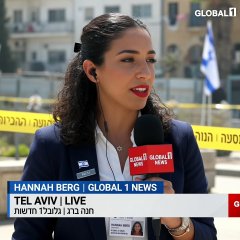
Israel Correspondent at Global1.News. Based in Tel Aviv, covering Israeli politics, security, technology, and society. Provides balanced, deeply-sourced reporting on one of the most closely-watched regions in the world.











Comments (0)