
US-Iran War Escalates: Jordan Attack Triggers New Strikes
The sudden death of Iran's Supreme Leader has unleashed a cascade of missile strikes, collapsing peace talks and dragging the Gulf to the brink of all-out war. With American troops killed in Jordan and the Strait of Hormuz now sealed, global energy supplies and regional stability hang in the balance.
The sudden death of Iran’s Supreme Leader has unleashed a cascade of missile strikes, collapsing peace talks and dragging the Gulf to the brink of all-out war. With American troops killed in Jordan and the Strait of Hormuz now sealed, global energy supplies and regional stability hang in the balance.
US-Iran War Escalates After Jordan Attack and Hormuz Closure
Dubai, United Arab Emirates — Article continues...
The Trigger: Troop Deaths in Jordan
On Friday, Iranian missiles struck a US airbase in Jordan, killing two US service members, leaving one missing, and hospitalizing four others. This attack directly prompted the United States to launch its eighth consecutive night of airstrikes against Iran on Sunday, July 19, 2026. The incident marked a sharp escalation in a conflict that began on February 28, 2026, the same day Iran’s Supreme Leader Ali Khamenei died. Since the war started, 16 US service members have been killed and more than 430 wounded.
US Central Command responded by targeting Islamic Revolutionary Guard Corps coastal surveillance facilities, air defense systems, maritime capabilities, and missile and drone storage sites. The strikes reflected Washington’s determination to deter further Iranian attacks on American personnel while signaling resolve to regional partners.
US troop casualties in the Gulf region have followed recurring patterns since the 2003 Iraq invasion, with Iran-backed militias responsible for hundreds of deaths through roadside bombs, rockets, and drones. The February 28, 2026, trigger coincided with Supreme Leader Ali Khamenei’s death, creating a leadership vacuum that accelerated proxy escalation. This latest Jordan strike, killing two and wounding others, fits a cycle where each US casualty prompts broader retaliation, lowering the threshold for direct confrontation.
Escalation dynamics now hinge on whether Washington treats the attack as an isolated proxy action or a state-directed operation. With 16 US deaths and over 430 wounded since February, domestic pressure for decisive response has intensified. Iranian decision-makers appear to calculate that calibrated casualties can impose political costs on the US without triggering full-scale war, yet repeated strikes risk crossing into uncontrollable territory.
Eighth Night of Strikes: Expanding the Target Set
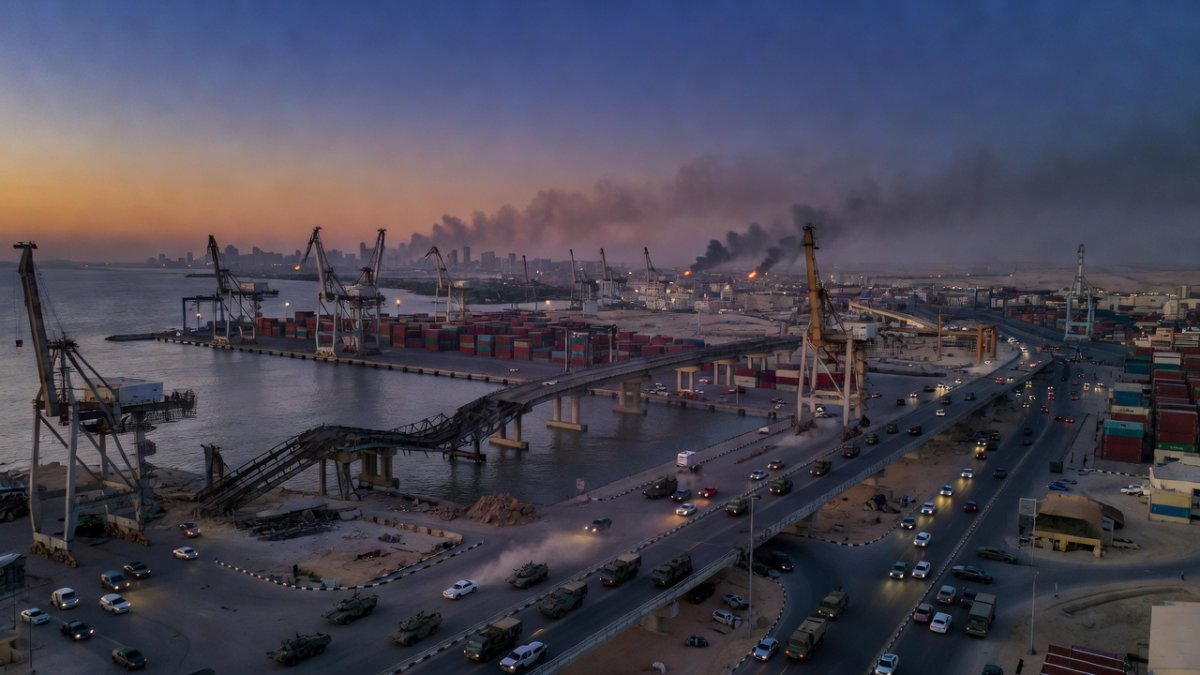
US forces struck locations near Bandar Abbas, Qeshm Island, Sirik, Hajiabad in Hormozgan province, Shadegan in Khuzestan, and the Darkhovin nuclear plant construction site. The International Atomic Energy Agency confirmed that the Darkhovin site remained in very early stages of construction with no nuclear material present. CENTCOM’s expanded target list demonstrated a shift from limited retaliation toward systematic degradation of Iran’s ability to project power across the Gulf.
President Trump publicly threatened Iranian power stations and bridges, raising the prospect of broader infrastructure attacks. These moves carry significant second-order effects on civilian populations and risk violating international humanitarian law protections for non-military targets.
US targeting has evolved from discrete retaliation against IRGC coastal radars and missile sites to systematic strikes on dual-use infrastructure near Bandar Abbas. Damage to bridges and tunnels in Hormozgan province has severed key logistics routes, complicating Iranian resupply of forward positions. This shift signals an intent to degrade not only immediate strike capabilities but also the sustainment architecture supporting longer campaigns.
The inclusion of the Darkhovin nuclear construction site, confirmed by the IAEA as empty of fissile material, illustrates the expanding envelope of acceptable targets. While military necessity arguments are advanced, the proximity to civilian areas and potential for collateral effects raise questions about proportionality under international humanitarian law. Continued expansion risks normalizing infrastructure attacks that could invite reciprocal Iranian action against Gulf energy facilities.
The Collapsing Interim Deal
Iran’s deputy foreign minister Kazem Gharibabadi announced that Tehran was suspending its commitments to the 60-day interim peace deal signed roughly one month earlier. The agreement had been intended to permanently end hostilities and was only at its halfway point when the Jordan attack occurred. Iran’s new Supreme Leader, Mojtaba Khamenei, warned that the United States would receive “unforgettable lessons” for its actions.
The collapse of the deal illustrates the fragility of any negotiated pause when core security concerns remain unaddressed. Both sides entered the interim arrangement with differing interpretations of what constituted acceptable behavior, leaving little room for de-escalation once casualties mounted.
The 60-day interim deal, signed roughly one month before the Jordan attack, contained provisions for mutual de-escalation, limited sanctions relief, and verification mechanisms intended to freeze hostilities. Its suspension by Iran’s deputy foreign minister after only 30 days underscores how fragile such arrangements remain when core deterrence issues are unresolved. Both sides retained differing red lines on proxy activity and force posture, leaving the agreement vulnerable to any significant casualty event.
Iran’s nuclear program status adds urgency: enrichment levels had been partially constrained under the interim framework, but suspension removes those limits. Supreme Leader Mojtaba Khamenei’s reference to “unforgettable lessons” signals a doctrinal shift toward more explicit deterrence signaling. The collapse illustrates that temporary pauses without addressing underlying security dilemmas tend to serve as brief respites rather than durable off-ramps.
The Strait of Hormuz: Global Energy at Stake
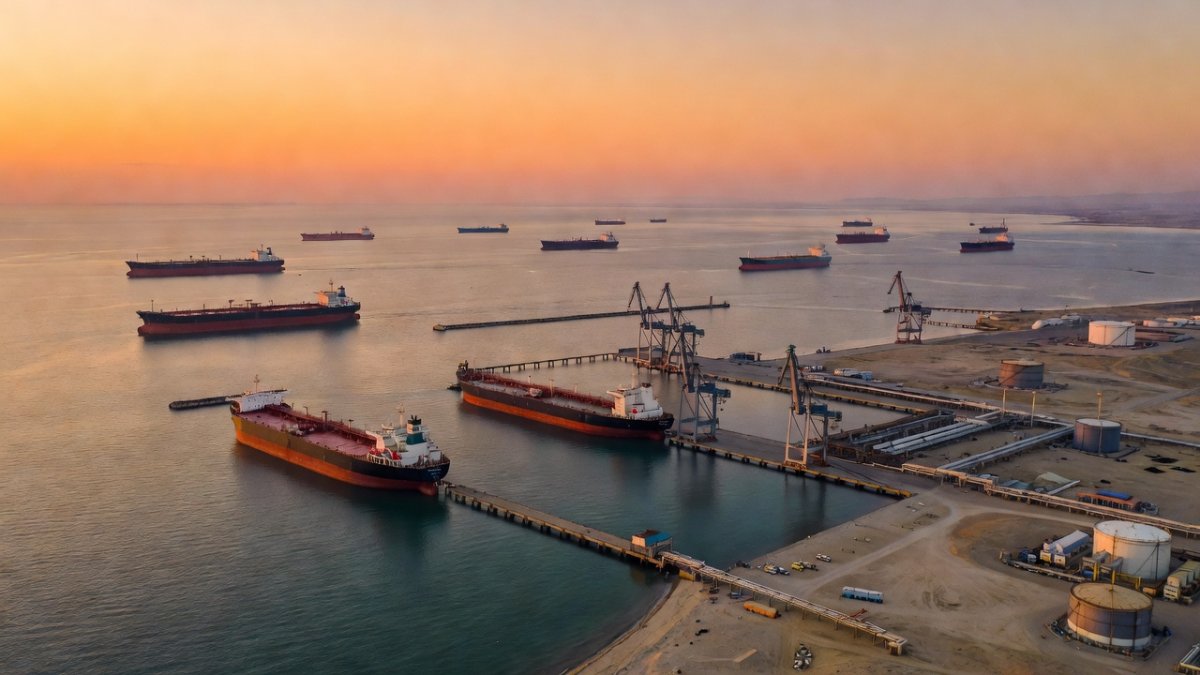
A US naval blockade has redirected five Iranian ships and disabled one vessel. The Strait of Hormuz, which previously carried approximately 20 percent of global oil transit, is now effectively closed, with only three transits recorded on Friday and eight on Saturday. This disruption directly affects energy markets and the diversification strategies of Gulf Cooperation Council states seeking to reduce reliance on hydrocarbon revenues.
Maritime organizations have issued warnings that the threat to mariners is severe, with deliberate hostile action considered highly likely. The closure amplifies existing tensions between Sunni Arab states and Iran, while also drawing in great-power competition as importers seek alternative supply routes.
Closure of the Strait has already produced measurable price effects, with Brent crude rising sharply on reduced daily transits from roughly 20 percent of global supply to near-zero effective flow. Historical precedents show that comparable disruptions—the 1973 embargo, 1979 Iranian revolution, and 1990 Gulf crisis—each triggered sustained price spikes exceeding 50 percent and contributed to global recessions. Current market buffers are thinner due to lower strategic petroleum reserves in several OECD states.
GCC diversification strategies face immediate stress as alternative export routes prove insufficient. Importers in Asia are accelerating spot purchases from West Africa and the Americas, yet logistics constraints limit rapid substitution. Prolonged closure would likely accelerate the global energy transition while simultaneously increasing short-term volatility that benefits neither producers nor consumers.
Iran’s Regional Retaliation: Gulf States Under Fire
Iran launched missiles and drones at Kuwait, Bahrain, and Jordan. Kuwait suffered a second attack on its desalination plant within two days, alongside strikes on an oil facility. Kuwait derives 90 percent of its drinking water from desalination, making these targets particularly sensitive. GCC Secretary-General Jasem Mohamed al-Budaiwi accused Iran of war crimes for targeting civilian infrastructure.
Jordan downed incoming Iranian missiles and summoned Iran’s chargé d’affaires. In Iraq, a drone struck a base near Irbil used by a Kurdish dissident group, wounding eight people. The timing coincided with new Iraqi Prime Minister Ali al-Zaidi’s visit to Washington, highlighting Tehran’s effort to complicate Baghdad’s alignment with the United States.
Kuwait’s extreme dependence on desalination—supplying 90 percent of drinking water—makes repeated strikes on these facilities a direct threat to civilian survival, prompting GCC accusations of war crimes. Bahrain and Jordan have also absorbed missile and drone salvos, exposing the limits of current air-defense architectures. The Sunni-Shia dimension amplifies domestic political risks for Gulf monarchies already managing sectarian tensions.
Jordan’s diplomatic protest and downing of incoming projectiles reflect a careful balancing act between alliance commitments and border security. Iraq’s Irbil incident further illustrates how Iranian retaliation can spill into third countries hosting dissident groups. These dynamics risk fracturing GCC cohesion if member states perceive uneven protection or disproportionate exposure.
Israel and the Spillover Calculus
Israel’s Lt. Gen. Eyal Zamir stated that Israeli forces are “prepared to immediately resume combat” after Iranian missiles landed near Eilat and Aqaba. Israel’s calculations involve balancing the need to deter Iranian proxies with the risk of opening a multi-front war that could draw in additional regional actors. The proximity of strikes to Jordanian and Israeli territory underscores how quickly localized incidents can expand into broader confrontation.
Arab-Israeli normalization efforts face renewed pressure as Gulf states weigh security cooperation with Israel against the immediate threat of Iranian retaliation. Sunni-Shia competition continues to shape alliance patterns across the region.
Eilat and Aqaba ports have faced indirect threats from Iranian drone corridors, raising Israeli concerns about sustained maritime access in the Red Sea. Lt. Gen. Zamir’s public statements emphasize that Israel has maintained heightened alert status since February 28 without direct involvement in the latest exchanges. This posture reflects a deliberate choice to avoid opening a second front while preserving freedom of action.
Israel’s strategic position since the war’s onset has centered on deterring Hezbollah and Iranian proxies without triggering full-scale regional war. Yet proximity to Jordanian and Gulf targets creates spillover risks that could force Israeli intervention if Iranian capabilities degrade Israeli early-warning systems. The calculus remains one of calibrated restraint amid expanding conflict geography.
Strategic Implications
Iran’s joint military command warned of a “devastating response” to US “bullying,” while Turkey watches the conflict’s impact on its own regional influence. The involvement of multiple Gulf states, the closure of a critical energy chokepoint, and threats to civilian infrastructure create a volatile environment with few off-ramps. Each actor pursues leverage through military pressure and diplomatic signaling, yet the risk of miscalculation remains high.
If implemented, further US strikes on power infrastructure could accelerate humanitarian concerns and draw stronger international condemnation. The current trajectory suggests that short-term military objectives are overriding longer-term stabilization efforts, with consequences that will reshape Middle East security dynamics for years to come.
Three plausible scenarios emerge: rapid escalation into direct US-Iran exchanges, negotiated de-escalation tied to renewed nuclear talks, or a prolonged frozen conflict with periodic proxy clashes. Each carries distinct implications for the regional order, particularly the durability of US security guarantees and the future of Gulf energy infrastructure.
At stake is whether the post-February 28 landscape produces a new balance of power or accelerates fragmentation. Great-power competition will intensify as China and Russia seek to exploit US distraction, while regional actors recalibrate alignments. The outcome will shape non-proliferation norms, maritime security regimes, and the viability of interim diplomatic instruments for years to come.
By Malik Hassan, Staff Writer
This article was produced with AI-assisted research and editorial support. Reporting is based on sources cited in the article.
What's Your Reaction?
 Like
0
Like
0
 Dislike
0
Dislike
0
 Love
0
Love
0
 Funny
0
Funny
0
 Wow
0
Wow
0
 Sad
0
Sad
0
 Angry
0
Angry
0
Middle East Correspondent at Global1.News. Based in Beirut, covering politics, conflict, energy, and society across the Middle East. Brings context and depth to a region often reduced to headlines.












Comments (0)