
Starbucks Korea Tank Day Controversy and Historical Memory
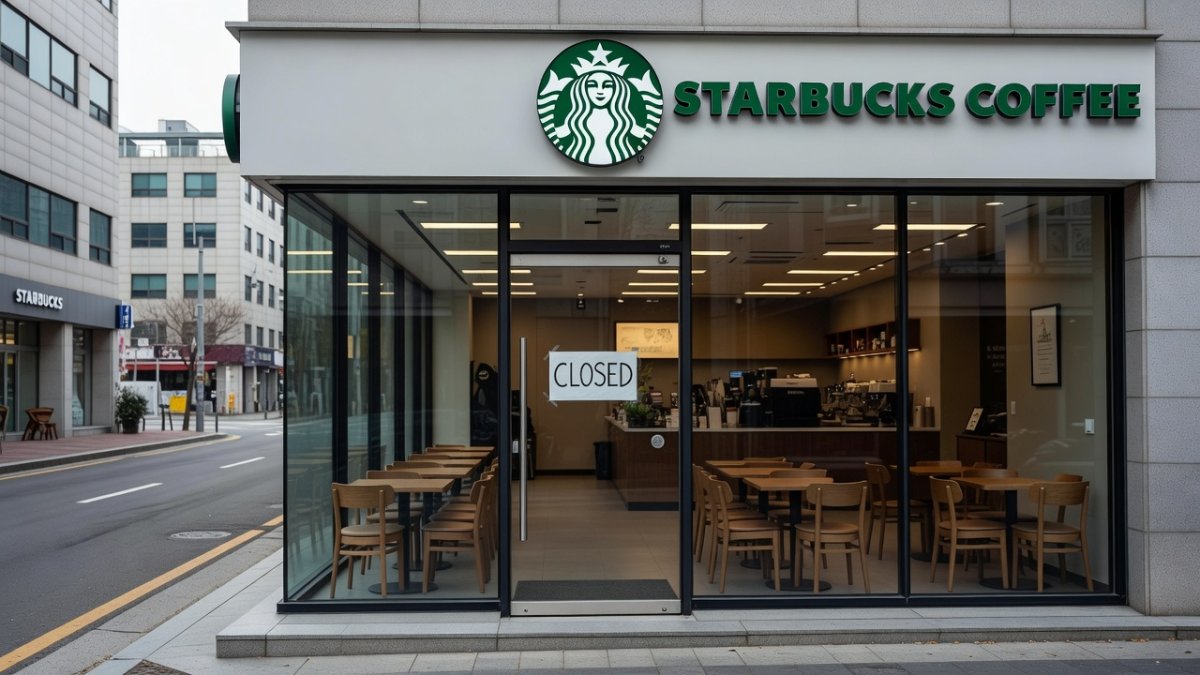
In late May 2026, Starbucks Korea announced that all more than 2,000 of its domestic outlets would close on June 22 for mandatory staff training, marking the first total shutdown in the company's Korean operations since its market entry in 1999. The decision followed the swift dismissal of the local chief executive and a public apology from Shinsegae Group Chairman Chung Yong-j
In late May 2026, Starbucks Korea announced that all more than 2,000 of its domestic outlets would close on June 22 for mandatory staff training, marking the first total shutdown in the company's Korean operations since its market entry in 1999. The decision followed the swift dismissal of the local chief executive and a public apology from Shinsegae Group Chairman Chung Yong-jin after the "Tank Day" promotion provoked nationwide outrage. Corporate documents indicate the training exercise carried an estimated direct cost of 2.1 billion won, equivalent to roughly 1.4 million United States dollars, underscoring the scale of remedial measures deemed necessary by senior management.
The closures were not limited to customer-facing adjustments; internal communications obtained by investigators reveal that several regional managers had not reviewed the promotional materials before rollout, relying instead on an artificial-intelligence tool that generated the contested slogan. This procedural lapse amplified perceptions that corporate haste had overridden elementary cultural due diligence. Observers noted that such a comprehensive operational pause had no precedent even during earlier public-relations crises involving foreign coffee chains in South Korea.
By framing the closures as an educational intervention rather than a punitive measure, Starbucks Korea sought to signal institutional learning. Yet analysts questioned whether a single day of training could adequately address entrenched shortcomings in historical awareness within a multinational subsidiary operating under a domestic chaebol umbrella. The episode thus illustrated how quickly reputational damage can translate into tangible logistical and financial consequences when corporate actions intersect with unresolved national trauma.
Starbucks Korea Tank Day Controversy: Historical Memory, Chaebol Accountability, and Democratic Reckoning
Seoul, South Korea – June 17, 2026 — The unprecedented nationwide closure of Starbucks Korea stores for mandatory history training represents the culmination of a crisis that has laid bare enduring tensions over the legacy of the Gwangju Uprising, the governance failures of family-controlled conglomerates, and the continuing role of historical memory in South Korea's democratic life.
The Tank Day Promotion and Why It Offended
Starbucks Korea introduced the "Tank Day" campaign on May 18, 2026, precisely coinciding with the anniversary of the Gwangju Uprising. The promotion offered discounted beverages under a tagline incorporating the Korean onomatopoeic term "tak," intended to evoke the sound of a punch or impact. Internal briefing slides later showed that an AI copywriting assistant had suggested the phrasing without contextual safeguards, and several district managers approved the materials without opening the attached historical notes.
The lexical choice proved incendiary. "Tank" directly referenced the armored vehicles deployed by Chun Doo-hwan's martial-law forces to suppress pro-democracy demonstrators in Gwangju between May 18 and 27, 1980. Meanwhile, "tak" phonetically recalled the torture-related death of student activist Park Jong-cheol in 1987, an event that catalyzed further democratization protests. Survivors and bereaved families interpreted the slogan as a trivialization of state violence rather than a harmless marketing device.
Public reaction intensified once screenshots of the promotional graphics circulated on social media platforms. Critics argued that the campaign exemplified a broader pattern in which commercial entities appropriate politically charged vocabulary for short-term engagement metrics. Starbucks Korea's subsequent internal review confirmed that no dedicated sensitivity committee had examined the campaign prior to launch, highlighting gaps in pre-release protocols for anniversary-timed initiatives.
Gwangju Uprising's Significance in Korean Democratization
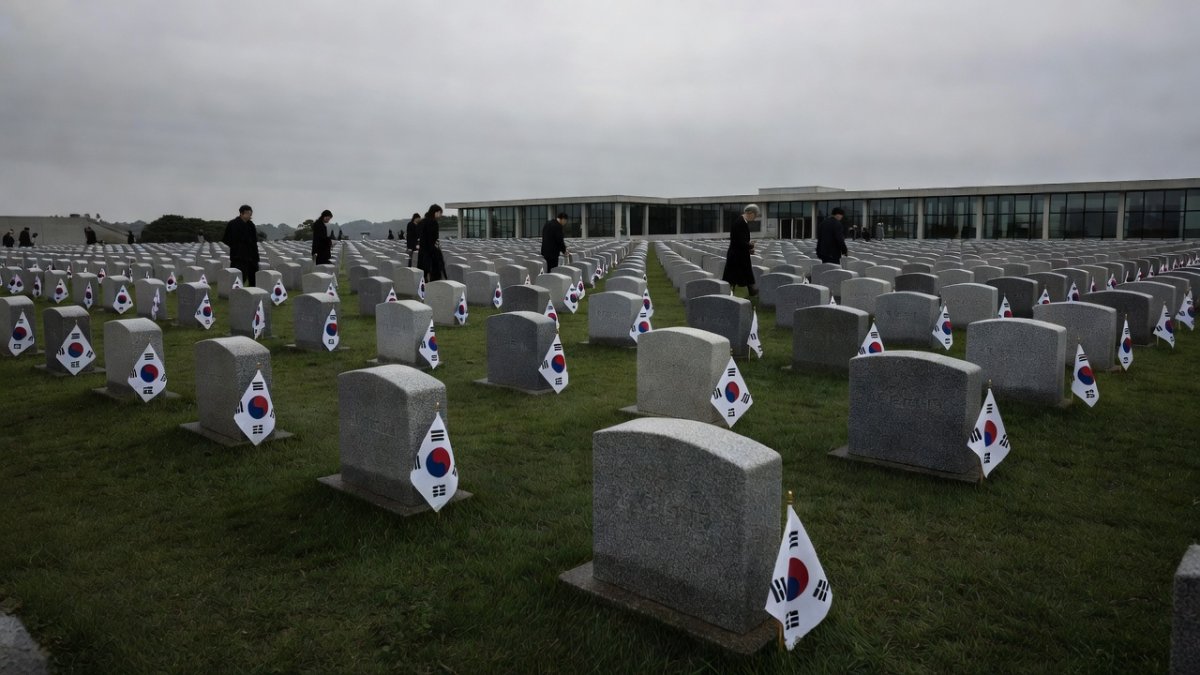
The Gwangju Uprising occupies a foundational place in South Korea's transition from authoritarian rule. Between May 18 and 27, 1980, citizens of Gwangju resisted the military coup led by Chun Doo-hwan, whose forces ultimately killed more than 200 people according to official records; citizens' groups maintain that the true toll approached or exceeded 2,000. The event crystallized public opposition to military dictatorship and supplied moral impetus for the June 1987 democracy movement.
Subsequent governments gradually incorporated the uprising into official commemorative calendars. The May 18 Foundation, established to preserve documentary evidence and support victims' families, has coordinated annual ceremonies attended by senior political figures. In 2026 the foundation received a formal apology from Starbucks headquarters in Seattle, illustrating how international corporations are increasingly expected to engage directly with Korean civic institutions when controversies arise.
Far-right online communities have periodically circulated claims that Gwangju protesters harbored sympathies for North Korea, assertions repeatedly rejected by South Korean courts. A Supreme Court ruling issued earlier in 2026 reaffirmed that such allegations constitute defamation. The persistence of these narratives nevertheless demonstrates that historical memory remains contested terrain, rendering any commercial reference to Gwangju symbols especially volatile.
Presidential and Political Response
President Lee Jae-myung issued a sharply worded statement on social media within hours of the promotion's exposure, characterizing the campaign as "inhumane and disgraceful conduct." His intervention set the tone for subsequent governmental scrutiny and signaled that the administration would not treat the matter as a routine corporate misjudgment. Opposition parties quickly echoed the criticism, framing the episode as symptomatic of insufficient regulatory oversight over foreign-branded consumer chains.
Within the same day, Starbucks Korea's chief executive was relieved of duties, and Shinsegae Group Chairman Chung Yong-jin appeared on national television to deliver a televised apology. The rapidity of these personnel actions reflected both the intensity of public sentiment and the political calculus of a conglomerate seeking to limit collateral damage to its broader retail portfolio. Gwangju municipal authorities reinforced the rebuke by prohibiting the use of Starbucks gift certificates in city-administered programs.
Legislators from the ruling party subsequently proposed amendments requiring large-scale retailers to conduct independent historical-sensitivity audits before launching promotions tied to national anniversaries. Although the bills remained in committee at the time of writing, they illustrated how a single marketing error could catalyze wider policy debate concerning corporate responsibility for collective memory.
Chaebol Governance Failures: Shinsegae and the Police Investigation
The controversy exposed structural weaknesses in Shinsegae Group's compliance architecture. Audit chief Yang Jong-hwan was questioned by police investigators regarding internal approval processes, while warrants were sought for the seizure of mobile-phone data belonging to several executives. Reports indicated that some senior managers had declined to surrender devices for the company's own internal review, prompting external law-enforcement involvement.
Chairman Chung's decision to undergo separate training on June 24 further underscored the gravity attached to leadership accountability. Corporate-governance specialists noted that such personal participation by a group chairman in remedial training sessions remains rare, suggesting recognition that reputational risk had migrated from the subsidiary level to the parent conglomerate. The episode also revived discussion about the adequacy of whistle-blower protections inside family-controlled business groups.
Police inquiries continue to examine whether the AI-generated slogan bypassed established review channels because of over-reliance on automated tools. Investigators have requested documentation detailing how many managers accessed the campaign briefing materials before the launch date, seeking to determine whether negligence or deliberate delegation contributed to the oversight failure.
Economic Impact and Corporate Remediation
Sales at Starbucks Korea outlets declined 26 percent in the week immediately following the controversy and have since stabilized approximately 25 percent below pre-incident averages. Industry analysts attribute the sustained drop to organized consumer boycotts coordinated through civic networks linked to the May 18 Foundation. Gift-certificate redemptions in Gwangju fell to negligible levels after municipal authorities withdrew official acceptance.
Remediation measures extended beyond the June 22 closures. Revised marketing guidelines now mandate dual human review for any campaign referencing historical dates, and external historians have been retained as consultants. Starbucks headquarters in Seattle issued a separate letter of regret to the May 18 Foundation, committing resources to support educational programs on Korean democratization.
Longer-term financial modeling suggests that recovery to previous revenue trajectories may require at least two fiscal quarters, assuming sustained investment in community-engagement initiatives. The episode has also prompted peer coffee chains to audit their own anniversary-related promotions, indicating potential sector-wide adjustments in risk-assessment practices.
Implications for Korean Democracy and Historical Memory
The Tank Day episode underscores the continuing salience of the Gwangju Uprising within South Korea's democratic identity. Even four decades after the event, references that appear to trivialize the sacrifices of 1980 elicit immediate and broad-based condemnation. This sensitivity reflects both successful civic education and the unfinished work of transitional justice, particularly regarding compensation and official acknowledgment of casualties.
Far-right attempts to recast Gwangju protesters as North Korean sympathizers, despite judicial repudiation, reveal persistent ideological fault lines. The controversy therefore served as a reminder that historical memory in Korea is not merely academic but remains a live arena of political contestation. Corporations operating in this environment must navigate not only market competition but also deeply embedded narratives of resistance and state violence.
Scholars have observed that the speed of digital circulation magnifies such missteps, transforming localized marketing errors into national debates within hours. Consequently, future corporate strategies will likely incorporate more robust historical-risk assessments, potentially elevating civic-society consultation to a standard governance practice rather than an optional public-relations exercise.
Looking Ahead: Policy Implications
Legislative proposals emerging from the incident may establish formal requirements for historical-sensitivity reviews among large retailers. Should these measures advance, South Korea would join a small cohort of democracies that statutorily link commercial speech to national commemorative calendars. Implementation details, including enforcement mechanisms and penalties for non-compliance, will determine the practical reach of any new framework.
At the corporate level, the Starbucks Korea case may accelerate adoption of AI-governance protocols that embed cultural-context filters before automated content reaches human approvers. Multinational chains could also expand partnerships with domestic memory institutions, transforming potential liabilities into collaborative educational opportunities. Such arrangements would require careful calibration to avoid perceptions of co-optation.
Ultimately, the episode illustrates how global brands must reconcile standardized marketing efficiencies with the particular historical textures of each national market. In South Korea, where democratization remains an actively remembered process rather than a settled past, failure to observe these textures carries immediate political, financial, and operational costs that extend well beyond any single promotional cycle.
By Prof. David Park, Staff Writer
This article was produced with AI-assisted research and editorial support. Reporting is based on sources cited in the article.
What's Your Reaction?
 Like
0
Like
0
 Dislike
0
Dislike
0
 Love
0
Love
0
 Funny
0
Funny
0
 Wow
0
Wow
0
 Sad
0
Sad
0
 Angry
0
Angry
0

East Asia/Technology Correspondent at Global1.News. Seoul-based voice covering Korean politics, technology, business, and culture. Analyzes how technology and geopolitics intersect across East Asia.















Comments (0)