
John McDonnell Rips Into UK Court's Palestine Action Terror Ruling
Parliamentary Outrage Ignites Following Middle East Eye Video of McDonnell’s Condemnation John McDonnell’s impassioned speech captured in the Middle East Eye video has resonated widely among human rights advocates and pro-Palestine activists who see the Court of Appeal decision as a direct assault on legitimate dissent. The veteran Labour MP described the ruling as one that dra
Parliamentary Outrage Ignites Following Middle East Eye Video of McDonnell’s Condemnation
John McDonnell’s impassioned speech captured in the Middle East Eye video has resonated widely among human rights advocates and pro-Palestine activists who see the Court of Appeal decision as a direct assault on legitimate dissent. The veteran Labour MP described the ruling as one that drags both Parliament and the judiciary into disrepute by equating non-violent direct action with terrorism. His words come at a time when over 700 criminal cases remain pending against supporters of Palestine Action, many of whom have participated in protests targeting arms companies linked to Israeli operations in Gaza. McDonnell emphasized that classifying protest through direct action as terrorism fundamentally undermines democratic traditions that have long protected the right to challenge government policy. Activists on the ground report increased fear and self-censorship, particularly among Palestinian diaspora communities in the UK who fear further marginalization. The video has amplified calls for solidarity with those facing lengthy trials scheduled throughout autumn and winter.
Viewers of the Middle East Eye footage witness McDonnell’s frustration as he highlights how the proscription disproportionately affects individuals motivated by humanitarian concerns over the ongoing crisis in Palestine. Families of detained activists describe emotional and financial strain, with breadwinners now facing potential prison sentences for actions they view as moral imperatives. McDonnell connected the ruling to broader patterns of restricting speech critical of UK foreign policy toward Israel. Community organizers note that Palestinian families in Britain already navigate daily discrimination and now confront additional legal risks when expressing solidarity. The speech has prompted renewed petitions and public meetings across several cities. Legal observers argue that such parliamentary interventions underscore deep divisions within the political establishment over the use of counter-terrorism legislation against domestic protest movements.
Human rights defenders stress that McDonnell’s intervention draws attention to the lived experiences of Palestinians whose relatives endure bombardment and displacement while UK courts legitimize restrictions on advocacy. The video’s circulation has coincided with statements from international observers questioning Britain’s commitment to free expression standards. McDonnell urged colleagues to recognize that the ban sets a dangerous precedent for future campaigns addressing global injustices. Palestinian community leaders in London report heightened anxiety among youth who previously participated in awareness-raising events without fear of terrorism charges. The Middle East Eye coverage also includes reactions from campaigners who credit McDonnell with giving voice to those silenced by the legal process. Overall the parliamentary anger reflected in the video signals potential for wider political mobilization ahead of the activists’ Supreme Court appeal.
Court of Appeal Panel Delivers Detailed Ruling Upholding Proscription
The five-judge Court of Appeal panel comprising Baroness Carr, Master of the Rolls, Lord Justice Edis, Lord Justice Lewis and Lady Justice Whipple concluded on 15 June 2026 that the Home Secretary’s decision to proscribe Palestine Action satisfied the requirements of proportionality under human rights law. Baroness Carr acknowledged the ban remains highly controversial and carries the potential for a chilling effect on legitimate protest activities. The court overturned the February 2026 High Court judgment by Justice Sharp which had found that Yvette Cooper failed to meet the proportionality test when imposing the ban on 5 July 2025. Judges reasoned that the organization’s tactics, including direct action against Elbit Systems facilities, justified the interference with individual rights to freedom of expression and assembly. Legal analysts note that the panel placed significant weight on government submissions regarding national security implications linked to arms exports. Palestinian solidarity groups interpret the decision as prioritizing political objectives over established legal safeguards.
Baroness Carr’s remarks during the hearing explicitly recognized the risk that the ruling could discourage peaceful demonstrators from participating in future actions related to Palestinian rights. Lord Justice Edis elaborated on the necessity of balancing individual liberties against perceived threats posed by repeated incursions at military-linked sites. The panel examined evidence of over 523 arrests during a single London protest and concluded that such scale indicated organized disruption warranting the terrorism designation. Justice Lewis highlighted procedural aspects of the original proscription order and found no procedural impropriety by the Home Office. Lady Justice Whipple addressed submissions concerning the impact on minority communities, yet ultimately aligned with the majority view that the measure remained lawful. Campaigners argue the reasoning overlooks the humanitarian context driving Palestine Action’s campaign against weapons used in Gaza.
The judgment allocates dozens of court days for trials scheduled in autumn and winter, signaling the scale of ongoing enforcement. Legal representatives for Palestine Action contend that the court undervalued evidence of non-violent methods employed by the group. Baroness Carr’s acknowledgment of controversy has been cited by supporters as an implicit recognition that the decision stretches existing terrorism legislation beyond its intended scope. Families affected by the ruling describe profound distress at seeing relatives branded terrorists for actions aimed at halting arms supplies implicated in Palestinian casualties. The Court of Appeal emphasized that the proscription does not criminalize all forms of protest but targets specific organizational activities. Human rights monitors warn that the detailed legal reasoning may nevertheless embolden authorities to apply similar measures against other justice movements.
McDonnell and Corbyn Deliver Strong Parliamentary Condemnations
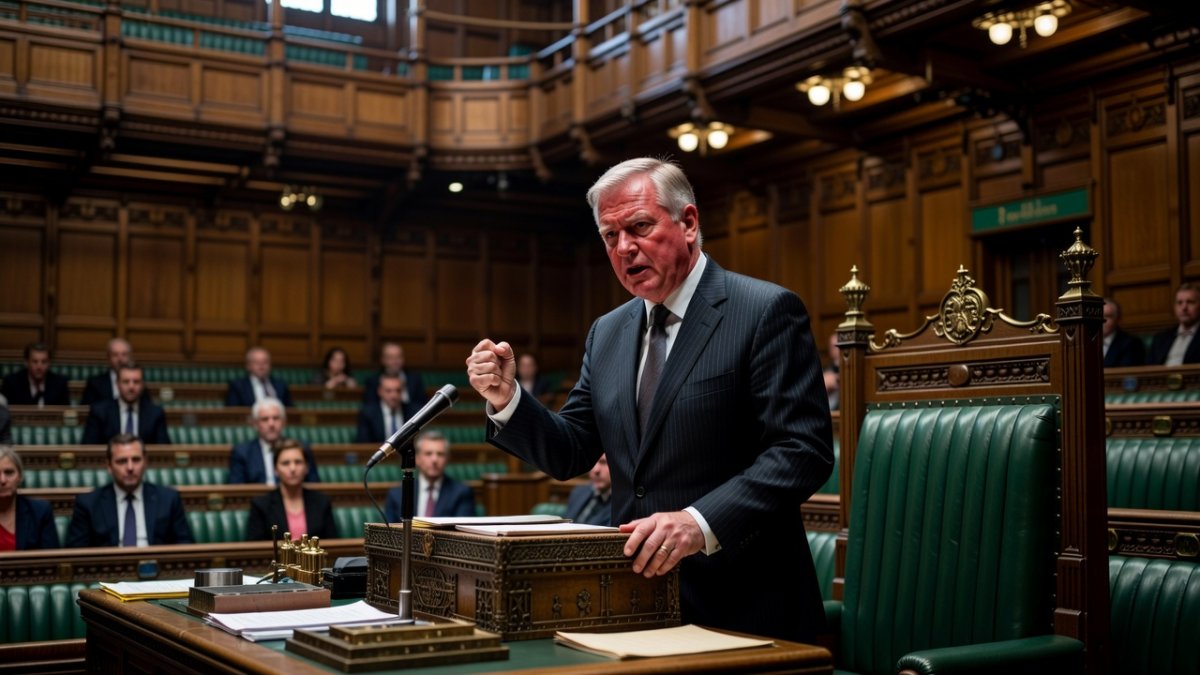
John McDonnell told Parliament that classifying protest through direct action as terrorism brings both Parliament and the judicial system into disrepute, a statement that captured widespread frustration among opposition MPs. He argued that the Court of Appeal had effectively rewritten the boundaries of legitimate dissent in ways that harm Britain’s international reputation on human rights. McDonnell referenced the pending cases of hundreds of activists and warned that the ruling would chill participation in campaigns supporting Palestinian self-determination. Colleagues across the opposition benches echoed his concerns, noting the decision’s timing amid continued reports of civilian suffering in Gaza. McDonnell’s intervention drew applause from public galleries filled with supporters of Palestine Action. The speech has since been widely shared as a rallying point for renewed advocacy efforts.
Jeremy Corbyn described the outcome as a travesty of justice that undermines decades of progress in protecting civil liberties. He highlighted how the proscription disproportionately targets individuals motivated by opposition to UK complicity in arms sales connected to Palestinian casualties. Corbyn called on the government to reconsider its approach and restore space for peaceful protest. Parliamentary records show his remarks prompted cross-party expressions of concern regarding free speech implications. Activists note that Corbyn’s long-standing solidarity with Palestinian causes lends particular weight to his critique of the ruling. The combined statements from McDonnell and Corbyn have galvanized local constituency meetings focused on the human cost borne by affected families.
Both MPs emphasized the need for parliamentary scrutiny of how counter-terrorism powers are deployed against domestic movements. McDonnell specifically questioned whether the Home Secretary had adequately considered less restrictive alternatives before imposing the July 2025 ban. Corbyn linked the decision to broader patterns of restricting narratives sympathetic to Palestinian human rights. Their interventions coincide with preparations for the June 30 review hearing before the Chief Magistrate. Supporters argue that such parliamentary voices provide essential counterbalance to the judicial outcome. The condemnations have also prompted renewed outreach to Palestinian communities in Britain who feel increasingly isolated by the legal developments.
Human Rights Organizations Highlight Chilling Effects on Free Speech
Akiko Hart of Liberty warned that the ruling creates a chilling effect on protest and free speech that will extend far beyond Palestine Action supporters. She noted that over 700 pending cases already demonstrate the practical consequences of the proscription for ordinary citizens exercising their rights. Hart argued that the Court of Appeal’s reasoning risks normalizing the misuse of terrorism legislation against political expression. Liberty’s analysis connects the decision to previous expansions of counter-terror powers that have historically impacted minority communities. Palestinian activists report that the uncertainty has led many to withdraw from public events. Hart called for urgent legislative reform to prevent further erosion of democratic safeguards.
Human Rights Watch characterized the proscription as a grave misuse of counterterrorism powers that diverts resources from genuine security threats. The organization documented how the ban has already resulted in lengthy sentences for the Filton Four and continues to affect hundreds more. HRW emphasized that such measures undermine Britain’s credibility when advocating for human rights abroad, particularly concerning Palestinian civilians. Reports from the group detail increased surveillance and intimidation faced by pro-Palestine campaigners since the July 2025 order. The chilling effect extends to journalists and academics who fear association with designated groups. HRW urged the government to reverse course and uphold international standards on freedom of assembly.
Ammar Kazmi stated that judges allowed the political objective of criminalizing pro-Palestine speech to take precedence over the law itself. He described the decision as one of the most extreme attacks on free speech in modern British history. Kazmi highlighted the emotional toll on families of activists awaiting trial and the broader message sent to Palestinian diaspora communities. Human rights monitors note that the ruling coincides with rising reports of hate incidents against Muslims and Arabs in the UK. Kazmi’s comments have been echoed by legal scholars concerned about precedent for future movements. The collective warnings from these organizations underscore the human rights stakes involved in the ongoing legal battle.
Filton Four Case Illustrates Palestine Action’s Direct Action Campaign
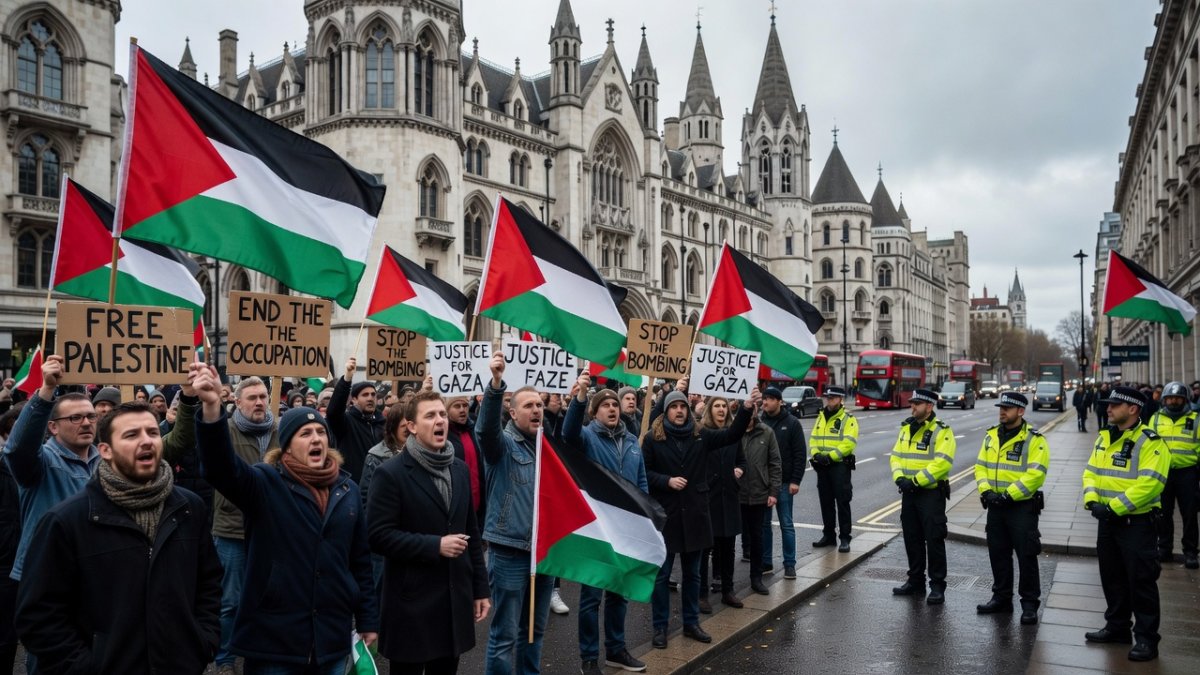
The sentencing of the Filton Four to terms between four and seven years underscores the severe consequences now facing Palestine Action participants following the upheld proscription. Charlotte Head, Samuel Corner, Leona Kamio and Fatema Rajwani were convicted for actions targeting Elbit Systems facilities in protest against arms supplies used in Gaza operations. Their cases have become emblematic of the broader campaign that seeks to disrupt military-industrial links perceived as enabling Palestinian suffering. Supporters describe the sentences as disproportionate given the non-violent nature of the protests. The Filton Four’s imprisonment has prompted solidarity vigils outside prisons and renewed focus on the humanitarian crisis in Palestine. Families of the convicted activists speak of the profound personal hardships resulting from lengthy separations.
Palestine Action’s campaign has centered on exposing and interrupting the operations of companies supplying equipment to Israeli forces amid documented civilian casualties in Gaza. The group’s tactics, while controversial, have drawn support from over 130 public figures including Sally Rooney and Greta Thunberg who view the actions as necessary moral interventions. The Filton Four’s prosecution illustrates how previously tolerated protest methods now attract terrorism-level penalties. Community leaders note that Palestinian families in the UK draw inspiration from such activism while fearing similar legal repercussions. The sentences have also sparked debates within legal circles about the appropriate threshold for designating protest groups as terrorist organizations. Activists maintain that the campaign remains rooted in principles of non-violence and accountability.
Contextual analysis reveals that Palestine Action emerged in response to specific arms export decisions by successive UK governments despite evidence of international humanitarian law violations in Gaza. The Filton Four’s case highlights the personal risks borne by young activists motivated by solidarity with Palestinians facing displacement and loss. Supporters argue that the campaign has succeeded in raising public awareness even as legal pressures mount. The human impact extends to relatives in Palestine who receive messages of support from UK-based campaigners now facing imprisonment. Legal teams continue to prepare appeals emphasizing proportionality concerns raised in earlier High Court proceedings. The Filton Four remain symbols of resistance within a movement confronting unprecedented state restrictions.
Mass Arrests and Over 700 Pending Cases Reveal Scale of Enforcement
More than 523 individuals were arrested during a single London protest, illustrating the intensity of policing directed at Palestine Action supporters since the July 2025 ban. With over 700 criminal cases now pending, courts have scheduled dozens of trial days across autumn and winter to process the backlog. The Chief Magistrate has paused proceedings pending a review hearing set for 30 June 2026, creating temporary uncertainty for defendants and their families. Shabana Mahmood has publicly stated that Palestine Action is not an ordinary protest group, justifying the robust enforcement approach. Palestinian communities report that the volume of arrests has created widespread fear and deterred participation in related events. Legal aid organizations struggle to meet the demand for representation amid the surge in cases.
Enforcement actions have included dawn raids and extended pre-charge detention periods that activists describe as intimidating. Families of those arrested detail the psychological strain of navigating complex legal processes without clear timelines. The scale of detentions has drawn comparisons to previous public order operations yet exceeds them in the application of terrorism legislation. Community support networks have emerged to provide assistance to affected households, many of which include members with direct family ties to Palestine. Police operations continue to target remaining activists despite the Chief Magistrate’s pause. The human cost manifests in lost employment, disrupted education and fractured community ties.
Data from court listings indicate that trials will extend well into 2027, prolonging uncertainty for hundreds of defendants. Activists argue that the enforcement strategy effectively criminalizes solidarity with Palestinians at a time when civilian casualties in Gaza remain high. Support groups document cases of individuals facing charges for distributing leaflets or attending vigils. The mass arrests have also prompted international scrutiny from bodies monitoring compliance with free expression obligations. Palestinian diaspora organizations emphasize that such policing sends a chilling message to those advocating for an end to UK arms exports. The cumulative effect of these measures continues to reshape the landscape of pro-Palestine activism in Britain.
Supreme Court Appeal and Future Implications for Palestine Activism
Huda Ammori has confirmed that Palestine Action will appeal the Court of Appeal decision to the Supreme Court and subsequently to the European Court of Human Rights, describing the ruling as one of the most extreme attacks on free speech in modern British history. Legal teams are preparing detailed submissions arguing that the proscription fails to meet European Convention standards on proportionality. The June 30 review hearing before the Chief Magistrate may provide interim relief for some defendants while the higher appeals proceed. Campaigners anticipate that the Supreme Court process could take many months, leaving hundreds in legal limbo. Palestinian human rights advocates view the appeals as critical opportunities to challenge the expansion of counter-terrorism powers. International solidarity networks have pledged continued support throughout the litigation.
Implications for broader Palestine activism include heightened caution among groups engaging in direct action or even symbolic protests against arms companies. The upheld ban may influence future government decisions regarding other movements addressing foreign policy issues. Activists note that the ruling coincides with ongoing reports of Palestinian civilian casualties, intensifying the moral urgency felt by supporters. Community leaders stress the need for sustained advocacy to prevent further criminalization of humanitarian solidarity. The Supreme Court appeal is expected to examine the balance between national security claims and fundamental rights in unprecedented detail. Success at higher courts could restore significant space for protest activities.
Long-term consequences may reshape how UK authorities apply terrorism legislation to domestic justice campaigns. Palestinian families in Britain express hope that successful appeals will affirm their right to advocate without fear of terrorism designations. Legal experts predict that the case will set important precedents affecting multiple civil society sectors. Ammori’s commitment to exhausting all domestic and international remedies underscores the determination of activists facing these restrictions. The human impact on individuals and communities remains central to ongoing discussions about democratic accountability. Ultimately the coming months will determine whether the current trajectory of enforcement continues or faces meaningful judicial correction.
By Fatima Al-Rashid, Staff WriterThis article was produced with AI-assisted research and editorial support. Reporting is based on sources cited in the article.
What's Your Reaction?
 Like
0
Like
0
 Dislike
0
Dislike
0
 Love
0
Love
0
 Funny
0
Funny
0
 Wow
0
Wow
0
 Sad
0
Sad
0
 Angry
0
Angry
0

Gulf/MENA Correspondent at Global1.News. Based in Doha, covering Gulf politics, energy markets, diplomacy, and development across the Middle East and North Africa. Tracks the economic transformation of the Gulf states.











Comments (0)