
South Korea's Early Heat Wave Tests Climate Governance Framework
The unusually early issuance of South Korea’s first heat wave alert on 18 June 2026 reveals deeper structural challenges in national climate governance. This meteorological event, arriving two weeks ahead of historical norms, directly tests the implementation capacity of the 2050 Carbon Neutrality Framework and the country’s Paris Agreement commitments. It also exposes the inte
The unusually early issuance of South Korea’s first heat wave alert on 18 June 2026 reveals deeper structural challenges in national climate governance. This meteorological event, arriving two weeks ahead of historical norms, directly tests the implementation capacity of the 2050 Carbon Neutrality Framework and the country’s Paris Agreement commitments. It also exposes the interplay between rising temperatures, public health systems, urban infrastructure limits, and surging energy demand.
Early Heat Alerts Expose Governance Shortfalls
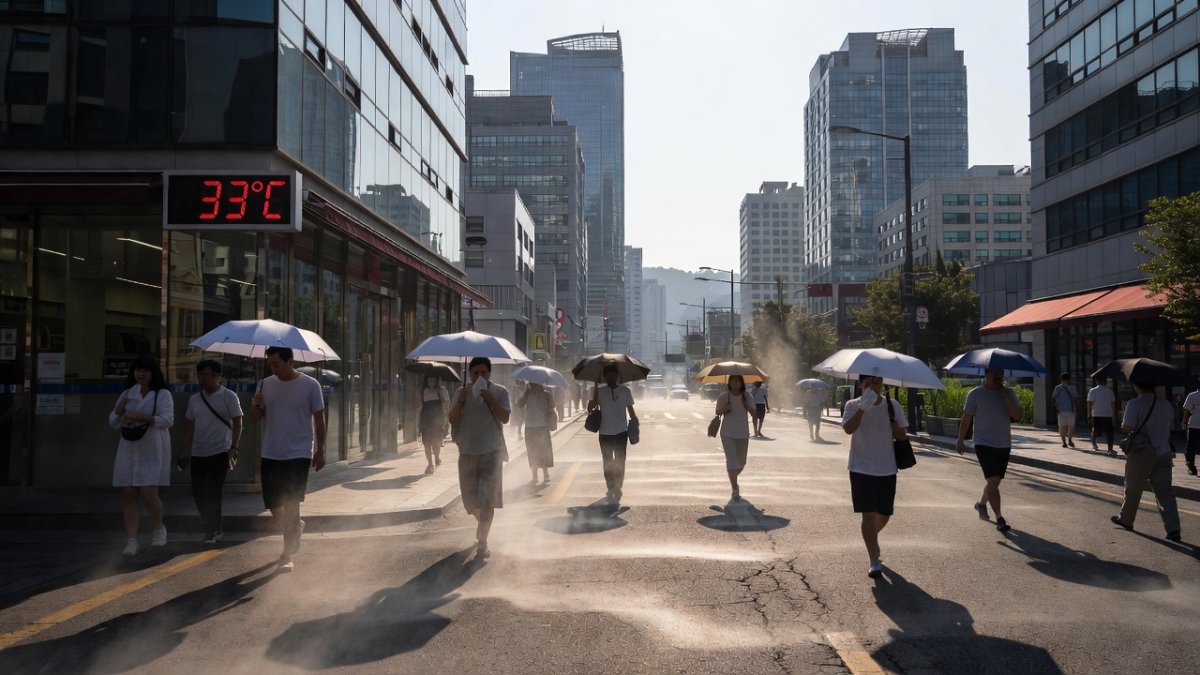
Seoul, South Korea – June 19, 2026 — The Korea Meteorological Administration’s decision to issue heat wave advisories for southern Seoul, portions of Gyeonggi Province, and Ganghwa County at 2 p.m. on 18 June marks a significant departure from established seasonal patterns. Earlier alerts for Hanam, Yeoju, Gyeongsan, Yecheon, and Gunwi at 11 a.m. further illustrate the accelerated arrival of extreme heat. With a threshold of 33 °C sustained over two consecutive days already met in Seoul by 16 June, the episode compels a reassessment of how climate governance frameworks translate into operational resilience.
Meteorological Context and Forecast Implications
The KMA’s January 2026 seasonal outlook had already projected above-normal temperatures for the summer period. This forecast aligned with observed global warming trends and regional circulation anomalies. The early breach of the 33 °C threshold therefore represents not an anomaly but a predictable acceleration within an established trajectory. Such shifts place immediate pressure on the 2050 Carbon Neutrality Framework’s adaptation components, which remain less developed than its mitigation targets.
Linkages to the 2050 Carbon Neutrality Framework
South Korea’s 2050 Carbon Neutrality Framework commits the nation to net-zero emissions through rapid decarbonization of power generation, industry, and transport. Yet the framework’s adaptation pillar has received comparatively modest funding and institutional attention. The current heat wave demonstrates that mitigation alone cannot safeguard populations from near-term climate impacts. Policymakers must now integrate heat-resilient urban design and emergency response protocols into the framework’s mid-term review scheduled for late 2026.
Public Health Policy Under Strain
Public health authorities face mounting demands as heat-related hospital admissions rise. Existing heat action plans emphasize vulnerable groups, yet coverage gaps persist in rapidly aging urban districts. The early timing of the alert disrupts school calendars and outdoor labor regulations, revealing coordination shortfalls between the Ministry of Health and local governments. Strengthening surveillance systems and expanding cooling-center networks now constitute urgent governance priorities.
Urban Infrastructure and Energy Demand Pressures
Seoul’s dense built environment amplifies the urban heat island effect, pushing electricity demand for air conditioning to record levels. The Korea Electric Power Corporation has warned of potential strain on transmission infrastructure during peak hours. These dynamics intersect directly with carbon neutrality goals: increased fossil-fuel backup generation risks undermining emission-reduction trajectories. Investment in district cooling, cool-roof mandates, and smart-grid technologies therefore emerges as both an adaptation and mitigation necessity.
Paris Agreement Commitments and International Standing
Under the Paris Agreement, South Korea’s Nationally Determined Contribution requires progressive strengthening of both mitigation and adaptation measures. The early heat wave provides empirical evidence that current adaptation planning remains insufficiently ambitious. International observers will scrutinize whether Seoul incorporates lessons from this event into its 2026 biennial transparency report. Failure to do so could erode diplomatic credibility in climate negotiations.
Policy Recommendations for Strengthened Climate Governance
First, the government should accelerate integration of real-time meteorological data into the 2050 Framework’s monitoring mechanisms. Second, municipal authorities require dedicated funding streams for heat-resilient infrastructure retrofits. Third, inter-ministerial coordination protocols must be revised to address compound risks such as simultaneous heat waves and power-system stress. Finally, public communication strategies should evolve beyond simple alerts toward sustained behavioral guidance.
Long-Term Projections and Governance Outlook
Climate models indicate that South Korea will experience more frequent and intense heat episodes through 2040. Without accelerated adaptation embedded within the carbon neutrality pathway, economic losses from health impacts and productivity declines will compound. The June 2026 alert therefore functions as an early stress test for the entire governance architecture. How national and local institutions respond in the coming months will determine whether South Korea can maintain both emission-reduction momentum and societal resilience under intensifying climate stress.
By Prof. David Park, Staff Writer
This article was produced with AI-assisted research and editorial support. Reporting is based on sources cited in the article.
What's Your Reaction?
 Like
0
Like
0
 Dislike
0
Dislike
0
 Love
0
Love
0
 Funny
0
Funny
0
 Wow
0
Wow
0
 Sad
0
Sad
0
 Angry
0
Angry
0

East Asia/Technology Correspondent at Global1.News. Seoul-based voice covering Korean politics, technology, business, and culture. Analyzes how technology and geopolitics intersect across East Asia.















Comments (0)