
Typhoon Bavi Poses Severe Test for Regional Disaster Preparedness and China's Climate Strategy
East Asia's exposure to intensifying tropical cyclones underscores the strategic imperative for coordinated disaster preparedness across the region, even as China advances its climate resilience objectives under the Dual Circulation strategy. The approach of Typhoon Bavi, following closely on the heels of Typhoon Maysak, highlights how successive extreme weather events strain n
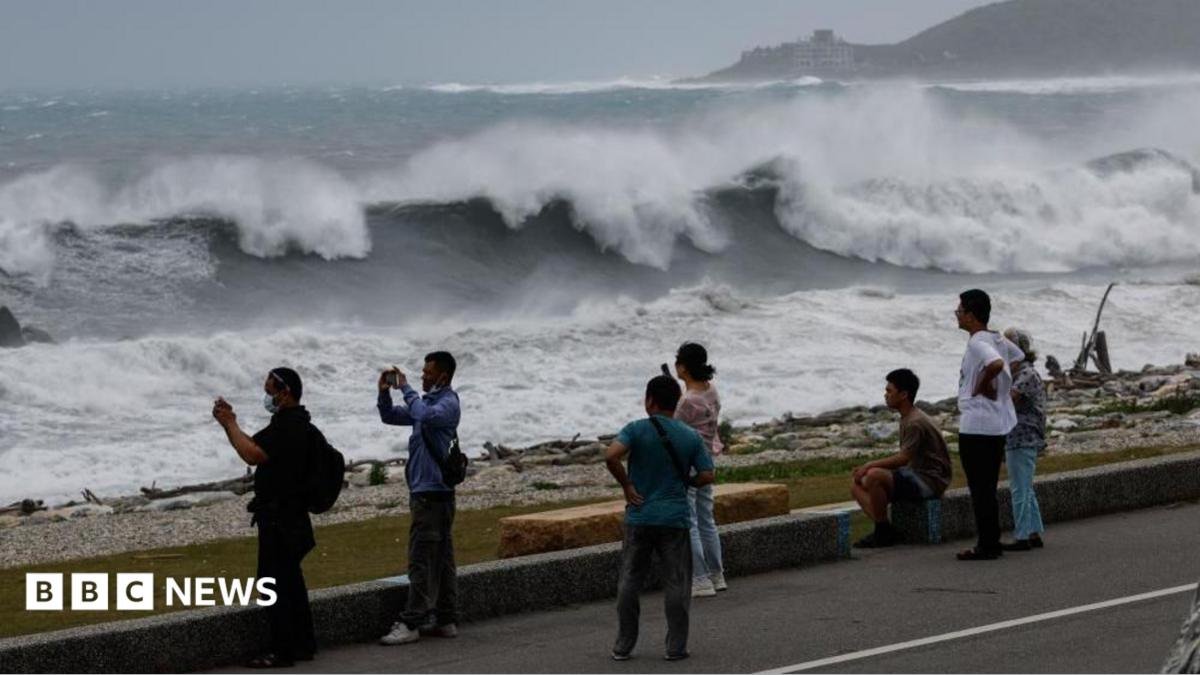
East Asia's exposure to intensifying tropical cyclones underscores the strategic imperative for coordinated disaster preparedness across the region, even as China advances its climate resilience objectives under the Dual Circulation strategy. The approach of Typhoon Bavi, following closely on the heels of Typhoon Maysak, highlights how successive extreme weather events strain national capacities and test Beijing's emphasis on technological self-sufficiency in early warning systems and infrastructure hardening.
Scale and Trajectory of Typhoon Bavi
Typhoon Bavi stands out as one of the strongest storms in decades, spanning a width of 1,000km and forecast to deliver up to 1m of rainfall in affected areas. After claiming at least 15 lives through landslides in the southern Philippines, the system is now tracking toward Taiwan and south-eastern China, with potential landfall in Fujian province on Saturday. Taiwan authorities have placed 29,000 soldiers on standby to support evacuation and relief operations, reflecting the island's long-standing focus on rapid military-civilian coordination during typhoon season.
China's Institute of Public and Environmental Affairs director Ma Jun has publicly warned of "significant impact" from the approaching system. This assessment aligns with observed patterns of increasing storm intensity, where wider circulation and heavier precipitation totals amplify risks to coastal populations and agricultural zones.
Immediate Predecessor: Typhoon Maysak's Toll
Just days earlier, Typhoon Maysak left at least 39 people dead in southern China while triggering rare tornadoes in Hubei province and inflicting massive agricultural losses in Guangxi. These cascading effects illustrate the compounding pressure on regional food security and supply chains when multiple typhoons arrive in quick succession. Recovery efforts in Guangxi remain ongoing, with local authorities prioritizing drainage infrastructure repairs and crop replanting programs to mitigate further economic disruption.
China's Evolving Climate Resilience Framework
Beijing's response to such events forms part of a broader push toward enhanced climate adaptation, consistent with objectives outlined in the 14th Five-Year Plan. Investments in meteorological monitoring, resilient urban design, and cross-provincial coordination mechanisms aim to reduce vulnerability in provinces such as Fujian and Guangxi. Director Ma Jun's remarks emphasize the need for sustained attention to environmental governance alongside disaster response, linking immediate typhoon threats to longer-term goals of ecological modernization.
These measures also support China's foreign policy doctrine of multilateral institution-building, as regional cooperation on early warning data sharing with ASEAN partners can strengthen collective resilience against shared climate risks. The strategic calculus involves balancing domestic priorities with outward-facing diplomacy that positions China as a contributor to regional stability.
Geopolitical Implications and Leverage Dynamics
Each side in the regional disaster management landscape pursues distinct objectives. Taiwan focuses on safeguarding its population through military mobilization, while mainland authorities in Fujian prepare for potential evacuations and infrastructure protection. China's leverage lies in its extensive meteorological networks and rapid deployment capabilities, yet successive storms like Maysak and Bavi reveal second-order effects that extend to supply chain interruptions affecting the EU and Global South trading partners reliant on Chinese agricultural exports.
Historical patterns show that intensified storm activity can accelerate policy shifts toward greater self-reliance in critical technologies, including satellite-based forecasting and flood-resistant construction materials. For ASEAN nations, the events serve as a reminder of the value in joint exercises and information exchange to offset individual capacity gaps.
Strategic Outlook for East Asian Preparedness
Looking ahead, the interplay between immediate typhoon response and China's climate resilience agenda will shape how effectively the region absorbs future shocks. Cautious implementation of new standards for coastal defenses and agricultural safeguards remains essential, with timelines for full rollout still subject to phased integration across provinces. The current sequence of storms provides a practical test of these evolving systems without overstating their current reach.
By Prof. Marcus Chen, Staff Writer
This article was produced with AI-assisted research and editorial support. Reporting is based on sources cited in the article.
What's Your Reaction?
 Like
0
Like
0
 Dislike
0
Dislike
0
 Love
0
Love
0
 Funny
0
Funny
0
 Wow
0
Wow
0
 Sad
0
Sad
0
 Angry
0
Angry
0

World Politics Analyst at Global1.News. Based in Beijing, covering US-China relations, global trade, and geopolitical strategy. Brings deep analytical perspective to the power dynamics shaping international affairs.














Comments (0)