
Japan AI Startup Bridges Tradition With Innovation at $600M Valuation
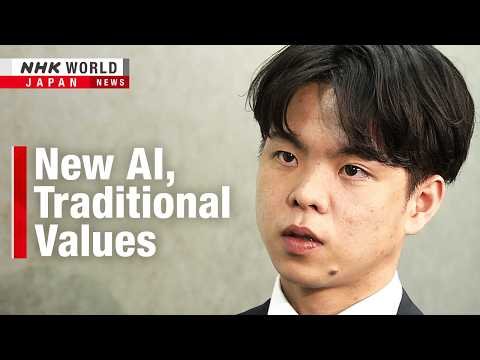
Early Success Signals Broader Shifts in Japan’s AI Landscape The NHK WORLD-JAPAN report highlights a Japanese AI startup founded approximately five years ago that has already achieved a valuation exceeding 600 million dollars. Limited details from the video description prevent naming the company or its founder, yet the milestone itself illustrates how select Japanese ventures a
Early Success Signals Broader Shifts in Japan’s AI Landscape
The NHK WORLD-JAPAN report highlights a Japanese AI startup founded approximately five years ago that has already achieved a valuation exceeding 600 million dollars. Limited details from the video description prevent naming the company or its founder, yet the milestone itself illustrates how select Japanese ventures are successfully applying artificial intelligence to longstanding industrial sectors.
This development occurs against the backdrop of Japan’s deliberate national strategy to embed digital technologies within its mature economy. Rather than treating AI as a standalone sector, policymakers and entrepreneurs increasingly view it as a tool for revitalizing established industries such as manufacturing, agriculture, and cultural heritage preservation.
Integrating AI With Traditional Sectors: The Core Opportunity
Japanese companies have long excelled in precision manufacturing, craftsmanship, and process optimization. The startup’s reported focus on marrying new AI capabilities with these older strengths reflects a pragmatic approach that avoids wholesale disruption. Instead, it augments existing workflows with data-driven insights, predictive maintenance, and quality-control enhancements.

Such integration carries particular relevance for Japan’s aging workforce. AI systems can capture tacit knowledge from experienced artisans and technicians, then codify it for training younger employees or for deployment in remote facilities. This knowledge-transfer function aligns closely with the goals of Society 5.0, the government’s vision for a human-centered society that fuses cyberspace and physical space.
Policy Frameworks Supporting AI-Tradition Convergence
The Ministry of Economy, Trade and Industry (METI) has consistently promoted AI adoption across small and medium-sized enterprises that form the backbone of traditional industries. METI’s various AI and digital transformation guidelines emphasize practical use cases rather than frontier research alone. The startup’s trajectory suggests that private-sector actors are beginning to operationalize these policy signals at scale.
The Digital Agency, established to accelerate government-wide digitalization, also plays an enabling role by improving data infrastructure and regulatory clarity. While the video does not specify direct engagement with these bodies, the broader ecosystem they have helped shape provides fertile ground for ventures seeking to apply AI in culturally embedded sectors.
Challenges in Scaling AI Within Heritage-Rich Industries
Despite the valuation milestone, significant hurdles remain. Traditional industries often operate with fragmented data, legacy equipment, and conservative attitudes toward external technology providers. Building trust requires demonstrated reliability over multiple business cycles, not rapid proof-of-concept wins.
Furthermore, Japan’s semiconductor strategy and Green Transformation (GX) initiatives create additional layers of complexity. AI solutions must eventually interoperate with next-generation chips and energy-efficient systems, raising both technical and capital requirements for young companies. The reported valuation indicates investor confidence that at least one venture has begun navigating these constraints successfully.
Implications for the Wider Asia-Pacific Startup Ecosystem
Japan’s experience offers instructive lessons for neighboring economies that also possess deep industrial traditions. Rather than copying Silicon Valley models wholesale, regional founders may find greater traction by adapting AI to local manufacturing clusters, agricultural practices, or artisanal supply chains.

Cross-border collaboration within ASEAN and East Asia could accelerate this process. Japanese firms bring decades of domain expertise; regional partners contribute market scale and diverse data environments. The startup’s achievement may therefore catalyze similar experiments beyond Japan’s borders.
Outlook: Sustaining Momentum Beyond Valuation Milestones
Valuation figures capture market expectations at a single moment. Long-term success will depend on whether the startup and its peers can deliver measurable productivity gains and cultural preservation outcomes inside traditional industries. Continued alignment with METI roadmaps, Digital Agency standards, and Society 5.0 objectives will help maintain policy support and access to public-private funding mechanisms.
Information available from the NHK report remains high-level, leaving open questions about specific deployment metrics or customer segments. Nevertheless, the existence of a five-year-old company reaching this scale underscores that Japan’s startup ecosystem is capable of producing globally relevant AI ventures when technology is applied thoughtfully to the country’s distinctive industrial heritage.
By Kenji Tanaka, Staff Writer
This article was produced with AI-assisted research and editorial support. Reporting is based on sources cited in the article.
What's Your Reaction?
 Like
0
Like
0
 Dislike
0
Dislike
0
 Love
0
Love
0
 Funny
0
Funny
0
 Wow
0
Wow
0
 Sad
0
Sad
0
 Angry
0
Angry
0

Japan Correspondent at Global1.News. Tokyo-based voice covering Japanese politics, technology, economy, and culture. Tracks the intersection of tradition and innovation in one of the world's most dynamic societies.














Comments (0)