
South Korea Braces for Record Summer Heat Amid Climate Pressures
South Korea enters the 2026 summer season under meteorological conditions that signal one of the most severe heat episodes in the observational record. Early June measurements from the Korea Meteorological Administration already place the capital among the hottest starts to the season in decades, raising concerns for energy systems, agriculture, and public health across the pen
South Korea enters the 2026 summer season under meteorological conditions that signal one of the most severe heat episodes in the observational record. Early June measurements from the Korea Meteorological Administration already place the capital among the hottest starts to the season in decades, raising concerns for energy systems, agriculture, and public health across the peninsula. These developments occur against the backdrop of repeated record summers in 2018, 2023, and 2024, underscoring an accelerating trend rather than isolated anomalies.
Record-Breaking Temperatures and KMA Observations
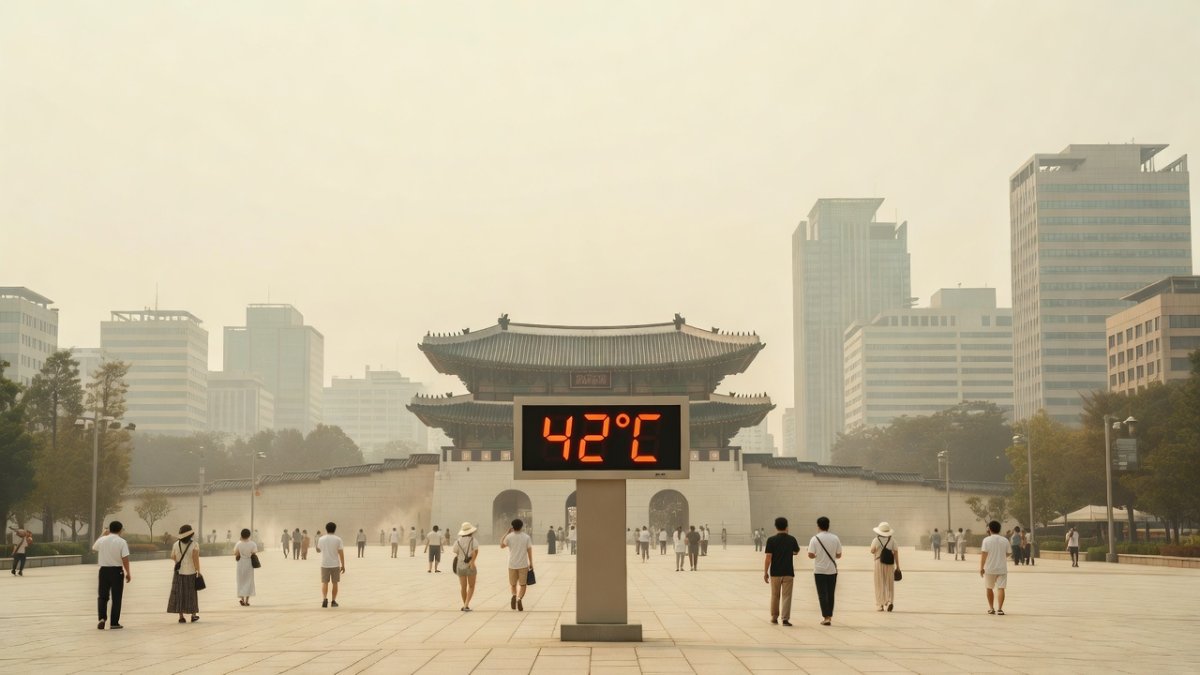
The Korea Meteorological Administration recorded Seoul's highest temperature of 2026 during mid-June, confirming an early and sharp departure from seasonal norms. National spring averages reached 13.3°C, 1.4°C above the 30-year baseline, ranking as the second-warmest spring since systematic observations began in 1973. This spring anomaly set the stage for an extended period of elevated temperatures that persisted into the first weeks of summer, with Seoul experiencing daytime peaks that exceeded previous mid-June benchmarks by several degrees. Forecasters now project intervals during July and August when daily maxima could surpass long-term averages by 5–10°C, particularly when the combined influence of regional high-pressure systems reaches maximum intensity. Historical comparison reveals the cumulative nature of recent extremes. The summers of 2018, 2023, and 2024 each established new national records for consecutive days above 33°C, with 2018 alone producing more than 30 heatwave days in parts of the southern provinces. The 2026 trajectory appears poised to extend this sequence, as soil moisture deficits from the unusually warm spring have reduced evaporative cooling across the central and southern regions. KMA station networks document that minimum nighttime temperatures have also risen steadily, limiting overnight recovery for both human populations and agricultural crops. These patterns align with the agency’s seasonal outlook released in early June 2026, which assigns elevated probability to prolonged heat episodes lasting ten days or longer. Urban stations in Seoul, Busan, and Daegu show the strongest departures, reflecting the additional influence of the urban heat island effect atop the broader synoptic warming. Agricultural monitoring stations in the Honam plain report soil temperatures at 10-centimeter depth already 2.8°C above the 1991–2020 mean, raising concerns for rice transplanting schedules and subsequent yield quality.
Atmospheric Drivers: The Tibetan and North Pacific Highs
The intensification of both the Tibetan High and the North Pacific High constitutes the primary dynamical driver behind the anticipated summer extremes. In typical years the Tibetan High expands eastward during July, but 2026 analyses indicate an earlier and stronger ridge that has already displaced the polar front northward beyond the Korean Peninsula by mid-June. This configuration suppresses cloud formation and rainfall, allowing greater solar insolation to reach the surface for extended periods. Simultaneously, the North Pacific High has strengthened and shifted westward, its western flank now covering the southern half of the peninsula for longer durations than observed in the 1990s or 2000s. The resulting subsidence warms the mid-troposphere and further inhibits convective activity. KMA upper-air soundings from Osan and Gwangju document geopotential height anomalies exceeding +60 meters at the 500 hPa level during the first half of June, values that historically correlate with multi-week heat episodes. The interaction between these two anticyclonic systems creates a blocking pattern that limits the southward penetration of cooler maritime air masses. Numerical model ensembles initialized in mid-June 2026 show this dual-high configuration persisting through at least the third week of July, with only brief interruptions from weak frontal passages. Such persistence amplifies the risk of compound heat events in which daytime maxima remain elevated while humidity levels stay moderately high, elevating wet-bulb temperatures in coastal cities.The Korean Peninsula as a Climate Change Hotspot
The IPCC 2024 assessment explicitly designates the Korean Peninsula a climate hotspot, citing warming rates approximately 1.8 times the global mean since 1980. This accelerated trend arises from the region’s mid-latitude location, where land-sea thermal contrasts amplify temperature responses to greenhouse forcing. Observational records from 1973 onward demonstrate that the frequency of days exceeding 33°C has increased by a factor of three in Seoul, while the length of the frost-free season has extended by nearly three weeks. Regional climate model projections under SSP2-4.5 indicate that by the 2040s, summers comparable to 2018 could occur once every two years rather than once per decade. The 2026 early-season anomalies already track the upper envelope of these projections, suggesting that the pace of change may exceed earlier estimates. Mountainous terrain in the Taebaek and Sobaek ranges further modulates local impacts, with valley stations experiencing amplified nighttime heat retention due to reduced ventilation. These physical changes carry direct implications for Northeast Asian climate dynamics. Enhanced warming over the peninsula alters the meridional temperature gradient that steers the East Asian jet, potentially shifting the summer monsoon rain belt northward and increasing drought risk in southern Korea while intensifying rainfall in parts of northern China and the Russian Far East.Policy Frameworks Versus Implementation Reality
The Carbon Neutral Green Growth Framework Act establishes a legally binding target of net-zero emissions by 2050, yet implementation metrics reveal persistent shortfalls. Sectoral roadmaps for power generation and industry remain heavily reliant on transitional fossil-fuel infrastructure, with coal-fired capacity still scheduled for partial operation through the mid-2030s. The Climate Action Tracker rates Korea’s current policies and targets as “Highly insufficient” for limiting warming to 1.5°C, citing insufficient ambition in both the 2030 nationally determined contribution and the supporting regulatory instruments. Annual progress reports submitted under the Act show that greenhouse-gas reductions between 2018 and 2024 averaged only 1.9 percent per year, well below the 4.7 percent annual rate required to meet the 2030 interim target. Renewable-energy deployment has accelerated in offshore wind and solar photovoltaics, yet grid-integration bottlenecks and land-use conflicts have slowed actual capacity additions. The absence of economy-wide carbon pricing continues to blunt incentives for rapid decarbonization in heavy industry and transport. These policy gaps matter acutely for adaptation planning. Without deeper mitigation, the frequency of summers exceeding 2018-level heat will continue to rise, increasing the probability that adaptation measures alone prove inadequate for protecting vulnerable populations and critical infrastructure.Urban Adaptation: Seoul’s Cooling Infrastructure
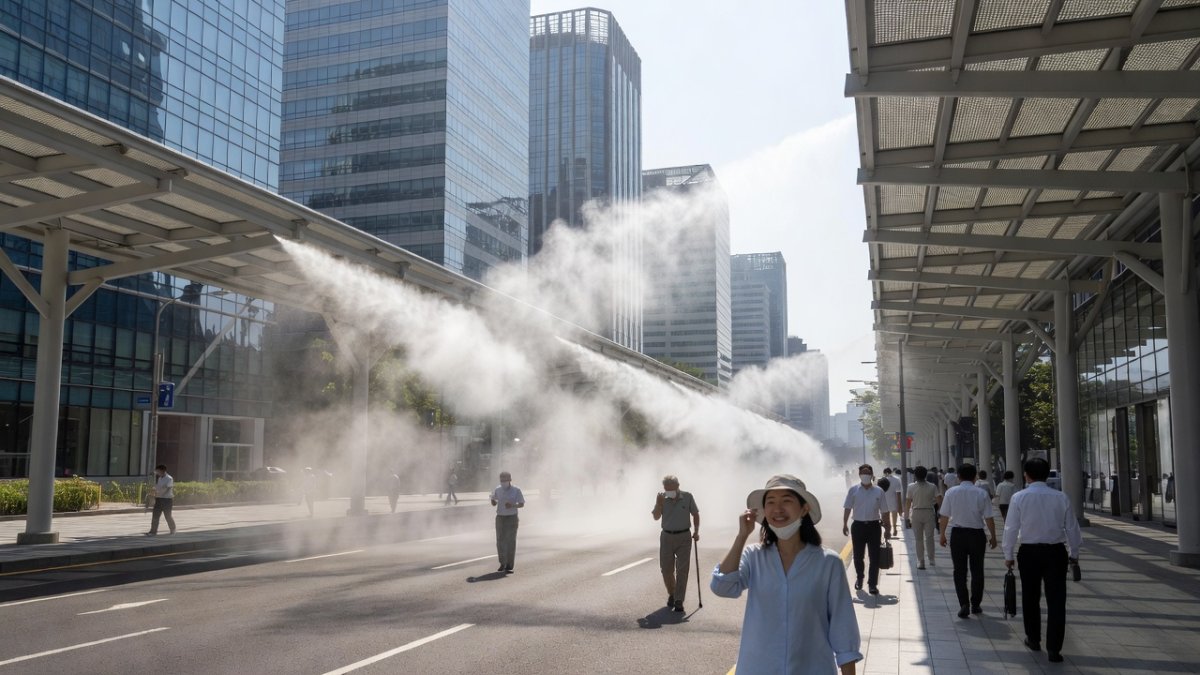
Seoul Metropolitan Government has expanded its network of fog-cooling systems and elevated cooling canopies in high-pedestrian districts including Jongno, Gangnam, and Dongdaemun. The fog systems, operational since 2022, release micronized water droplets along major thoroughfares during heat alerts, lowering ambient temperatures by 2–3°C within a 15-meter radius. Canopy structures incorporate reflective materials and integrated misting nozzles, providing shaded rest zones that have demonstrated measurable reductions in heat-related emergency calls during pilot evaluations. Smart-city sensors embedded throughout the urban core now feed real-time temperature and humidity data into a centralized heat-risk dashboard managed by the Seoul Metropolitan Facilities Management Corporation. When thresholds are crossed, the system automatically activates additional cooling stations and adjusts public-transport schedules to reduce outdoor exposure for workers. These interventions build on earlier green-roof mandates that have added more than 1.2 million square meters of vegetated surface area since 2015. Despite these advances, coverage remains uneven across the city’s 25 districts. Older residential neighborhoods in the northeast and southwest continue to exhibit surface temperatures 4–6°C higher than newly developed zones with extensive canopy coverage. Equity concerns have prompted the city to prioritize future installations in areas with high concentrations of elderly residents and outdoor laborers.Public Health Pressures and Demographic Vulnerabilities
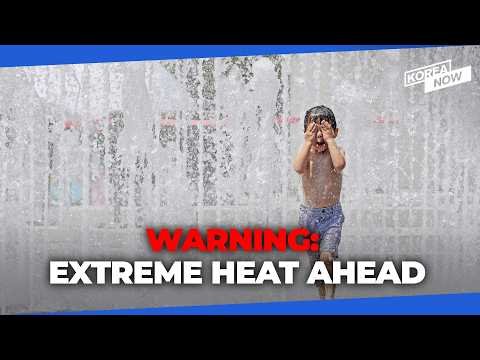
The Korea Disease Control and Prevention Agency has documented a steady rise in heat-related illnesses since 2015, with emergency-department visits increasing by an average of 11 percent annually during July and August. In 2024, more than 2,800 cases were reported nationally, the majority involving adults over 65 and outdoor workers in construction and agriculture. Preliminary 2026 surveillance data already indicate an earlier onset of cases, coinciding with the mid-June temperature spike in Seoul. Korea’s rapidly aging population amplifies these risks. By 2026, 20.3 percent of the national population is aged 65 or older, with the highest concentrations in rural counties where access to air-conditioned public spaces remains limited. The KDCA has issued targeted guidance for long-term care facilities, mandating hydration protocols and indoor temperature monitoring, yet compliance varies widely across municipal jurisdictions. Outdoor workers face additional exposure through extended shifts during peak harvest and construction seasons. Recent amendments to the Occupational Safety and Health Act require mandatory rest breaks when the heat index exceeds 32°C, but enforcement capacity remains constrained in small enterprises. Mobile heat-safety applications developed in partnership with the Ministry of Employment and Labor have improved awareness, yet adoption rates among daily laborers stay below 40 percent.
Regional Monsoon Dynamics and Inter-Korean Dimensions
The East Asian summer monsoon track exerts decisive control over precipitation and temperature patterns across the Korean Peninsula and neighboring countries. When the monsoon front stalls south of the peninsula, as projected for portions of July 2026, southern and central Korea experience prolonged subsidence and heat. Conversely, northward displacement of the front can bring heavy rainfall to northern provinces while leaving southern areas drier and hotter. These dynamics carry transboundary implications. North Korea’s agricultural regions, already vulnerable to interannual rainfall variability, face parallel risks of heat stress during the same periods when South Korea experiences peak temperatures. Limited meteorological data exchange between the two Koreas hampers coordinated early-warning systems, although informal channels through the World Meteorological Organization have facilitated limited real-time sharing during past heat events. Regional cooperation mechanisms such as the Tripartite Environment Ministers Meeting among Korea, China, and Japan have discussed joint heatwave early-warning protocols, yet concrete implementation remains modest. Enhanced data sharing on upper-air observations and soil-moisture conditions could improve forecast skill for the entire Northeast Asian domain, reducing economic losses in agriculture and energy sectors across borders.Looking Ahead: The Adaptation Imperative
The convergence of record spring temperatures, intensified high-pressure systems, and structural policy shortfalls positions South Korea at a critical juncture for climate adaptation. While urban cooling infrastructure and public-health surveillance have advanced, the underlying emission trajectory continues to drive more frequent and intense heat episodes. Sustained investment in both mitigation and adaptation remains essential to protect demographic groups already experiencing disproportionate impacts. Future adaptation strategies will require integration of climate services with urban planning, agricultural extension, and labor regulations. The 2026 season offers a test case for evaluating whether current measures can scale under more extreme conditions. Without accelerated progress on both the Carbon Neutral Green Growth Framework Act targets and equitable adaptation deployment, the Korean Peninsula will confront increasingly severe summers with diminishing margins for safety.By Prof. David Park, Staff Writer
This article was produced with AI-assisted research and editorial support. Reporting is based on sources cited in the article.
What's Your Reaction?
 Like
0
Like
0
 Dislike
0
Dislike
0
 Love
0
Love
0
 Funny
0
Funny
0
 Wow
0
Wow
0
 Sad
0
Sad
0
 Angry
0
Angry
0

Prof. David Park
East Asia/Technology Correspondent at Global1.News. Seoul-based voice covering Korean politics, technology, business, and culture. Analyzes how technology and geopolitics intersect across East Asia.















Comments (0)