
Former Israeli Negotiator Daniel Levy: From Zionist Upbringing to Human Rights Critic
In a recent Middle East Eye Real Talk interview, Daniel Levy, a former Israeli peace negotiator who served under Prime Ministers Yitzhak Rabin and Ehud Barak, reflected on his decades-long involvement in efforts that he now views as fundamentally flawed. Speaking with Mohamed Hashem, Levy described how his experiences at the negotiating table revealed deep structural problems i
In a recent Middle East Eye Real Talk interview, Daniel Levy, a former Israeli peace negotiator who served under Prime Ministers Yitzhak Rabin and Ehud Barak, reflected on his decades-long involvement in efforts that he now views as fundamentally flawed. Speaking with Mohamed Hashem, Levy described how his experiences at the negotiating table revealed deep structural problems in Israel's approach to Palestinians. His evolution from insider to outspoken critic offers a rare perspective on why past peace initiatives repeatedly fell short.
Levy's comments come at a time when discussions around accountability in the Israeli-Palestinian conflict continue to draw international attention. He highlighted the absence of enforcement mechanisms that allowed violations to persist without consequence. This assessment aligns with ongoing reports from human rights organizations documenting conditions in the occupied territories.
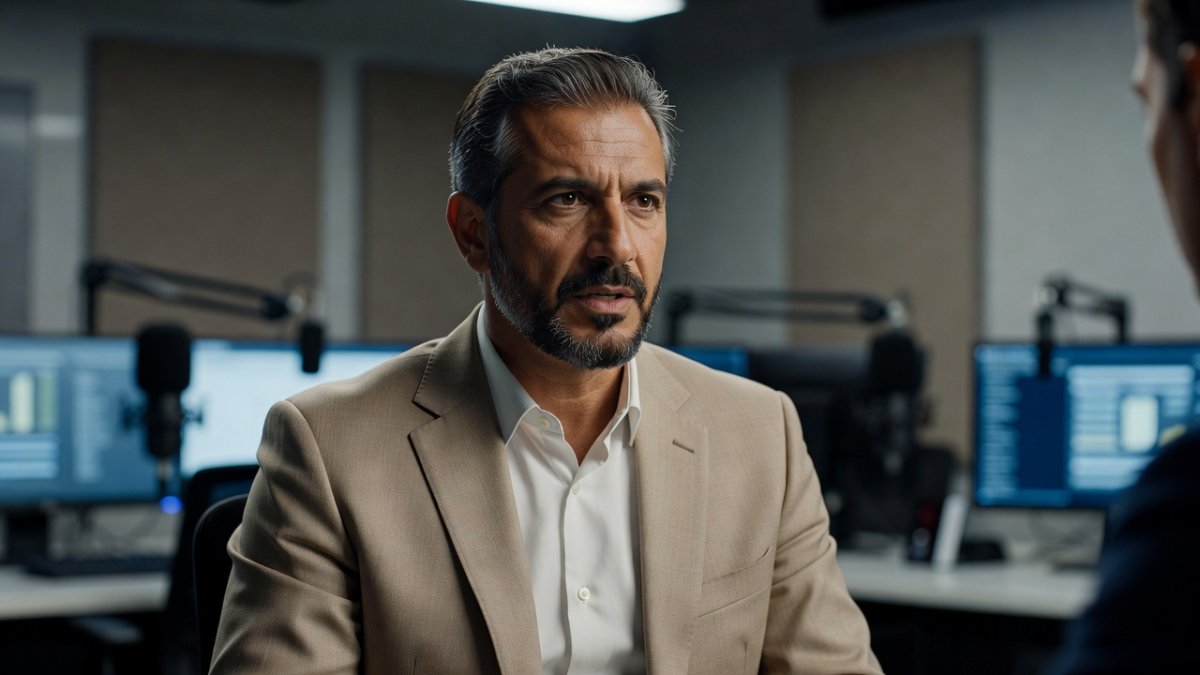
From Orthodox Zionism to the Negotiating Table
Daniel Levy was born in London and raised in an Orthodox Zionist household. His father, Lord Michael Levy, maintained close ties to Israeli political circles. Levy studied at King's College, Cambridge, before becoming involved in Jewish student leadership as World Chairman of the World Union of Jewish Students. These early experiences shaped his initial commitment to Israel as a secure homeland for Jews.
After moving to Israel, Levy entered government service during a period of active diplomacy. He advised Prime Minister Yitzhak Rabin from 1992 to 1995 and later worked under Ehud Barak from 1999 to 2001. His roles placed him directly in discussions about borders, security arrangements, and Palestinian self-determination.
Levy participated in the Oslo 2 process in 1995 and attended the Taba summit in January 2001. These assignments came during moments when Israeli officials presented negotiations as pathways to mutual recognition. Yet the gap between public statements and on-the-ground policies began to surface for him even then.
Inside the Oslo and Taba Negotiations
At the Taba summit, Levy witnessed Israeli proposals that offered limited territorial concessions while retaining control over key settlement blocs and Jerusalem. Palestinian negotiators sought full sovereignty and an end to occupation, but enforcement provisions remained absent from draft texts. The talks collapsed without agreement, leaving core issues unresolved.
Levy later noted that the peace process often served as cover for continued expansion. Settlements grew during the Oslo years despite commitments to freeze construction. This pattern undermined Palestinian trust and reinforced the view that negotiations lacked meaningful consequences for rights violations.
The 1995 Oslo 2 accords divided the West Bank into areas A, B, and C, with Israel retaining security control over most land. Levy observed how this framework allowed daily restrictions on Palestinian movement and development to continue. Economic conditions in Palestinian communities deteriorated as a result.
By the time of the 2003 Geneva Initiative, which Levy helped draft alongside Ghaith al-Omari, he had already begun questioning whether bilateral talks alone could deliver justice. The initiative proposed detailed solutions on refugees and borders, yet it received little official backing from either side.
The Journey to Critique
Levy co-founded J Street in 2007 to create space for American Jews who supported Israel but opposed its occupation policies. In a 2009 Guardian interview, he explained the organization's aim: to show that many Jewish Americans identified as pro-Israel through the lens of peace with neighbors rather than expansion. This marked an early public step away from mainstream pro-Israel advocacy.
As president of the U.S./Middle East Project, Levy continued analyzing policy failures. He served as director of the Middle East program at the European Council on Foreign Relations from 2012 to 2016 and joined boards including the New Israel Fund and Molad. These roles allowed him to connect diplomatic history with current realities in the West Bank and Gaza.
Levy has described the peace process as the "refuge of scoundrels who want to maintain the status quo." He pointed to repeated cycles where talks resumed without addressing settlement growth or Palestinian sovereignty. The lack of accountability mechanisms, he argued, permitted violations to accumulate over decades.
His board membership with the Rockefeller Brothers Fund and earlier work with the Geneva Initiative reinforced his focus on practical alternatives. Levy emphasized that genuine progress required consequences for rights abuses rather than indefinite negotiations.
Occupation, Language, and the Weaponization of Antisemitism
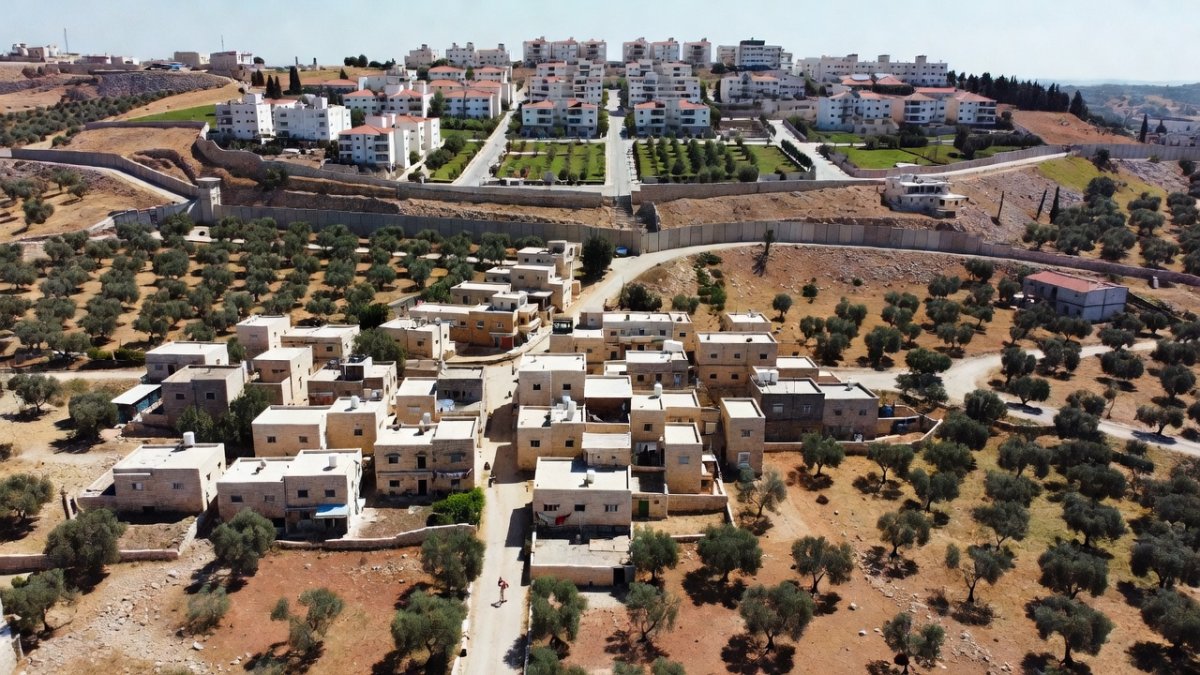
Levy has characterized Israel's control over Palestinians as a system of nondemocracy. This description draws from the daily experience of movement restrictions, home demolitions, and administrative detention that affect West Bank residents. Palestinian communities in Area C face particular barriers to building permits and access to resources.
He has warned against the abuse of antisemitism accusations to silence advocacy for Palestinian rights. Such tactics, Levy stated, distort legitimate criticism and shield policies that undermine both Palestinian dignity and long-term Israeli security. Organizations monitoring these patterns have documented cases where advocacy groups faced funding cuts or public attacks.
Levy has also cautioned that certain expressions of Zionism are undermining Jewish safety and global security. In his view, the occupation's continuation fuels resentment and instability across the region. This assessment connects to broader discussions among Jewish intellectuals about the relationship between Israeli policies and diaspora communities.
In a March 2026 Democracy Now! interview, Levy remarked that Israel remains "on the impunity high from its Gaza genocide, which has led us here." He has written in Zeteo in 2026 that Netanyahu is lying about ceasefire violations, highlighting how official narratives diverge from documented events on the ground.
What Levy's Journey Means for Palestinians and the Region
Levy's shift from negotiator to critic illustrates the limits of past diplomatic frameworks that prioritized Israeli security concerns over Palestinian self-determination. His testimony carries weight because it comes from someone who sat at the table during key moments. Palestinian analysts have noted that such insider accounts confirm long-standing complaints about settlement expansion during talks.
The human impact remains visible in villages across the West Bank where families navigate checkpoints and land confiscations. Levy's emphasis on enforcement mechanisms resonates with calls from groups like the Palestinian Center for Human Rights for accountability measures tied to international law. Without these, displacement and economic hardship continue.
His critique of weaponized antisemitism language opens space for more open debate in Western capitals. Palestinian civil society organizations have long argued that conflating policy criticism with prejudice hinders solidarity efforts. Levy's position aligns with this view while drawing from his own experience in Jewish communal spaces.
Ultimately, Levy's reflections point toward the need for approaches centered on equality and rights rather than indefinite interim arrangements. For communities living under occupation, this evolution among former officials signals that internal Israeli debates may eventually pressure policy changes, though the timeline remains uncertain. The daily realities in Gaza and the West Bank continue to test whether such shifts will produce tangible relief.
By Fatima Al-Rashid, Staff Writer
This article was produced with AI-assisted research and editorial support. Reporting is based on sources cited in the article.
What's Your Reaction?
 Like
0
Like
0
 Dislike
0
Dislike
0
 Love
0
Love
0
 Funny
0
Funny
0
 Wow
0
Wow
0
 Sad
0
Sad
0
 Angry
0
Angry
0
Gulf/MENA Correspondent at Global1.News. Based in Doha, covering Gulf politics, energy markets, diplomacy, and development across the Middle East and North Africa. Tracks the economic transformation of the Gulf states.









Comments (0)