
Typhoon Bavi: East Asia's Climate and Security Crossroads
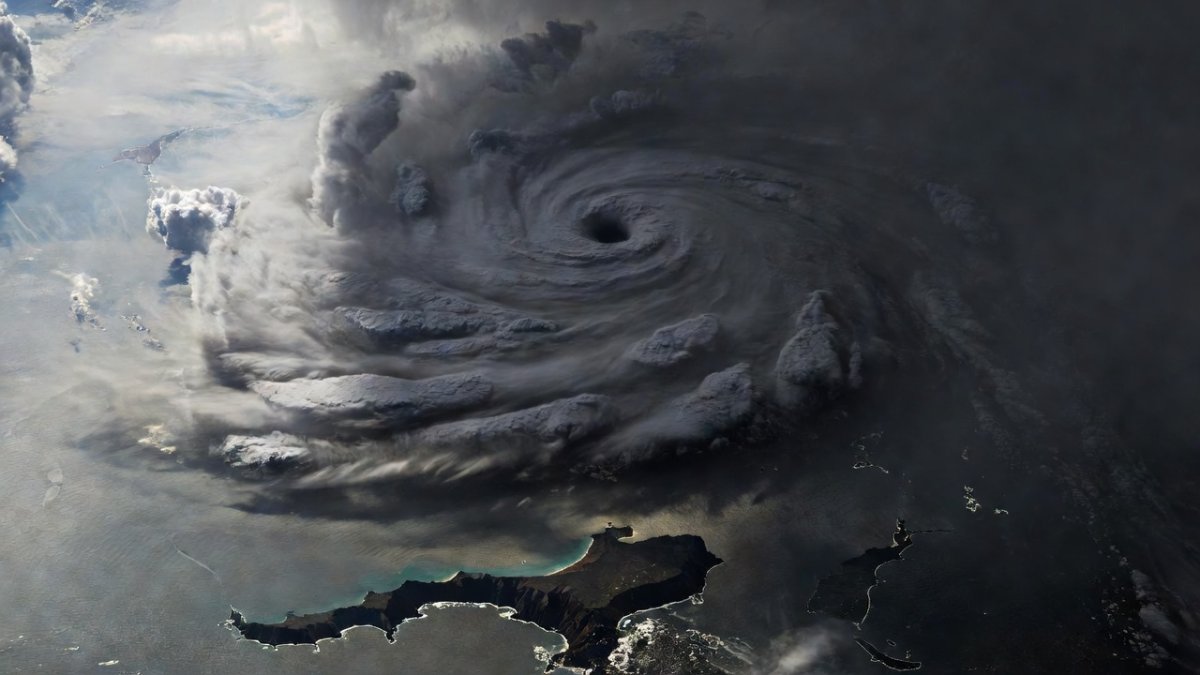
Section 1: A Storm of Exceptional Scale Typhoon Bavi spans 1,000km at its widest point as it sweeps across the Pacific toward Taiwan. This immense diameter sets it apart from typical tropical cyclones that affect the region. The storm has already produced devastating landslides in the Philippines that killed 15 people. Forecasters anticipate up to one meter of rainfall across p
Section 1: A Storm of Exceptional Scale
Typhoon Bavi spans 1,000km at its widest point as it sweeps across the Pacific toward Taiwan. This immense diameter sets it apart from typical tropical cyclones that affect the region. The storm has already produced devastating landslides in the Philippines that killed 15 people. Forecasters anticipate up to one meter of rainfall across parts of Taiwan once Bavi makes landfall. Such volumes of precipitation would exceed the capacity of many drainage systems in mountainous terrain.
The trajectory of Bavi places both Taiwan and coastal China directly in its path. Satellite imagery confirms the storm's steady northwestward movement across open waters. In the Philippines the initial impacts included widespread flooding that triggered the fatal landslides. Taiwan's Central Weather Administration has issued warnings for extreme rainfall totals reaching one meter in vulnerable counties. These forecasts underscore the scale of hydrological risk facing the island.
More than 260 flights have been cancelled because of Bavi, affecting over 40,000 passengers across regional airports. Airlines began suspending services days before the storm's projected arrival to ensure aircraft safety. The cancellations extend beyond Taiwan to include routes connecting the Philippines and southern China. Passengers face prolonged disruptions as carriers assess runway conditions and wind speeds. This aviation standstill illustrates how a single large-scale weather system can paralyze transportation networks.
Bavi's size amplifies its potential for compound hazards including storm surge and river flooding. The 1,000km width means multiple weather fronts interact simultaneously across different jurisdictions. Philippine authorities continue to assess additional landslide risks in provinces already saturated by earlier rains. Taiwan expects the heaviest precipitation to concentrate in central and southern mountain ranges. These combined factors elevate Bavi from a routine seasonal event to a regional crisis.
Regional meteorological agencies coordinate closely to track Bavi's evolution over the coming days. The storm's current path suggests possible interaction with landmasses that could alter its intensity. Philippine death tolls from landslides serve as an early indicator of Bavi's destructive reach. Taiwan's one-meter rainfall projection remains the central concern for civil protection planners. Aviation disruptions already demonstrate the storm's economic footprint before any direct landfall occurs.
Section 2: Taiwan's Mobilisation and Civilian Response
Taiwan has placed 29,000 soldiers on standby to support disaster relief operations ahead of Typhoon Bavi. These troops will assist with evacuation, debris clearance, and emergency infrastructure repair. Sandbag distribution has begun in low-lying districts to reinforce riverbanks and coastal barriers. School closures have been announced across multiple counties to protect students from hazardous travel conditions. This coordinated deployment reflects Taiwan's long-standing emphasis on rapid civil-military integration during natural disasters.
Fisherman Chen Ming-hui observed that the current calm sea conditions appear deceptive given the approaching storm. His comments highlight the psychological challenge of preparing communities for an event that has not yet arrived. Local authorities have urged residents to heed evacuation orders despite the temporary tranquility. Chen Ming-hui's perspective captures the lived experience of those whose livelihoods depend on accurate weather interpretation. Such personal accounts reinforce the importance of clear public communication from the Central Weather Administration.
Farmers across Taiwan are securing crops and livestock ahead of the expected one meter of rainfall. Protective measures include reinforcing greenhouse structures and moving animals to higher ground. These preparations aim to limit agricultural losses that could affect domestic food supplies. Military personnel on standby will later help clear flooded fields once Bavi passes. The proactive stance of farming communities demonstrates how disaster preparedness extends beyond government institutions.
Effective disaster preparedness directly tests Taiwan's autonomous governance capacity under pressure. The mobilization of 29,000 soldiers alongside civilian agencies shows institutional coordination that functions independently. Sandbag distribution and school closures represent routine yet critical decisions made without external direction. Taiwan's ability to execute these measures signals resilience in the face of recurring climate threats. Such operational autonomy remains essential for maintaining public confidence during successive weather events.
Local governments continue to monitor Bavi's approach while refining evacuation routes and shelter capacities. The combination of military assets and community-level actions creates layered protection for vulnerable populations. Chen Ming-hui's remarks about deceptive calm serve as a reminder that visible conditions can mask underlying danger. Farmers' crop-securing efforts complement official preparations by preserving economic assets. Together these elements illustrate how Taiwan converts preparedness planning into tangible risk reduction.
Section 3: China's Warning and Northern Vulnerability
Ma Jun has warned that northern Chinese provinces lack sufficient experience with typhoon impacts. His assessment highlights gaps in local infrastructure designed primarily for continental weather patterns. Bavi may make landfall in Fujian before tracking northward, exposing regions unaccustomed to such systems. The possibility of a double landfall increases the complexity of forecasting and resource allocation. Ma Jun's statements draw attention to the uneven distribution of climate adaptation capabilities across China's diverse geography.
China's Institute of Public and Environmental Affairs has documented vulnerabilities in northern flood defenses. These assessments align with Ma Jun's caution about limited institutional memory of tropical cyclone events. Fujian authorities are already prepositioning supplies in anticipation of Bavi's arrival. A double landfall scenario would require simultaneous response operations in multiple provinces. Such coordination challenges test the limits of centralized emergency management frameworks.
Northern provinces face heightened risks because their drainage systems and early-warning networks were not built for typhoon-scale rainfall. Ma Jun emphasizes the need for targeted training and equipment upgrades in these areas. Bavi's trajectory toward Taiwan could still generate indirect effects through heavy rain bands reaching the mainland. The Institute of Public and Environmental Affairs continues to publish data that informs provincial planning. These analytical contributions support evidence-based adjustments to China's broader climate resilience strategy.
Integration of typhoon preparedness into the 14th Five-Year Plan reflects Beijing's recognition of escalating climate threats. Ma Jun's warnings serve as a catalyst for accelerating adaptation measures in northern regions. Fujian landfall preparations provide a template that could be adapted for less experienced provinces. The potential for double landfall underscores the value of flexible, multi-jurisdictional response protocols. China's climate resilience strategy therefore requires both infrastructure investment and knowledge transfer across administrative boundaries.
Ma Jun's public statements also encourage greater transparency in risk communication with affected populations. Northern communities must receive clear guidance on evacuation timing and shelter availability. The Institute of Public and Environmental Affairs supplies independent verification of provincial readiness levels. Bavi's approach offers a practical test of whether 14th Five-Year Plan objectives translate into operational effectiveness. Addressing northern vulnerabilities now will determine China's overall capacity to manage future Pacific storms.
Section 4: The Maysak Aftermath and Cumulative Strain
Maysak previously killed 39 people and forced the evacuation of 130,000 residents in Guangxi. Livestock losses were extensive, damaging rural economies already recovering from earlier disruptions. Two rare tornadoes spawned by Maysak struck Hubei, adding unexpected structural damage to the storm's toll. These cascading effects illustrate how a single typhoon can generate multiple hazard types across distant provinces. Recovery operations were still underway when Bavi began its approach across the Pacific.
Successive storms like Maysak and Bavi overwhelm local recovery capacity by compressing rebuilding timelines. Guangxi communities had limited opportunity to restore agricultural output before facing renewed flood risks. The 130,000 evacuees from Maysak required sustained support that strained provincial budgets and logistics networks. Livestock losses reduced immediate food availability and long-term breeding stock in affected counties. Such cumulative pressures reveal systemic fragilities in China's agricultural supply chains.
The two rare tornadoes in Hubei demonstrated that typhoons can produce secondary phenomena far from their primary track. These events caught local responders with limited specialized equipment for tornado damage. Maysak's 39 fatalities occurred across multiple impact mechanisms including flooding and wind-related incidents. Evacuation of 130,000 people required rapid shelter activation that diverted resources from routine governance functions. The combined toll underscores the need for integrated multi-hazard planning rather than single-threat protocols.
China's agricultural security faces direct threats when consecutive typhoons strike during critical growing seasons. Livestock losses from Maysak reduced protein supplies and farm incomes in Guangxi. Recovery efforts must now incorporate lessons from both Maysak and the approaching Bavi to prevent repeated setbacks. Provincial authorities recognize that overlapping disaster cycles erode the effectiveness of standard relief mechanisms. Sustained investment in resilient farming infrastructure becomes essential under these conditions.
The Maysak experience provides a baseline for evaluating how Bavi may compound existing recovery burdens. Guangxi's 130,000 evacuees highlight the scale of temporary displacement that can recur with each new storm. Hubei's tornado incidents show that even inland areas require expanded hazard awareness. Agricultural security implications extend beyond immediate losses to affect national food price stability. Managing cumulative strain therefore demands forward-looking policies that anticipate successive Pacific weather systems.
Section 5: Cross-Strait Interdependence and Shared Risk
Typhoon Bavi creates unavoidable functional interdependence between Taiwan and mainland China despite ongoing political tensions. Supply chains linking the two sides must account for simultaneous disruptions to ports and manufacturing zones. Semiconductor hubs in both Taiwan and coastal China face production delays when heavy rainfall and power outages coincide. Aviation networks that connect the region experience cascading cancellations affecting passengers and cargo alike. These shared vulnerabilities demonstrate that climate events operate independently of political boundaries.
Bavi's projected path toward Taiwan will likely generate secondary effects on mainland supply routes. Semiconductor fabrication facilities require stable electricity and water supplies that typhoon rainfall can compromise. Cross-strait shipping schedules already reflect adjustments made in anticipation of Bavi's arrival. The interdependence becomes visible when a single storm forces coordinated decisions across competing jurisdictions. Such operational realities persist regardless of diplomatic friction.
Beijing's Dual Circulation strategy emphasizes domestic resilience while maintaining external linkages that Bavi now threatens. Supply chain interruptions in Taiwan affect components essential to mainland assembly lines. Semiconductor hubs on both sides of the strait represent concentrated points of economic exposure to extreme weather. Aviation networks serve as the physical backbone for just-in-time manufacturing that cannot tolerate prolonged closures. Bavi therefore tests the practical limits of Dual Circulation under climate stress.
Shared risk management requires technical cooperation even when political channels remain constrained. Taiwan's 29,000 soldiers on standby and China's provincial preparations both address the same meteorological threat. Semiconductor supply chains illustrate how economic integration creates mutual incentives for accurate forecasting and timely warnings. Aviation disruptions already demonstrate the tangible costs of inadequate cross-strait coordination. These functional linkages persist as long as Bavi remains active in the Pacific.
The storm's scale forces recognition that climate resilience cannot be achieved in isolation. Taiwan's rainfall forecasts of up to one meter carry implications for mainland river systems downstream. Semiconductor hubs and aviation networks represent critical nodes where interdependence is most acute. Beijing's Dual Circulation strategy must therefore incorporate climate risk as a core variable rather than an external shock. Bavi underscores that shared exposure can generate pragmatic cooperation even amid broader strategic competition.
Section 6: Geopolitical and Strategic Implications
Typhoon Bavi's impacts extend beyond East Asia to influence perceptions across ASEAN, Japan, and the Global South. Effective disaster management functions as a form of soft power that shapes regional influence. Countries that demonstrate rapid, transparent response to storms like Bavi gain credibility among neighbors facing similar climate threats. Conversely, inadequate preparation signals governance weaknesses that adversaries can exploit. Bavi therefore serves as an unplanned test of regional leadership capacity.
Japan monitors Bavi closely because its own typhoon season overlaps with Pacific storm tracks. ASEAN members observe how Taiwan and China manage the event to inform their own preparedness frameworks. The Global South watches for evidence that major powers can translate resources into tangible protection for vulnerable populations. Disaster management outcomes will influence diplomatic narratives about governance effectiveness. Bavi's aftermath will contribute to ongoing assessments of regional resilience.
Soft power derived from competent disaster response can offset other sources of geopolitical friction. Taiwan's mobilization of 29,000 soldiers and systematic school closures project institutional competence. China's warnings from Ma Jun and coordination through the Institute of Public and Environmental Affairs similarly communicate proactive governance. When responses prove effective, they enhance international standing; when they falter, they invite criticism. Bavi thus operates as both a physical threat and a strategic signaling opportunity.
Japan and ASEAN countries will compare their own typhoon protocols against the cross-strait performance during Bavi. The Global South seeks models for scaling disaster management in resource-constrained settings. Effective responses reinforce narratives of capable regional leadership, while shortcomings highlight areas requiring external assistance. Bavi's trajectory across multiple jurisdictions makes it a natural benchmark for comparative analysis. These evaluations will shape future cooperation patterns in climate adaptation.
The broader picture reveals that climate events increasingly intersect with geopolitical competition. ASEAN, Japan, and Global South observers assess not only immediate humanitarian outcomes but also the signaling value of each actor's performance. Disaster management as soft power operates through demonstrated competence rather than declarative statements. Bavi's handling will contribute to long-term perceptions of governance quality across East Asia. Strategic implications therefore extend well beyond the storm's physical footprint.
By Prof. Marcus Chen, Staff WriterThis article was produced with AI-assisted research and editorial support. Reporting is based on sources cited in the article.
What's Your Reaction?
 Like
0
Like
0
 Dislike
0
Dislike
0
 Love
0
Love
0
 Funny
0
Funny
0
 Wow
0
Wow
0
 Sad
0
Sad
0
 Angry
0
Angry
0

World Politics Analyst at Global1.News. Based in Beijing, covering US-China relations, global trade, and geopolitical strategy. Brings deep analytical perspective to the power dynamics shaping international affairs.














Comments (0)