
European Leaders Demand Ukraine Peace Role at NATO Summit
In a recent BBC News report, European leaders delivered a clear message to US President Donald Trump at the NATO summit in Ankara: they must have a seat at the table in deciding Ukraine's future, even as the White House pushes for a swift negotiated settlement with Moscow. European Leaders Push for Decisive Role in Ukraine Peace Talks as NATO Summit Closes Ankara, Turkey – 12 J
In a recent BBC News report, European leaders delivered a clear message to US President Donald Trump at the NATO summit in Ankara: they must have a seat at the table in deciding Ukraine's future, even as the White House pushes for a swift negotiated settlement with Moscow.
European Leaders Push for Decisive Role in Ukraine Peace Talks as NATO Summit Closes
Ankara, Turkey – 12 July 2026 — The NATO summit that concluded in the Turkish capital this week exposed the deepening divide between Washington and its European allies over the future of Ukraine — a rift that could shape the continent's security architecture for decades to come.
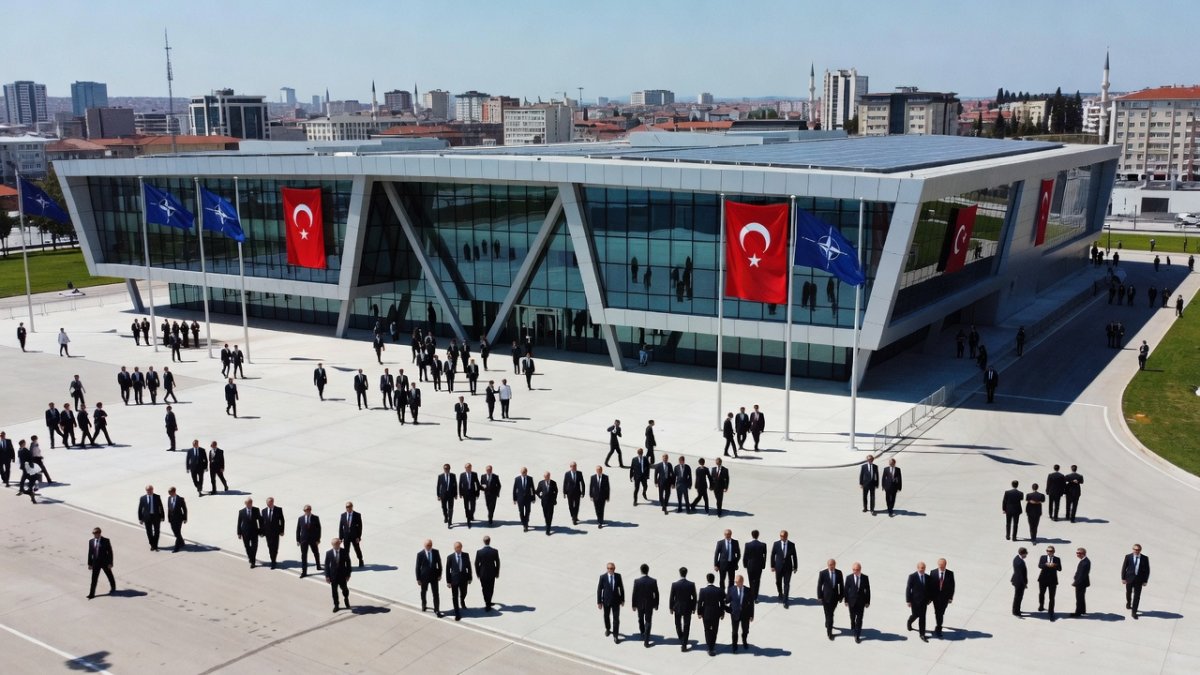
The Ankara Summit — Unity Declared, Divisions Simmering
The NATO summit in Ankara this week was carefully choreographed to project unity, but beneath the handshakes and the declarations, a fundamental tension was playing out between Washington and its European partners. US President Donald Trump hailed the gathering as a resounding success, telling reporters there was "a lot of love" in the room and praising the alliance's renewed commitment to Article 5 as "ironclad." NATO Secretary-General Mark Rutte reinforced the message, stating that allies "warmly welcomed President Trump's leadership." Yet even as the leaders posed for group photographs at Beştepe Presidential Compound, Trump had authorised retaliatory strikes on Iran — a decision made shortly after leaving a NATO dinner that underscored his frustration with allies who, he complained bitterly, had failed to help keep the Strait of Hormuz open. The dual messaging — public warmth toward the alliance, private and public frustration with its limitations — encapsulates the complex relationship between the Trump administration and the European partners who remain dependent on American military power.
For European leaders, the summit was a delicate exercise in managing Trump's mercurial approach to international alliances. The US president had called them "weak" in a Politico interview published during the summit itself, a remark that reflected a broader administration view articulated in the recently published National Security Strategy, which accused Europeans of having "unrealistic expectations" about how the Ukraine war might end. Despite these provocations, Europe's leaders publicly praised Trump's role in advancing peace negotiations. British Prime Minister Sir Keir Starmer noted that the US president had progressed talks "the furthest we've got in four years" in just a few weeks. Behind closed doors, however, the concern was palpable: that Trump's push for a quick deal with Moscow could sacrifice Ukrainian sovereignty for the sake of a political victory.
The carefully worded summit declaration attempted to bridge the gap. It reaffirmed the alliance's commitment to collective defence while signalling a major transformation, declaring that members were "building the future: a stronger Europe in a stronger NATO." European and Canadian members pledged to spend nearly $300 billion more on defence this year and last, a figure Rutte presented to Trump as tangible proof that the burden-sharing demands were being met. "Grab the win. It's there," Rutte told the president.
The Patriot Gambit — Trump's Gift to Ukraine
The most consequential announcement to emerge from the Ankara summit was Trump's decision to grant Ukraine a license to produce American Patriot missile defence systems — a step that Kyiv has been requesting for years as Russian missile strikes continue to target critical infrastructure across the country. "We'll give them the right to make Patriots. We'll show them how to do it," Trump said during a bilateral meeting with Ukrainian President Volodymyr Zelenskyy on the sidelines of the summit. "I think they can produce them pretty quickly." The announcement represents a significant shift in US policy. Washington had previously stopped direct military aid to Ukraine, although it continued providing intelligence and allowing European countries to purchase American weapons for transfer to Kyiv. The Patriot license effectively outsources production to Ukraine itself, bypassing the aid debate while still strengthening Kyiv's defensive capabilities. Zelenskyy has for years argued that Ukraine could produce Patriots faster and more cheaply than American factories, given the urgency of wartime demand.
The diplomatic choreography surrounding the announcement was itself revealing. Trump dropped his usual critical tone toward Zelenskyy, describing him as having "done an amazing job" and "been very effective" in the war effort. "We've actually developed a good relationship. It's hard to believe," Trump said — a striking admission given the infamous Oval Office confrontation that soured relations between the two leaders last year. The Patriot decision, however, also carried implicit messages for Europe. By granting directly to Ukraine the technological capability to produce its own advanced air defence systems, Trump was simultaneously answering Kyiv's most urgent request while signalling that continued American patronage of European allies was not limitless. The message was clear: Europe must step up, and Ukraine must ultimately stand on its own.
For Ukraine, the Patriot license is a lifeline. The systems are among the most effective defences against Russia's ballistic missile arsenal, but they are expensive, in high demand, and take years to produce through traditional American supply chains. Bringing production to Ukrainian soil — even under license — would dramatically shorten delivery timelines and reduce dependence on foreign manufacturing capacity. Zelenskyy described the agreement as a "breakthrough," though he also pressed NATO allies at the summit for more immediate military support as the war enters its fifth year with no end in sight.
The €70 Billion Question — Who Pays for Ukraine's Defence?
The €70 billion package agreed at the Ankara summit represents the most concrete financial commitment to Ukraine's defence since the conflict began. Under the terms outlined in the NATO declaration, €30 billion will flow through an EU loan programme while €40 billion will come from NATO allies. The United States will not contribute to either portion. According to AP News reporting on the summit outcomes, most of the €40 billion tranche for 2026 has already been secured through bilateral pledges from European capitals. This funding is intended to cover ammunition, air defence interceptors, and training programmes through 2027.
In practical terms, the package addresses a projected €20 billion shortfall in Ukraine's 2026 defence budget. Previously, the United States had supplied roughly $30 billion annually in direct military assistance. European officials now view the new arrangement as a bridge that keeps Ukrainian forces operational while Washington steps back. NATO Secretary-General Mark Rutte emphasised that the funds would be disbursed through existing mechanisms to avoid delays. Ukrainian President Volodymyr Zelenskyy welcomed the total but stressed that sustained deliveries remain essential.
The EU loan component operates through a centralised borrowing facility backed by member-state guarantees. Germany Chancellor Friedrich Merz confirmed Berlin's participation in the €30 billion portion, noting that repayments would be tied to future Ukrainian reconstruction revenues. European leaders have made clear they expect a seat at any peace negotiation table in exchange for this financial burden. The NATO declaration explicitly links the package to continued Ukrainian sovereignty, a point reiterated by Rutte during the closing press conference.
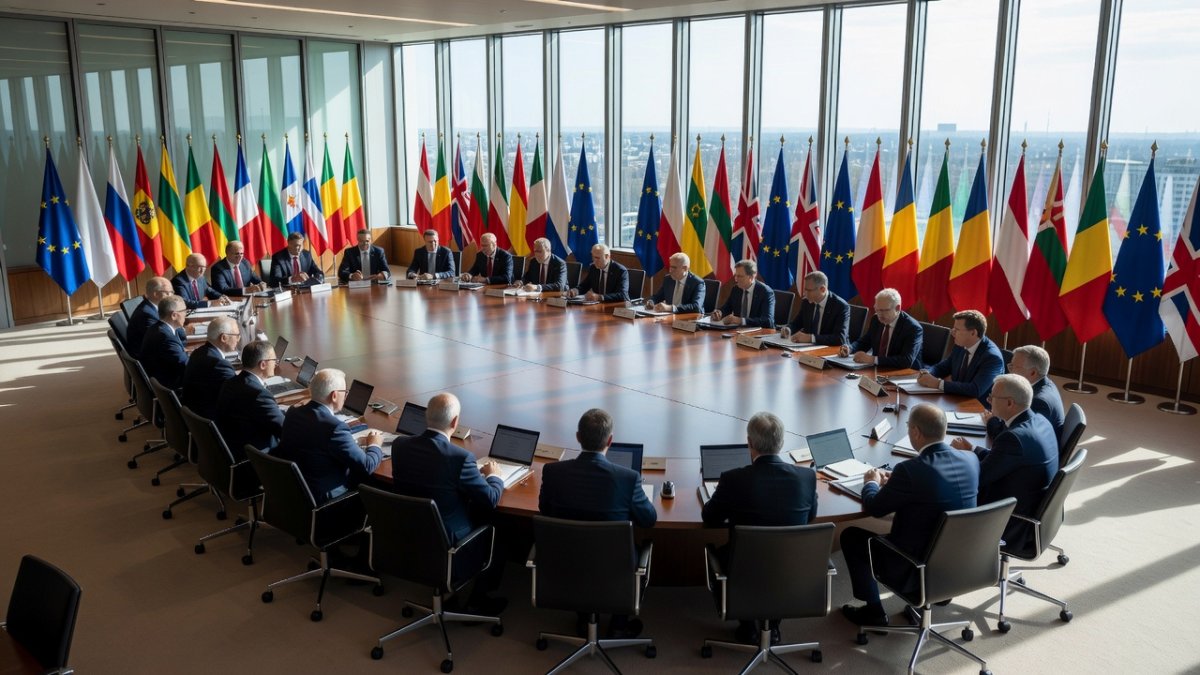
Russia's Calculus — What Moscow Makes of NATO's Internal Strains
From the Kremlin's perspective, the visible divisions between Washington and its European allies constitute a strategic opening. Russian state media outlets have repeatedly amplified President Trump's characterisation of European leaders as "weak," framing the comments as evidence that NATO cohesion is eroding. This narrative aligns with Moscow's long-standing objective of weakening the transatlantic bond. Analysts suggest the uncertainty surrounding American security guarantees, particularly after earlier tensions involving Greenland and Denmark, creates space for Russian influence operations across the continent.
In recent months, European officials have attributed a series of hybrid incidents to Russian actors, including drone activity disrupting airports in Germany, Denmark and Belgium, railway sabotage in Poland, and cyber-attacks targeting critical infrastructure. BBC Europe Editor Katya Adler has reported that these events have heightened public anxiety in European capitals and brought the conflict closer to civilian life. Moscow's apparent goal is to force European governments to weigh continued alignment with Washington against the prospect of restored energy and commercial ties with Russia.
European leaders privately assess that the Kremlin is calculating the alliance will fracture under pressure. The combination of reduced US direct aid and Europe's still-developing defence industrial base is viewed in Moscow as an opportunity to press for concessions in any future talks. Adler's reporting indicates that European intelligence services are tracking increased Russian disinformation campaigns aimed at amplifying transatlantic disagreements. While these efforts have not yet altered formal NATO policy, they underscore the strategic calculations at play as the war continues.
The Tightrope — Europe Walks Between Washington and Kyiv
European leaders find themselves in a precarious position that requires balancing dependence on American capabilities with the need to preserve Ukrainian sovereignty. Decades of underinvestment have left European militaries reliant on US intelligence, command-and-control systems, air-to-air refuelling, and nuclear deterrence. Despite recent spending increases, these gaps cannot be closed quickly. At the same time, cross-border hybrid incidents have raised public concern about Russian aggression and strengthened domestic support for continued assistance to Kyiv.
The political dilemma is acute. Public criticism of President Trump's approach risks prompting further US disengagement, while silence could allow outcomes that undermine Ukrainian independence. UK Prime Minister Sir Keir Starmer has called for "hard-edged security guarantees" that would prevent any temporary ceasefire from becoming a permanent vulnerability. German Chancellor Friedrich Merz has expressed scepticism about certain details in US planning documents, particularly those that appear to limit long-term commitments.
French President Emmanuel Macron faces additional constraints, with France's defence budget under pressure and only €120 million allocated for Ukraine aid in the coming year. BBC Europe Editor Katya Adler has described the resulting diplomacy as a "tortuous dance" in which European officials seek to maintain American engagement while advancing their own positions. This balancing act will determine whether the €70 billion package translates into lasting leverage at the negotiating table or merely sustains the status quo.
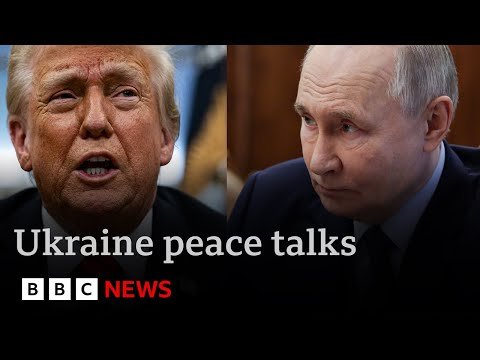
Analysis — A Continent at a Crossroads
The Ankara summit may be remembered not for what it achieved, but for what it revealed: a transatlantic alliance that formally remains united but is increasingly fractured on the fundamental question of European security. NATO's renewed commitment to Article 5 and the €70 billion Ukraine package are real achievements. Yet the underlying dynamics — America's reduced commitment, Europe's military dependence, and Russia's opportunism — point toward a continent that must fundamentally rethink its defence posture. The declaration's reference to "a stronger Europe in a stronger NATO" remains aspirational rather than operational at this stage.
European leaders recognise that converting spending pledges into actual capability will require sustained political will and industrial coordination. The coming months will test whether the alliance can close capability gaps before the next crisis emerges, whether in Ukraine, the Baltics, or elsewhere. The signal sent to Moscow, Beijing, and the Global South is one of continued Western engagement tempered by evident internal strains. How effectively Europe manages this transition will shape the broader geopolitical landscape for years ahead.
By Irina Volkov, Staff Writer
This article was produced with AI-assisted research and editorial support. Reporting is based on sources cited in the article.
What's Your Reaction?
 Like
0
Like
0
 Dislike
0
Dislike
0
 Love
0
Love
0
 Funny
0
Funny
0
 Wow
0
Wow
0
 Sad
0
Sad
0
 Angry
0
Angry
0
Russia/Eastern Europe Correspondent at Global1.News. Covering Russian politics, energy, security, and the shifting dynamics of the post-Soviet space. Provides clear-eyed analysis on one of the world's most opaque regions.









Comments (0)